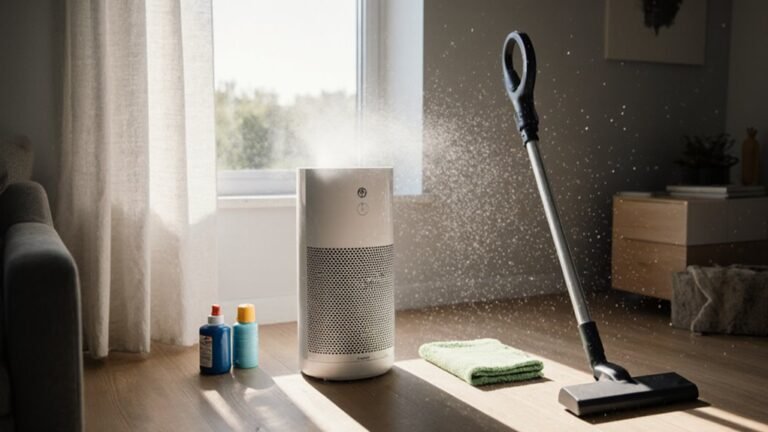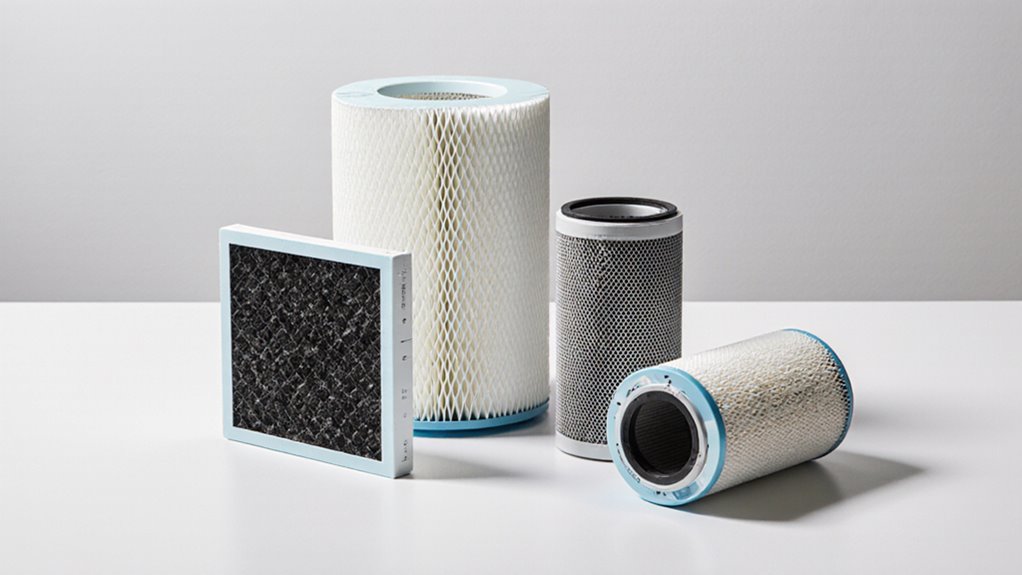

Air purifier filters remove airborne particles, neutralize odors, and protect the unit for longer life. HEPA filters capture fine dust, pollen, and many allergens down to submicron sizes. Activated carbon targets gases, VOCs, and smells through adsorption. Pre-filters trap larger debris and extend HEPA lifespan, while washable parts cut maintenance costs. Additional technologies like UV or ionizers can reduce microbes or alter particles, but effectiveness varies by design.
What Air Purifier Filters Do
At the moment you look at an air purifier, the filter is the part that does the real work of cleaning your air. You’re not just buying a box with a fan. You’re getting a system that pulls in dirty air, traps particles, and helps your room feel safer and calmer.
HEPA media catches dust, pollen, pet dander, and smoke particles, while activated carbon adsorbs odors and gases that sneak past fiber layers. That’s why filter certification matters: it helps you trust the claims.
In some models, carbon regeneration can extend odor control, but the filter still needs care. A good filter works quietly in the background, so you can breathe easier and feel like your space is truly yours.
How To Choose The Right Air Purifier Filter
Initially, match the purifier to your room size so it can clean the air well enough for the space you use most.
Then choose the filter type that fits your main problem, like HEPA for dust and allergies or activated carbon for smells and gases.
Finally, check the upkeep cost, because a filter that works great but gets pricey fast can wear on you over time.
Room Size Match
To choose the right air purifier filter for your room, start matching the purifier’s CADR to the space you actually use, since size matters more than fancy labels. With smart room sizing and airflow matching, you can breathe easier and feel like your space is truly on your side.
A unit that fits your room helps you and your household share cleaner air without overworking the machine.
- Measure the room, not the whole home, so you pick a purifier that suits your daily hangout.
- Check the CADR against your room size, aiming for strong circulation without noise that steals the peace.
- Place it where air can move freely, because blocked flow makes the purifier work harder.
When the match feels right, your room starts to feel calmer, fresher, and more welcoming.
Filter Type Needs
How do you know which filter your air purifier really needs? Start with your biggest air worry. Should you battle pollen or pet dander, choose HEPA, and H13 or H14 gives you stronger relief. In case smells, cooking fumes, or new furniture bother you, add activated carbon for gas control. For a shared home, a pre-filter helps catch hair and lint, so the main layers work better.
Next, check the purifier’s sealed design and CADR, because a great filter won’t help provided air slips around it. You can also look at material sourcing and energy recovery, since better-made parts support a cleaner, smarter setup. Once you match the filter to your space and sensitivities, you’ll feel more confident, and your home can feel like everyone’s safe spot.
Maintenance Cost Check
Whenever you compare air purifier filters, the sticker price is only part of the story, because the real cost shows up over time. You want a filter that fits your home and your budget, so check replacement frequency before you buy. A HEPA filter could last 6 to 12 months, while carbon might need changes sooner should odors be heavy. That means your operating costs can grow faster than you expect.
- Look at the filter price and how often you’ll replace it.
- Check whether the pre-filter is washable, since that can cut costs.
- Match the filter to your room’s needs, so you avoid paying for power you don’t use.
Once you track these details, you make a smart choice and feel confident in your space.
HEPA Filters And Particle Capture
At the time you choose a true HEPA filter, you’re getting a filter built to trap tiny particles that can slip past ordinary screens.
It captures at least 99.97% of particles as small as 0.3 microns, and it often works even better on larger and smaller bits like dust, pollen, and pet dander.
That means your air purifier can help you breathe easier whenever invisible particles are the real troublemakers.
HEPA Filtration Basics
Although HEPA sounds technical, the idea is simple: it traps tiny particles in the air before they can keep floating around your room. Whenever you choose a true hepa model, you’re picking a filter built to meet strict filter grades, so you can feel more confident about what you breathe at home.
- You get help with dust, pollen, and pet dander.
- You breathe easier whenever your purifier runs in shared spaces.
- You support a calmer home where everyone can feel included.
A HEPA filter uses dense fibers to snag particles as air moves through. That’s why it’s such a trusted part of many purifiers.
In case you’re comparing options, check the label, the grade, and the sealed design. Those details help you choose a unit that fits your space and your needs.
Particle Capture Efficiency
Because particle capture is the heart of HEPA performance, you can judge a purifier based on how well it grabs the tiny stuff that slips past weaker filters.
You belong with the air you trust, so look at particle size and capture efficiency together.
True HEPA media stays strong around 0.3 microns, and it often does even better with bigger or smaller particles.
As filter loading builds, the fibers trap more debris, but airflow impact can rise too.
That means the unit might work harder, so steady fan power matters.
You’ll also want a sealed housing, since leaks can undo good capture.
Whenever you match the filter to your room and run it often, you give yourself cleaner air and a calmer home.
Microscopic Contaminant Removal
Microscopic contaminants can feel invisible and unfair, yet HEPA filters give you a real way to fight back. You’re not imagining the sting of ultrafine particles drifting through your space. HEPA media traps them through forcing air via a dense web, and that helps you cut PM2.5, pollen, mold spores, and pet dander.
- Capture power: True H13 and H14 filters catch at least 99.97% of 0.3 micron particles, and they often do even better with smaller or larger ones.
- Room fit: Match CADR to your room so the purifier can keep up with bioaerosol flux and everyday breathing.
- Real limits: HEPA won’t remove gases or odors, so pair it alongside carbon whenever you want fuller relief.
Activated Carbon Filters For Odors
Activated carbon is often the quiet hero whenever bad smells take over your space, and it works via trapping odor-causing gases deep inside its tiny pores. You can regard it as a sponge for odor chemistry, not scent masking, so it helps the air feel truly clean. Whenever cooking, pets, or new furniture leave a lingering smell, this layer gives you relief without drama.
| Odor source | Carbon response |
|---|---|
| Kitchen fumes | Adsorbs greasy gases |
| Smoke | Grabs lingering VOCs |
Because you’re part of that home, fresh air matters. A purifier with enough carbon can soften sharp smells and support a calmer room. For stronger odors, choose models with more carbon mass and sealed airflow, so the air you breathe gets real help, not a quick cover-up.
Pre-Filters And Large Debris
A good pre-filter often does the dirty work initially, and that’s a relief whenever your purifier has to deal with more than just fine dust. You get a calmer start because hair, lint, and big dust clumps hit this layer initially, so your main filters can stay focused on smaller particles. Good pre filter design also supports better debris containment, which helps keep mess from slipping deeper into the unit.
- You catch large messes at the outset, before they spread.
- You protect the main filter from rapid clogging.
- You make upkeep feel simpler for your home.
That setup matters because whenever you and your purifier work as a team, the air path stays clearer and the whole system feels easier to trust.
Washable And Permanent Filters
Although washable and permanent filters can sound like the easy, low-hassle choice, they work best provided you use them with realistic expectations.
You might like the simple care and the promise of washable longevity, but these filters usually catch only larger dust, hair, and lint. So, they help your purifier stay cleaner, yet they don’t match the fine-particle power of higher-grade media.
Whenever you rinse them, let them dry fully before reuse, because damp material can hurt airflow and comfort.
Permanent aesthetics can also appeal to people in case you want a neat look that feels built in. Still, check the manual, clean them on schedule, and watch for wear. Assuming the frame bends or the mesh clogs, replace it.
How UV Light And Ionizers Work
At the time you look at UV light and ionizers, it helps to know that they do very different jobs inside an air purifier.
UV-C uses light to damage germs’ DNA, so it can support microbial inactivation when air or surfaces stay under the lamp long enough.
Ionizers work by giving particles a charge, which helps them stick to plates or other surfaces.
- UV light could assist with germs, but it needs the right dose and timing.
- Ionizers can lower floating dust, yet ozone concerns matter provided the unit is poorly designed.
- You fit in better with cleaner air when you choose a model with clear evaluation and safe output.
Together, these features can add support, but they don’t replace strong particle filtration.
Air Purifier Filter Maintenance Tips
UV lights and ionizers can help in a few narrow ways, but the real work of clean air still depends on the filters you keep in good shape. You may stay ahead of dust and odors with simple habits that fit your routine and home. Start with usage scheduling, so your purifier runs long enough to match your room’s needs. Then check pressure monitoring, because a rising load often means airflow is slipping.
Wash or replace the pre-filter often, and plan filter swaps before performance drops too far. During seasonal storage, clean the housing, dry every part, and seal spare filters away from moisture. Should you share space with pets, cooking, or smoke, inspect sooner. These small steps help your unit work harder for you, and they make clean air feel like a team win.
Frequently Asked Questions
How Do I Tell if a Purifier Has True HEPA Certification?
You can tell by checking for true HEPA certification, what the certification means, filter evaluation, and particle removal standards on the label or specification sheet. Look for H13 or H14 and independent third party verification.
Can One Filter Remove Both Smoke Particles and Cooking Odors?
Yes, you will usually need two media: HEPA for smoke filtration and activated carbon for odor adsorption. A single true HEPA will not catch cooking smells, but a combined purifier can help you feel comfortable and at home.
How Often Should Carbon Filters Be Replaced in Normal Homes?
You’ll usually replace carbon filters every 6 to 12 months in normal homes, unless odor saturation happens sooner. Why wait for smells to linger? Follow your replace schedule, and you’ll keep your space feeling fresh and welcoming.
Do Ionizers Create Harmful Ozone Indoors?
Yes, they can. Some ionizers produce ozone, which can increase health risks, especially for children, older adults, and people with asthma. If you want cleaner air, choose certified ozone-free models instead.
What Room Size Matches My Purifier’s CADR Rating?
Your purifier’s CADR should match your room’s size like a lantern fits a tent. Divide the CADR by 4 to 5 to estimate the room square footage. Check room placement and fan speed and you will enjoy cleaner air.