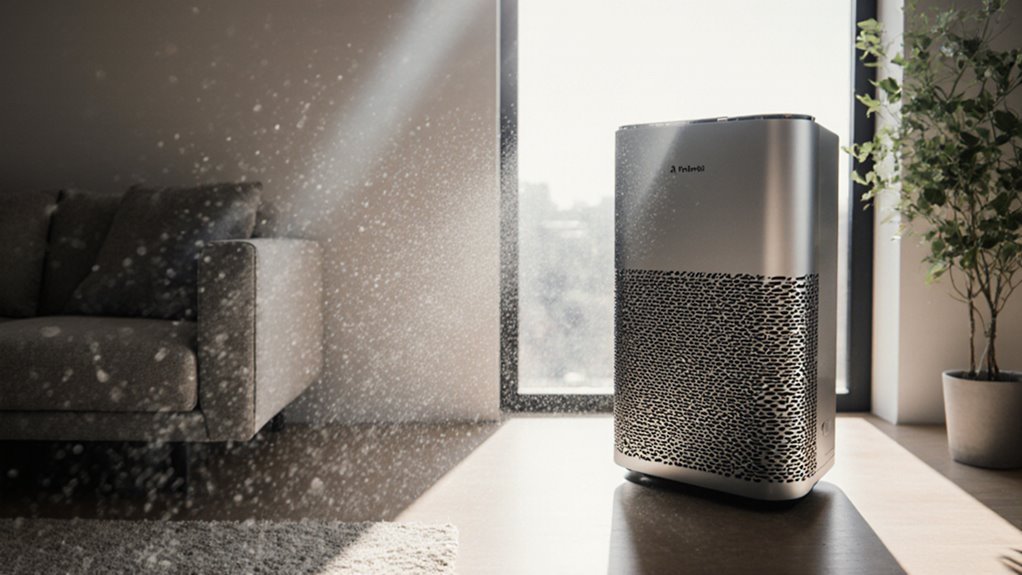

Yes — air purifiers can remove fine particulate matter when the unit has a true HEPA filter and is sized for the room. HEPA filters capture particles as small as 0.3 microns and reduce smoke, pollen, and cooking aerosols. Placement near pollution sources and running the unit at the correct fan speed improves performance. Regular filter replacement keeps efficiency high over time. Room size, airflow, and maintenance determine real-world results, so pick a purifier rated for your space and follow the manufacturer’s care guidelines.
What Is PM2.5?
What exactly is PM2.5? You breathe it in without noticing because these tiny particles are smaller than 2.5 micrometers. That means they slip deep into your lungs and sometimes into your bloodstream.
You meet them in smoke, traffic exhaust, and cooking fumes, so source identification matters whenever you want cleaner air. Because PM2.5 stays airborne for a while, it can spread through shared spaces and affect the people around you.
That’s why health impacts can build quietly over time, especially provided you already deal with asthma, heart issues, or allergies. Once you understand PM2.5, you can make smarter choices and feel more in control.
You’re not overreacting by caring about it. You’re protecting your home, your comfort, and your community.
Can Air Purifiers Remove PM2.5?
Yes, you can use an air purifier to lower PM2.5 in your home, especially provided it has a true HEPA filter.
HEPA and other good mechanical filters trap tiny particles well, but results depend on room size, airflow, and how long you run the unit.
Should you want the best drop in PM2.5, keep windows closed during high-pollution times, place the purifier well, and change the filter on schedule.
PM2.5 Filtration Basics
Air purifiers can make a real difference whenever PM2.5 is the problem, and that matters because these tiny particles are small enough to slip deep into your lungs.
You’re not imagining the effect either. Whenever smoke, cooking, or other indoor sources raise the level, a purifier helps pull those particles from the air you breathe at home.
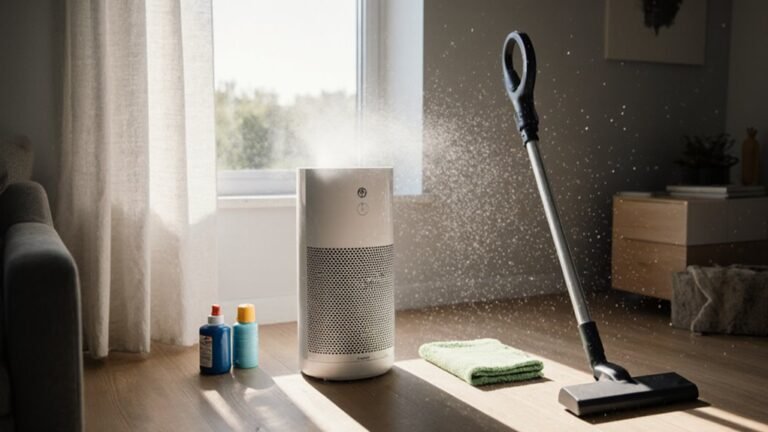
For best results, place the unit where you spend time, keep windows closed during bad air days, and let it run often. Clean air only stays clean provided the device keeps moving enough air, so filter maintenance matters too. A clogged filter slows things down and leaves more PM2.5 behind.
Think of it as teamwork: you reduce the particles, and the purifier helps protect your space.
Best Filter Types
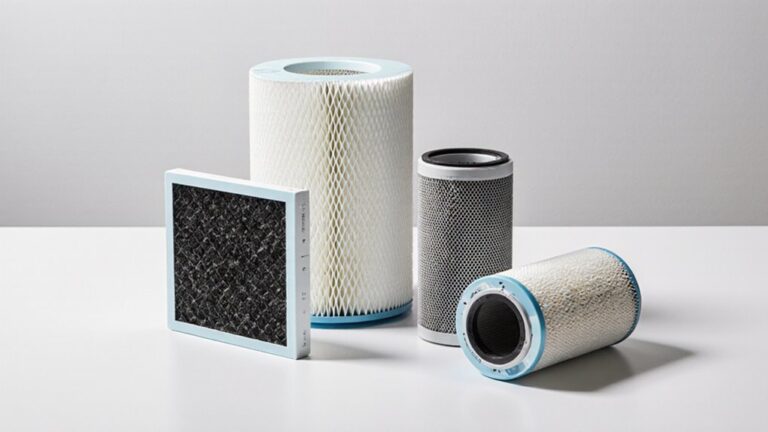
The right filter can feel like the difference between breathing easy and just hoping for the best. You’ll usually do best with a true HEPA filter, because it grabs fine PM2.5 with strong mechanical force and gives you a steady sense of relief.
Should you want support for odors too, add activated carbon, but keep in mind it won’t catch particles on its own. Skip cheap ionizers when you can; their electrostatic risks and ozone concerns can make the air feel less friendly, not more.
Check the filter lifespan so you know at what point performance starts slipping, and watch replacement indicators before the system gets tired. Once you pick the right type, you’re not just buying a machine. You’re joining a cleaner-air routine that helps your space feel safer and more like home.
Factors Affecting Removal
Even though a purifier can make a big difference, its real-world power depends on a few key factors that work together.
You get the best PM2.5 drop when the unit matches your room, runs often, and sits where air can move freely. Should the CADR be too low, the cleanup feels slow, and dust can keep up.
- Place it near you, not behind furniture.
- Keep windows closed whenever outdoor air is dirty; window infiltration can undo gains fast.
- Watch occupant behavior, like cooking or smoking, because new particles enter quickly.
- Replace filters on time so airflow stays strong.
Once these pieces line up, you and your household can breathe easier, and the room starts feeling like your space again.
How Do HEPA Filters Trap Fine Particles?
You can imagine of a HEPA filter as a dense web of tiny fibers that grabs particles as air moves through it.
As you breathe polluted air through the purifier, bigger particles get snagged via interception and impaction, while the tiniest ones keep bouncing through until diffusion helps trap them.
That mix of fiber capture methods is why HEPA filters can hold onto fine particles so well, even whenever they’re hard to see.
HEPA Fiber Capture
Tiny fibers do the hard work inside a HEPA filter. You breathe easier whenever these strands slow fine particles and let your room feel like a safer place to belong.
- They create a maze of tight spaces.
- Air keeps moving through without pause.
- Some fibers get a light charge from fiber charging.
- That extra pull helps the filter stay useful longer.
Because of this design, you get strong capture without a noisy struggle. As dust builds, HEPA lifespan can shorten, so you’ll want to check the filter often and replace it on time. A fresh filter keeps airflow steady and helps your purifier keep doing its job for you and everyone nearby. Whenever you care for it, the whole room feels cleaner, calmer, and more welcoming.
Particle Trapping Mechanisms
A HEPA filter does more than catch dust via chance, because it uses three main trapping actions at once. Initially, interception grabs particles that slip close to a fiber and stick as you breathe nearby air through the mat.
Next, impaction forces bigger fine particles to keep moving straight, so they slam into fibers instead of turning with the airflow. Then diffusion helps the tiniest bits wobble randomly, which makes them hit fibers more often.
That’s why you can trust HEPA for fine particulate matter, not just visible fuzz. Some filters also use electrostatic removal, where particle charging helps attract and hold extra particles.
Which Air Purifiers Remove PM2.5 Best?
At the time it comes to cutting PM2.5, HEPA air purifiers usually do the best job because they trap at least 99.97% of particles as small as 0.3 microns and still catch many smaller ones too. You’ll usually feel most at ease with true HEPA models, especially whenever you check portable sensors and follow maintenance schedules.
- Choose a true HEPA unit, not a vague “HEPA-like” label.
- Look for strong CADR and steady fan settings.
- Keep filters clean so airflow stays strong.
- Use it in the room where you spend time most.
If you want extra comfort, pair HEPA with upgraded HVAC filters. Activated carbon helps with smells, but it won’t grab PM2.5 on its own.
Whenever you desire cleaner air and a calmer space, this path usually feels like the smart, friendly pick.
How Does Room Size Affect Performance?
Room size changes everything because your purifier can only clean the air in front of it, and a bigger space gives that air more places to hide. Once you match the unit to your room volume, you help it cycle the air often enough to matter.
Should the space be too large, even a good filter works slowly, and you might still breathe stale air. That’s why ACH targets guide you. Aim for more air changes in bedrooms, offices, and other rooms where you stay most.
In a small room, the same purifier can feel strong and steady. In a large room, you could need a higher-output unit or two smaller ones. You’re not alone in this choice; getting the size right helps your home feel cleaner and calmer.
What Does CADR Tell You About PM2.5?
Once you know the room size, CADR gives you the next piece of the puzzle because it tells you how fast the purifier can clean that space. With good CADR interpretation, you can judge whether the unit can lower PM2.5 fast enough for your room. Consider Filter sizing as matching the purifier’s strength to your shared space, so you’re not left waiting for cleaner air.
- Higher CADR means quicker particle cleanup.
- Lower CADR might struggle in bigger rooms.
- Steady use helps keep PM2.5 down.
- Proper placement makes every clean breath count.
When you compare CADR with room volume, you can aim for about 4 to 6 air changes each hour. That’s where the purifier starts to feel like a teammate, not just a machine.
Do Activated Carbon Filters Help Too?
Activated carbon can help, but it serves a very different job than the particle filter in your purifier. You still need that filter for fine dust and smoke. Carbon works through carbon adsorption, so it traps odors, fumes, and some volatile chemicals on its surface. That means you get better gas removal from cooking smells, pet odors, and nearby traffic exhaust.
Suppose you’ve ever wished your room felt fresher, this layer can make a real difference. However, carbon doesn’t catch PM2.5 by itself, so it won’t replace a HEPA or other particle stage. Consider it as a teammate, not the star player. Whenever your purifier includes both stages, you can breathe easier and feel more at home in your space.
How Do You Pick the Right PM2.5 Air Purifier?
Whenever you’re picking a PM2.5 air purifier, start with true HEPA filtration, since that standard catches very fine particles well.
Next, make sure the purifier’s CADR matches your room size so it can clean the air fast enough to matter.
Provided the unit is too small or the airflow is weak, even a good filter won’t do much, so check both the label and the room coverage before you buy.
HEPA Filtration Standards
In case you’re trying to pick the right PM2.5 air purifier, HEPA filtration is the primary thing you should check, because that label tells you the unit can capture at least 99.97% of particles as small as 0.3 microns.
- Look for HEPA certification, not vague “HEPA-like” claims.
- Check the filter lifespan so you know at what point performance might drop.
- Choose a true mechanical filter, since it traps fine dust without guessing.
- Keep an eye on replacement costs, because a good purifier should fit your routine.
Once you know the standard, you can shop with confidence and feel like you belong in the group that doesn’t settle for marketing noise.
HEPA gives you a clear, trusted benchmark, and that makes your choice feel less stressful and a lot more human.
Room Size Compatibility
Room size matters a lot more than many people expect, because a purifier that works beautifully in a small bedroom can feel weak in a large habitable room.
So, start by checking room capacity before you buy. Measure the floor space, then consider ceiling height, furniture, and open doorways. These details shape how much air your purifier must move.
Next, match the unit’s airflow to the room’s volume, because airflow matching helps you get steady PM2.5 control without guesswork. Should you choose too small a unit, you might still breathe the same dusty air. Should you choose one that fits well, you’ll feel the room calm down faster.
That simple fit can make your home feel safer, cleaner, and more like your place.
CADR And Airflow
To pick the right PM2.5 purifier, start with CADR, because that number tells you how much clean air the unit can make each minute. You want enough flow to match your room, so the purifier doesn’t feel like a tiny helper in a big crowd.
Check these parts:
- Room volume and square footage
- CADR for smoke or dust
- Airflow modeling for your layout
- Fan placement away from walls
Next, aim for steady circulation, not just raw power. A good fan pushes air through the filter and back into the room without short-circuiting near a corner.
Should you share the space, pick a model that can run quietly enough for daily use. That way, you and your people get cleaner air without turning home into a wind tunnel.
Where Should You Place an Air Purifier?
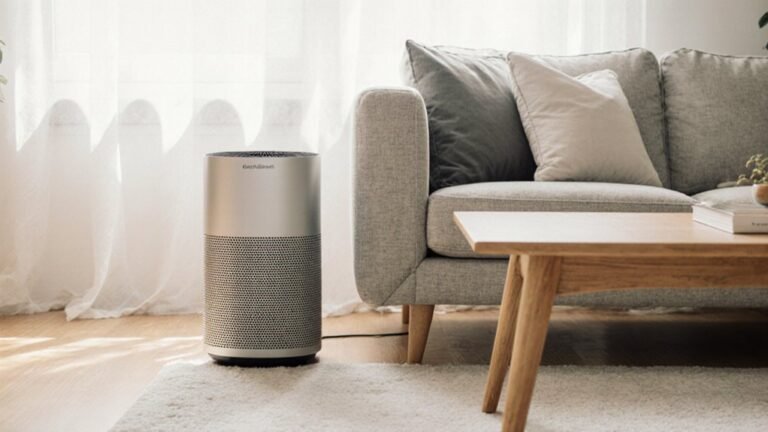
Along the path of better air, where you place your purifier can have a big difference in how well it works. Put it in the room you use most, and keep it near the center so air can move around you.
Leave space on all sides, because furniture obstruction can block the intake and slow the clean air you want. Also, consider noise placement. If the unit sits too close to your bed or desk, you might turn it off sooner, and that’s no help at all.
Keep doors closed whenever you can, since that helps the purifier focus on one area. In a shared room, choose a spot where your family gathers, so everyone benefits and the space feels more comfortable together.
How Can You Tell Air Quality Is Improving?
Once your purifier is in the right spot, you can start looking for signs that the air is getting cleaner.
You might notice less dust floating in sunlight, and your nose could feel less irritated upon entering the room.
Portable monitors can help you track fine particles, so you’re not guessing. Should the numbers drop after the unit runs for a while, that’s a good sign.
Seasonal trends matter too, because pollen or smoke can change what you see from week to week.
- Check the monitor before and after run time.
- Watch for steadier readings during busy hours.
- Notice fewer stale smells and less throat tickle.
- Compare today’s air with last month’s pattern.
Once you observe these small wins, you’ll know your space is becoming easier to breathe in.
When Aren’t Air Purifiers Enough?
Even the best air purifier can fall short when the problem is bigger than one room, one filter, or one source.
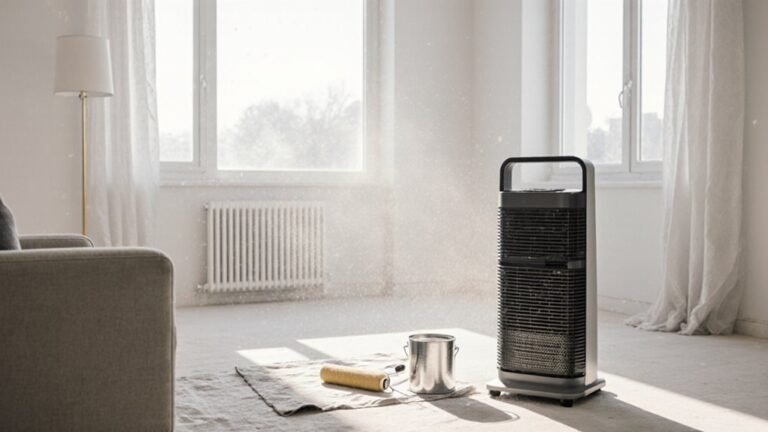
When smoke drifts in from outdoors, you’ll see limited effectiveness because the unit can’t stop fresh pollution from replacing clean air. The same goes for cooking, candles, or smoking, since you need source control initially. Turn off the burner, open a vent, and cut the source before you rely on filtration.
Also, one small purifier mightn’t handle a large space, and clogged filters can slow it down. Should your windows stay open on bad air days, the purifier works harder but wins less.
Frequently Asked Questions
Do Air Purifiers Remove Ultrafine Particles Too?
Yes, you can capture ultrafine particles too, though it’s a gentler affair. With strong particle filtration and high filter efficiency, your purifier can reduce them well, especially when you keep it running continuously.
Can Air Purifiers Help With Wildfire Smoke Indoors?
Yes, you can reduce wildfire smoke indoors with air purifiers. They will cut smoke infiltration, especially with portable deployment in occupied rooms. Choose a HEPA unit, keep windows closed, and run it continuously for better relief.
Do Ionizers Produce Harmful Ozone?
Yes, ionizers can produce harmful ozone, a concealed sting in the air. You should avoid models with ozone formation, especially if you want less respiratory irritation and a healthier home where you can breathe easy together.
How Often Should HEPA Filters Be Replaced?
Replace your HEPA filter every 6 to 12 months, but check the filter lifespan and replacement indicators such as reduced airflow, odor, or visible dirt. You will keep your purifier working well for your space and crew.
Can One Purifier Clean an Entire House?
No, one purifier usually can’t clean your entire house; you’ll get the best results in a single room, where airflow patterns help it work hard. For wider coverage, you will need multiple units.