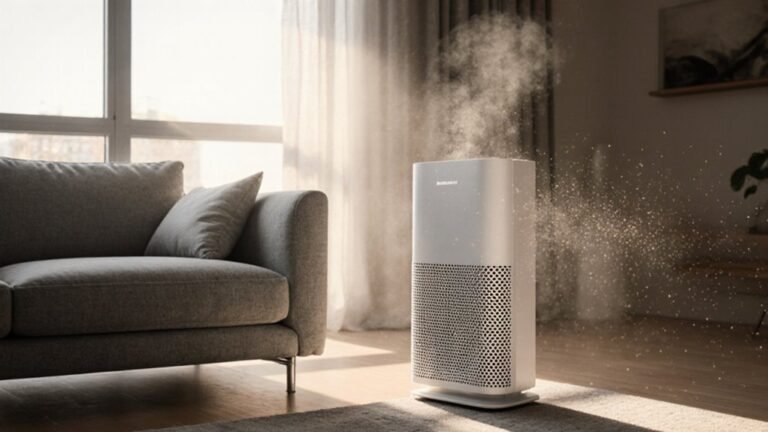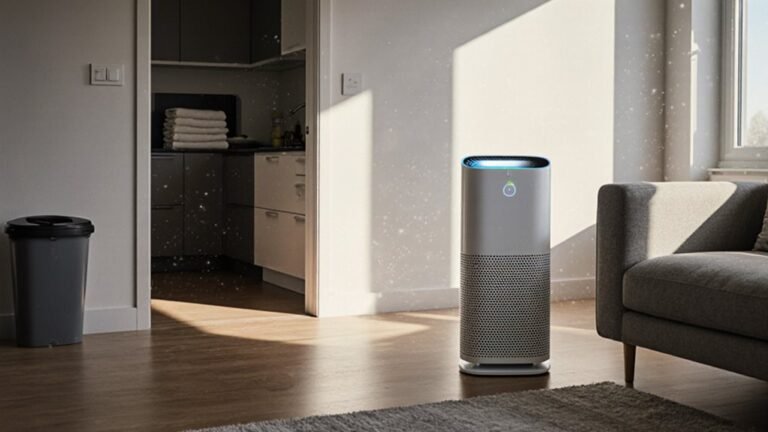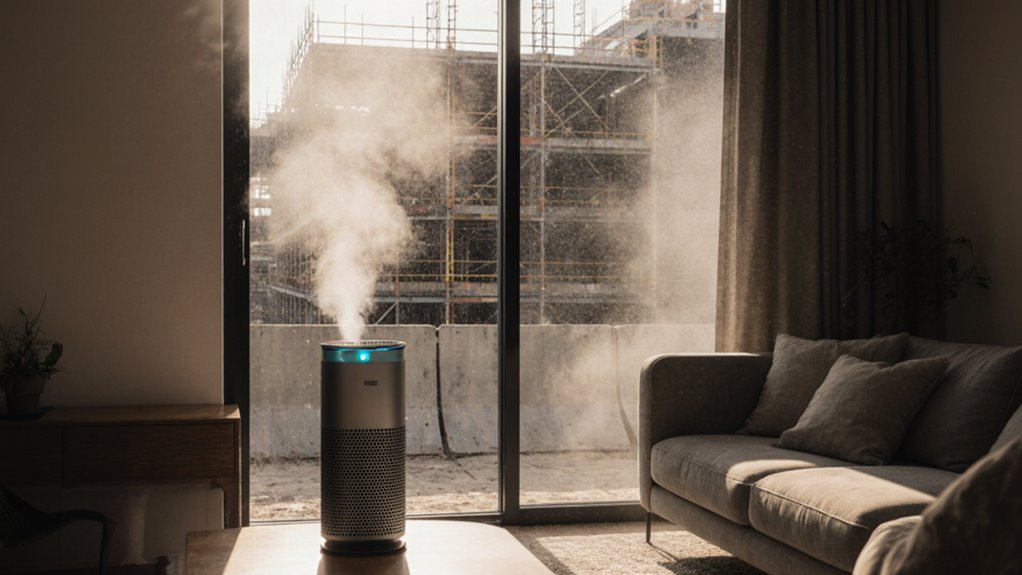

Construction dust fills the air with fine particles that can irritate the throat, nose, and lungs. A True HEPA air purifier captures the tiny drywall and wood dust that cleaning often misses. A washable pre-filter traps larger debris and extends HEPA filter life. Proper room size rating and enough Clean Air Delivery Rate (CADR) are key to handling renovation dust. Choosing the right purifier makes cleanup faster and protects indoor air quality during projects.
Our Verdict on the Best Air Purifiers for Construction Dust
As construction dust starts floating through your home, the right air purifier can feel like a small rescue. You want a unit that fits your space and helps you breathe easier while you clean up.
For heavy renovation messes, the AlorAir PureAiro HEPA Pro 870 gives you rugged, high-CFM power. Should you need a budget pick, the Honeywell HPA300 offers strong HEPA performance and low-cost filters. For larger rooms, the Levoit Core 600S clears air fast.
Look for true HEPA, a thick pre-filter, and activated carbon once fumes show up. Also, check filter placement so dust hits the right stages, and pay attention to noise levels so you can run it longer without feeling pushed out of your own space.
How Construction Dust Affects Indoor Air
Construction dust can change your indoor air fast, and you might inhale a mix of silica, wood, and drywall particles without even noticing it.
The tiniest particles are the most worrying because they can remain airborne for hours or days and reach deep into your lungs.
That’s why you need strong cleanup and good filtration to keep the air safer while work is underway.
Construction Dust Hazards
Once a remodel starts, the dust it sends into your home can be a lot more dangerous than it looks. You might breathe in silica, wood dust, gypsum, and even fibers from mold, fiberglass, or asbestos. Tiny particles can slip deep into your lungs, where they can trigger coughing, asthma, and COPD flare-ups.
Should you face occupational exposure, you need respiratory protection because respirable crystalline silica can raise your risk for silicosis and lung cancer. You could also notice fumes from paint, adhesives, and solvents adding headaches or nose irritation.
Because this dust stays airborne and can ride your HVAC, you and your family deserve stronger control. Use HEPA filtration, keep negative pressure during work, and vacuum with a HEPA machine often.
Air Quality Impacts
Even provided the work stays in one room, construction dust can spread through your home fast and change your indoor air in ways you can feel right away.
Tiny silica, wood, and drywall bits ride the air, and the smallest particles slip deep into your lungs, so occupant health can drop fast.
- You might notice a scratchy throat or coughing.
- Asthma can flare whenever dust lingers.
- Drywall dust can clog filters, so use a thick pre-filter.
- Strong ventilation strategies and HEPA filtration help keep dust down.
Since surface cleaning misses much of this fine dust, you need HEPA-grade capture and, during work, negative-pressure containment.
After the job, run a high-CADR purifier at max speed and bring in outdoor air so your rooms feel safer, cleaner, and easier to breathe.
Do Air Purifiers Help With Construction Dust?
Yes, air purifiers can help a lot with construction dust, especially while you run a True HEPA or H13 unit nonstop in the room.
You’ll trap most drywall and wood particles, so the air feels easier to breathe. To keep up with heavy cleanup, choose a unit that moves enough air for your room and run it on high.
A washable pre-filter helps catch the bigger dust initially, which can protect the main filter and stretch filter lifespan. Still, you’ll notice fan noise, so place it where it won’t bother you.
In case paint or glue smells linger, activated carbon can help too. Even so, you still need vacuuming, ventilation, and dust control around the work area to really keep things steady.
What to Look for in a Construction Dust Air Purifier
Whenever you shop for a construction dust air purifier, start with a True HEPA filter, since H13 or H14 models can catch the fine dust and silica that slip past weaker filters.
Then match the CADR to your room size so the unit can actually keep up, and check for a thick pre-filter plus activated carbon in case paint fumes or VOCs are part of the mess.
Should you be working in a dusty space, a rugged unit with strong dust-handling capacity will save you from clogged filters and extra headaches.
HEPA Filter Performance
Start with the filter, because that’s where a construction dust purifier proves its worth. You want True HEPA, H13, or H14, because they give you strong particle capture and help you breathe easier whenever drywall grit fills the air.
A good pre-filter helps too, since it catches bigger chunks and protects filter longevity. Then look for:
- certified HEPA for fine dust
- H13 or H14 for tougher job sites
- a washable or replaceable pre-filter
- activated carbon whenever paint or glue odors linger
Whenever you pick the right filter stack, you’re not just buying gear. You’re joining a smarter, calmer crew that keeps the mess from taking over your space. In dusty work zones, expect to change filters often, because heavy loading happens fast.
Room Size And CADR
For a construction dust air purifier to do its job, the room size has to match the CADR, because a unit that’s too small just can’t keep up. Whenever you size it right, you help your space feel calmer and cleaner, even whenever dust keeps sneaking in. Aim for about 375 CFM for a 562 sq ft room with 8 foot ceilings provided you want around 5 ACH.
In bigger jobs, choose a unit rated for the largest room you’ll treat, or use two units to enhance airflow. Heavy dust calls for 5 to 8 ACH, especially whenever occupancy impact changes and seasonal variation shifts your needs. Check the dust CADR, not just smoke or pollen, and pick a portable model that fits your room or work zone.
Pre-Filters And VOCs
Dust doesn’t just float around and leave on its own, so a good construction dust air purifier needs more than a HEPA filter to really keep up. You’ll do better with a multi-stage unit that protects the HEPA and helps you breathe easier while the job gets messy.
- Pick a sturdy pre-filter, like washable or pleated MERV 8 to 10.
- Clean or vacuum that pre-filter every 1 to 4 weeks.
- Choose True HEPA plus a thick activated carbon layer for paint or glue fumes.
- Check filter maintenance costs, since HEPA and carbon might last only 3 to 6 months.
If VOCs are part of the project, like with solvents or adhesives, look for pelleted carbon and stronger VOC monitoring.
A higher CADR can also help refresh the room faster whenever you need relief.
Best for Construction Sites: AlorAir CleanShield HEPA 550
As soon as a construction site fills the air with grit and chaos, the AlorAir CleanShield HEPA 550 steps in like a steady workhorse you can count on.
You get 550 CFM, so it can clear dust-heavy zones up to about 900 sq. ft. with strong air changes. Its MERV-10 prefilter, true HEPA filter, and activated carbon layer catch big debris, fine dust, and some odors, which helps you breathe easier with the crew.
The rotomolded polyethylene shell feels tough, stackable, and ready for moves between work areas. You can also use ducting options for source capture, and the 10-year warranty details add real peace of mind. It does run loud, but it keeps up well on hard jobs.
Best Budget Pick: Honeywell HPA300
Provided that you’re looking for a budget-friendly way to tackle construction dust, the Honeywell HPA300 gives you solid HEPA power without a painful price tag.
You get strong airflow for medium-sized rooms, plus a True HEPA filter and carbon pre-filter that help catch fine dust and cut some paint or adhesive odors.
It’s also easy to move, simple to maintain, and keeps replacement filter costs low, so you can keep cleanup steady without adding more stress.
Budget-Friendly HEPA Performance
The Honeywell HPA300 steps up fast as soon as you need real cleanup without a huge price tag. You get True HEPA power, strong dust capture, and a CADR near 300 CFM, so it can handle construction mess in rooms up to about 465 sq ft.
- It grabs fine drywall dust well.
- It keeps filter longevity in a good place.
- It supports energy efficiency for everyday use.
- It feels like a smart fit when your space needs backup.
In trials, it cleared a small room in about 20 minutes on high, so you can trust it when the air looks rough. The dual carbon pre-filter and low-cost HEPA replacements also help you stay on track without stretching your budget. For heavier renovation dust, run it hard during and after work.
Easy Maintenance And Costs
Once you start clearing drywall dust and other post-renovation grime, the Honeywell HPA300 keeps paying you back with easy care and low upkeep.
You get strong cleaning for about 465 square feet, yet you don’t need a fancy routine to keep it working well. Vacuum or wipe the pre-filter frequently, since renovation dust can clog it fast, and keep the unit on high during the messiest work. That helps protect airflow and enhances filter longevity.
The True HEPA filter usually lasts about 12 months, while the pre-filter and carbon layer need changes every 3 months in dusty spaces. With low replacement budgeting, you can plan ahead and keep a spare filter on hand. Your yearly cost stays about $205, which feels fair once your air finally starts to clear.
Best for Large Rooms: Levoit Core 600S
For big, dusty spaces, the Levoit Core 600S is a strong room-sweeper that can help you breathe easier fast. You get a CADR of 410 CFM, so it fits open rooms up to about 465 sq ft. In about 15 minutes, it can clear stubborn dust from the air, which feels like a win whenever your home’s under repair.
- Its H13 true HEPA-style filter grabs 99.97%+ of tiny particles.
- The carbon layer helps cut odors and VOCs from fresh materials.
- Auto mode and the app let you handle settings from the couch.
- Its 13.7-pound build makes placement easier, even in busy rooms.
You’ll also appreciate the filter upgrades and reasonable noise levels. That said, heavy dust can shorten filter life, so staying on top of changes keeps your space feeling like yours.
How We Tested These Models
We put these air purifiers through side-by-side trials in a home lab, because real dust doesn’t care what’s on the box. You can trust the results because we evaluated them in the same testing environments since 2010.
We tracked CADR, PM1 and PM2.5 cleanup times, energy use, and noise at every speed. Then we checked how fast each unit cleaned a 728 cubic foot room, plus the CFM needed for 5 ACH in different room sizes.
We also watched portability, housing strength, filter space, and upkeep, so you can see which models fit rough job sites. For long term reliability, we looked at parts, availability, and wear from repeated use.
That way, you can pick with confidence, not guesswork, and feel like you’re choosing with the crew.
Why HEPA and Activated Carbon Filters Matter
HEPA and activated carbon filters do the heavy lifting as construction dust starts floating through your space. You need both whenever you want cleaner air and a little peace of mind.
- HEPA grabs 99.97% of tiny dust at 0.3 microns and up.
- Activated carbon helps trap VOCs and paint smells.
- Multi-stage units protect filter lifespan by slowing clogging.
- Good installation tips: match CADR to your room size.
Together, they catch the fine silica, wood, and drywall particles you don’t want in your lungs, while also cutting odors HEPA can’t touch.
That mix matters whenever you’re sharing space with fresh renovations and trying to breathe easier. Should you pick a unit with a washable pre-filter, you’ll handle dust better and save time on upkeep.
Choose one that fits your room, and you’ll feel like the air finally belongs to you too.
How to Deal With Drywall Dust
Drywall dust can spread fast, and it has a sneaky way of settling on every shelf, vent, and floorboard before you even notice it. So you need containment strategies that keep it in the work zone. Seal doorways with plastic, close gaps, and set a box fan or negative air machine to push air out through a window while filtering it.
Then place a True HEPA or H13 purifier inside the room and run it on high during sanding and for hours after. Because this dust is heavy, check and clean the washable pre-filter often so the HEPA filter doesn’t clog initially.
For personal protection, wear a well-fitted mask and eye protection. Also, swap HVAC filters every 2 to 3 weeks at outset, and call a pro provided dust keeps drifting.
How to Clean Up After Renovation Work
After the dust settles, the real cleanup starts, and it can feel a little overwhelming once every surface looks cloudy again. You can handle post renovation mess step by step, and you don’t have to do it alone.
- Run your HEPA purifier on high for 24 to 72 hours.
- Keep the zone sealed so dust stays put.
- Vacuum with a HEPA tool, then wipe with damp cloths.
- Wash fabrics, and check airflow assessment so the purifier still moves air well.
If paint, glue, or solvent smells linger, choose a unit with carbon too. Clean or replace the pre-filter often, especially after drywall or wood work. Keep the purifier going until visible dust fades and the room feels safe enough to breathe in again.
Other Ways to Reduce Dust Indoors During Construction
You can do a lot more than just run a purifier while the work is going on, and that extra effort can save you from a lot of sneezing, dusting, and “why is there grit on everything?” frustration.
Build sealed containment with plastic barriers and a zipper doorway, then push air out with a box fan in a window. Inside that zone, run a MERV 13+ or HEPA scrubber on high to catch fine dust.
Next, upgrade your HVAC return filter to MERV 13 to 16 and change it often so dust doesn’t spread.
For cleanup, skip dry sweeping and use a HEPA vacuum plus damp cloths.
Finally, enhance entry hygiene with tack mats, a boot area, and disposable coveralls or over-shoes, so your clean spaces stay that way.
Frequently Asked Questions
How Long Does Construction Dust Stay in the Air?
Construction dust can stay airborne for minutes to days, depending on particle settling and airborne persistence. You will see larger particles drop quickly, while fine dust lingers longer, especially with airflow or disturbance around you.
How to Detox From Construction Dust?
You’re better off clearing airborne particles with HEPA filtration, fresh air, and frequent cleaning; do not wait for trouble to pile up. Vacuum with a HEPA machine, wash fabrics, shower, and keep your space ventilated, so you have company.