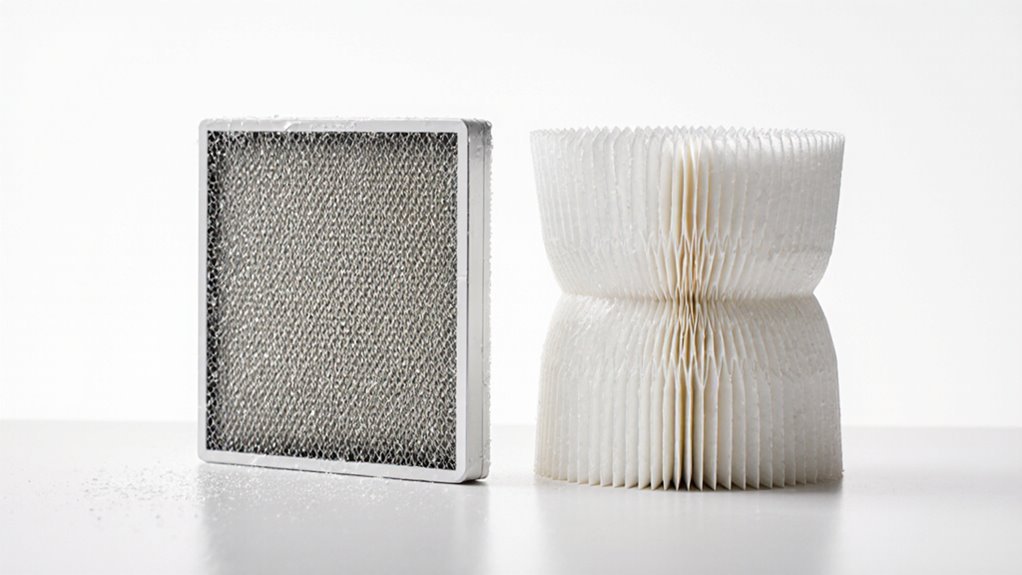

Washable filters offer easy cleaning and lower ongoing cost. Disposable filters provide stronger, consistent particle capture and less maintenance. Room size, allergy severity, and how often the purifier runs determine which filter performs best. Washables work well for light dust and odor control; disposables excel at trapping fine particles and allergens. Choose based on filtration efficiency, lifespan, and convenience for the best air quality results.
What Are Washable and Disposable Air Purifier Filters?
Provided you’re trying to choose between washable and disposable air purifier filters, it helps to know what each one really is.
Washable filters use filter materials like mesh, foam, or electrostatic media, and you can rinse or vacuum them for reuse. Disposable filters use pleated media or cartridges that you replace whenever they fill up.
That simple difference shapes your day-to-day routine, your costs, and even user perceptions of how fresh your room feels.
In case you like a low-waste setup, washable options can seem friendly and easy. Should you want a swap-and-go path, disposable filters often feel more dependable and familiar.
Either way, you’re not just buying a part. You’re choosing how much upkeep fits your home, your budget, and your peace of mind.
How Do Washable Air Purifier Filters Work?
At the time you use a washable air purifier filter, air moves through a reusable layer of mesh, foam, or electrostatic material that catches bigger particles initially and then helps protect the rest of the purifier.
You’ll often notice the outer layer traps hair, lint, and dust initially, so the inner parts don’t clog as fast.
With electrostatic charging, the filter can pull tiny bits toward the fibers, which enhances capture without much extra force.
Then the airflow keeps moving through the unit in a steady way, so you still feel part of the clean-air routine at home.
Many models also use waterproof housings, which let you rinse the filter safely and put it back after it dries.
That simple cycle helps you keep your space fresh, together and with less hassle.
How Do Disposable Air Purifier Filters Work?
Whenever you use a disposable air purifier filter, air gets pulled through a pleated sheet of dense filter media that traps particles and keeps them from floating back into your room. Tiny fibers and electrostatic charging help snag dust, pollen, and smoke, so you can breathe with more ease. Good filter evaluation checks how well the media catches particles and how much air still moves through. Your unit also depends on manufacturing materials, because better fibers and tighter pleats usually hold more dirt before airflow drops.
| Feature | What it means |
|---|---|
| Pleats | More surface area |
| Media | Traps fine particles |
| Testing | Confirms real performance |
| Noise tradeoffs | Stronger flow can sound louder |
As the filter loads, your purifier could work harder, but the design keeps the change predictable and simple for you to manage.
Washable or Disposable Air Purifier Filters?
Now that you know how disposable filters trap dust and smoke, the next big choice is whether a washable filter can do the same job for your home. You might like washable filters provided you want less filter disposal and fewer store trips. They can feel easier on your budget and could lower energy use whenever they stay clean.
Still, you need to rinse or vacuum them on time, and that extra care asks more from you. Disposable filters give you a simple swap, so you can stay focused on your day. In case your space has pets, cooking, or constant dust, consider how much upkeep you can share with your home routine. Choose the option that fits your life, not just the label.
Which Air Purifier Filter Cleans Better?
Whenever you compare air purifier filters, true HEPA disposable filters usually clean better because they trap more fine particles like smoke, dust, and pollen.
Washable filters can still help, but they often catch less of the tiny stuff, so your results depend a lot on the filter type and how frequently you clean it.
That signifies maintenance matters too, because a dirty or worn filter won’t protect your air as well, no matter how nice it sounds on the box.
Filtration Efficiency
Provided that you want the cleaner air, the filter that usually wins is a true HEPA filter. You get stronger, steadier cleaning because it’s built for fine particles, not just the big stuff you can see.
Washable filters can feel like a smart team choice at the outset, but sensor drift and charge decay can quietly weaken their results over time. That means your purifier might look active while doing less for your home. Disposable HEPA filters keep their performance more predictably, so you don’t need to guess whenever the air gets worse.
Should you live with allergies, pets, or smoke, that steady help matters. You can still use a washable pre-filter, but let the true HEPA stage do the heavy lifting for your space.
Particle Capture Rates
Particle capture rates tell the real story, because not every filter cleans the same kind of dirt in the air. When you look at washable and disposable filters, you want more than a label that sounds nice. You want proof. Disposable true HEPA filters usually catch fine dust, smoke, and ultrafine dynamics better, while washable panels often do better with big lint and hair. That gap matters in real world decay, where performance changes over time.
- True HEPA keeps its edge on tiny particles.
- Washable media can lose fine capture power.
- Electrostatic filters might start strong, then fade.
- Big debris is easier for both systems.
- Your room’s air tells you which one fits.
Maintenance Impact
Maintenance changes the whole game, because a filter that cleans well on day one may not stay that way should it be a pain to care for. You feel this fast with washable filters, since you must rinse, dry, and reinstall them, and that rhythm can wear you down.
Good cleaning ergonomics matter because in case the frame is awkward, you’ll skip steps or rush, and dust wins. Disposable filters make life simpler: you swap them out, keep moving, and trust the steady result. That ease shapes maintenance psychology, because less effort often means better habits.
Still, washable pre-filters can help you stay on track whenever pets or lint pile up. So, provided you want a filter you’ll actually keep using, choose the one that fits your daily routine and home flow.
How Much Maintenance Does Each Filter Need?
Usually, the amount of upkeep depends on whether your purifier uses a washable filter, a disposable one, or a mix of both. You’ll feel the difference fast, so it helps to match your cleaning schedule to your user behavior and room use.
- Washable pre-filters need rinsing or vacuuming every few weeks.
- Washable main filters need gentle cleaning and full drying.
- Disposable filters need simple checks and a swap when dirty.
- Hybrid units ask for light pre-filter care and less hands-on work.
- Busy homes with pets or cooking need more attention.
Provided you’re in the same boat, don’t stress. A washable system asks for more time, but it can fit your routine provided you like hands-on care. A disposable setup asks for less effort, so you can keep things easy and still breathe better.
How Long Does Each Filter Last?
Your filter’s lifespan depends on the type you choose, because disposable HEPA filters usually last about 6 to 18 months, while washable filters can keep going longer with the right care.
You’ll know it’s time to replace one whenever airflow drops, dust builds up faster, or the filter starts looking worn even after cleaning.
With washable filters, regular rinse-and-dry cycles help them last, but repeated washing can still wear them down over time.
Filter Lifespan Range
Whenever you compare washable and disposable air purifier filters, the lifespan range tells you a lot about what kind of care each one needs and how long you can count on it.
You’ll usually see washable filters last 12 to 18 months, whereas disposable ones frequently run 6 to 18 months, depending on use.
That difference creates replacement uncertainty, but it also shapes your environmental tradeoffs.
- Washable filters can stretch longer with gentle care
- Disposable filters give you a set swap cycle
- Heavy dust can shorten either one
- Clean homes could let both last longer
- Hybrid systems can balance both paths
Replacement Timing Signs
The real question isn’t just how long a filter can sit in your purifier. You should watch for signs that it’s time to swap or replace it. Should your purifier use indicator lights, treat them as a helpful nudge, not the final word.
Once airflow drops, dust clings faster, or odor persistence returns after cleaning, the filter might be full. With disposable filters, that often means the media is loaded and can’t trap particles well anymore. With washable filters, fading performance can show up as weaker air cleaning even when the surface looks fine.
You’ll feel more at ease whenever you notice these clues sooner, because your home stays fresher and your purifier keeps doing its job without drama or guesswork.
Washable Care Cycles
Usually, washable filters last longer than people expect, but they only stay effective provided you keep up with their care cycle. You’re part of that routine, and that makes a real difference.
Most washable pre-filters need rinsing every 2 to 4 weeks, while washable HEPA-style media might need gentler cleaning and replacement after about 12 to 18 months.
- Rinse whenever dust looks packed in
- Let it dry fully before reinstalling
- Use cycle alerts so you don’t forget
- Check for tears, warping, or odor
- Watch for microbial growth after damp storage
Should you clean on time, you help airflow stay strong and protect the rest of your purifier. Should you wait too long, grime builds up fast, and the filter starts slipping out of step with your home.
Which Air Purifier Filter Costs Less Over Time?
Over three to five years, a washable air purifier filter can cost less upfront because you could skip or delay replacement purchases, but that savings only holds provided the filter truly keeps working well after each cleaning.
Whenever you look at lifecycle cost, you need to count your time, water, and any extra wear on the purifier.
A disposable filter usually costs more again and again, yet it gives you steady performance and fewer surprises. That can feel worth it whenever you want peace of mind at home.
A washable filter also lowers the disposal footprint, so you might feel better about tossing less waste. Still, should cleaning weaken the media, you could end up paying sooner than you expected.
Choose the path that fits your budget, routine, and comfort.
Which Homes Are Best for Each Filter?
Provided your main goal is saving money, the right filter also depends on where you live and how much the air has to work each day.
In Pet owner households, washable pre-filters fit well because they catch hair and help the main filter last longer.
In High dust environments, you’ll usually feel more at ease with disposable true HEPA filters, since they keep steady fine-particle capture whenever the room gets busy.
- Small apartments with light dust can use washable filters
- Busy homes with pets require easy rinse-and-repeat care
- Allergy-prone bedrooms do better with disposable HEPA
- Homes near roads or smoke benefit from stronger capture
- Family spaces with lots of lint might like hybrid setups
How Do You Choose the Right Air Purifier Filter?
Choosing the right air purifier filter can feel tricky, but you could narrow it down fast whenever you match the filter to your real needs. Start with your room size and main worry. In case you battle smoke, allergies, or wildfire dust, choose true HEPA with a sealed case. Should you mainly trap pet hair, a washable pre-filter can help.
Next, use a purchase checklist: CADR, filter certification, replacement cost, and noise. Then look at sensor integration, since smart readings can remind you once air quality drops or a filter loads up.
Were you wanting less upkeep, pick disposable filters. Should you prefer lower waste and do light cleanup, washable might fit. You’ll choose better whenever your home, habits, and budget all line up.
Frequently Asked Questions
Are Washable Filters Safe for Allergy and Asthma Sufferers?
Not usually. You will do better with a true HEPA purifier. Washable filters can lose efficiency and vary in pore sizing, though hypoallergenic materials help. If you have allergies or asthma, prioritize verified certification and sealed housing.
Do Washable Filters Remove Smoke and Wildfire Particles Effectively?
No. Washable filters usually miss the smoky storm. You’ll face smoke penetration and particle reentrainment, so they will not reliably trap wildfire PM2.5. If you want your home to breathe easier, choose a true HEPA filter instead.
Can Washable Filters Eliminate Odors and VOCS?
No, you can’t rely on washable filters alone to eliminate odors and VOCS. You will need activated carbon or photocatalytic oxidation for real gas control, and a purifier that fits your room and gives you confidence.
How Do Certifications Verify True HEPA Filter Performance?
Certifications confirm true HEPA performance by comparing your filter to certification standards and third party test results to verify particle removal efficiency. You can trust the label once the claimed ratings match independent test data and your home breathes easier.
Do Washable Filters Lose Effectiveness After Repeated Cleaning?
Yes. After repeated cleaning, you’ll often see filter degradation, especially with washable HEPA style media. Your cleaning frequency matters: more washes can strip charge or damage fibers, so performance usually drops and fine particle capture weakens over time.