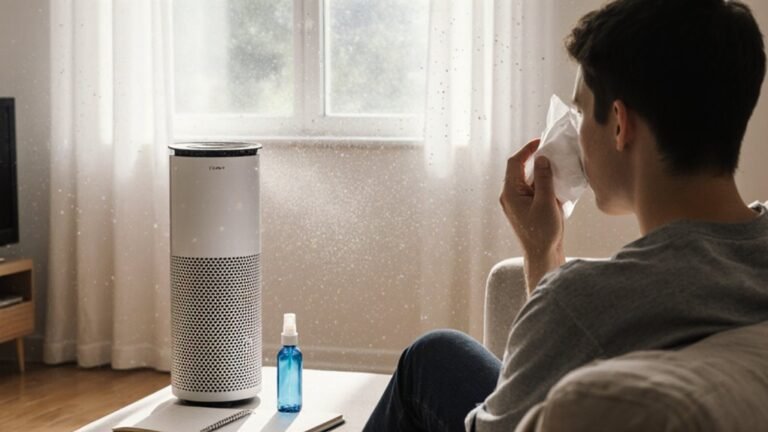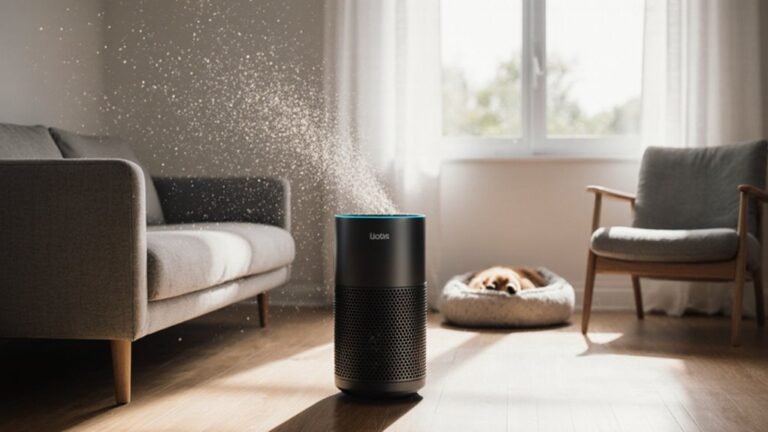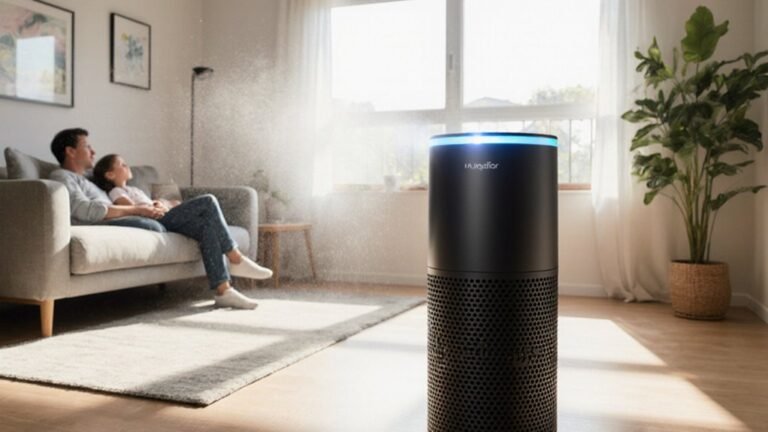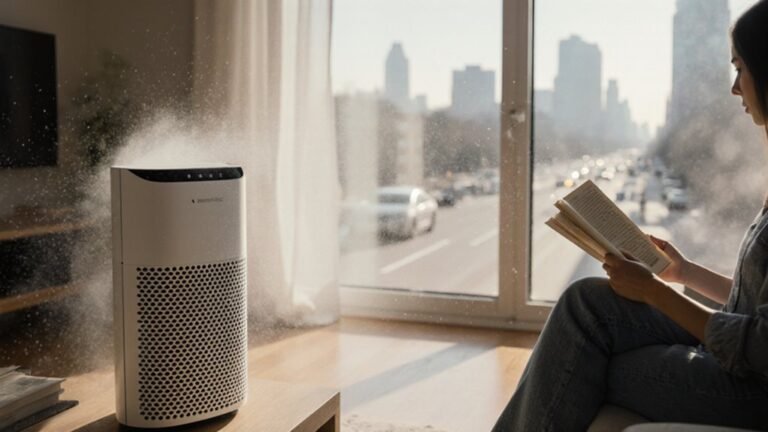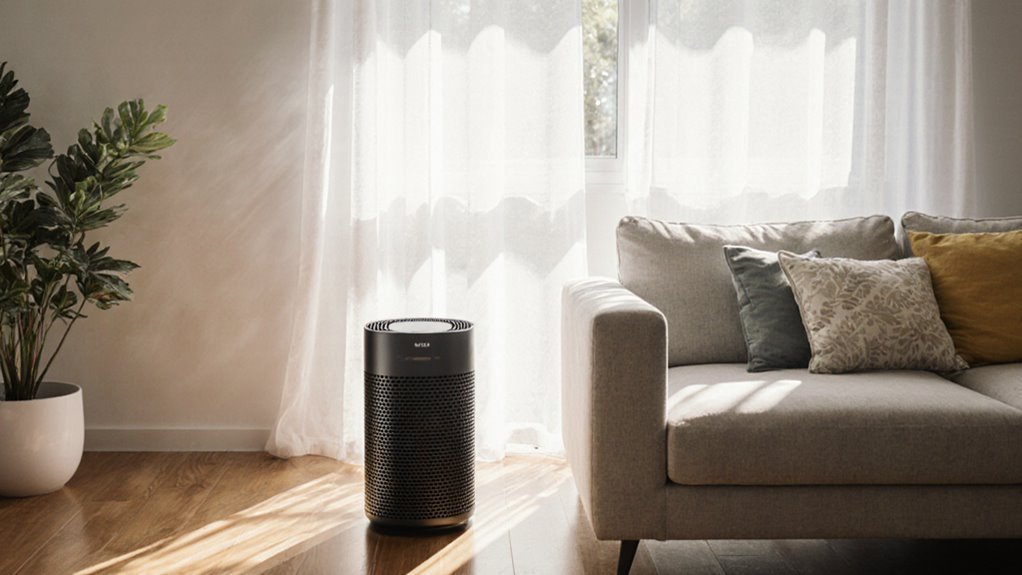

Air purifiers reduce airborne particles like dust, pollen, pet dander, mold spores, and smoke, improving indoor air quality. HEPA filters capture tiny particles that irritate lungs, eyes, and sinuses, while activated carbon removes odors and some gases. Proper unit size and placement—near sleeping or sitting areas—boosts effectiveness. Regular filter replacement keeps performance steady and prevents pollutant buildup. Choosing a purifier based on room square footage and specific pollutant types delivers the best health benefits.
Why Indoor Air Quality Affects Your Health
Because you spend so much time inside your home, the air you breathe there can shape how you feel every day. Indoor exposure matters because you might spend about 90% of your time inside, and that air can hold more pollutants than outdoor air.
Whenever fine particles, dust, pet dander, mold spores, or VOCs stay in the air, they can reach deep into your lungs and trigger asthma, allergies, infections, headaches, fatigue, or foggy thinking. You deserve a space that helps you rest and breathe easier.
Health disparities can make this issue hit some families harder, especially if homes have less ventilation or more sources of pollution. So, improving indoor air supports your sleep, your breathing, and your daily comfort.
Common Pollutants Air Purifiers Remove
Air purifiers can help you tackle the everyday stuff that makes your air feel heavy, like dust, pet dander, and fine smoke particles.
With a true HEPA filter, you can catch tiny pollutants, while an activated carbon layer helps cut down on odors and VOCs from cleaning sprays, cooking, and smoke.
Should mold spores be also floating around, the right purifier can make your space feel cleaner and a lot easier to breathe in.
Dust And Dander
Dust and dander can build up fast, and should you live with pets or track in a lot of outdoor debris, you already know how stubborn they can be. A true HEPA air purifier helps you breathe easier by catching 99.97% of particles as small as 0.3 microns, so those flakes and fibers don’t keep floating around your home.
- It lowers the dust that settles on your daily spaces.
- It helps pet dander stay out of the air you share.
- It supports a calmer room whenever allergies flare.
For best results, choose a purifier sized for your room and run it nonstop. Then pair it with HEPA vacuuming, pet grooming, and fabric treatments, plus regular filter care. That way, you’re not just cleaning the air, you’re making your space feel more like yours.
Smoke And Odors
Smoke can cling to a room fast, and odors often linger long after the source is gone, so a good air purifier can make your space feel easier to live in.
Whenever you’re coping with cooking smoke, choose a purifier with a true HEPA filter to catch fine particles like PM2.5 that drift deep into your lungs. Then look for activated carbon or charcoal, because odor adsorption helps trap smells from dinner, candles, and smoke.
Next, check the CADR rating and match it to your room size so the air cycles quickly. You’ll get better results whenever you run it all the time in the room where the smell starts and keep it away from walls. That way, you breathe easier and feel more at home.
VOCs And Mold
Have you ever noticed a room that feels clean but still makes you uneasy? VOCs can do that. They drift from paint, cleaners, furniture, and cooking, and an air purifier with activated carbon can help trap many of them. True HEPA alone won’t catch gas, so look for both stages.
- This setup helps you breathe easier at home.
- Mold spores are different, and HEPA filters capture them well.
- Better results come from the right room size, steady use, and filter care.
Still, a purifier can’t fix wet walls or leaks. That’s where humidity control and kitchen ventilation matter. If you lower moisture and move stale air out, you help stop mold at the source. Then your purifier can support the space you share and make it feel safer for everyone.
How Air Purifiers Improve Home Comfort
A good air purifier can make your home feel calmer, cleaner, and easier to breathe in, especially whenever you deal with dust, pollen, pet dander, or that stubborn cooking smell that seems to stick around forever.
Whenever you choose a true HEPA unit, you cut tiny particles that can make rooms feel stuffy and irritating. Add activated carbon, and you also soften odors and many VOCs, so your space feels fresher fast.
For best ventilation harmony, place the purifier near the center of the room and match it to the square footage. That way, you get steady air changes and better humidity control support through cleaner circulation.
Keep the fan clear and replace filters on time, and you’ll notice fewer sneezes, less throat irritation, and a more welcoming home.
How Air Purifiers Help Sleep and Focus
If you place a properly sized HEPA purifier in your bedroom and run it all night, you can cut down on allergens that wake you up and help you sleep more soundly.
It also lowers dust, pollen, and other irritants, so you’re less likely to deal with coughing, sneezing, or headaches after dark.
With cleaner air in your bedroom or office, you can wake up clearer and stay more focused throughout the day.
Better Sleep Quality
Should allergies, congestion, or a scratchy throat keep waking you up, a HEPA air purifier in your bedroom can make a real difference. You can breathe easier whenever it traps pollen, pet dander, and dust mites before they bother you.
That steadier air helps your nighttime routines feel calmer and supports circadian alignment, so your body can settle into sleep more naturally.
- Place the unit near your bed or in the room center.
- Match the CADR to your room size so it could refresh the air through the night.
- Keep filters changed on schedule so performance stays strong.
If odors or VOCs have been bothering you, activated carbon can help ease nasal irritation, too. With fewer wakeups and less breathing stress, you might feel more alert, focused, and ready to belong in your day.
Reduced Nighttime Irritants
Even though your bedroom seems clean, tiny irritants can still float around and bother you whilst you sleep. A True HEPA purifier in the room helps you breathe easier through catching pollen, pet dander, and dust before they settle on you.
With smart bedroom placement, centered and clear of furniture, it can move air more evenly and keep allergy triggers low overnight. Whenever you choose the right size for your space and use calm overnight settings, it can refresh the air without keeping you awake.
HEPA plus activated carbon also helps with late-night cooking smells and light VOCs, so your nose doesn’t keep sending out tiny complaints. As a result, you wake less often, breathe more comfortably, and feel more settled come morning.
Improved Daily Focus
Cleaner bedroom air can do more than help you sleep, because it can also help your brain stay sharper the next day. Whenever you breathe cleaner air, you might wake with less congestion, fewer headaches, and more steady energy. That makes it easier to stay on track with work, school, or home tasks.
- True HEPA filters catch pollen, pet dander, and dust mites that can pull your focus off course.
- Activated carbon helps cut odors and VOCs, so you’re less likely to feel drained.
- A room-sized purifier can keep air steadier overnight and during the day.
With better sleep continuity, you could use mindful breathing and easier task sequencing to start your day calm, clear, and ready to belong in the flow.
Which Filters Matter Most?
Filters do the heavy lifting in any air purifier, so picking the right one matters more than flashy features. You’ll feel better whenever you choose a True HEPA filter, because it traps 99.97% of tiny particles like dust, pollen, pet dander, and many aerosols.
Should smells from cooking or paint bother your home, add activated carbon, since it helps absorb odors and VOCs. Next, match the purifier’s CADR to your room size, so the air keeps moving through the filter often enough.
For whole-home comfort, higher-MERV HVAC filters can help whenever your system runs continuously. Check maintenance schedules, because a clogged filter can’t protect you well. Also, notice noise levels, so your space stays calm and livable.
Skip ozone-making gadgets and stick with certified options.
HEPA vs. Carbon Filtration
At the point you compare HEPA and carbon filters, HEPA takes the lead on tiny particles like dust, pollen, pet dander, and smoke.
Carbon filtration works differently because it helps cut odors and gaseous pollutants that HEPA can’t catch.
Together, they give you a cleaner, fresher space that feels easier to breathe in.
HEPA Particle Capture
True HEPA filtration gives you strong particle capture, and that matters a lot whenever you want relief from the stuff that floats around your home and makes you sneeze, cough, or feel stuffy.
With smart filter mechanics, you get tight control over tiny particles, not just the bigger bits you can see.
- HEPA traps at least 99.97% of airborne particles down to 0.3 microns.
- It catches pollen, pet dander, and many mold spores that stir up discomfort.
- You should match CADR to your room size so particle capture stays effective.
Whenever you choose the right size unit, you help your space feel calmer and cleaner.
That gives you a better place to breathe, rest, and belong.
Carbon Odor Reduction
Although HEPA does an excellent job with dust, pollen, and pet dander, it won’t do much for the smells that hang in the air, and that’s where carbon filtration steps in.
If you want your home to feel fresher, look for a purifier with True HEPA plus a substantial activated carbon layer. The carbon adsorbs odors and many VOCs, and stronger carbon weight usually means better odor control because the gases have more contact time and better adsorption kinetics.
CADR can still help with particles, but it won’t tell you much about smell removal. Instead, check carbon specs or odor assessment data.
Also, watch for filter saturation, because a tired carbon filter can’t keep up forever. Replace it on schedule, and you’ll keep the room feeling more like yours.
How to Match an Air Purifier to Room Size
To get the cleanest air in a room, you need to match the purifier’s CADR, or Clean Air Delivery Rate, to the space you want to cover. Start with your room’s square feet, then aim for at least five air changes per hour. That’s how you give your home a steady sense of comfort and care. For a 176 sq ft room, a 176 CFM unit fits well.
Bigger rooms need more power: 353 CFM covers about 530 sq ft, 530 CFM covers 795 sq ft, and 706 CFM covers 1,059 sq ft.
- Check the label before you buy
- Choose HEPA for single rooms
- Leave room for real-life losses
Your placement strategy matters too, and noise considerations can help you stay happy with daily use. Pick a slightly larger unit for open doors, airflow, and humidity.
Best Places to Use Air Purifiers at Home
The right purifier can quietly change how your home feels, starting with the rooms where you spend the most time.
In bedroom placement, keep it near your bed, centered, and away from walls so it can cut nighttime allergens and help you rest better.
Next, move one into your household room or open family area, where your crew gathers and dust, pet dander, and pollen often drift around.
In the kitchen, choose a purifier with activated carbon and True HEPA to tackle smoke, odors, and tiny particles from cooking.
For nursery protection, place a quiet unit in your child’s room so young lungs get cleaner air all day and night.
Match each unit to the room size, and your home starts feeling more like your safe place.
How to Set Up an Air Purifier
Now that you know where an air purifier helps most, setting it up the right way makes it work much better for you.
Put it in the center of the room, with 12 to 18 inches of open space around it, so air can move freely.
Choose ideal placement in the room you use most, like your bedroom, household room, or home office, so you feel the difference where it counts.
- Match the unit to your room size and CADR.
- Run it day and night, then raise the fan whenever cooking or smoke starts.
- Keep filter alerts close, so you clean or replace HEPA and carbon filters on time.
Whenever you set it up this way, you give your space a calm, cleaner feel without extra effort.
Mistakes That Reduce Air Purifier Performance
Should you place your air purifier too close to a wall or hide it behind furniture, you block airflow and weaken its cleaning power.
You can also lose a lot of performance whenever you ignore filter care, since clogged filters can’t trap dust and particles well.
To keep your air cleaner, set the unit in an open spot and replace or clean the filters on schedule.
Poor Placement Choices
Even a strong air purifier can fall short should you position it in the wrong spot, and that’s frustrating because the machine may be working hard while the air still feels stale. You need smart floor placement, with intake clearance and a central spot a few feet from walls, cabinets, and furniture. Should you tuck it behind a sofa or near a ceiling, it can miss the air you breathe most. In a large room, you also need a unit that fits the space, or it won’t reach the clean-air goal.
- Keep it at seated or sleeping height.
- Let air flow freely around the unit.
- Match the purifier to the room size.
When you place it well, you give your home a better chance to feel fresh and welcoming.
Neglected Filter Maintenance
A clean filter keeps your air purifier doing the job you bought it for, so skipping maintenance can quietly undo all that good work. Whenever you let filter neglect build up, your purifier loses CADR, gets louder, and moves less air. That means you and your home crew might still breathe allergens and VOCs. Check the change light, since it’s there for a reason. Replace HEPA filters every 6 to 12 months, or sooner provided your space is busy. Clean the pre-filter often, because it catches the big stuff initially and protects the main filter.
| Mistake | Result |
|---|---|
| Dirty HEPA filter | Lower airflow |
| Skipped pre-filter cleaning | Faster saturation |
| Wrong filter type | Less capture |
| Wrong orientation | Weak particle removal |
| Delayed replacement | Higher replacement costs |
How Air Purifiers Fit Healthy Habits
Clean-air routines make your home feel lighter, and an air purifier can fit right into that kind of healthy habit. In your daily routines, it works best whenever you place it in bedrooms and your home office, then let it run while you sleep or work. That steady habit integration can help you breathe easier and stay focused with less sneezing and stuffiness.
- Choose a size that matches your room.
- Run it more during cooking or cleaning.
- Keep filters fresh on schedule.
Whenever you pair HEPA filtration with low-VOC choices, no indoor smoking, and open windows whenever you can, you lower the air burden together. Should odors or fumes bother you, a carbon filter can help too. It’s a simple way to feel more at ease in the spaces you share.
Why Lab-Tested Results Can Mislead
Although lab reports can look impressive, they don’t always match what happens in your home. You might see a strong CADR or a claim that a purifier clears a room five times an hour, yet evaluation limitations matter. In a sealed chamber, the unit faces ideal placement and no extra pollution. Your home adds real world variability: open doors, airflow, furniture, humidity, cooking, and pet dander.
| Lab claim | What changes at home | Why it matters |
|---|---|---|
| High CADR | Ventilation shifts | Clean air drops |
| Room coverage | Ceiling and layout vary | Coverage can shrink |
| HEPA or carbon assessment | Mixed pollutants differ | Results don’t always transfer |
How to Choose a Winix Air Purifier
Now that you know lab numbers can look better than real life, the next step is picking a Winix purifier that fits your space and your daily routine. Start with room size, then match the model to your needs.
- For a small bedroom, the WINIX A230 works well and stays quiet for overnight use.
- For medium rooms, the C545 or 5510/5530 gives you strong True HEPA cleaning and budget options.
- For large, open areas, the 9800 or XQ can move more air faster.
If odors bother you, choose a unit with activated carbon or AOC™ layers. Also, check filter life, maintenance schedules, and warranty considerations so you can keep performance steady without surprise hassles. That way, your home feels cleaner, calmer, and more like yours.
Portable vs. Whole-Home Purifiers
Picking between a portable purifier and a whole-home system can feel tricky, but it gets easier once you match the machine to your daily existence.
Should you spend most of your time in one room, a portable True HEPA unit can be your best friend. You can size it via CADR, place it near the center of the room, and get strong cleaning in bedrooms, offices, or family rooms.
For bigger homes, whole-home systems slip into the ductwork and share cleaned air across rooms, yet they need HVAC runtime, professional installation, and steady maintenance. So, weigh installation tradeoffs and energy costs against the comfort of broad coverage. That way, you’ll select a setup that feels natural, works hard, and helps your space feel truly yours.
Frequently Asked Questions
Where Should You Place an Air Purifier in a Living Room?
Place your purifier centrally, at least a foot from walls and furniture, near seating or near an entryway if that is where odors gather. This lets air flow freely and helps everyone breathe easier together.