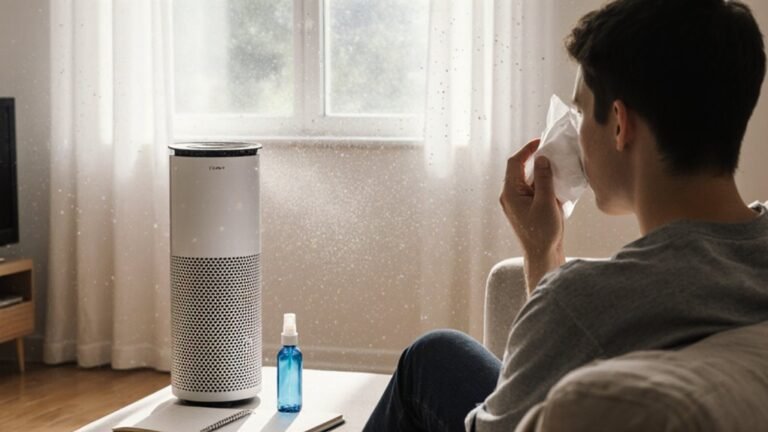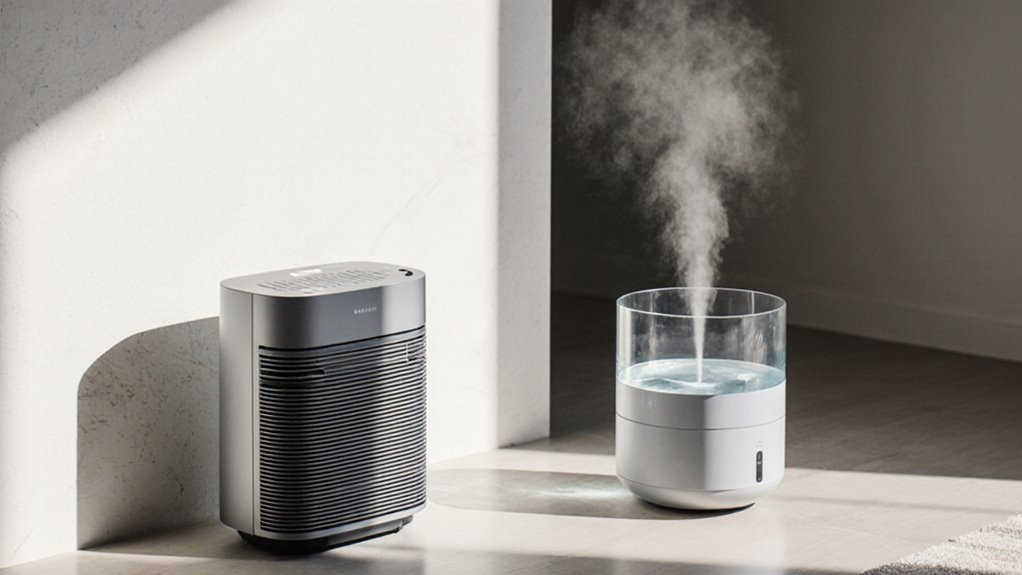

Air purifiers clean indoor air by drawing it through filters that trap dust, smoke, pet dander, and odors. Humidifiers add moisture to dry indoor air to relieve dry throats, reduce static shocks, and protect wood furniture. Choose an air purifier when particles, allergens, or lingering smells cause problems. Choose a humidifier when the air is uncomfortably dry or causes respiratory irritation. Some rooms benefit from both devices used appropriately.
Air Purifier vs Humidifier: What’s the Difference?
Although air purifiers and humidifiers both can make your home feel better, they do very different jobs. You use an air purifier to help clear the air around you, while a humidifier adds moisture whenever the room feels dry.
That difference matters because one device helps with particles, and the other helps with comfort from dry air. You can also spot sensor differences: purifiers often track air quality, while humidifiers often watch humidity levels. So, you don’t need to guess what’s happening.
Energy consumption can differ, too, since some humidifiers, especially warm-mist models, use more power than many purifiers. Should you be choosing between them, consider what your space needs most. That way, you can feel more at home and breathe easier.
How Air Purifiers Clean Indoor Air
An air purifier pulls indoor air through a set of filters or cleaning stages so it can trap the stuff you do not want to breathe. You get cleaner air because particle trapping starts with a prefilter, then moves to a HEPA layer and, sometimes, carbon. That flow depends on airflow behavior, so the fan must keep air moving without losing strength. | Stage | What it does | |—|—| | Prefilter | Catches larger dust and hair | | HEPA filter | Traps fine pollen, smoke, and dander | | Carbon layer | Helps with odors and some gases | As air passes through, pressure drop rises, and that can change how hard the unit works. So, whenever you choose a model, you protect filter lifespan and keep your room feeling like a safer place to breathe.
How Humidifiers Add Moisture to a Room
Humidifiers add moisture via turning water into tiny particles or vapor and sending that moisture into the air you breathe. You feel the change whenever dry rooms start to seem softer and less harsh.
Should you use an ultrasonic model, a fast vibrating plate makes a cool mist, but tap water can leave ultrasonic white dust on nearby surfaces. That’s why distilled water helps.
An evaporative wick filter works differently. Air pulls water through the wick, then a fan releases cleaner moisture into the room. This method often feels steady and simple.
As the humidity rises, your skin, throat, and nose might feel less parched. You’re not just adding water; you’re making your space feel more comfortable, calm, and welcoming for everyone inside.
When to Use an Air Purifier
Whenever the air in your home feels heavy with dust, smoke, or pet dander, an air purifier can help you breathe easier through pulling those tiny particles out of the air.
You’ll want one whenever allergies flare up, whenever wildfire smoke drifts in, or whenever your bedroom traps odors and fine dust.
In occupational settings, like workshops or offices with poor ventilation, a purifier can support cleaner air and help you stay focused with less irritation.
It’s also handy for travel use in hotel rooms or rentals, where you can’t control every smell or speck floating around.
Choose a HEPA model for particles, and add carbon should odors bother you.
Place it in the room where you spend the most time, and let it work quietly while you rest, read, or settle in.
When a Humidifier Makes More Sense
A humidifier makes more sense whenever dry air is leaving you with scratchy throats, dry skin, or stuffy mornings, because it adds moisture back into your room fast.
In winter, that extra humidity can make your home feel warmer and more comfortable without turning up the heat.
Should your nose or eyes feel dry but dust and smoke aren’t the main problem, a humidifier can give you the relief your air purifier can’t.
Dry Air Relief
Whenever dry indoor air starts to wear you down, a humidifier can feel like a small relief with a big payoff. You might notice easier skin hydration, less throat scratchiness, and better respiratory comfort whenever the air feels less harsh. Should your room feels tight, static jumps off blankets, or your nose feels dry, humidity can help you feel more at ease.
| Clue | What You Feel | Why It Helps |
|---|---|---|
| Dry lips | Less cracking | Adds moisture |
| Scratchy throat | Softer swallowing | Eases dryness |
| Tight skin | Better skin hydration | Reduces moisture loss |
| Stuffy air | More respiratory comfort | Calms dry passages |
Choose a humidifier whenever your main issue is dry air, not dust or smoke. Keep the room in a comfortable humidity range, and you’ll feel like you belong in your own space again.
Winter Comfort Benefits
Whenever winter air turns dry and bitter, a humidifier can do more than ease discomfort, because it helps your home feel warmer and easier to live in.
That softer air gives you seasonal comfort, especially whenever heaters keep running and leave rooms feeling harsh.
You might notice less throat scratchiness, fewer static shocks, and better respiratory hydration while you rest, work, or unwind with people you care about.
- It adds gentle moisture to dry rooms.
- It makes bedrooms feel cozier at night.
- It helps you breathe easier in heated spaces.
- It supports a calmer, more welcoming home feel.
Allergy-Friendly Moisture
Sometimes, a humidifier makes more sense than an air purifier whenever your allergy symptoms come from dry indoor air instead of floating particles. You could feel scratchy eyes, a tight throat, or stuffy passages that get worse at night. In that case, gentle moisture can calm your nose and help you breathe easier.
A humidifier won’t remove humidifier allergens, but it can ease dryness that stirs irritation and even moisture triggered asthma in some people whenever air gets too arid. Keep the room near 30 to 50 percent humidity, and follow manufacturer guidance so you don’t invite mold.
During seasonal adjustments, you may require less mist in wet months and more in winter. Clean it well, so your comfort feels safe, not spooky.
Benefits of Air Purifiers vs. Humidifiers
Provided you’re trying to breathe easier at home, the benefit of an air purifier and the benefit of a humidifier aren’t the same, and that’s exactly why each one can matter so much. An air purifier helps you feel settled whenever dust, pollen, smoke, and indoor odors keep floating around. A humidifier helps whenever dry air leaves your nose, throat, and skin feeling rough, and it can support sleep quality on dry nights.
- You breathe cleaner air with a purifier.
- You feel less dryness with a humidifier.
- You might rest better whenever your room fits your needs.
- You can choose the one that matches your home’s challenge.
Once you know the difference, you can pick the support that helps your space feel more comfortable and welcoming.
Can You Use an Air Purifier and Humidifier Together?
Yes, you can use an air purifier and a humidifier together, and in many homes, they actually work best as a team. You just need smart placement distance, so the mist won’t strike the purifier and clog its filter. Put the humidifier a few feet away, and let the purifier handle the air around you. This setup can help you breathe easier and feel more comfortable, especially whenever the air turns dry.
Still, watch for water residue on nearby furniture or walls, because extra moisture can cause trouble. Use distilled water where possible, and clean the humidifier often so it stays fresh. With a little care, you can enjoy cleaner air and softer humidity without one device getting in the other’s way.
How to Choose Between a Purifier and Humidifier
To choose between an air purifier and a humidifier, start with the problem you want to fix. Should dust, smoke, or pollen be making you miserable, you’ll likely feel better with a purifier. Should your nose, throat, or skin feel dry, a humidifier could be your best friend.
- Pick a purifier for allergens and odors.
- Pick a humidifier for dry air comfort.
- Check energy efficiency before you buy.
- Consider room placement so the device works well.
Should you live with both issues, you can even plan for both devices in the same space. Just match the machine to your main need, and you’ll create a room that feels calmer, cleaner, and easier to breathe in.
Maintenance Tips for Both Devices
Keeping both your air purifier and humidifier in good shape doesn’t take much, but it does matter. You’ll feel better whenever they work like a team. For your purifier, plan regular filter replacement so dust and pollen don’t clog the system.
| Device | Care Task | Timing |
|---|---|---|
| Air purifier | Filter replacement | Every 6 to 12 months |
| Humidifier | tank disinfection | Weekly |
| Humidifier | scale prevention | Use distilled water |
Check the purifier’s sensor calibration whenever auto mode seems off, because a weak reading can leave your room guessing. For the humidifier, empty stale water daily, scrub the tank, and dry parts fully. This helps stop buildup and keeps the air comfy for everyone in your space.
Which Device Fits Your Home Best?
Your home’s air can tell you a lot about what you need most. Should you’re coping with dust, smoke, pollen, or pet dander, an air purifier usually fits best, but should dry skin, scratchy throats, or static are the bigger problem, a humidifier might help more.
Whenever both issues show up, you might need to balance clean air and healthy humidity so your space feels comfortable all day.
Home Air Quality Needs
Provided your home feels stuffy, dusty, or dry, the right device can make a real difference.
You’re not alone in this; many homes need help in different ways. Should indoor VOCs or pet dander bother you, an air purifier fits best. In case your nose feels tight and your skin gets itchy, a humidifier could help more.
Consider these signs:
- Dust seems to settle fast.
- Smoke or odors hang around.
- Dry air makes mornings rough.
- ventilation strategies already help, but not enough.
A purifier cleans the air you breathe, while a humidifier adds moisture.
Humidity Level Requirements
The right device often depends on how dry or damp your home feels, because humidity changes what your body needs most.
In case your indoor air drops below the ideal RH of 30% to 50%, you might notice scratchy skin, dry sinuses, or static shocks. In that situation, a humidifier helps you feel settled again.
Assuming your rooms stay above 50%, moisture can feed mold and dust mites, so an air purifier won’t fix that on its own. Instead, you should manage humidity to begin with and then choose the cleaner air support you need.
Good sensor placement matters too, because a hygrometer near vents or windows can mislead you. Put it where you live, relax, and sleep, so your choice fits your real comfort.
Frequently Asked Questions
Can an Air Purifier Remove Smoke Odors Completely?
Not completely. You’ll usually need an air purifier with activated carbon to reduce smoke odors, but strong smells can linger. Skip ozone generators; they can add harmful byproducts. You’ll get better results with ventilation and cleaning.
Does a Humidifier Help With Allergies or Asthma?
Not really. You’re better off with a purifier for allergies or asthma. A humidifier helps only when dry air is irritating you, and keeping humidity around 30 to 50 percent supports airway hydration without fueling mold.
What Humidity Level Is Best for Indoor Comfort?
You’ll feel most comfortable at 30 to 50% relative humidity, the ideal humidity range for most homes. Make seasonal adjustments as needed, keeping it slightly higher in winter and lower in summer to stay cozy together.
Is Distilled Water Necessary for All Humidifiers?
No, you don’t need distilled water for every humidifier; think of it as rain versus tap grit. You will reduce mineral buildup and extend filter lifespan, but some models work fine with regular water provided you maintain them.
Can an Air Purifier and Humidifier Be Placed Together?
Yes, you can place them together, but you should keep them several feet apart. Follow placement guidelines, watch humidity levels, and handle maintenance considerations so you are breathing easier and your shared space stays comfortable.