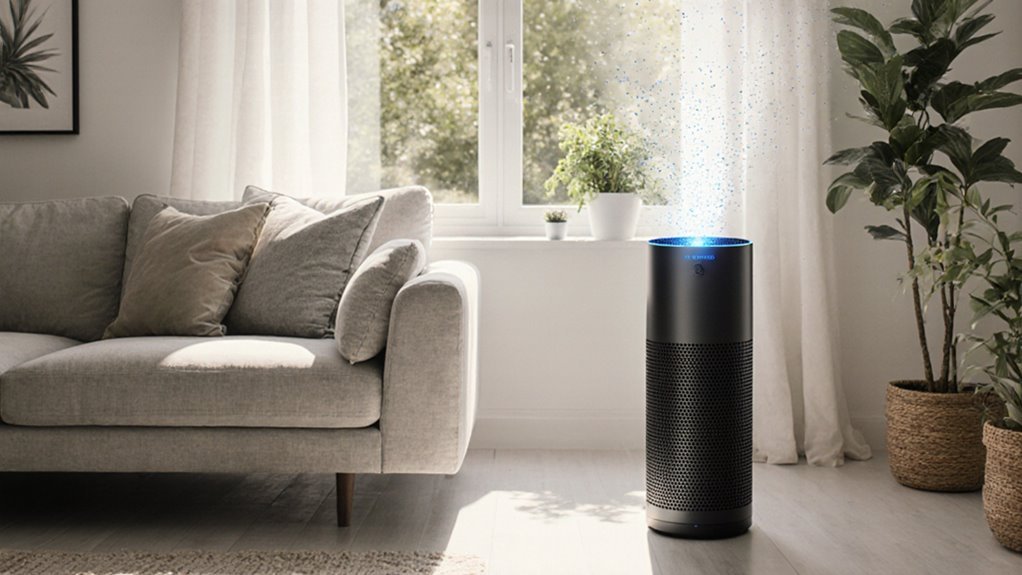

Air purifiers remove pollen, pet dander, smoke, and fine dust to make indoor air cleaner. HEPA filters trap tiny particles while activated carbon filters reduce odors and volatile organic compounds. Proper placement and selecting the right unit size and CADR keeps filtration effective for a given room. Regular filter replacement maintains performance and prevents airflow loss. Using an appropriately sized purifier can make indoor spaces noticeably fresher and healthier to breathe.
Why Use an Air Purifier?
Provided that you spend time breathing the same indoor air every day, an air purifier can make that space feel easier and safer to live in.
You get cleaner air because true HEPA filters trap 99.97% of tiny particles, including pollen, pet dander, dust, and smoke. That can help your breathing feel calmer and support sleep quality at night.
Should you notice smells lingering, a HEPA and activated carbon model can also cut many odors. Choose a unit with a higher CADR for faster cleaning, and place a portable one in the room where you spend the most time.
It can also help steady indoor humidity by easing that stale, heavy feeling. Avoid ozone-producing devices, since they can add unwanted risks.
Who Needs an Air Purifier Most?
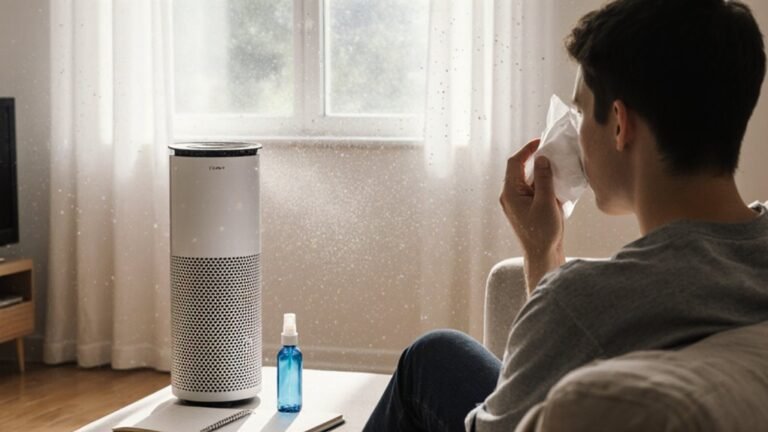
You need an air purifier most when allergies or asthma make every sneeze, wheeze, or itchy eye feel like a daily battle.
Should you sleep with pets or live around smoke, cooking fumes, or wildfire haze, a purifier can help cut the stuff in the air that keeps bothering you.
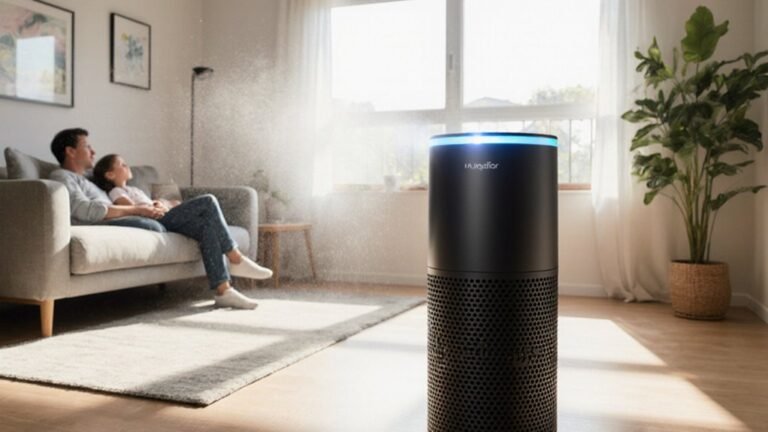
For kids, older adults, and anyone with a weaker immune system, steady filtration can make your home feel safer and easier to breathe in.
Allergy And Pet Relief
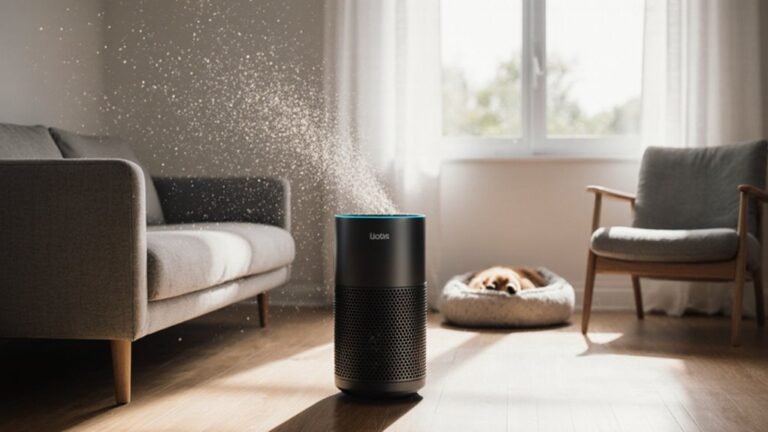
Assuming pet dander has been sneaking into your nose and making sleep feel like a battle, a good air purifier can help bring some relief.
You can feel more at ease whenever a true HEPA model traps 99.97% of tiny particles, including pet dander and pollen.
Place it in your bedroom for nighttime relief, since steady cleaning while you rest can cut sneezing and stuffy sinuses.
In case you share space with pets, pick a unit with a high CADR for dust and pollen so it clears the room faster.
Then keep helping your air through vacuuming with a HEPA vacuum and damp-dusting nearby surfaces.
Should pet smells bother you too, choose one with activated carbon, but don’t forget to replace that filter often.
Smoke And High Exposure
Once smoke starts drifting through your home, the air can feel heavy, scratchy, and hard to trust, but the right air purifier can make a real difference fast.
If you live near wildfires, use wood stoves, or sit close to cooking smoke, you need strong wildfire preparedness and smart ventilation strategies.
- Choose a portable HEPA unit with a high CADR for your room size.
- Pick one with activated carbon to cut smoke odor and gases.
- Place it where you rest most, often your bedroom.
- Run it day and night on a quiet setting.
For frequent smoke, one room unit mightn’t be enough. Then you could require more units or better HVAC filtration. This setup helps you breathe easier and feel more at home.
Where Should You Put an Air Purifier?
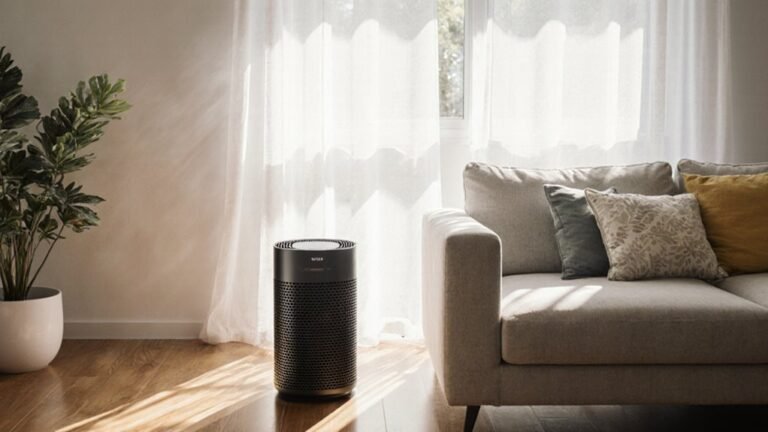
The best place for an air purifier is usually the room where you spend the most time, because that’s where it can do the most good. For many people, bedroom placement works best, since you breathe there for hours each night. Keep it a few inches from walls, curtains, and furniture so air can move freely. Window proximity matters too, but don’t park it in a draft or behind a bed. Should you reside with smoke, set it in the main family area and close the door to help it work faster.
| Spot | Best Use | Tip |
|---|---|---|
| Bedroom | Nighttime rest | Place near your bed |
| Living room | Shared time | Keep doors closed |
| Wall edge | Open airflow | Leave space |
| Window area | Fresh air flow | Avoid direct draft |
| Multiple rooms | Flexibility | Use sized units |
What Does an Air Purifier Remove?
An air purifier can help you breathe easier via capturing airborne allergens like dust, pollen, and pet dander that float through your rooms.
It also cuts down smoke and fine particles, which can make a big difference whenever the air feels heavy or irritated.
Many models add activated carbon too, so they can reduce some odors and gases, but they won’t handle every pollutant on their own.
Airborne Allergens
Which airborne allergens can an air purifier actually help with? You’ll notice the biggest relief from pollen, pet dander, and dust mite fragments whenever you use a true HEPA unit. It traps at least 99.97% of particles as small as 0.3 micrometers, so your room can feel calmer during seasonal variability. In case you share space with family, that matters.
- Choose a purifier with a high CADR for faster cleanup.
- Match the size to your bedroom or household room.
- Run it on a quiet setting for all-day comfort.
- Use HVAC integration for wider support across your home.
Even then, purifier care works best alongside vacuuming and damp dusting, since settled allergens stay on surfaces. A model with activated carbon can also help with some odor-linked particles.
Smoke And Particles
Smoke can creep into your home fast, but a good air purifier can help take the edge off.
You’ll want a true HEPA model, because it grabs 99.97% of particles as tiny as 0.3 micrometers. That means it can catch smoke, dust, pollen, and pet dander before they keep hanging around.
Should you’re focused on wildfire readiness, pick a room purifier with a high CADR, since it can move hundreds of cubic feet of clean air each minute. That helps clear cooking aerosols and fine specks faster.
Consumer evaluations also check 0.1 to 1 micron particles over 15 minutes, which gives you a fair look at performance.
Skip ozone devices and most ionizers, since they’re less helpful and can make things worse.
Odors And Gases
Should you’re hoping to clear up a stubborn kitchen smell or the sharp sting from cleaning sprays, an air purifier can help, but only up to a point.
In case you select one with activated carbon, you can trap some odors and VOCs, so your room feels more comfortable. Still, carbon limitations matter:
- Cooking smells fade better than chemical fumes.
- Smoke and pet odors respond well.
- Formaldehyde, ammonia, and nitrogen oxides linger.
- Carbon fills up, so replace it about every 3 months.
That’s why continuous ventilation still matters whenever smells keep coming back. HEPA helps with particles, while carbon handles some gases. Together, they give you a cleaner, calmer space.
Should odor sources stay active, you’ll need source control too.
How HEPA Air Purifiers Clean the Air
A HEPA air purifier cleans the air via pulling room air through a dense filter that traps tiny particles before they can keep floating around your home. You’ll breathe easier whenever it catches 99.97% of particles as small as 0.3 micrometers, including pollen, dust mite allergen, pet dander, and smoke. Because it uses mechanical filtration, the filter’s fibrous web grabs particles via interception, impaction, and diffusion, not via charging them.
| Room feel | What you notice | Why it helps |
|---|---|---|
| Quiet corner | softer hum | run it longer |
| Busy bedroom | steady flow | supports filter lifespan |
| Shared communal room | cleaner airflow patterns | clears air faster |
Look for a higher CADR and about 50 dB or less so your space stays calm and welcoming.
Which Air Purifier Types Work Best?
For the best results, you’ll usually want a true HEPA purifier, since it traps the tiny particles that bother you most, like smoke, pollen, and pet dander.
In case odors or some gases are also a concern, choose a HEPA unit with activated carbon, but bear in mind that the carbon needs regular replacement to keep working well.
You’ll also want to skip ozone makers, ionizers, and weak UV-style devices, because they can leave you with more problems than cleaner air.
HEPA Filtration
True protection starts with the filter, and that’s where HEPA earns its good name. You obtain strong particle capture because true HEPA filters trap 99.97% of particles as small as 0.3 micrometers. That means less dust, pollen, pet dander, smoke, and other tiny irritants floating around your space, so you may breathe easier with your people nearby.
- Look for true HEPA certification, not just HEPA-type labels.
- Check CADR ratings for faster room cleaning.
- Monitor filter lifespan so you know when to replace it.
- Use whole-home HEPA-level systems should you desire coverage across the house.
HEPA handles particles, not gases or most odors, so read the specs carefully. For your home, a real certified unit grants you the trust and comfort you want.
Activated Carbon
Activated carbon steps in whenever smells and gases start bothering your air, and that’s where the right purifier can make a real difference.
It works through carbon adsorption, where gases cling to the carbon because of chemical affinity.
You’ll notice it helps with cooking odors, VOCs, and smoke smells, so your home can feel calmer and more welcoming.
Still, it won’t catch particles, so you need a certified HEPA filter too.
The strongest room purifiers pair thick carbon beds with true HEPA media, giving you help with both allergens and odors.
Because carbon fills up, replace it often, usually about every 3 months for best results.
For your space, choose a properly sized unit with enough CADR, and skip ozone or ionizing gadgets that can add risks.
Avoid Weak Technologies
As you’re trying to clean indoor air, the safest bet is to stick with technologies that have strong proof behind them. You can trust true HEPA units, because they catch 99.97% of tiny particles and usually give you the best CADR for dust, smoke, and pollen.
- Look for AHAM and Energy Star labels.
- Pair HEPA with activated carbon for odors.
- Skip ozone makers and ionizers.
- Treat PCO, PECO, and UVGI claims with care.
That means you can ignore marketing myths that promise big results without real evaluation. Should you be tempted by DIY filters, bear in mind they might help a little, but they don’t match certified units.
Whenever you choose proven gear, you join a smarter crowd that keeps your home feeling fresher, safer, and easier to breathe in every day.
Which Air Purifiers Should You Avoid?
You can save yourself a lot of frustration by being aware which air purifiers to skip prior to you buy. Avoid ozone generators and stand-alone ionizers, since they can make ozone that irritates your lungs and won’t help much. Also, skip units sold as only HEPA-type or HEPA-like, because they don’t meet true HEPA standards. Whenever marketing claims sound bold, pause and look for proof.
Be careful with PCO, PECO, or some UVGI models unless trusted testing shows they remove the pollutants you care about. Provided you need odor control, don’t trust tiny carbon filters or DIY modifications that promise miracle results; carbon fills up fast.
Finally, choose models with independent CADR data and quiet performance, because a purifier that can’t clean at real-life noise levels won’t fit your home or your community.
How Air Purifiers Are Tested
Evaluations start in a sealed chamber, where Consumer Reports adds smoke and dust to see how well an air purifier clears the air. You get a fair trial because the team tracks particle changes for 15 minutes with a counter that reads sizes from 0.1 to 1.0 micrometers. Initially, chamber calibration keeps the setup steady. Then sensor validation checks that the tools stay accurate.
- The purifier runs at its highest fan speed.
- It also runs at a quieter setting under 50 decibels.
- That helps you judge comfort for daily use.
- Costs include energy and scheduled filter changes.
Consumer surveys then add owner satisfaction and reliability, so you can trust both lab results and real-life experience.
What CADR Means for Air Purifiers
CADR, which stands for Clean Air Delivery Rate, tells you how much clean air an air purifier can move each minute, and that number can make shopping a lot less confusing. You’ll see it in cubic feet per minute, or cfm, for smoke, dust, or pollen. A higher CADR means faster cleanup, so a dust CADR of 250 sends 250 cubic feet of clean air into your space each minute.
That helps you feel more at ease whenever the air feels stale. AHAM Verifide ratings give you trusted numbers and room-size guidance, so you can match the purifier to your room and main pollutant. Whenever you compare models, check placement guidance, lower-speed performance, and energy consumption, too, because you’ll want comfort that fits your routine.
How To Choose the Right Air Purifier
Once you know what’s causing the problem in your room, choosing an air purifier gets a lot easier. You can pick a true HEPA portable model to trap dust, pollen, smoke, and many viral droplets with confidence.
Then match the CADR to your room size so the unit cleans fast enough for your needs. Should odors or gases bother you, add a purifier with activated carbon, and keep filter maintenance in mind because carbon can wear out in about three months.
Also, look for Energy Star models and low-speed noise under 50 dB so you can share the space comfortably.
- Check AHAM Verifide ratings for trusted performance
- Use placement tips so air can move freely
- Skip ozone, most ionizers, and weak ozone-based systems
- Consider MERV 13 to 15 HVAC options for whole-home help
How Much Does an Air Purifier Cost?
A good air purifier can cost less than a nice dinner out or as much as a major home upgrade, so it helps to know what you’re really paying for.
For most rooms, reliable HEPA units sit in clear budget ranges, often around $100 to $500, while high-CADR models can pass $600.
Should you require whole-house help, installed systems usually run $1,000 to $3,000.
Then, you should plan for filter costs too. True HEPA replacements could cost $80 to $200 or more, and carbon filters can reach $50 and need changes about every three months.
Energy Star models can trim yearly power use.
With smart maintenance planning, you can match your room size, avoid surprise costs, and feel good about the choice.
How To Use an Air Purifier Effectively
For the best results, start placing your portable HEPA air purifier in the room where you spend the most time, and the bedroom is often the smartest choice. Use these placement tips so air can move freely: keep it a few feet from walls, curtains, and furniture. Then match the CADR to your room size, because the right fit helps you breathe easier faster.
- Keep doors and windows shut while it runs.
- Turn it up during smoke, cooking, or dust.
- Use noise management by choosing a quiet setting for nightly use.
- Replace HEPA and carbon filters on schedule.
A true HEPA filter catches tiny particles, and activated carbon can help with odors. Also, vacuum with a HEPA vacuum and skip indoor smoking so your space stays fresher.
Frequently Asked Questions
Can Air Purifiers Reduce Odors From Cooking and Pets?
Yes, you can reduce cooking and pet odors with an air purifier that uses activated carbon; it traps smell molecules well. Skip ozone generators—they’re risky. You’ll breathe easier, and your home’ll feel fresher, more welcoming.
Do Air Purifiers Help With Allergy Symptoms During Pollen Season?
Yes, they can, yet the relief you feel might surprise you. You will trap pollen better with pollen capture filters, enhancing allergen reduction and easing sneezing, so your home feels like the safe place you belong in.
How Often Should Filters Be Replaced or Cleaned?
Check your purifier manual, but you will usually replace filters every 3 to 12 months and clean washable ones monthly. Regular filter maintenance keeps your space welcoming, fresh, and comfortable for everyone.
Can One Air Purifier Clean an Entire House?
Not usually. You is a whole house approach or ducted systems, like a lighthouse guiding every room. One purifier helps a single space, but your entire home needs coverage to feel truly included and fresh.
Are Air Purifiers Noisy Enough to Disturb Sleep?
Yes, some are, but you can choose quiet models and lower the fan speed to sleep peacefully. You are not alone; many people find a gentle hum soothing, not disruptive, at night.