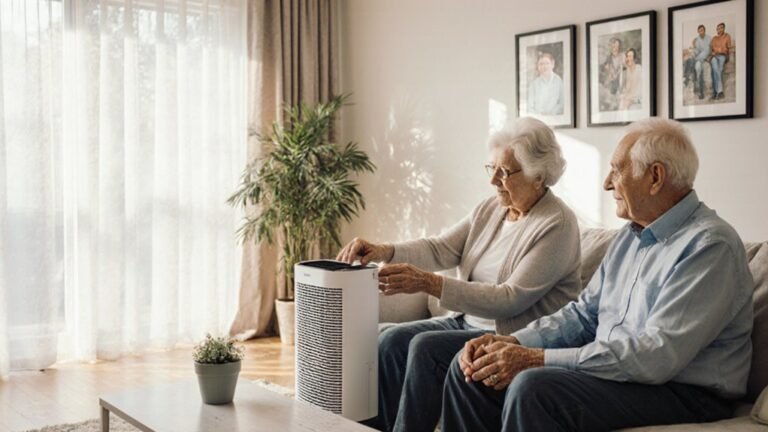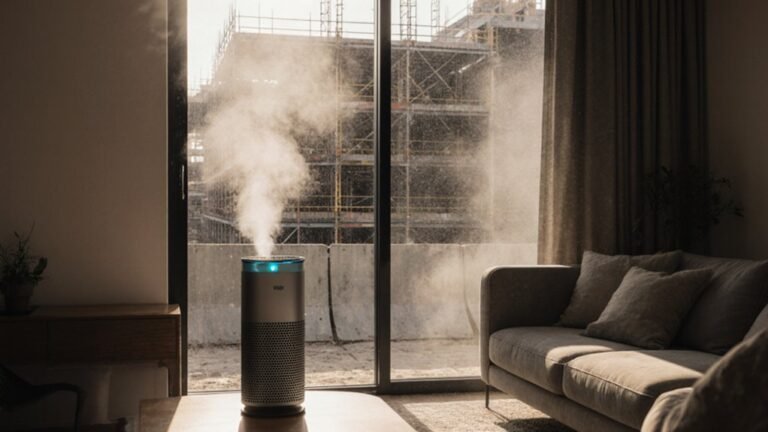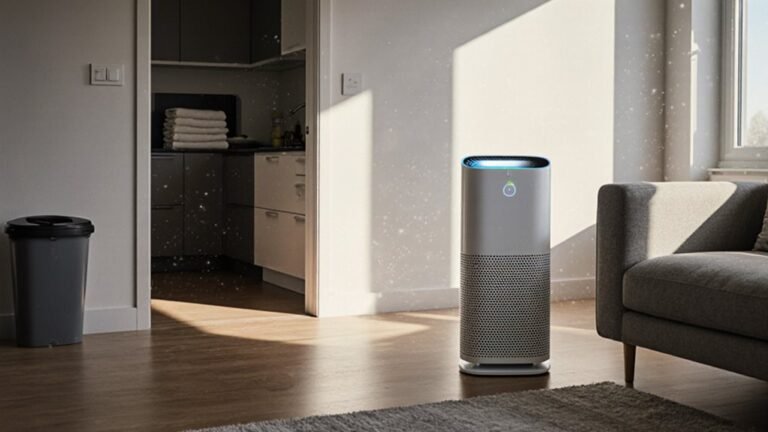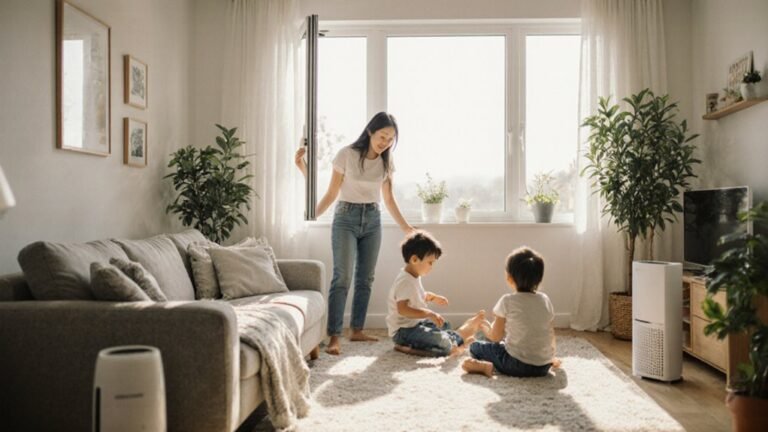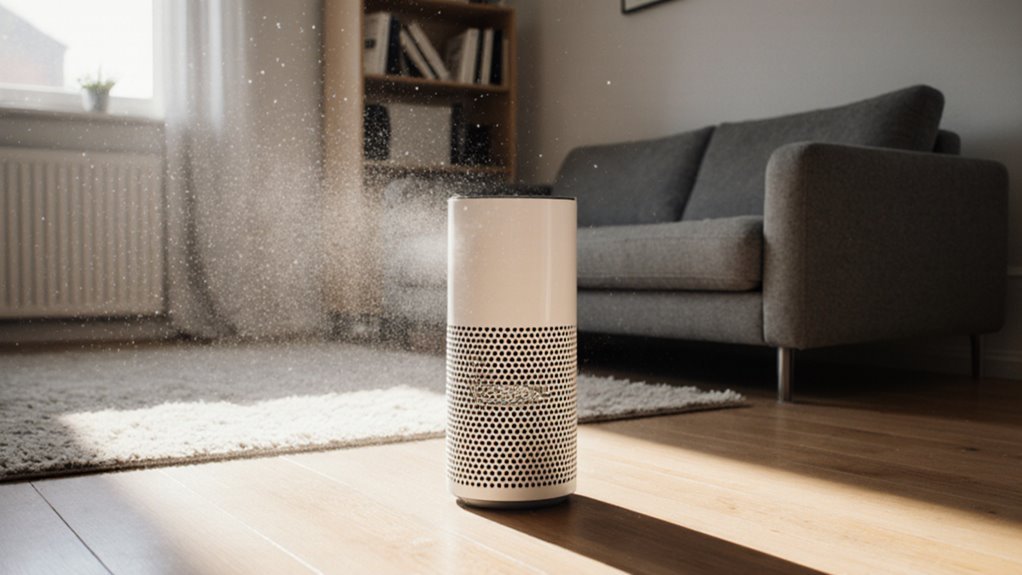

Air purifiers do not remove settled dust from surfaces, but they significantly reduce airborne dust and allergens. A quality purifier with a true HEPA filter captures tiny particles like pet dander, pollen, and fine dust. Choosing the correct filter type, matching the unit to room size, and placing it where airflow is unrestricted determines performance. Regular filter replacement and combining purification with cleaning routines keeps airborne dust lower. Proper selection and maintenance can make indoor air noticeably cleaner even while surfaces still need dusting.
How Do Air Purifiers Help With Dust?
Air purifiers help with dust via pulling dusty air through filters that trap many of the tiny particles floating around your home. You breathe easier because the unit changes airflow patterns and slows the spread of floating lint, pet dander, and soil.
As particle behavior shifts, larger bits settle faster, while finer dust stays in the air longer, so your purifier keeps catching what you could inhale. That matters most in bedrooms and shared rooms, where you and your people spend time close together.
Whenever you run the purifier often, it lowers airborne dust and helps the room feel fresher. Still, it can’t grab dust already resting on shelves or rugs, so you’ll want cleaning to keep pace too.
What Filter Is Best for Dust?
For dust, a True HEPA filter is your best bet because it traps tiny particles that regular filters often miss.
It can catch the fine dust, pet dander, and pollen that stay in the air longest, so you’re breathing less of what bothers you.
Activated carbon can help with odors, but it won’t grab dust, so you’ll still want to keep up with filter changes and regular maintenance.
HEPA Filtration Efficiency
At the time dust starts to sneak around your home, HEPA filtration usually does the heaviest lifting. You get strong particle capture because True HEPA traps tiny specks, from pet dander to fine PM2.5, before they drift back into your breathing space. That matters whenever you want relief that feels real, not wishful.
Since the filter catches so much, your room can stay cleaner longer, and that can support your filter lifespan whenever you pair it with a pre-filter. You’ll still need to vacuum and dust, because settled dirt won’t vanish on its own. Even so, a well-sized HEPA unit gives you a steadier, friendlier home base, with less floating debris and fewer sneaky irritants.
Activated Carbon Limits
Carbon filters can help with smells, but they’re not the best tool for plain old dust. You’re not missing anything if that sounds confusing; it’s just one of the carbon limitations. Activated carbon works by adsorption capacity, which means it grabs gases and odors onto its surface. Dust is different. Tiny bits of skin, pollen, and fibers need a filter that traps particles, not one that handles fumes.
- Consider carbon as the scent sponge.
- Consider HEPA as the dust catcher.
- Picture both as a team whenever you want fresher, cleaner air.
Should you live with pets, kids, or city air, you deserve a purifier that fits your home’s real mess. So, for dust, lean on HEPA initially and use carbon only as a bonus.
Filter Maintenance Schedule
Usually, the best filter for dust is a True HEPA filter, because it catches the small particles that hang in the air and keep circling through your room.
To keep it working well, follow the replacement timing on the label, since a clogged filter can’t help your home breathe easier.
You’ll usually need to check it every month and change it every 6 to 12 months, depending on dust, pets, and use.
In case your purifier has a washable pre-filter, clean it often so hair and larger bits don’t crowd the HEPA layer.
Also, store extra filters in a dry, sealed bag so they stay fresh before you need them.
Whenever you care for the filter, you’re helping your whole room feel lighter.
How to Choose the Right Purifier Size
Choose a purifier that fits your room, not just your wish to make the dust disappear. With smart room sizing, you match CADR to the space so the unit can clear air fast enough for your family’s daily breathing.
Should you pick one that’s too small, it works like a tired helper in a busy room. In the event you pick one that’s too large, you might face noise tradeoffs that make you want to mute your own peace.
- Check the room’s square footage.
- Look for a CADR that supports 4 to 6 ACH.
- Choose a fan setting you can live with every day.
When you size it right, you help your home feel cleaner, calmer, and more like the place you belong.
Where Should You Place an Air Purifier?
Now that you’ve matched the purifier to the room size, placement is what helps it actually do its job. Put it where air can move freely, not tucked behind a chair or pressed against curtains. A few feet from the wall usually works best, because the unit can pull dusty air in and send cleaner air back out.
For bedrooms, bedside placement can help you breathe easier while you sleep, especially provided dust seems to gather near the bed. In open spaces, corner positioning can still work provided you leave enough room around the intake and outlet.
Keep it off the floor only provided the manual says so, and don’t cover vents. Whenever you place it well, you help the purifier feel like part of your room, not an afterthought.
How Else Can You Reduce Dust?
Beyond the purifier itself, you can cut dust through tackling the things that keep making it. Start by declutter surfaces so cloths and crumbs don’t have a place to settle. Then keep laundry, blankets, and pet beds clean, because fibers and dander ride in on them.
- Vacuum rugs and floors with a HEPA vacuum.
- Wipe shelves and tables with a damp microfiber cloth.
- Use humidity control to keep air from getting too dry.
When you hold indoor moisture steady, dust stirs up less, and your home feels calmer. Seal small gaps around windows, and change HVAC filters on time too. These steps don’t fight your purifier; they work alongside it. Together, they help you breathe easier and make your space feel more like yours, not dust’s.
What Dust Air Purifiers Can’t Remove?
Even though an air purifier can do a lot, it can’t clean up everything that looks like dust in your home. It only pulls in airborne particles, so settled surfaces, shelves, and carpets can still hold the mess you see and touch. It also won’t erase dust from couches, curtains, or pet bedding unless you tidy those spots yourself.
Source elimination matters here, because your home keeps making new dust from skin flakes, fabric fibers, pet dander, and tracked-in dirt. So, provided you want a calmer, cleaner space, pair the purifier with vacuuming, damp dusting, and regular laundry. That way, you help the air, and you help the room feel like yours again.
Are Air Purifiers Worth It for Dust?
Should you be curious whether an air purifier is worth it for dust, the short answer is yes, especially should you contend with sneezing, stuffy rooms, or that never-ending layer on your shelves. You’re not imagining it, and you’re not the only one fighting it.
A good HEPA unit pulls floating dust, dander, and fine particles from the air, so you breathe easier while your home feels calmer.
- In a bedroom, it can cut airborne dust fast.
- In a family room, it helps between cleanings.
- On a settled surface, it slows how quickly new dust lands.
Still, you’ll need ongoing source control, like vacuuming and washing fabrics. That’s because an air purifier helps the air, but it can’t erase the dust you already see.
Frequently Asked Questions
Can Air Purifiers Remove Ultrafine Particles From Household Dust?
Yes. If you use a True HEPA purifier, you can remove many ultrafine particles from household dust. HEPA efficiency captures tiny particles well, and you’ll reduce particle reentrainment by running it continuously.
How Quickly Do Air Purifiers Lower Dust Levels in a Room?
You’ll usually see a rapid reduction within hours if you run a properly sized purifier continuously; particle decay speeds up as it filters the air, though visible dust on surfaces won’t vanish without cleaning, old chap.
Do Air Purifiers Help With Dust Allergies and Asthma Symptoms?
Yes, you can get dust reduction and symptom relief with a true HEPA purifier, especially in bedrooms. It will not cure allergies or asthma, but you will likely breathe easier, sneeze less, and feel more comfortable.
Should I Run My Air Purifier All Day for Dust Control?
Yes, you should run your air purifier all day for dust control if you can. Continuous operation keeps particles lower, and you can balance noise tradeoffs by using a quieter setting that still works well.
How Often Should Purifier Filters Be Replaced for Dust Removal?
You should replace them every 6 to 12 months, though filter lifespan depends on dust load and runtime. Watch replacement indicators, like reduced airflow or odor. Once your trusty steed starts wheezing, you will know it is time.