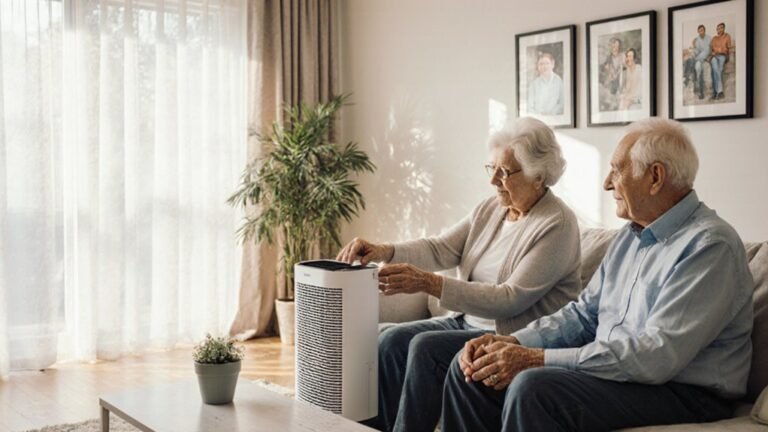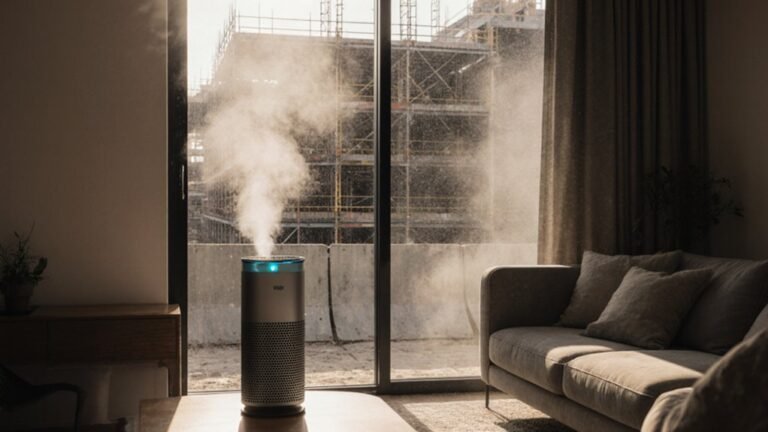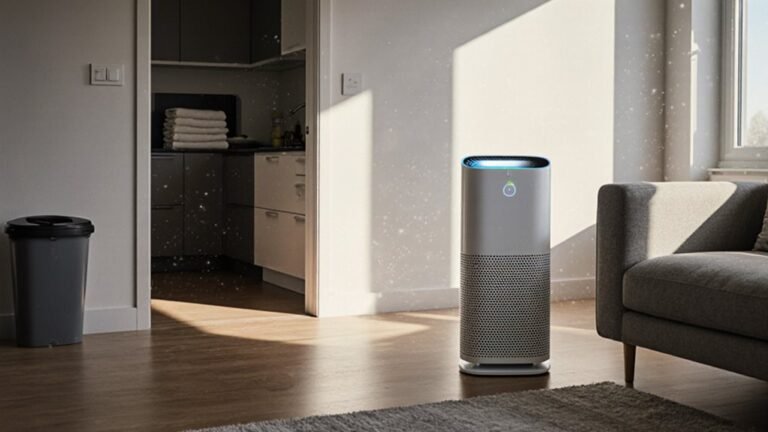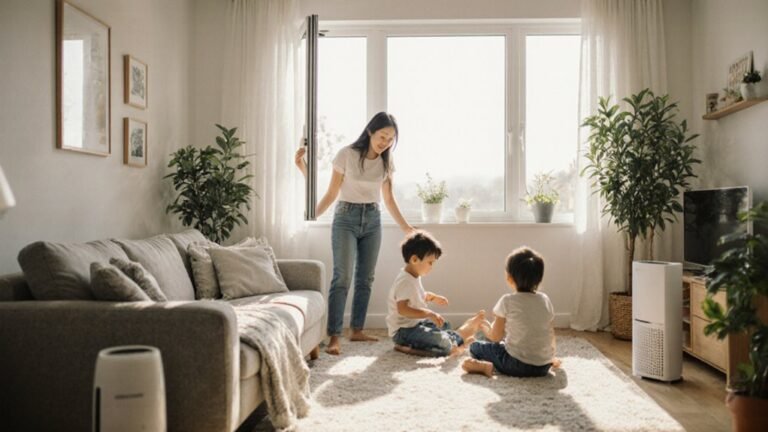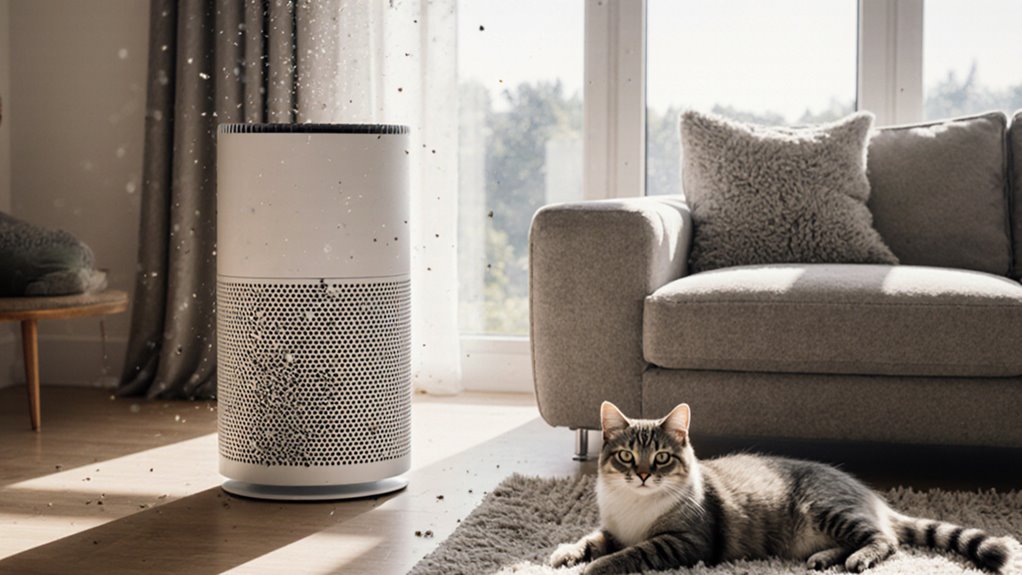

Yes — air purifiers with true HEPA filters effectively remove airborne pet dander. They capture tiny allergen particles circulating in room air, reducing sneezing and irritation. Filter efficiency depends on HEPA quality, purifier Clean Air Delivery Rate (CADR), room size, and proper placement. Activated carbon layers can help reduce pet odors but cannot extract dander trapped in upholstery and bedding. Regular vacuuming, washing fabrics, and replacing filters keep both air and surfaces cleaner.
Do Air Purifiers Remove Pet Dander?
Yes, air purifiers can remove pet dander from the air, and that can feel like a real relief whenever your nose is itchy and your eyes won’t stop watering.
You’re not imagining the difference, either. Whenever you run a good purifier in the room where you spend time, it pulls dander from the airborne mix before those tiny bits keep floating around. That helps lower exposure during busy moments, like whenever your pet shakes off or you walk across a rug and stir up airborne resuspension.
For best results, you can watch allergen monitoring reports, notice your symptoms, and keep the unit running often. Still, a purifier only handles what’s in the air right now, so your space works better whenever you stay consistent and keep the room clear.
How HEPA Filters Trap Pet Dander
HEPA filters trap pet dander via pulling room air through a dense web of fine fibers that catch tiny particles before they can keep floating around and bothering you.
You get help from this tight maze because dander doesn’t just pass through it. Instead, the fibers use filter media depth to slow the air and give particles more chances to stick.
Electrostatic attraction also plays a part, so even smaller bits cling to the filter instead of drifting back to you.
That means you can breathe easier in the spaces where you relax, sleep, and share time with your pet.
While no filter fixes everything, a good HEPA unit can make your home feel calmer and more welcoming for everyone who lives there.
Why Room Size and Airflow Matter
Room size changes how fast an air purifier can clean the air, so a small unit might struggle in a large room.
You’ll get better pet dander control whenever the purifier’s airflow matches the room’s volume and can move air through the space often. Provided the airflow is too weak or blocked, dander can linger longer, and that means you’re still breathing more of it than you want.
Room Size Impact
Because air purifiers clean only the air that moves through them, room size and airflow shape how well they can cut pet dander. Whenever your room volume is larger, the purifier has to work harder, so fan speed matters more than you may suppose. A small unit in a big space can leave you waiting while allergens linger.
- Match the purifier to the room, not just the box label.
- Use a stronger fan speed whenever your pet spends time nearby.
- Keep the unit running so the air keeps cycling.
You’re not asking for perfection. You’re asking for a calmer room where you can breathe easier and feel like you belong in your own space. That comfort grows faster whenever airflow keeps up with the size of the room.
Airflow Coverage Range
From the initial breath of cleaner air, coverage range shows you how far a purifier can really reach in your home. You want the unit to match your room, because a tiny coverage footprint in a big space leaves dander floating around like an uninvited guest.
Whenever the airflow patterns move well, the purifier pulls in more airborne particles and sends cleaner air back across the room. That means you feel the difference faster in your favorite chair, bed, or play corner.
Should furniture block the stream, the clean-air zone shrinks. So, place the purifier where air can move freely, and check the room size against its rated area. Whenever you act, you give your home a better chance to feel calm, fresh, and truly shared.
Best Features to Look for in Pet Air Purifiers
Whenever you’re choosing a pet air purifier, HEPA filtration should be your primary must-have because it traps the tiny dander particles that float around your room.
You’ll also want activated carbon, since it helps cut pet odors and keeps the air smelling fresher.
Together, these features give you a better shot at easing sneezes, sniffles, and that stubborn “pet lives here” smell.
HEPA Filtration Power
A strong HEPA filter is the heart of a good pet air purifier, and it matters more than flashy extras. Whenever you live with pets, you want a filter that traps tiny dander before it keeps floating around your room. Whenever HEPA can catch 99.97% of particles, so it gives you real support, not just a promise.
- It helps reduce airborne dander fast.
- It enhances filter longevity whenever the unit handles dust well.
- It works without particle charging, which can be hit or miss.
Look for a purifier with a tight seal and a strong CADR rating, too. That way, you and your home can breathe easier, and your space feels more welcoming for everyone who shares it.
Activated Carbon Control
HEPA does the heavy lifting for dander, but activated carbon quietly helps with the stuff your nose notices next.
Whenever you live with pets, you want your home to feel fresh, not like a fur-covered echo. That’s where activated carbon matters. It helps with odor adsorption from litter boxes, wet dog smells, and cooking smells that cling to pet spaces.
Whenever look for enough carbon depth, because carbon longevity depends on how much material the purifier holds. Thin pads can fade fast.
You’ll also want easy filter maintenance, since dirty carbon won’t keep up with daily life. Change filters on schedule, and pair them with a strong HEPA stage so you get both clean air and a room that feels like yours again, just calmer.
Where to Place an Air Purifier for Pet Dander
For the best results, place your air purifier where your pet spends the most time, because that’s where the dander starts building up in the air.
Keep it in the main occupied spot or bedroom, since shared space feels calmer whenever the air moves well around you and your pet.
Use floor placement provided the unit pulls air low, and avoid corner avoidance, because tight corners block flow and weaken the clean-air pull.
- Set it a few feet from walls.
- Keep toys and furniture clear.
- Run it near nap spots, not behind curtains.
That way, you help the purifier catch floating dander before it spreads.
In case you and your pet share the room, this setup can make the space feel fresher, kinder, and more like home.
What Air Purifiers Can’t Remove
Even though an air purifier can make a room feel much easier to breathe in, it can’t fix every pet allergy problem on its own. It only cleans the air that passes through it, so dander stuck in carpets, sofas, bedding, and clothes stays put. That’s why air purifier myths can leave you disappointed when you expect one machine to do everything.
Odors might also linger should you rely on carbon filters alone. And in case you skip filter changes, maintenance costs and weak airflow can quietly cut performance. You also can’t count on ionizers or ozone makers to help safely. For real relief, you need to treat the purifier as one helpful piece of your home team, not the whole team.
How to Reduce Pet Dander at Home
The positive update is that you can lower pet dander at home with a few steady habits, and you don’t need to turn your house into a science lab to do it.
Start with pet grooming, because brushing and bathing your pet helps trap loose flakes before they float around your rooms.
Then focus on fabric choices, since washable blankets, smooth rugs, and slipcovers hold less dander than thick throws.
- Vacuum carpets and sofas with a HEPA filter often.
- Wash bedding, pet beds, and throws weekly.
- Keep bedrooms pet-free so you can breathe easier at night.
Next, pair these steps with good airflow and a regular wipe-down of hard surfaces.
If you follow them, you make your home feel calmer, cleaner, and more welcoming for everyone who shares it.
Frequently Asked Questions
How Often Should Pet Air Purifier Filters Be Replaced?
You should replace pet air purifier filters every 3 to 6 months, but filter lifespan depends on use, pet hair, and dust. Check your replacement schedule monthly and change filters sooner if airflow drops or odors linger.
Do Air Purifiers Help With Pet Odors Too?
Yes, you’ll get odor reduction, not magic. HEPA clears dander; activated carbon helps scent neutralization, too. Fresh air and pet warmth can share a room, but only with the right purifier, cleaning, and care.
Are Ionizer Air Purifiers Safe for Pet Allergies?
No, you shouldn’t rely on ionizer air purifiers for pet allergies; ionizer emissions can produce ozone, which may irritate your lungs. You will usually do better with HEPA filters and regular cleaning for safer relief.
Can One Purifier Clean My Whole House of Dander?
No, one purifier won’t cleanse your whole home of dander like a lone lantern in a storm. You’ll need a portable room unit, ideally more than one, to truly support the spaces where you belong.
Will Pet Dander Return if the Purifier Is Turned Off?
Yes, it will return. Whenever you turn the purifier off, pet dander can build up again through recirculation effects and from surface reservoirs. Keep cleaning, grooming, and filtering regularly so you feel more comfortable together.