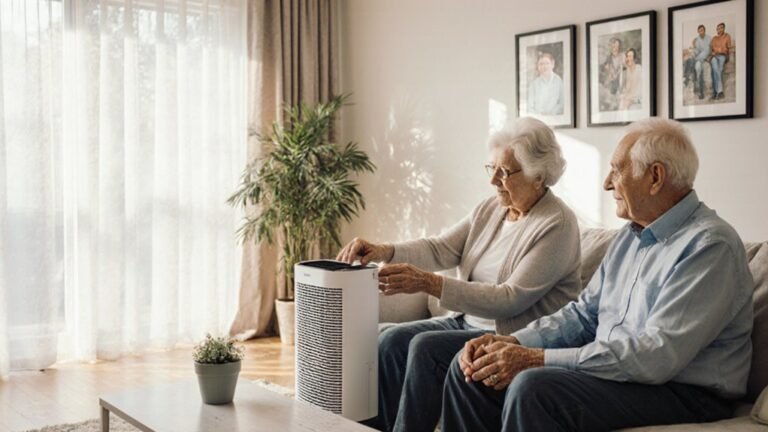
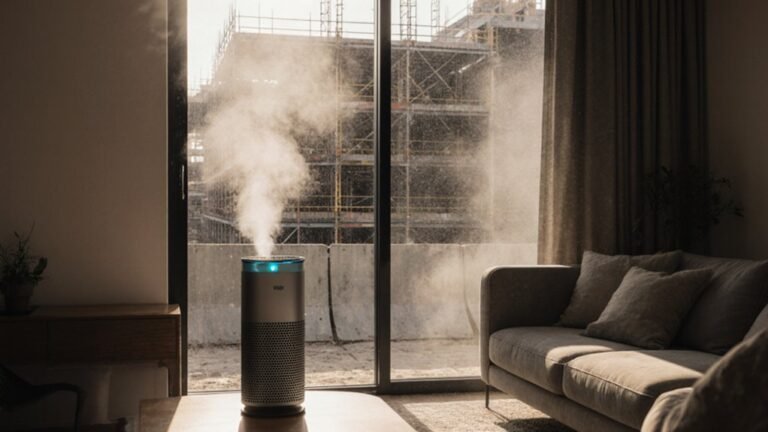
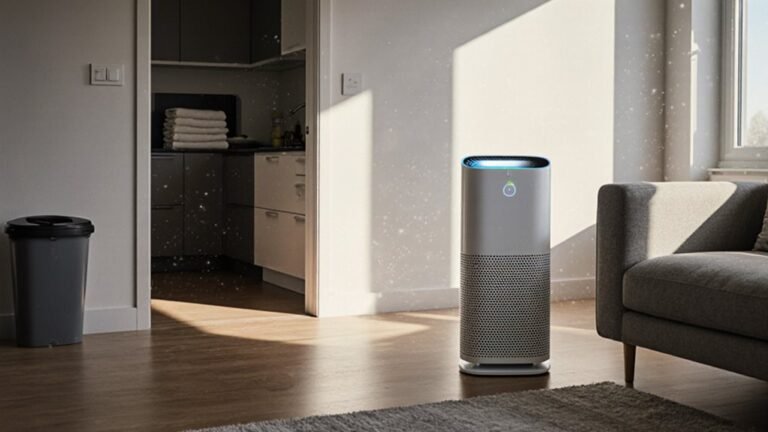
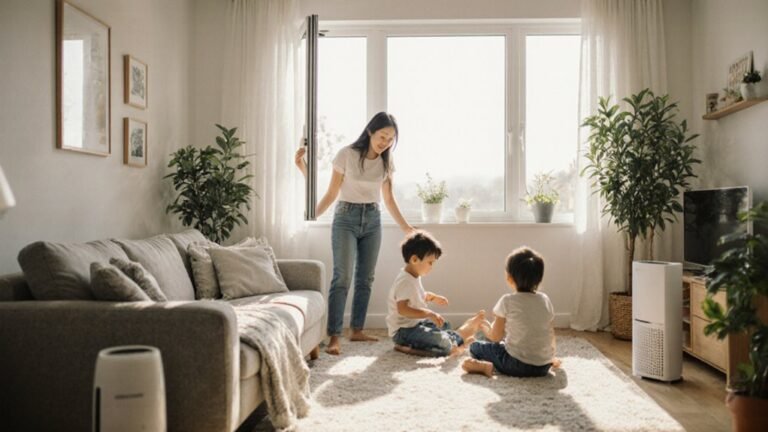
Yes — air purifiers can reduce smoke indoors. True HEPA filters capture the tiny particulate matter in smoke. Activated carbon filters absorb many smoke odors and volatile organic compounds (VOCs). Effectiveness depends on filter quality, purifier size, and room layout. Choosing the right combination of HEPA and sufficient carbon, matched to room volume, yields the best results.
Do Air Purifiers Remove Smoke?
Yes, air purifiers can remove a lot of smoke from indoor air, and that can bring real relief whenever the room feels hazy or smells like a campfire.
You’ll notice the biggest help once the unit runs in the room where you spend time most, because clean air builds up there initially. Choose a model with strong HEPA filtration and enough carbon for odor control, then give it time to work.
For portable maintenance, keep the intake clear and wipe dust off the outside so airflow stays strong. Your filter lifespan will shorten during heavy smoke, so check it often and replace it whenever it darkens or smells stale.
With the right setup, you can breathe easier and feel more at home indoors.
How Air Purifiers Trap Smoke
Smoke can feel sneaky, but air purifiers trap it in a few clear ways. They pull room air through a fan, then use dense filters to catch tiny soot and ash before they drift back to you. That matters whenever you want your space to feel calmer and easier to breathe in.
Some units also use electrostatic removal, which gives particles a charge so they stick to collecting plates or filters. Should your purifier includes carbon, it can also help with smoky smells.
Still, filter maintenance matters a lot, because loaded filters slow airflow and cut performance. So you assist your purifier keep up by checking the filter, replacing it on time, and keeping doors and windows closed during heavy smoke.
Why HEPA Filters Matter
HEPA filters matter because smoke isn’t made of just one kind of particle, and many smoke particles are tiny enough to get deep into your lungs.
You can count on a true HEPA filter to catch at least 99.97% of particles down to 0.3 microns, which helps remove a lot of the PM2.5 and even some ultrafine smoke particles.
That means you’re giving your air purifier a much better shot at cleaning the air you breathe once smoke starts building up indoors.
HEPA Particle Capture
Often, the biggest reason air purifiers help with smoke is simple: they catch the tiny particles that do the most harm. A true HEPA filter uses tight fibers to trap these specks as air moves through it. Some get snagged by direct interception, and others drift into the fibers through particle diffusion, which helps the filter catch even very small bits. That’s why you can breathe a little easier while the purifier runs steadily in your room.
As smoke builds up, the filter collects more debris, so filter loading can slow airflow over time. You help your purifier work better if you keep windows closed, use the right size unit, and replace the filter on schedule. Then the air feels cleaner, and your space feels more like home.
Smoke Particle Sizes
Because smoke is made of many different bits, not just one kind, an air purifier has to work against a mix of particle sizes to really help. You’ll see a spread from PM2.5 to ultrafine particles, and that particle distribution changes with each fire, cigarette, or cooktop puff. HEPA filters matter because they trap most of these solids as air moves through them, even as ultrafine dynamics make tiny bits float and wiggle in tricky ways.
| Size range | Behavior | HEPA result |
|---|---|---|
| PM2.5 | Deep lung risk | Strong capture |
| Ultrafine | Fast movement | Good capture |
| Mixed smoke | Varied load | Better overall |
What Activated Carbon Removes
Activated carbon helps trap the smoky stuff you can’t see, smell, or easily ignore. You get relief because its tiny pores grab odor molecules and many volatile gases before they drift around your room. That matters whenever smoke leaves a stale, harsh smell that makes home feel less like home.
But carbon works best provided air stays in contact with the sorbent long enough, so adsorption kinetics and bed depth matter. A thin layer won’t do much for you. You’ll also need sorbent regeneration or replacement once the pores fill up, because tired carbon stops pulling its weight. So, in choosing a purifier, look for enough carbon to handle those lingering compounds and help your space feel fresher, calmer, and more welcoming.
Which Smoke Types They Handle Best
Whenever you’re coping with wildfire smoke, a good purifier can make a real difference because it targets the fine particles that hang in the air and get deep into your lungs.
It also helps with cigarette smoke, since that smoke carries both tiny particles and strong odors that need the right filter mix.
For cooking smoke, you’ll get the best results whenever your purifier handles both the visible haze and the smell that can linger long after dinner’s done.
Wildfire Smoke Particles
Wildfire smoke is tough, but air purifiers can handle a lot of it, especially the tiny particles that cause the biggest problem indoors. You’ll get the best help from a HEPA filter, because it catches PM2.5 and many ultrafine bits before they settle deep in your lungs. That matters since respiratory deposition rises whenever particle chemistry makes smoke sticky, oily, or oddly mixed.
Should you close windows and keep the unit in your main room, you’ll lower the load faster and feel the difference sooner. Bigger rooms need stronger CADR, so don’t let a small purifier do a big job. Also, replace loaded filters on time, because soot clogs them. With the right setup, yourself and your space can breathe easier together, even while the sky looks rough.
Cigarette Smoke Removal
Cigarette smoke can cling to indoor air like a stubborn guest, but the right air purifier can still make a real difference.
You breathe easier whenever a HEPA purifier catches fine particles from smoke, including the PM2.5 that drives secondhand exposure. It also helps with ultrafine bits that drift deep into your room.
For smell, choose a unit with a strong activated carbon layer, because that’s what helps with nicotine residues and the stale odor left behind.
Should you share your space with smokers or a nearby apartment, a higher CADR gives you faster relief. Close windows, keep doors shut, and place the purifier where you spend time most.
In that case, your room feels calmer, cleaner, and more like home again.
Cooking Odor Filtration
Kitchen smoke can slip into your room fast, but air purifiers don’t all handle it the same way. You’ll get the best match whenever you pair kitchen ventilation with a purifier that has strong HEPA and carbon stages.
For cooking odor, activated carbon matters most because it grabs the gases that make fried fish, garlic, and burnt toast linger. Good source profiling helps you choose the right unit, since steam from boiling pasta needs less odor control than searing meat.
In case your purifier also offers grease adsorption, it can help catch sticky particles before they coat surfaces. Place it near the kitchen doorway, keep windows managed, and let the fan run after cooking. That way, your home feels fresher, and you still feel at home.
How Room Size Affects Smoke Removal
As a room gets bigger, smoke removal gets harder, because the purifier has more air to clean and the smoke has more places to spread. You can still win that fight, though, whenever you match the unit to the room volume. A small purifier in a large space will feel busy but never caught up.
Why Some Purifiers Don’t Remove Smoke Smells
Some purifiers clear out smoke particles well, but they can still leave that sharp, stale smell behind. That’s because numerous smoke odors come from gas-like molecules that basic filters can’t catch.
Should your purifier only has a particle filter, you might notice the air feels cleaner even while the smell lingers.
Filter Type Limits
Even although a purifier runs all day, it can still miss the part of smoke that makes your nose wrinkle initially: the smell. You might feel let down, but that doesn’t mean your unit failed. It could use filter materials built for dust, not odor, and its filter lifespan can drop fast in heavy smoke.
| Filter type | What it catches | Smell help |
|---|---|---|
| HEPA | Fine particles | Low |
| Carbon blend | Smoke gases | Better |
| Basic mesh | Lint | Very low |
Many home units pair a thin carbon layer with a particle filter, so they clean the air you breathe better than they clean the scent you notice. Should you want to fit in with a smoke-weary room, choose stronger carbon and replace it on time.
Odor Molecules Slip
A strong smoke smell can slip past your purifier, and that can feel frustrating in case you’ve done everything right. You’re not imagining it. Many purifiers trap smoke particles well, but odor molecules can stay in the air.
Those tiny gases need chemical adsorption, usually from a deep activated carbon filter. Provided the carbon layer is thin, full, or missing, the smell lingers even whenever dust and haze drop fast.
Some units also use scent masking, which covers the odor instead of removing it. That can make your room seem better for a while, but the smoke is still there.
How Fast Air Purifiers Clean Smoke
Once smoke fills your room, an air purifier starts working right away, but the speed depends on the smoke level, room size, and filter strength. In most rooms, you’ll notice cleansing timeframes within minutes, while full particle decay can take hours. That’s normal, so you’re not alone should the air doesn’t feel fresh instantly.
| Room size | Smoke load | Likely pace |
|---|---|---|
| Small | Light | Faster relief |
| Medium | Moderate | Steady change |
| Large | Heavy | Slower clearing |
In case you keep the doors shut, the purifier can pull smoke particles down more evenly. You might still smell some smoke at initially, yet the air often feels easier to breathe as the particles drop. With patience, you grant your space a calmer, safer feel for everyone inside.
What Air Purifier Features Matter Most for Smoke?
At the moment smoke drifts into your home, the best purifier features are the ones that target both the tiny particles you can’t see and the odors you can still smell. Look for true HEPA filtration, because it grabs fine smoke particles well. Then add a thick activated carbon layer, since that helps with the smell and some gases.
Check the CADR too, so the unit fits your room and doesn’t feel weak. You’ll also want easy filter maintenance, because smoke loads filters fast and a clogged unit works harder. Finally, consider noise tradeoffs. A quieter setting could feel calmer, but higher fan speeds usually clean faster. Choose a purifier you can live with every day, not just one that sounds impressive.
How to Reduce Smoke Indoors During Wildfires
During wildfire season, the fastest way to make indoor air safer is to cut smoke at the door and clean what still gets inside. You may seal gaps around windows and doors, then keep a simple emergency kit ready with masks, filters, and spare batteries. Next, make one room your calm zone and run a HEPA purifier there.
| Step | Action |
|---|---|
| 1 | Close windows and doors |
| 2 | Seal gaps with tape or weatherstripping |
| 3 | Run the purifier in your main room |
| 4 | Replace filters when they load up |
Also, limit opening doors, wipe dusty surfaces, and track indoor air on a monitor in case you can. These small moves help you protect your space and care for the people you love.
How to Ventilate Smoke Indoors
Provided that you need to let smoky air out, you have to do it with care, because a wrong breeze can pull more smoke inside instead of clearing it away. Open a window on the clean-air side initially, then crack another on the smoky side so air can move through.
Should you be able, use a fan to point outward and guide the dirty air out. Good window sealing matters here, because gaps can let smoke sneak back in.
- Choose the calmest side of your home
- Close doors to protect the room you use most
- Try temporary pressurization through adding clean air with a fan
This helps you keep the space feeling safer and calmer. As you work with the airflow instead of against it, you give your home a better chance to breathe with you.
Common Air Purifier Mistakes With Smoke
Even should you bring home a good air purifier, it can still miss the mark in case you use it the wrong way for smoke. You can make placement mistakes by tucking it behind a couch, in a corner, or too close to a wall, which blocks airflow and weakens cleanup. Set it where air moves freely in the room you use most.
Then keep up with maintenance neglect, because a loaded filter can’t catch smoke well. Check the filter often during smoky days and replace it once it looks dirty or smells stale. Also, close windows and doors so you aren’t feeding fresh smoke inside. Pick the right size unit for your space, and let it run long enough to keep helping your household breathe easier together.
When an Air Purifier Isn’t Enough
Whenever smoke gets heavy or keeps coming back, an air purifier can only do so much. You might still feel trapped by odor, stinging eyes, or a haze that won’t leave. That’s where limited effectiveness shows up fast, especially should smoke keep leaking in from outside through cracks, vents, or open doors.
- Close windows and seal gaps to slow gas infiltration.
- Use recirculation on your HVAC, in case you have it.
- Cut the smoke source, because no filter can beat ongoing smoke.
Should you be coping with wildfire smoke, tobacco, or cooking fumes, pair your purifier with a HEPA filter and enough activated carbon. In a room that still smells smoky, you’re not failing. You just need a bigger plan, and you deserve cleaner air that actually feels livable.
Frequently Asked Questions
Can Smoke Particles Penetrate Deep Into the Bloodstream?
Yes — smoke’s tiny PM2.5 and ultrafine particles can penetrate deep lung tissue, enter your bloodstream, and trigger systemic inflammation. You’re not overreacting; protecting your indoor air helps you and your community breathe easier.
Do Air Purifiers Remove Carbon Monoxide From Smoke?
No, you can’t rely on air purifiers to remove carbon monoxide from smoke. Their filters target particles, and measurement challenges can hide danger. You’ll need ventilation, alarms, and prompt action to keep your home safe.
Are Ionizers Safe for Smoke Removal?
No, you shouldn’t rely on ionizers for smoke removal because they use particle charging and can create ozone concerns. You’ll get safer results with a HEPA purifier, and you’ll protect your home and people better.
How Often Should Smoke Filters Be Replaced?
Like a weary shield, you should replace smoke filters every 1 to 3 months during heavy smoke, or whenever airflow drops. Your filter lifespan depends on use; watch replacement indicators like odors, discoloration, or reduced performance.
Do DIY Box-Fan Filters Work for Wildfire Smoke?
Yes, you can use a homemade MERV13 window fan filter for wildfire smoke, and it will cut PM2.5 well enough for many rooms. You will feel the difference, especially if you seal windows and keep replacing filters.