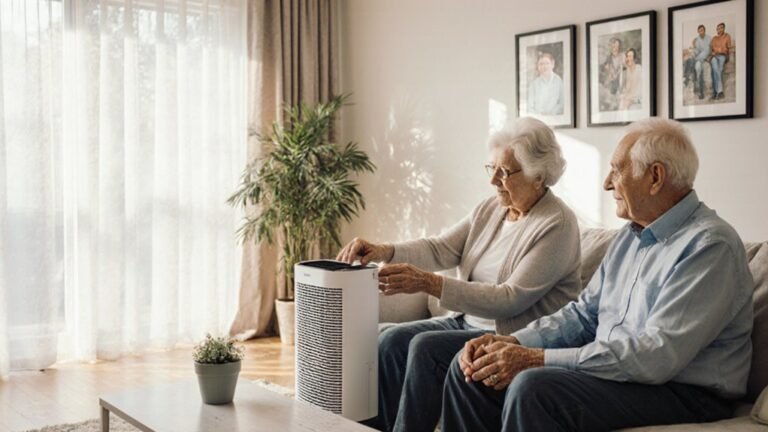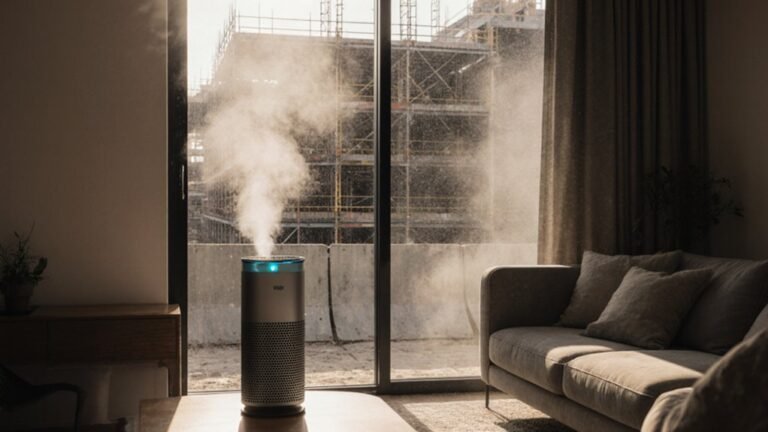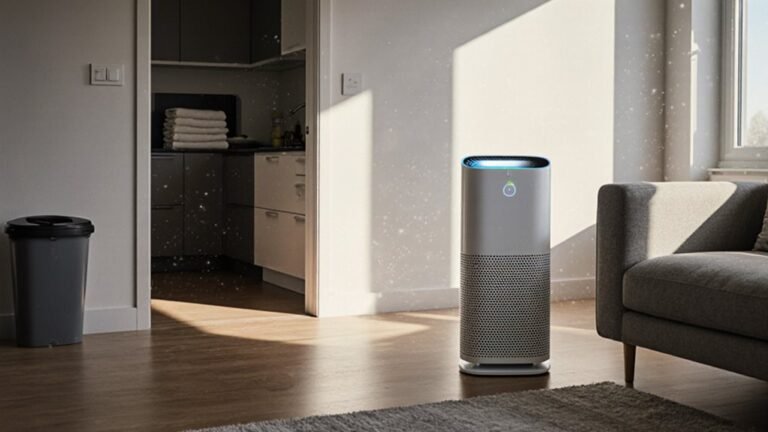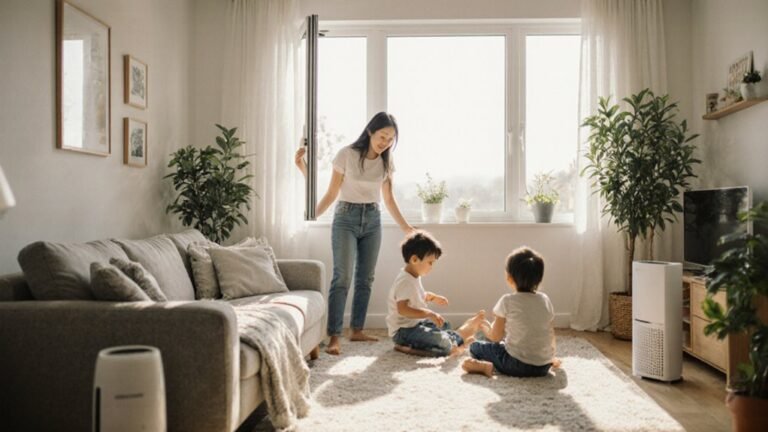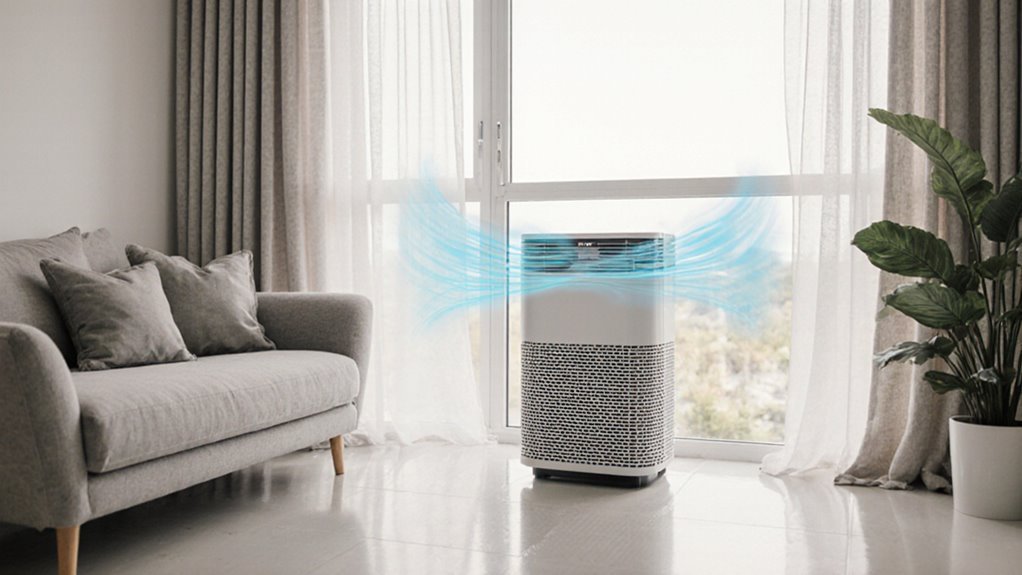

Indoor air often contains two to five times more pollutants than outdoor air, so purifier placement matters. Place the unit in the room you use most—near your bed, sofa, or desk—while keeping it away from walls and windows. Allow several inches of clearance on all sides for proper airflow and position the purifier at breathing height when possible. For kitchens or pet areas, place the unit where smoke, cooking odors, or pet hair escape into the room. Regular filter checks and occasional relocation to high-traffic spots keeps performance consistent.
Where Should You Place an Air Purifier?
Right from the start, place your air purifier where you spend the most time, because that’s where it can help the most.
In your bedroom, living room, or home office, it can support the air you breathe all day. Provided pets, cooking, or dust bother you, move it closer to that source, but keep some space around it so air can move freely.
A spot on a table or dresser often works well, because it lifts the unit into your breathing zone. This also helps protect filter lifespan by reducing extra strain.
Next, consider noise management, especially at night. Should the sound feel too loud, move it a bit farther away or lower the fan speed so you can keep using it comfortably.
Put It in the Right Room First
Start with the room where you spend the most time, because that’s where an air purifier can assist you the most. In case you sleep in one bedroom, work in a small office, or relax in the family room, put the unit there initially.
Your occupant habits and activity patterns shape where dust, dander, and smoke build up. During seasonal usage, you might need to move it from a bedroom in winter to a family room in summer. Also, consider ventilation interactions, since an open window or strong vent can change how well the purifier works.
Whenever you select the room that fits your daily life, you help yourself breathe easier and feel more at home. Then the purifier can support your routine without getting in the way.
Choose the Best Air Purifier Placement for Pollutants
Once you know the best room, the next step is to place the purifier where the pollutants actually gather, because that’s where it can help the most. Consider your daily spots, like the bed, couch, or desk, and aim there initially.
Your filter placement should match the source, not just the center of the room. For example, a bedroom unit works well near your headboard, while a family room unit fits near pet hangouts.
- Put it close to the biggest pollutant source.
- Keep it in your breathing zone.
- Use noise mapping to find a spot that won’t bug your sleep.
- Adjust for cooking, pets, or dusty corners.
When you place it with care, you make clean air feel like part of your space.
Leave Space Around the Air Purifier
Give your air purifier a little room to breathe, because tight spots can block the intake and exhaust.
You’ll get better airflow whenever you keep it a few inches away from walls, furniture, and curtains.
That small gap can make a real difference in how well it cleans your air.
Maintain Clearance
Keep some breathing room around your air purifier so it can do its job well. You want placement clearance on every side, plus safety distancing from walls, curtains, and furniture. That space helps air move freely and keeps the unit from feeling boxed in.
- Set it at least a foot from walls.
- Keep it away from tight corners.
- Leave room behind and beside it.
- Check that nothing crowds the top.
When you give it space, you help the room feel fresher and calmer. It’s a small move, but it can make your home feel like everyone belongs there.
Should you share the room with kids or pets, this buffer also helps protect them from bumps and accidental nudges.
Keep Vents Open
Once you’ve already left space around the purifier, the next step is to make sure its vents can breathe, too, because blocked vents can turn a hardworking unit into a tired one.
You want open intake and exhaust sides so air can move freely through the room you share. Keep curtains, baskets, and furniture away from those openings, and check that nothing shifts after cleaning day.
In case you notice dust building up, handle filter maintenance on schedule, because a clogged filter can slow airflow and make vent obstruction feel even worse.
A few inches of open room on each side helps the purifier pull in dirty air and send out cleaner air without struggling. That small habit supports better comfort, steadier performance, and a space that feels welcoming to everyone nearby.
Place It Where Air Circulates Best
Air flows best once your purifier has room to work, so start placing it in the open where people actually spend time. Watch the airflow patterns in the room, then keep the unit near the busiest spot, not concealed in a corner.
A little purifier elevation helps too, because raised air often reaches your breathing zone faster. Try this:
- Set it beside your main chair.
- Keep it away from tight walls.
- Lift it on a stable table.
- Face the exhaust into open space.
That setup helps you feel like the air is moving with you, not against you. Whenever you give clean air a clear path, your space feels calmer, fresher, and more like home.
Best Air Purifier Placement in a Bedroom
Provided you want cleaner sleep, the best spot is usually close to where your head rests, because that’s where you breathe all night. Aim for bedside placement on a dresser or nightstand, about 2 to 5 feet high, so the purifier can catch particles in your breathing zone.
Keep it a few feet from the bed, with open space around it, so air can move freely instead of getting trapped. Should you be sensitive to sound, choose noise mitigation through using a lower fan setting at night and placing the unit on a stable surface that doesn’t rattle. You’ll rest easier whenever the purifier works quietly beside you, and your bedroom feels like the calm, shared space you deserve.
Where to Put an Air Purifier in a Living Room
In an inhabited room, the best place for your purifier is usually near the center of the space or between the main seating area and the biggest source of dust, pet hair, or smoke, because that’s where you spend the most time breathing.
You’ll fit in faster once it feels like part of the room, not a stranger in the corner.
- Put it beside pet seating so it catches dander sooner.
- Keep it on a steady table or low stand.
- Leave space around it for clear airflow.
- Choose acoustic placement that won’t drown out talk or TV.
If your room is open, aim it toward the busiest path so clean air reaches you and your guests.
That way, everyone can relax and breathe easier together.
How to Position an Air Purifier in a Kitchen
Once you set an air purifier in the kitchen, place it a few feet from the stove, not right beside the burners, so it can catch cooking smoke, grease, and odors without getting hit by heat. That cooktop proximity helps your purifier work with the room, not against it.
Set it on a steady counter or table, and keep the intake open so grease buildup doesn’t slow the filter. Should you often make spicy meals or fried foods, aim the unit toward the cooking zone to grab recipe odors fast.
A model with charcoal absorption can also help with lingering smells after dinner. Leave space around it, and you’ll make your kitchen feel fresher, calmer, and more like a place everyone can enjoy together.
Position It for Allergies and Pet Dander
Provided that allergies or pet dander are making your home feel itchy, stuffy, or just plain uncomfortable, place the purifier where you actually breathe the most. You’ll feel the difference faster whenever it sits near your bed, couch, or desk, not far away.
For pet sleeping spots, set it close enough to catch fur and flakes before they spread.
- Put it in your main room.
- Keep filter proximity close to the breathing zone.
- Aim the airflow toward the room’s center.
- Match the unit to the room size.
If your pet naps beside you, that shared space matters.
Whenever you clean the air where you live and rest, you help your whole crew breathe easier. It’s a small move, but it can make home feel more like your place again.
Avoid Corners, Walls, and Clutter
Whenever you place your air purifier, give it room to breathe too. You’re helping your home feel calmer whenever you keep it out of blocked corners, tight walls, and clutter buildup. Air needs space to move, and your purifier needs open sides to pull in dust and push out clean air.
| Wrong spot | Better spot |
|---|---|
| Behind a chair | In the open |
| Tucked by a wall | A few feet away |
| Packed with boxes | Clear floor space |
| Cramped corner | Centered nearby |
That little gap can make a big difference. So, move laundry baskets, cords, and decor that crowd the unit. Should you live with kids, pets, or roommates, choose a shared spot everyone can keep clear. Once the path stays open, your purifier works with your space, not against it.
Use Multiple Air Purifiers in Large Homes
Assuming your home is large, one purifier often can’t keep up with every room you use most. You’ll get better results whenever you match each unit to the space it covers and place them in the zones where you spend the most time, like bedrooms, family rooms, or a home office.
That way, you can spread clean air where it matters most instead of hoping one machine can do all the work.
Room Coverage Needs
A single purifier can do a lot, but it can’t be everywhere at once in a large home, and that’s where multiple units start to make real sense. You get better room coverage when you match each unit to the space it serves. That means smart capacity planning, simple airflow modeling, and even considering about filter lifespan so one machine isn’t overworked. Room zoning helps you split a big home into areas that share the same air.
- Put one in the rooms you use most.
- Size each unit for the room, not the whole house.
- Balance noise and power so you’ll actually run them.
- Keep each purifier working for its own zone.
Whenever you do this, your home feels cleaner, calmer, and more like it’s looking out for you.
Strategic Placement Zones
In a large home, the smartest way to use multiple air purifiers is to place each one where it can do the most good, not just where it fits. You’ll feel the difference whenever you treat each zone like part of your circle. Put one near bedrooms, one beside the family room, and one close to the kitchen in case cooking fumes spread. Use raised placement on a stable table or dresser, so airflow reaches the occupant breathing zone better. | Zone | Best spot | Why it helps |
| Bedroom | Near the bed | Cuts sleep-time exposure |
|---|---|---|
| Sitting room | Beside seating | Helps family time |
| Kitchen | A few feet away | Catches spikes fast |
Keep clear space around each unit, and match size to the room. Whenever you spread them well, your whole home feels fresher, calmer, and easier to share.
Adjust Placement for Windows and Vents
Windows and vents can make or break how well your air purifier works, so you’ll want to place it with a little care. Good window positioning helps you catch drafts that bring in dust, pollen, and street smoke before they spread. At the same time, watch for vent interference, because strong supply or return vents can push cleaned air away too fast.
- Keep it away from open windows.
- Skip spots beside heating or AC vents.
- Use a nearby open area instead of a tight corner.
- Check airflow after you move it.
When you’re part of a shared room, this small shift can help everyone breathe easier. You don’t need a perfect setup, just a smart one that lets your purifier join the flow, not fight it.
Move It Higher or Lower as Needed
Should your purifier still seem to miss the dust, the fix could be as simple as changing its height. Try elevated placement on a dresser, table, or sturdy shelf, and keep it about 2 to 5 feet above the floor. That puts the intake closer to your breathing zone, where particles often hang out with your everyday air.
If your room feels crowded, step back and try floor level trial, then compare the feel after a few hours. You’re not failing if the first spot doesn’t work. Small moves can make a big difference. Just keep the unit stable, and don’t block the vents with books, curtains, or cute clutter.
With a little patience, you can find a spot that helps your space feel calmer, cleaner, and more like home.
Signs Your Air Purifier Is in the Wrong Spot
Should your purifier feels weak, it could be stuck in a spot where air can’t move freely.
You might also notice lingering odors or dust that keeps piling up in one area, which usually means the unit isn’t reaching the whole room.
These signs can feel frustrating, but they’re often easy to fix with a better placement.
Weak Airflow
Weak airflow is often the initial clue that your air purifier isn’t sitting where it should, and it can be frustrating as the machine seems to be running but the room still feels stale. You’re not imagining it; low airflow usually means the unit can’t breathe well. Check for fan obstruction, then look at placement.
- Move it out of corners.
- Keep at least a foot around it.
- Lift it on a stable table or dresser.
- Face the intake toward open space.
When you clear the path, you help the purifier pull air from your space, not fight your furniture. That small change can make you feel like you belong in a fresher, calmer room.
Provided the air still feels weak, match the unit to the room size.
Lingering Odors
Lingering odors can be one of the clearest signs that your air purifier is sitting in the wrong spot, and that can feel extra annoying should you’ve done everything else right.
Whenever smells hang around, your purifier mightn’t be catching the air where odor chemistry is strongest. You need source tracing to find the cooking spot, pet bed, trash can, or damp corner that keeps feeding the smell. Then place the unit closer, but not blocked, so it can pull in that air fast.
Suppose the purifier sits too far away, it cleans the room slowly and lets odors spread. You’ll usually feel more at ease once the purifier works with you, right where the problem starts, instead of trying to chase stale air after it drifts around.
Uneven Dust Buildup
Uneven dust buildup is often a quiet clue that your air purifier isn’t helping the room evenly, and that can be frustrating unless you’re already trying to keep things clean. You may notice dust hotspots on one shelf, under the bed, or near the couch while other areas stay clear.
That pattern usually means the unit sits too close to a wall, furniture, or a vent.
- Check for blocked airflow around the purifier.
- Move it closer to where you spend time most.
- Lift it to breathing height where feasible.
- Watch your cleaning frequency after the move.
When dust settles more fairly, you’ll feel more at home in the space. Then your purifier can work with you, not against you, and the room starts to feel calmer.
Frequently Asked Questions
How Much Clearance Does My Air Purifier Need From Walls?
You’ll want at least 1 foot of minimum clearance from walls, and 4 to 12 inches is often okay. Keep your wall distance open on all sides so your purifier can breathe freely and work better.
Should I Place My Purifier Near the Floor or Higher Up?
You’ll usually do better with mid-room positioning, not right on the floor. Raised placement helps your purifier catch what you breathe most. Near-ceiling placement can miss particles, so keep it around chest height.
How Do I Choose the Right CADR for My Room Size?
Choose the proper CADR by matching it to your room volume and aiming for four to six air changes per hour. Larger rooms need higher CADR, so confirm the purifier is rated for your room size to ensure it will work effectively.
Can One Air Purifier Cover an Open-Concept Home Effectively?
Not usually — you’ll get better results with multiple units and a zoning strategy. In open concept homes, one purifier often can’t cover every corner, so you’ll breathe easier once you match each zone’s needs.
How Often Should I Replace the Filter for Best Performance?
You should follow your purifier’s replacement schedule, usually every 6 to 12 months. Check filter lifespan more often if you run it hard, have pets, smoke, or notice weaker airflow and odors.