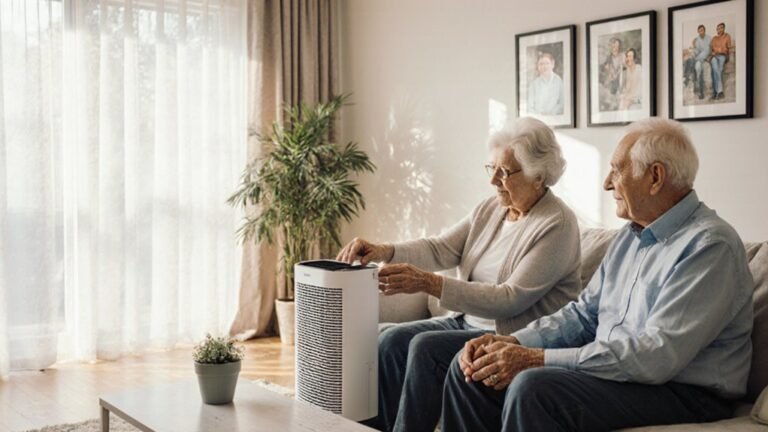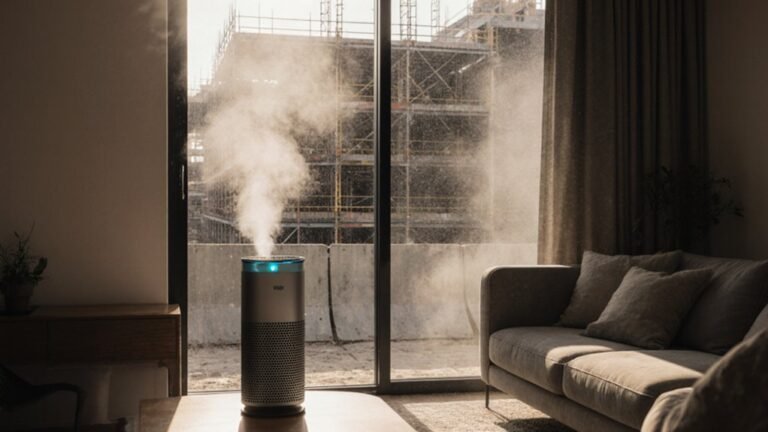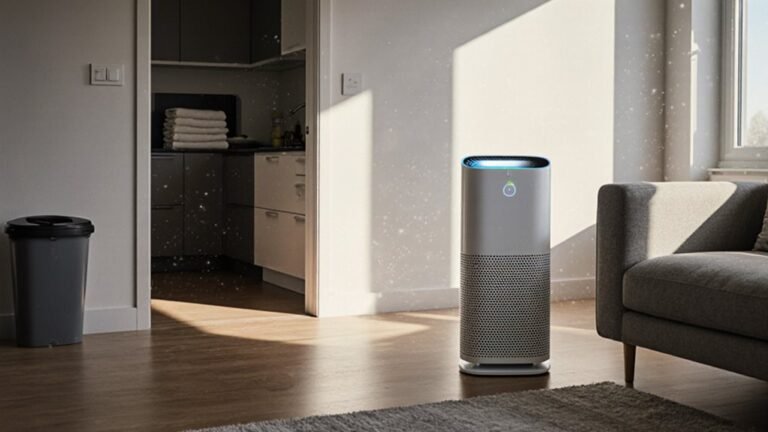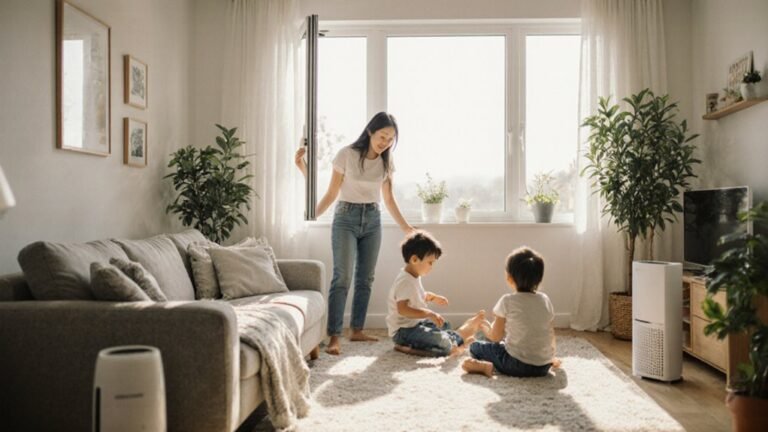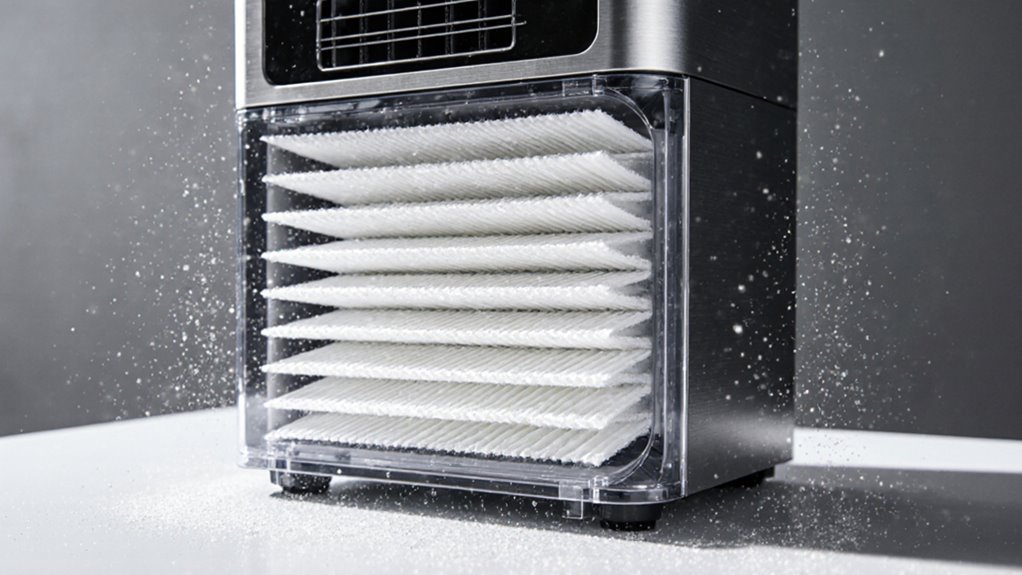

HEPA filters trap tiny particles like dust, pollen, smoke, and fine aerosols to improve indoor air quality. They remove at least 99.97% of particles sized 0.3 microns when properly rated. Different HEPA grades and filter fit affect performance and compatibility with air purifiers or HVAC systems. Matching filter size, CADR, and replacement schedule to room size and pollutant type delivers the best results. Proper installation and regular replacement keep airflow steady and filtration effective.
What Are HEPA Filters?
HEPA filters are special air filters that catch very tiny particles that regular filters often miss. You can trust them because they follow strict performance standards, not just a fancy label.
Whenever you hear HEPA myths, recollect that “HEPA-type” isn’t the same thing. A true HEPA filter must meet exact capture rules, and that helps you feel confident about the air in your space.
You’ll also want to watch filter lifespan, because a loaded filter won’t work as well over time. So, whenever you choose one, look for verified ratings and a solid seal. That way, you’re not guessing; you’re making a smart choice for your home, your comfort, and the people who breathe beside you.
How HEPA Filters Trap Tiny Particles
You can consider a HEPA filter like a maze of fine fibers that catches tiny particles in more than one way.
As air moves through the dense fiber layer, larger bits slam into fibers, while smaller ones stick as they twist through the path.
Even the tiniest particles can get held back because they drift, brush past fibers, and end up trapped.
Particle Capture Mechanisms
Although tiny particles seem almost weightless, HEPA filters catch them through several smart physical processes working together. You can consider of the filter as a team that helps your air feel safer. The largest specks hit fibers via Particle impaction, while mid-sized ones brush and stick through interception. Very tiny bits wander in shaky paths, so Brownian capture helps them collide with fibers. | Mechanism | What it does |
| — | — |
|---|---|
| Impaction | Bumps larger particles into fibers |
| Interception | Snags particles that touch fibers |
| Brownian capture | Traps tiny moving particles |
| Sieving | Blocks bigger particles outright |
| Combined action | Raises overall capture |
This mix matters because you’re not coping with one size only. Instead, the filter keeps working across many sizes, so you can breathe with more confidence and feel included in cleaner indoor spaces.
Fiber Density And Flow
Whenever air moves through a HEPA filter, the tight mat of fine fibers does most of the hard work. You benefit from this design because it slows the air just enough for particles to meet the fibers instead of rushing past them.
With the right fiber density, the web stays open enough for airflow but packed enough to guide the stream through many twists. That balance in fiber porosity and flow behavior helps the filter feel smooth while still working hard.
Tiny Particle Retention
Tiny particles can feel almost invisible, but a HEPA filter still has to catch them, and that’s where the magic of its fiber maze really shows. You might suppose the smallest specks slip through, yet they don’t. As air bends around each fiber, tiny bits drift close and stick via surface deposition, while others zigzag until they touch. During nanoparticle evaluation, you can see this quiet teamwork at its best.
- Fine fibers slow the air like a soft forest path.
- Tiny particles follow curves and lose their escape route.
- Some particles bounce into fibers and stay there.
- Even the smallest specks cling as layers build up.
Why HEPA Filters Improve Indoor Air
HEPA filters improve your indoor air because they catch tiny particles that other filters often miss. That means you breathe less dust, pollen, smoke, and mold, which can make your space feel calmer and easier on your lungs.
Whenever the air feels cleaner, you might notice less sneezing, less irritation, and a more comfortable room altogether.
Capturing Fine Particles
A HEPA filter helps your indoor air feel cleaner because it catches the fine particles that slip past many ordinary filters.
You can envision tiny specks moving through a maze of fibers, where particle agglomeration makes some clumps easier to trap.
- Dust drifts like faint gray fog
- Smoke looks like soft evening mist
- Pollen floats like bright yellow confetti
- Tiny debris swirls, then sticks
With airflow modeling, engineers shape that maze so air keeps moving while particles get pulled in.
You don’t need perfect conditions to feel the difference; you just need steady capture at the right size range.
That’s why HEPA media works so well in shared spaces. It helps your room feel fresher, and it gives you a sense that clean air is part of your everyday circle.
Reducing Allergens Indoors
Whenever dust, pollen, and pet dander keep sneaking into your home, a HEPA filter can help your rooms feel easier to breathe in. You can make your space feel more welcoming by choosing one that matches your room size and placing it where air moves well. Bedroom placement matters because you spend so much time there, and steady filtration can support a calmer night. | Allergens | Common source | Best placement |
| — | — | — |
|---|---|---|
| Dust | Floors, fabrics | Near traffic paths |
| Pollen | Open windows | Adjacent to entry areas |
| Pet dander | Beds, couches | In bedrooms |
If you run the filter frequently, it catches tiny particles before they settle on surfaces. That means you share your home with fewer triggers and more comfort, which can feel like a quiet win for everyone.
Improving Breathing Comfort
Breathe easier, because the air in your home can feel lighter as a HEPA filter is doing its job. You might notice less throat tickle, less chest tightness, and more steady breathing whenever tiny particles drop out of the air. That helps your breathing ergonomics, so your lungs don’t work as hard during rest, reading, or sleep.
- Soft morning light without dusty haze
- A calmer room after vacuuming
- Cleaner air around your couch and bed
- Fewer sniffles whenever guests arrive
As you use it daily, your space can feel more welcoming, like everyone gets to exhale together. Still, watch humidifier interactions, because too much moisture can add comfort problems of its own. Whenever you balance both well, your home feels easier to breathe in and easier to belong in.
What HEPA Filters Remove
HEPA filters are built to catch tiny particles that float in the air and can slip past ordinary filters. You breathe easier whenever they trap pollen, dust, mold spores, smoke, and many pet dander bits. They also catch fine particles from wildfire haze and some airborne germs riding on droplets. That means your space can feel cleaner and more welcoming for everyone inside.
However, HEPA alone won’t give you odor removal or gas adsorption, since smells and vapors are much smaller than the fibers can hold. Should you want help with those, you need a carbon layer or another gas filter. So, HEPA does the heavy lifting on particles, while other media handle odors and fumes.
HEPA Filter Ratings Explained
HEPA ratings tell you how well a filter traps tiny particles, and they’re not all the same from one label to the next.
Whenever you see terms like True HEPA, H13, or H14, you can compare real performance instead of guessing based on marketing buzz.
MERV ratings work too, but they measure HVAC filters, so they sit in a different lane than HEPA.
HEPA Rating Standards
Whenever you shop for an air cleaner, the label can look simple, but the rating behind it tells you a lot about real performance. You’ll see label variations like True HEPA, H13, or HEPA-style, and those words aren’t the same. Trusted certification programs help you spot the real thing, so you can feel confident, not confused.
- A seal that looks tight and sturdy
- Fine fiber layers like a soft maze
- A room map showing the right fit
- A trial report with clear numbers
These standards matter because they show how well the filter traps tiny particles at the hardest size to catch. Whenever you choose a verified rating, you join people who want cleaner, safer air at home.
MERV Versus HEPA
A lot of people get stuck comparing MERV and HEPA, but the difference gets clearer once you understand what each rating really measures.
In a MERV comparison, you’re looking at how well an HVAC filter traps common indoor particles in a whole system. HEPA focuses on much finer capture, with true HEPA holding back at least 99.97% of 0.3 micron particles.
That means HEPA usually gives you stronger Filter performance for smoke, dust, and tiny aerosols. Still, a higher rating isn’t the whole story.
You also need the right fan power, a good seal, and enough airflow for your room. So, when you select, consider your space, your air goals, and how much protection you want to feel at home.
Best Uses for HEPA Filters
Clean indoor air matters most whenever you’re handling tiny particles that can slip deep into your lungs, and that’s where HEPA filters shine.
You’ll get the best results when you use them where the air carries smoke, dust, pollen, or mold spores. In hospital applications, they help protect shared spaces, and portable units can support smaller rooms or work areas where you need fast relief.
- A clinic hallway with steady foot traffic
- A workshop clouded by fine dust
- A classroom after allergy season winds up
- A household area during wildfire smoke days
Because HEPA media traps very small particles, you fit into a cleaner, calmer space with others who breathe easier too.
Whenever you choose the right size and keep airflow strong, you make every breath feel a little safer and a lot more welcoming.
HEPA Filters in Home Air Purifiers
The heart of a home air purifier is usually its HEPA filter, and that matters because it can pull tiny particles out of the air you breathe every day. Whenever you choose one, look for True HEPA and check the CADR, because size and strength should fit your room.
| Feature | What it means |
|---|---|
| Portable placement | Move it where you gather most |
| Room fit | Match airflow to square footage |
| Noise tradeoffs | Faster fans might sound louder |
| Filter seal | Tight housing helps stop leaks |
| Replacement cost | Plan for upkeep over time |
You’ll feel more at ease once the unit runs in the right spot, since good placement helps it share clean air with your family. Should sleep matters, low noise tradeoffs can be worth a slower setting. Also, keep the filter clean and replace it on schedule, so you keep that steady, welcoming comfort going.
HEPA Filters in Vacuums and HVAC Systems
Should you liked how a home purifier helps your family breathe easier, it’s natural to look at the bigger systems that keep air moving through the whole house or building. In vacuums, HEPA media catches the dust cloud that carpet agitation stirs up, so you’re not chasing dirt from room to room. In HVAC systems, the filter works with airflow balancing, helping your vents share cleaner air without choking the fan.
- Envision crumbs lifted from a hallway rug
- Image pollen trapped before it swirls back
- Feel steadier air coming through each vent
- Notice less gray dust settling on shelves
When you use these systems well, you help your space feel more like a shared safe place. Good seals matter, too, because leaks can let particles slip past and undo the care you’ve put in.
How to Choose the Right HEPA Filter
As you’re choosing a HEPA filter, it helps to match the filter to both your air quality goal and the space it has to serve, because a strong filter in the wrong unit can still leave you breathing dust.
Start with filter sizing, so the unit can move enough clean air for your room and your daily routine. Then check for True HEPA, H13, or verified CADR ratings, since labels like HEPA-type can mean less than you expect.
If odors or smoke bother you, pick a model with carbon media too. Next, think about noise tradeoffs, because a quieter fan often works best when you’ll actually keep it running.
Finally, choose a brand with clear testing data and a fit that feels right for your home.
HEPA Filter Maintenance and Replacement
Once you’ve picked a HEPA filter that fits your room and your goals, you need to keep it working like it should. Check the prefilter every month, and clean it so the main filter doesn’t clog too fast. Dust, pet hair, and smoke can shorten filter lifespan, so watch for weaker airflow or more noise. Then follow your replacement schedule, because a tired filter can’t protect your space the way your crew needs.
- Glance at the filter in bright light.
- Feel for gentler airflow at the vent.
- Mark the next swap on your calendar.
- Store a spare in a dry closet.
When you replace it, power the unit down initially and seal the used filter in a bag. That small habit helps your home stay fresh, safe, and welcoming for everyone inside.
Frequently Asked Questions
How Do I Tell True HEPA From HEPA-Type Filters?
You can spot True HEPA by checking filter standards, particle tests, and certified efficiency. True HEPA usually shows 99.97% at 0.3 microns; HEPA type labels are not standardized, so you will want verified tests and certifications.
What CADR Do I Need for My Room Size?
You’ll want a CADR that fits your room volume and desired air changes: multiply room volume by target air changes then divide by 60. It’s transformative, and you’ll breathe easier together.
Do HEPA Filters Remove Odors and VOCS?
No, HEPA filters will not remove odors or VOCs well. You will need activated carbon for that, and some systems add photocatalytic oxidation too. Together they can help your space feel fresher and more comfortable.
How Often Should HEPA Filters Be Replaced?
You should replace it whenever the filter lifespan ends, usually every 6 to 12 months. Watch replacement indicators like reduced airflow, odors, or a dirty filter. If you belong to a heavy use household, check monthly.
Are HEPA Filters Effective Against Wildfire Smoke?
Yes, HEPA filters can help with wildfire smoke by trapping wildfire particles. You will breathe easier provided you size the unit well and check mask compatibility for layered protection especially once outdoor air gets heavy.