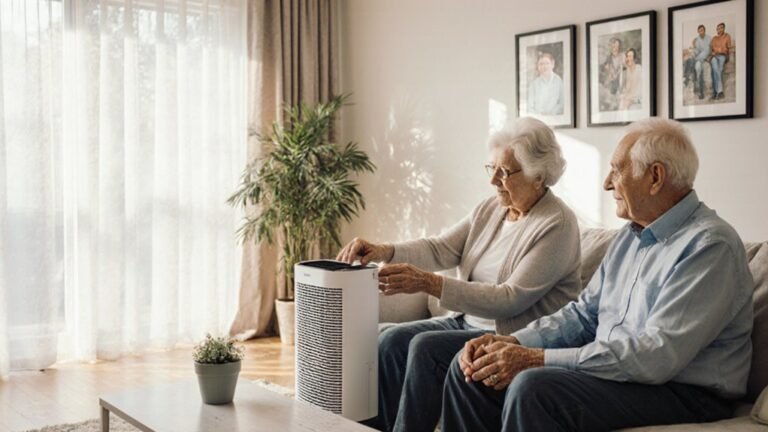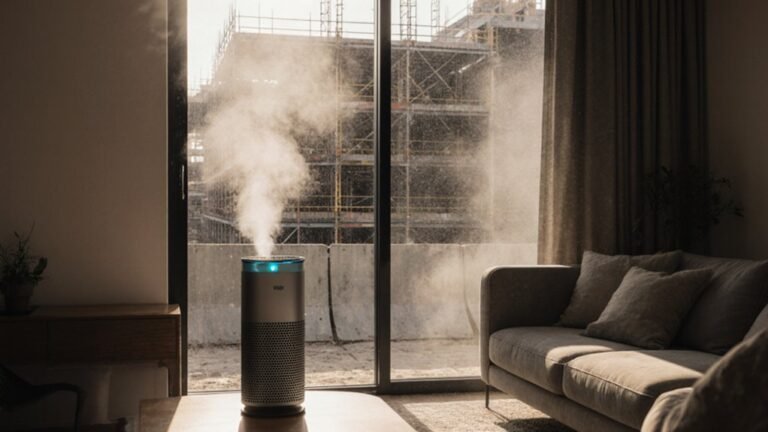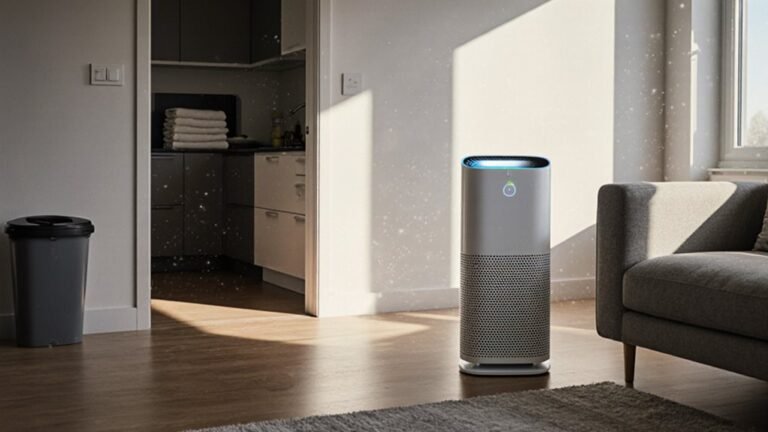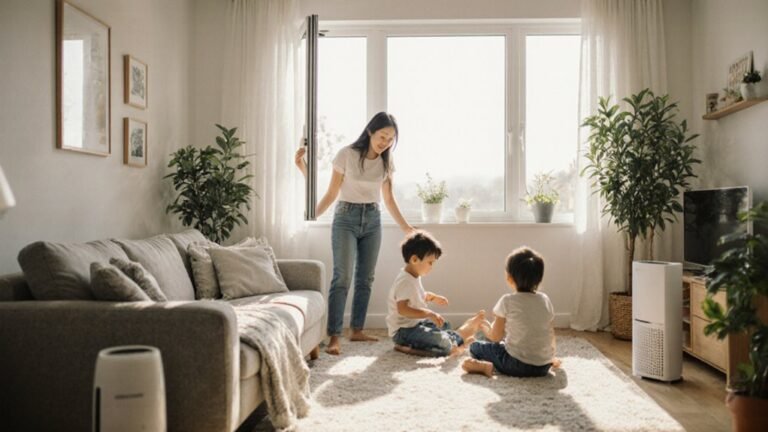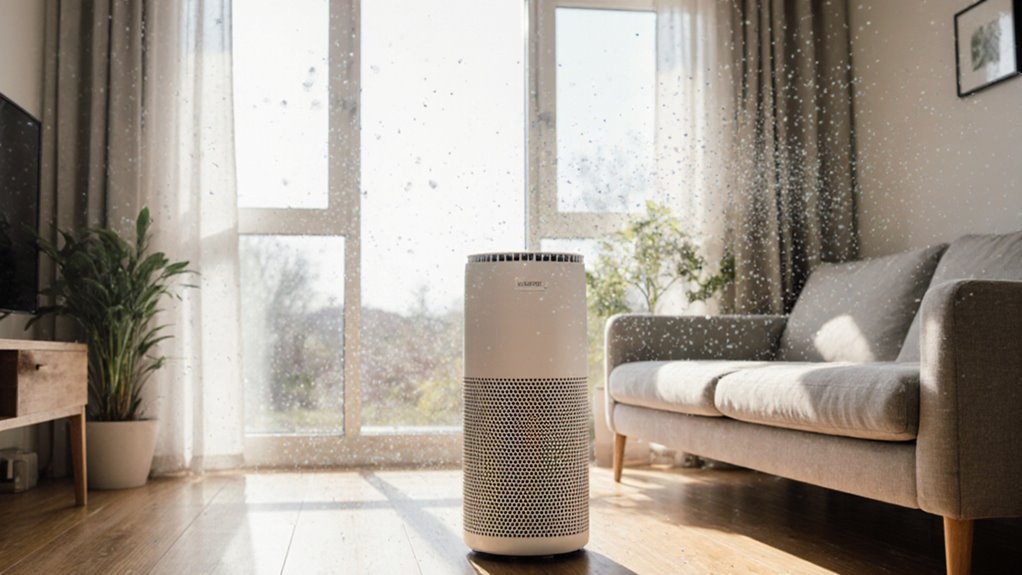

Yes — a quality air purifier can significantly cut indoor pollen levels. True HEPA filters trap tiny pollen grains as air cycles through the unit. Choosing a purifier sized for the room keeps filtration effective. Proper placement, continuous run time, and regular filter replacement maintain peak performance. Knowing these practical steps helps keep indoor air clearer and allergy symptoms lower.
Can Air Purifiers Reduce Pollen Indoors?
Yes, air purifiers can reduce pollen indoors, and for many people, that relief feels like a small win on a bad allergy day.
You’re not imagining it when your nose calms down in a filtered room.
A true HEPA purifier can trap tiny pollen grains very well, and a good pre-filter helps catch the bigger ones initially.
Provided you match the unit to your room, airflow mapping can show where the air moves best, so the purifier isn’t working in the wrong corner.
Seasonal timing also matters, because operating it during peak pollen months gives you the biggest payoff.
Keep it on in the bedroom, where you breathe for hours.
That steady use can lower indoor pollen and help you rest easier.
What Makes Air Purifiers Catch Pollen?
What makes an air purifier catch pollen so well is mostly simple science working in your favor. Inside the unit, filter mechanics slow the air and give pollen fewer escape routes. As air moves, particle interception lets those grains brush against fibers and stay there.
Airflow behavior matter too, because steady suction pulls dusty air through the same path again and again, which helps your purifier build a cleaner room. Some models also use electrostatic attraction, so tiny charges help lure pollen toward collecting surfaces.
Whenever you place the purifier near where you sleep or relax, you help it work like part of your own space. That’s why the machine can feel like a quiet teammate, not just a box, especially whenever pollen season makes home feel less friendly.
HEPA Filters for Pollen Removal
HEPA filters are often the heart of a good air purifier for pollen, because they trap the tiny grains before they can keep floating around your room.
You can feel more at ease whenever the air keeps getting cleaner.
- A true HEPA filter catches pollen with very high efficiency, so you breathe easier during peak season.
- A pre-filter helps protect the main filter, which can improve HEPA lifespan and keep performance steady.
- With regular Allergen trials, you can see whether your purifier is really lowering pollen around you.
How to Choose the Right Room Size
Choosing the right room size starts with matching the purifier to the space where you spend the most time, because a unit that’s too small can feel like it’s trying to mop up a puddle with a paper towel.
You’ll get better room matching when you check the room’s square footage and compare it with the purifier’s CADR. Strong filter sizing gives you faster pollen removal and steadier comfort.
Should your bedroom be your refuge, choose a model made for that exact size, or a bit larger. Then you can breathe easier without pushing the unit too hard.
Also, look for a purifier that can run all night without loud noise, so you’ll actually keep it on. That simple fit helps your space feel calmer, cleaner, and more like home.
Where to Place an Air Purifier
Put your air purifier in the bedroom initially in case pollen makes nights rough, because that’s where you spend hours breathing the same air.
In the residential room, place it where you relax most and where air can move freely through the room. Keep it away from walls, curtains, and big furniture so the airflow doesn’t get blocked and the purifier can work the way you need it to.
Bedroom Placement
In the bedroom, where you place an air purifier can make a real difference in how well you sleep and breathe. For smart bedroom placement, keep the unit near your bed, but not so close that the airflow feels harsh. That helps cut sleep exposure and lets you rest easier.
- Put a bedside purifier on a steady table or floor spot with open space around it.
- Aim it toward the room, so clean air reaches your breathing zone.
- Pick a model with a calm noise tradeoff, because quiet nights help you keep it running.
When you stay consistent, you join a cleaner, more comfortable sleep space. And since pollen can drift in overnight, a purifier beside your bed gives you support right where you need it most.
Living Room Location
Whenever pollen starts drifting through your home, the lounge often becomes the main path it follows, so placing your air purifier there can help a lot.
You can set it near the center of the room so the airflow reaches your seating arrangement and pulls in floating pollen before it spreads farther.
This spot works well because you and your family usually pass through the household room often, and those traffic patterns keep the air moving.
Should you relax, read, or watch TV there, the purifier also supports the space where you spend genuine time together.
For best results, keep it running during peak pollen hours.
Then the room feels calmer, fresher, and a little more like your own safe place.
Avoid Obstructions
Keep your air purifier clear of furniture, curtains, and tight corners so it can do its job without fighting the room. Whenever you handle furniture placement well, you cut airflow obstruction and help pollen reach the filter faster. That means the purifier can pull in more dusty air from around your bed or couch, where you breathe most.
- Leave a few feet of open space around the unit.
- Point the intake toward the room, not a wall.
- Keep drapes, baskets, and lamps away from the vents.
If you share a room, don’t tuck the purifier behind a chair just to hide it. Anytime a clear path lets the machine work smoothly, and that helps you feel more at home with cleaner air.
Best Features for Pollen Control
As you’re choosing an air purifier for pollen control, true HEPA filtration should be high on your list because it traps tiny pollen particles with very high efficiency.
You should also look for a high CADR rating, since that tells you how quickly the purifier can clean the air in your room.
Together, these two features can help you feel more comfortable and breathe easier during pollen season.
HEPA Filtration
HEPA filtration is one of the best tools you can use for pollen control because it catches the tiny particles that slip into your home and settle into your air. Whenever you choose a purifier that meets HEPA standards, you give yourself steady relief, especially in rooms where you rest and breathe most.
- It traps pollen with very high efficiency.
- It helps your space feel cleaner and calmer.
- It supports your daily comfort without much effort.
Look for a strong pre-filter too, because it can protect the main filter and improve Filter lifespan. Then keep the unit running in the room you use most, so your home works with you, not against you. That simple step can make your indoor air feel more like a safe place.
High CADR Ratings
A high CADR rating can make a big difference, especially in case pollen keeps sneaking into your space faster than you’d like. Whenever you pick a unit with high CADR, you help the room clear pollen faster, so you can breathe easier and feel more at home. That speed matters in bedrooms and family rooms, where air keeps moving and pollen keeps coming.
Still, you want balance. A strong fan can bring a noise tradeoff, so look for a model you can tolerate all day and night. Also, check filter lifespan, since heavy pollen loads can clog filters sooner. Good design can also keep energy consumption lower, which helps you run the purifier more often without worry.
How Long Should You Run an Air Purifier?
You should usually run your air purifier as long as pollen is in the air, and that often means many hours a day, not just a quick burst here and there. Assuming you want steady relief, let it work with your routine, not against it. Continuous operation helps keep pollen levels lower, especially in the room where you sleep.
- During peak season, keep it on most of the day.
- For better overnight runtime, run it in your bedroom before bed and through the night.
- Provided your unit has different speeds, use a stronger setting when you’re home.
That way, you and your space stay in sync. Check the filter often, too, because a tired filter can’t do its job well. With the right habits, you give yourself a calmer, cleaner place to breathe.
Can Air Purifiers Stop Pollen Entry?
Air purifiers can help trap pollen once it’s floating indoors, but they can’t stop it from coming in through open doors, windows, shoes, clothes, or pets.
HEPA filters catch pollen very well, so you can lower what you breathe, especially in bedrooms and other closed rooms.
Still, you’ll get the best relief whenever you pair a purifier with cleaning and simple habits that cut down new pollen entry.
Pollen Entry Sources
Pollen sneaks in through several everyday entry points, and that’s why an air purifier can only do part of the job.
You’re not dealing with one doorway, but many: open windows, cracked doors, clothes, shoes, and even pet dander that drags pollen inside.
- Air flows in whenever you open up for fresh air, and pollen rides along.
- You track it in after work, especially from hair, jackets, and bags.
- Your pets can carry it on fur, then spread it across rooms you share.
Purifier Limits And Benefits
Still, it helps to know what an air purifier can and can’t do, because it won’t stop pollen from getting inside in the initial place. It works after pollen enters, catching particles with HEPA filters and easing the load in your room. That matters whenever you want a calmer bedroom or a safer inhabited space for your crew.
| Benefit | Limit | Best use |
|---|---|---|
| Traps pollen fast | Can’t seal doors | Bedroom nights |
| Cuts airborne pollen | Misses surfaces | After cleaning |
| Helps breathing | Needs upkeep | During peak season |
| Fits tight spaces | Portable units vary | Small rooms |
| Supports comfort | No cure | Daily use |
With seasonal maintenance, you keep performance steady. So, choose portable units with the right CADR, run them often, and pair them with cleaning. You’ll feel more in control, and that relief counts.
Best Habits for Lower Indoor Pollen
Whenever you want to lower indoor pollen, the best habits work together and make your home feel easier to breathe in.
You don’t need a perfect routine; you just need a few steady moves that fit your life and help you feel at home.
- Practice seasonal laundering by washing bedding, throws, and clothes often, so pollen doesn’t settle in and ride around with you.
- Build entryway organization with a shoe spot, coat hook, and basket for bags, because that’s where outdoor pollen likes to sneak in.
- Clean smart by vacuuming with a HEPA filter and wiping hard surfaces, especially after windy days.
Also, keep windows closed on high-pollen days, and change clothes after periods outside.
Small habits can make your space feel calmer and more welcoming.
Signs Your Air Purifier Is Working
One of the easiest signs your air purifier is working is that the room starts to feel less heavy, especially during peak pollen season. You could also notice fewer sneezes, calmer eyes, and less morning congestion.
Check the filter indicators, because a clean or changing light can show the unit is still catching pollen well. At the same time, steady noise levels tell you the fan is running as expected.
Should you place it near your bedroom, you might wake up feeling more rested and less stuffed up. You can also see less dust settling on nearby surfaces, since the purifier is pulling particles from the air.
Whenever you keep it on consistently, your space can feel more like a place where you can finally breathe easy.
Frequently Asked Questions
Can Air Purifiers Reduce Pollen Stuck on Furniture?
No, you can’t rely on air purifiers to remove pollen stuck on furniture; they mainly clean airborne particles. You will need surface cleaning and fabric treatment to lift residues, reduce re suspension, and keep your space comfortable.
Do Air Purifiers Help With Pollen Allergies at Night?
Yes, if you place a HEPA purifier beside your bed, you will get night relief from pollen allergies. An ounce of prevention is worth a pound of cure, and bedroom placement helps you breathe easier while you sleep.
How Often Should HEPA Filters Be Replaced During Pollen Season?
Replace your HEPA filter during pollen season based on the manufacturer’s replacement schedule, usually every 6 to 12 months; if you run it daily you will likely need earlier changes. Check the filter lifespan and replace pre filters more often.
Do Activated Carbon Filters Remove Pollen Too?
No, they don’t. Activated carbon filters trap odors and gases through pore adsorption, not pollen. Think of them as a sponge for smells; you’ll still want HEPA for pollen, especially if you’re welcoming allergy sufferers home.
Can a Purifier Work if Windows Are Open?
Yes, you can use it, but open windows let pollen keep coming in, so airflow patterns matter. Put the purifier near you, run it continuously, and you will still feel a cleaner, more comfortable room.