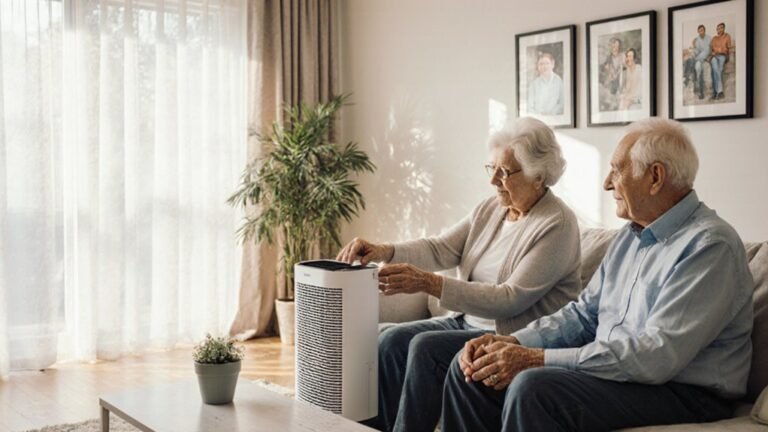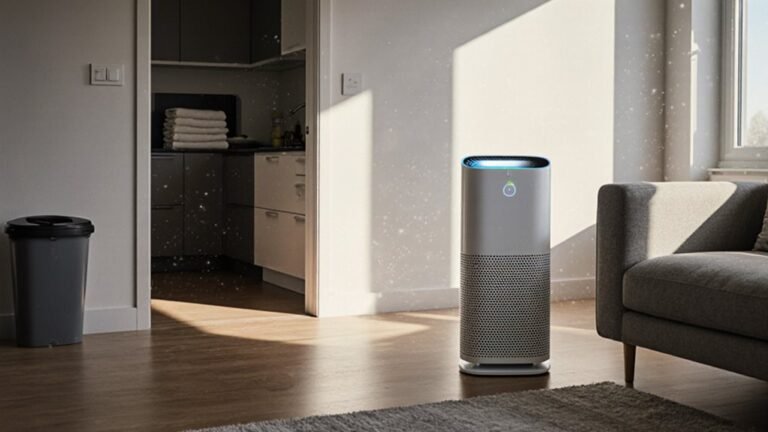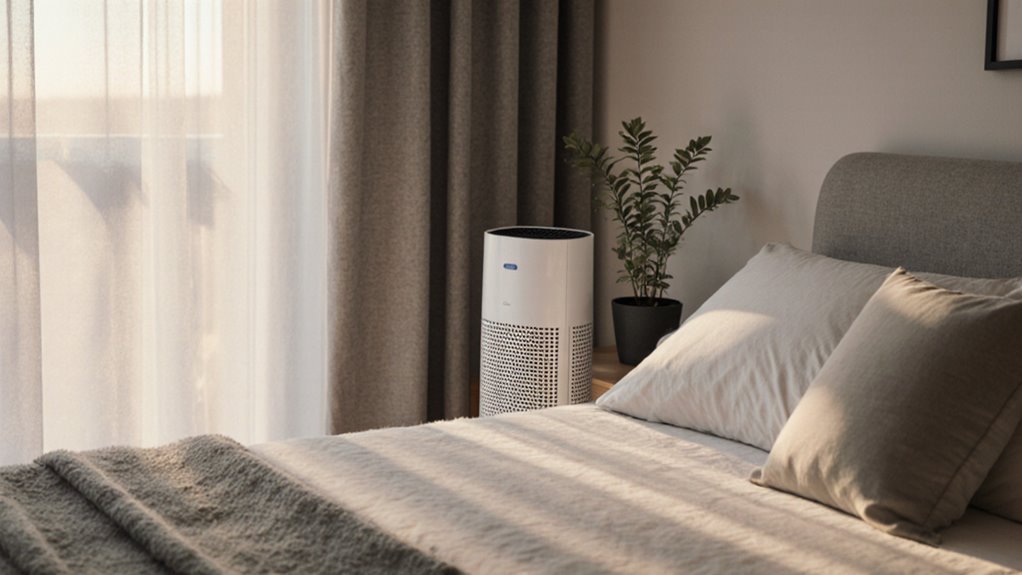

A bedroom air purifier should match room size, use true HEPA plus activated carbon, operate quietly, and be placed for unobstructed airflow. Choose a unit rated for your square footage and check CADR and ACH numbers. True HEPA captures fine particles like pollen, smoke, and pet dander, while carbon removes odors and volatile organic compounds. Look for low decibel ratings and night modes to avoid sleep disruption. One final factor: regular filter replacement keeps performance consistent and protects long-term indoor air quality.
How to Choose a Bedroom Air Purifier
As you choose a bedroom air purifier, start with the air you actually need to clean, because that’s what’ll make your room feel calmer and easier to breathe in.
Should dust, pollen, or pet dander bother you, pick a True HEPA model. In case smoke or strange smells linger, add activated carbon. Then look for a quiet sleep mode, because you deserve rest without a whirring chorus. Check for low noise, easy filter changes, and simple controls. Some budget models still do this well, so don’t assume you need the fanciest box on the shelf.
When you prefer app control, smart connectivity can help you adjust settings from bed. Finally, choose a safe, ozone-free unit with clear filter costs, so your space feels welcoming and easy to maintain.
Pick the Right Room Size
Start matching the purifier to your bedroom’s square footage, because a unit that’s too small won’t clean the air fast enough.
Next, check the Clean Air Delivery Rate, since CADR tells you how quickly it can clear dust, pollen, and smoke from your space.
Then look at ceiling height as well, since a room with taller ceilings has more air to clean than the same floor size with standard walls.
Match Room Square Footage
Picking the right room size is the initial step to getting real comfort from a bedroom air purifier, because even a strong model can feel disappointing should it’s too small for your space. Measure your room square footage, then match it to the purifier’s rating so you’re not guessing.
Your room layout matters too, since a long, oddly shaped space can need more help than a simple square. Check where your bed sits, and make sure air can move freely around it.
Tight window seals also matter, because they help keep outside dust and pollen from sneaking back in. Whenever the fit is right, you’ll feel more settled, breathe easier, and enjoy a bedroom that feels like it’s truly yours, not just another room with a machine.
Check Clean Air Delivery
How do you know whether a purifier can really keep up with your bedroom? Look at CADR testing, because that score shows how fast it clears smoke, dust, and pollen. For a cozy room, you want a match that feels steady, not rushed.
| Room size | CADR target | What it means |
|---|---|---|
| Small | 100+ | Good for a tight sleep space |
| Medium | 150+ | Covers most standard bedrooms |
| Large | 200+ | Helps bigger rooms stay fresh |
| Very large | 250+ | Handles more air, more often |
| Any room | 4 to 6 ACH | Keeps cleaning strong overnight |
Portable monitors can help you see results in real time. Should the numbers stay low, step up the size. In case they climb fast, you’ve found your room’s match.
Consider Ceiling Height
Ceiling height matters more than most people expect, because a purifier that looks strong on paper can struggle once it has to clean a taller room.
Whenever you shop, measure the room’s height, not just the floor space. With tall ceilings, the air volume grows, so you might need a higher CADR to keep the same fresh feel near your bed.
Good airflow modeling helps you match the purifier to that bigger space, instead of guessing and hoping for the best.
Should your room has vaulted or tall ceilings, check the manufacturer’s room-size rating for the full volume. Then place the unit where air can move freely. That way, you and your purifier work together, and your bedroom feels like the calm, shared space you want to come home to.
Why HEPA Filters Matter at Night
At night, a true HEPA filter can make your bedroom feel like a safer, calmer place because it pulls tiny particles out of the air while you sleep.
As you move through each sleep stage, that particle clearing effect helps cut allergen reduction, so your nose, throat, and lungs don’t work as hard.
That matters whenever pollen, dust, or pet dander keep sneaking in after dark.
You might also notice fewer triggers that can raise inflammatory markers and leave you feeling worn out by morning.
Because the air stays cleaner, you can settle in with more ease and feel like your room is working with you, not against you.
In a shared home or busy apartment, that small shift can feel deeply comforting.
Choose a Quiet Air Purifier
You’ll sleep better once your purifier stays quiet enough to fade into the background. Look for low-decibel models and a sleep mode that lowers fan speed without shutting off cleaning power.
That way, you get cleaner air without trading it for a noisy night.
Noise Levels Matter
A quiet purifier can make a big difference in a bedroom, because the best air-cleaning machine should help you sleep, not fight for your attention. You deserve a room that feels calm and shared, even during you sleep alone.
Once you compare white noise comparison options, listen for a steady hum instead of sharp clicks or rattles. That softer sound blends in like rain, so it’s easier to relax.
Also, check directional airflow, because a strong stream aimed at your pillow can feel distracting and chilly. You want the air to move well without making your bed feel like a wind tunnel.
Sleep-Friendly Fan Settings
Most nights, the quietest fan setting is the one that helps you breathe easier without stealing your sleep. You want low noise, but you also need enough airflow to clean the room while you rest. Start on sleep mode, then move up only provided the air still feels heavy.
In case your purifier sits near the bed, choose a gentle stream and smart fan placement so it doesn’t blow straight at your face. That small shift can make the room feel calmer and more inviting. Also, check whether the unit stays steady on its lowest speed, because a smooth hum is easier to ignore than sudden changes.
Whenever you pick a model with quiet controls, you give yourself a bedroom that feels shared, safe, and ready for real rest.
Bedroom Air Purifier Features to Look For
As you’re choosing a bedroom air purifier, the best features do more than clean the air, because they also help you sleep better and wake up feeling less stuffed up.
Look for true HEPA filtration, plus a real carbon stage with strong carbon capacity for odors and smoke. Check CADR and ACH so the unit fits your room, not just your wish list.
You’ll also want a quiet sleep mode, dim lights, and simple controls that won’t bug you at night. Smart auto modes can help too, but only provided sensor calibration is reliable, so the purifier reacts whenever air quality changes.
Finally, choose easy filter alerts, washable prefilters, and ozone-free certification. That way, you can feel confident your bedroom setup has your back.
Where to Place Your Air Purifier
Near your bed is usually the best place to start, because that’s where you need the cleanest air while you sleep. Aim for bedside placement a few feet away, so the purifier can pull air through your breathing zone without blasting you. Keep it off the floor if dust gathers fast there, and leave space around it so air can move freely.
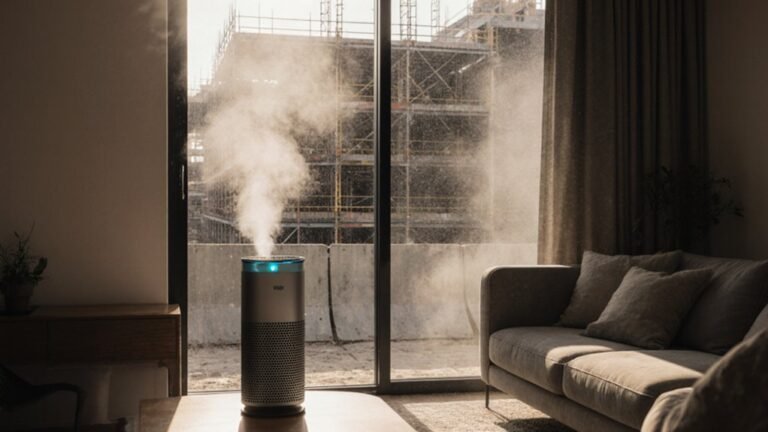
Also, consider window proximity. In case you sleep with a window open on good-air nights, place the unit between the bed and the window. Should outside air be smoky or full of pollen, move it farther from the window and close the frame. You’ll feel better as the purifier works with your room, not against it. Small shifts can make your bedroom feel calmer, fresher, and more yours.
When to Replace Bedroom Filters
You’ll know it’s time to replace your bedroom filter whenever airflow drops, the purifier sounds strained, or dust and odors start hanging around longer than they should.
Your filter’s life also changes with room size, smoke, pets, pollen, and how often you run the unit, so your schedule could need a little adjusting.
Should the filter look gray, clogged, or damaged, cleaning might help the pre-filter, yet the main HEPA or carbon filter typically requires a full swap.
Filter Lifespan Signs
As your bedroom air purifier starts working harder than usual, it’s often trying to tell you the filter is wearing out. You might notice weaker airflow, more dust settling nearby, or filter indicators flashing sooner than before.
Should odors hang around after cooking, pets, or laundry day, that odor persistence can mean the carbon layer is full. You could also hear the unit sound a little louder, since air struggles to move through a clogged filter.
Check the pre-filter too, because trapped lint and hair can hide the real problem. Once you replace the filter, your room can feel fresher fast, and you can breathe with more ease. That small swap helps you keep your sleep space comfy, calm, and truly yours.
Replacement Timing Factors
Whenever your bedroom filter starts to wear down, the right replacement time usually depends on more than the calendar. You should watch your room use, local pollen, smoke, and pet traffic, because each one can age the filter faster.
Should you run the purifier every night, you might need a new filter sooner than a light user. Also, seasonal storage matters. Should you pack the unit away for months, check the filter before you bring it back into your sleep space.
Keep an eye on warranty tips, too, since some brands expect proof of timely swaps. Once you match replacement timing to real conditions, you help your bedroom stay calm, fresh, and welcoming for everyone who sleeps there.
Clean Vs Replace
A quick check can save you from replacing a filter too soon, but it can also stop you from keeping one far too long.
Initially, look at the pre-filter. In case dust wipes off easily during filter cleaning, you can keep using it.
Next, check the HEPA or carbon cartridge. Should it stay gray, smells musty, or airflow feels weak, it’s time for cartridge disposal and a fresh one.
You should also trust the filter reminder light, but don’t rely on it alone. Provided your bedroom has smoke, pets, or heavy pollen, you might need to replace filters sooner.
As soon as you notice more noise, less sleep-friendly comfort, or slower cleanup, act fast. Staying on top of this helps your purifier work like part of your room, not a tired guest.
Best Air Purifiers for Allergies and Pets
Whenever allergies and pet dander keep sneaking into your bedroom air, the right purifier can help you breathe easier and sleep better. You’ll fit in best with a model that uses True HEPA allergen trapping and a carbon layer for odors, so your room feels fresher and calmer.
- Pick a purifier with a CADR sized for your room, so it can keep up with nightly pollen and pet dander.
- Choose low-noise sleep mode, because you deserve quiet rest, not a fan that sounds like a tiny airport.
- Look for easy filters and clear replacement alerts, so you can stay on top of care without stress.
If you share your room with a furry friend, place the unit near your bed and run it before sleep. That way, you wake up feeling more like yourself.
What Air Purifiers Can’t Fix
Even the best bedroom air purifier has limits, so it can’t solve every air problem you face at night. It won’t remove carbon monoxide, fix leaks, or stop new pollutants from entering your room. It also can’t undo chemical exposures from fresh paint, strong cleaners, or scented sprays, even provided that it helps with odors.
| Can’t fix | Why it matters |
|---|---|
| Carbon monoxide | Needs a detector, not a filter |
| Moisture leaks | Creates mold risk |
| Poor ventilation | Lets stale air build up |
| Chemical exposures | Needs source control |
| Humidity control | A purifier doesn’t add or remove water |
How to Keep Bedroom Air Cleaner Daily
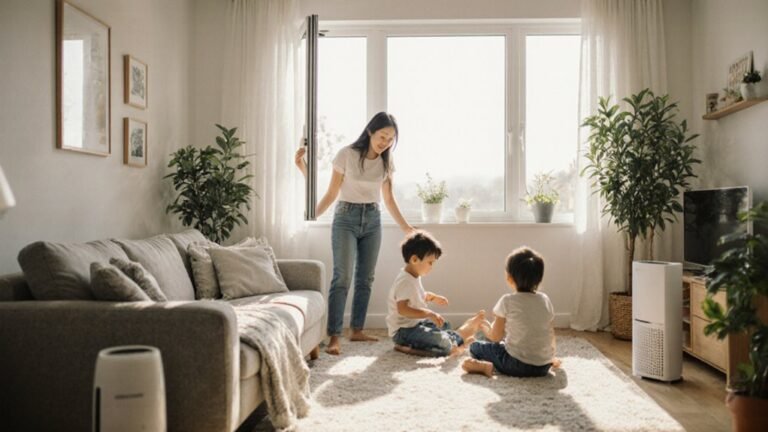
Each day, small habits can keep your bedroom air much cleaner, and that matters because you spend so many hours breathing it in. Start by airing out the room whenever outdoor air is good, so open windows can flush stale air.
Then make your bed, dust surfaces, and vacuum under it to cut down on concealed particles. In case you like a little green company, choose indoor plants that fit your space, but don’t let them replace cleaning.
- Wash sheets weekly to remove dander.
- Keep shoes at the door.
- Run your purifier before sleep.
Next, watch moisture and clutter, since both can trap odors and dust. Once you stay steady with these small moves, your room feels calmer, fresher, and more like a place where you truly belong.
Frequently Asked Questions
How Much Does It Cost to Run a Bedroom Air Purifier Overnight?
You’ll usually pay about $3 to $8 a month, so overnight use costs just pennies, like a quiet nightlight for your room. Your energy cost stays low, and noise level depends on the sleep setting you choose.
Can an Air Purifier Remove Wildfire Smoke Odors From a Bedroom?
Yes, you can reduce wildfire smoke odors with an air purifier that uses activated carbon; HEPA filters handle particles, not smells. Smoke chemistry matters, and strong odors can shorten filter lifespan, so replace filters regularly.
Is It Safe to Use an Air Purifier Every Night While Sleeping?
Yes, you can safely run it every night provided you choose an ozone free certified model, keep up with filter maintenance, and manage fan noise. You’ll breathe easier, sleep better, and feel at home.
Do Purifiers Lower Nighttime Blood Pressure or Improve Sleep Quality?
Yes, they can help: studies show you might see lower nighttime blood pressure and better sleep quality. When you breathe cleaner air, reduced snoring can follow, though bedroom humidity also matters, so keep conditions comfortable.
Should I Keep Windows Open or Closed With a Bedroom Purifier?
Keep windows closed whenever pollen, smoke, or pollution is high, so you maximize allergen control. Open windows only once outdoor air is clean and you want fresh air; otherwise, your purifier cannot fully keep up indoors.