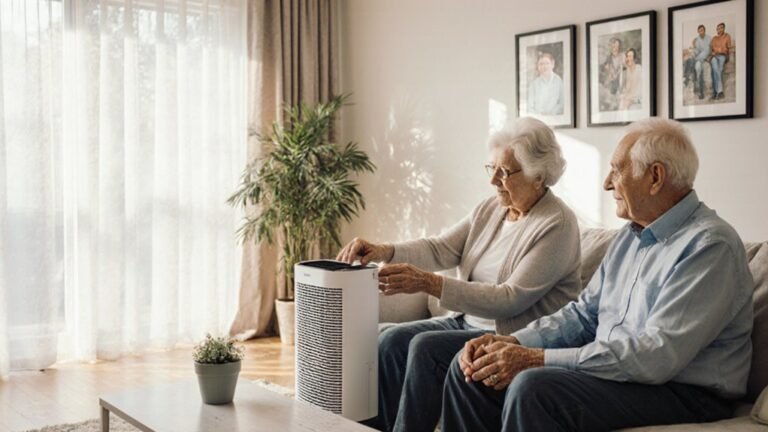
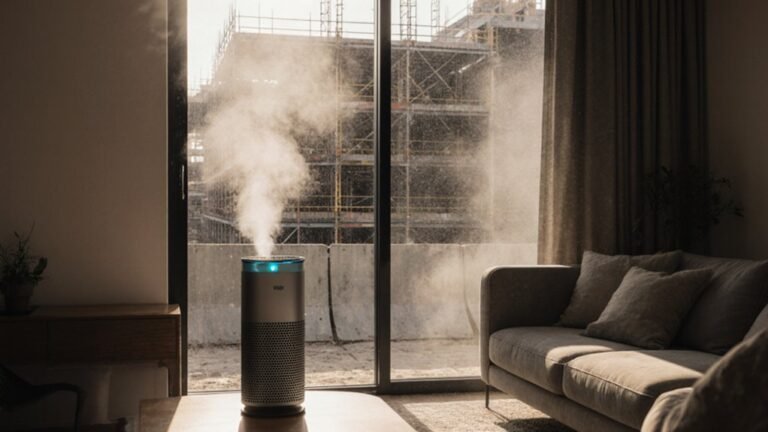
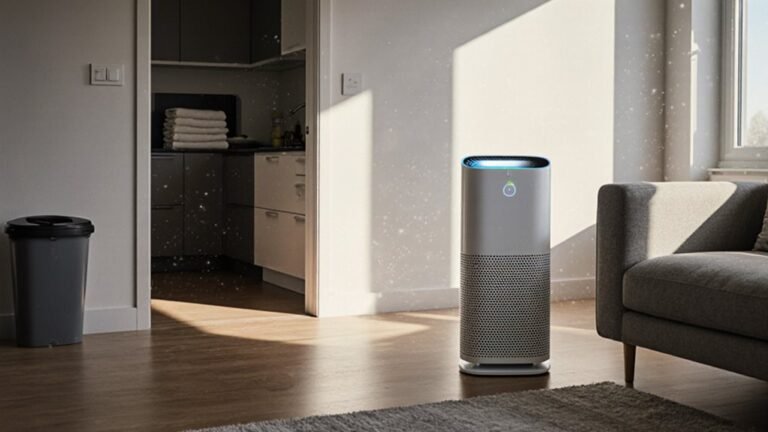
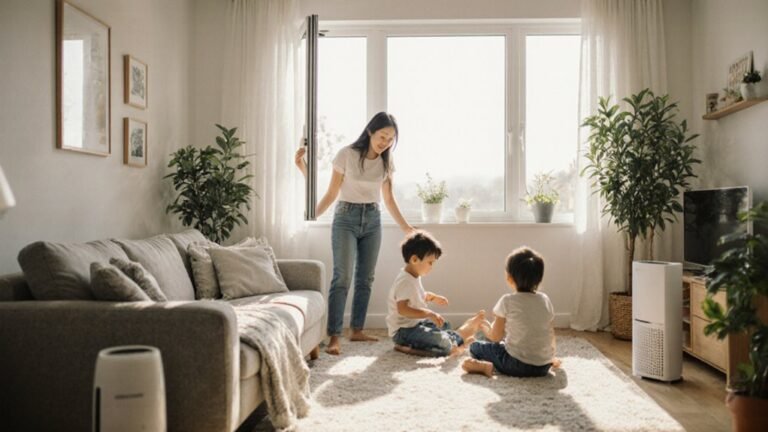
Yes — air purifiers can reduce exposure to airborne germs. Choosing the right size and a true HEPA filter makes a significant difference. These machines draw air through filters that capture tiny particles and aerosols that often carry pathogens. Placement, continuous runtime, and regular filter replacement directly affect how well a purifier works. Combined with ventilation and good hygiene, purifiers add a meaningful layer of protection indoors.
What Air Purifiers Remove
Tiny particles are the main thing air purifiers go after, and that matters more than most people realize. You’re not just moving air around; you’re giving your room a better shot at feeling easier to breathe in. A good filter catches dust, smoke, and many tiny aerosols that drift on indoor air. That’s why HEPA models matter whenever you want steady cleanup, not guesswork.
Still, you should watch filter lifespan, because a packed filter works less well over time. You’ll also notice noise tradeoffs whenever you raise the fan speed. Higher power can clean faster, yet it could sound busier than you’d like. So you get to balance comfort, coverage, and the kind of quiet that helps everyone stick with it.
How Air Purifiers Reduce Germs
Whenever you run an air purifier with a strong HEPA filter, it traps tiny airborne particles that can carry germs.
Because HEPA filters capture at least 99.97% of 0.3 micron particles, you help cut down the germs floating around the room. Over time, that lower particle load can reduce germ circulation and make the air feel safer to breathe.
Filtration Of Airborne Particles
Air filters can feel like quiet helpers in the background, but they do an essential job. You breathe easier whenever they trap airborne particles that carry germs.
As air moves through the filter, tiny bits stick through interception, impaction, diffusion, and electrostatic pull. Whenever particles clump through particle agglomeration, the unit can catch them more easily.
That matters in busy rooms where you want cleaner shared air and a stronger sense of safety. Good filtration also helps protect filter lifespan, because the right size and fit keep airflow steady.
Provided you choose a well matched purifier and keep it running, you give yourself and everyone nearby a better chance to share space with less worry.
HEPA Capture Efficiency
A well-chosen purifier does more than move air around the room. Whenever you choose a true HEPA unit, you give your space a strong helper that traps tiny particles from the air you breathe. Its fibers use particle behavior to catch germs on contact through interception, impaction, and diffusion.
That matters because many virus-laden aerosols are small, and HEPA filters can capture 99.97% of particles at 0.3 microns.
- You get broad capture across many particle sizes.
- You keep performance steady through watching filter loading.
- You help your room feel safer whenever the unit fits the room size.
If the filter gets clogged, airflow drops and capture weakens, so you’ll want to replace it promptly.
Reduced Germ Circulation
Clean air starts to work for you through lowering how many germs stay floating around in a room. As the purifier pulls air through its filter, it catches tiny particles that can carry viruses and bacteria, so fewer of them keep recirculating near you.
With strong airflow modeling, you can see how cleaner air moves through shared spaces and cuts down buildup. That matters whenever you’re trying to feel safe at home, in class, or at work.
Your own occupant behavior also plays a part, because closing doors, placing the unit near people, and running it often can help the room stay fresher. In this way, the purifier doesn’t just clean air once. It keeps helping by reducing the germ load you breathe around every day.
HEPA Filters and Germ Capture
You can count on HEPA filters to trap tiny particles that might carry germs, including many virus-laden aerosols.
They work through pulling air through dense fibers that catch particles through interception, impaction, diffusion, and static attraction.
Whenever the filter and room size match well, you get much cleaner air and a lower chance of breathing in those germs.
HEPA Filter Efficiency
HEPA filters do the heavy lifting whilst it comes to trapping tiny airborne germs, and that’s why they matter so much in air purifiers. You can trust them more whenever you look at testing standards, because they show how well a filter performs under set lab conditions. Strong HEPA filters can also support filter longevity, since a well-made unit holds its power better over time.
- You get cleaner air whenever the filter stays tightly sealed.
- You feel safer whenever the unit meets real HEPA ratings.
- You keep the system steady through replacing filters on schedule.
Once you choose a purifier, you’re joining a smarter, calmer way to care for your space. Then the device can keep working with less strain, and you can breathe with a bit more confidence.
Capturing Germ-Laden Particles
Snagging tiny germ-laden particles is where a good purifier really starts to earn your trust. You want a unit that pulls air through a true HEPA filter, because that’s where close range capture happens best. As air moves inside, the fibers trap particles by impact, interception, and diffusion, so many virus-hitching bits don’t get back to you.
Whenever you place the purifier near where you sit or sleep, it can catch more of what floats nearby. That matters in shared rooms, where every breath feels personal. Keep the filter sealed and changed on time, too, because a tired filter can cut filter lifespan and weaken performance. With the right setup, you get cleaner air and a little more peace of mind.
Do Air Purifiers Kill Viruses or Trap Them?
Air purifiers usually trap viruses instead of killing them. You get cleaner air because the filter catches virus-filled particles and keeps them out of your breathing space. In some units, virus inactivation happens with UV light, but that’s not the main job of most purifiers. Good filter maintenance matters, too, because a clogged filter can’t keep doing its part.
- HEPA filters grab tiny airborne particles well.
- UVGI units can damage germs after capture.
- Regular filter checks help your purifier stay effective.
When you choose the right unit for your room, you give yourself and your household a better shot at calmer, safer air. That can feel like a small win, but it really adds up during busy days at home.
Which Germs Air Purifiers Handle Best
The germs that air purifiers handle best are the ones that travel through the air on tiny droplets and particles. You’ll get the most help from HEPA units whenever you face virus-laden aerosols, some bacteria, and mold spores.
These particles stay suspended, so the filter can catch them before they spread around your space. That matters because pathogen survivability can stay high in the air for a while, even though people feel fine.
Still, the purifier only helps provided air moves through it, not around it. Once the filter fills up, prompt filter disposal and replacement keep performance strong.
You won’t stop every germ this way, but you do make the room feel safer and more welcoming for everyone sharing it.
Why Room Size Affects Performance
Room size changes how hard your air purifier has to work, because a small unit can clean a small space much faster than a big one.
Once the room gets larger, you need more clean air each hour to keep airborne germs moving out.
Should the purifier be too small for the room, you might still breathe the same stale air even while it’s running.
Room Volume Matters
A bigger space can make an air purifier work harder than you’d expect, and that’s because clean air has to fill every corner of the room. If you match the unit to the room volume, you help it reach people where they actually sit, breathe, and gather. Your furniture layout can block airflow or help it move, and that changes how well the purifier supports your space. Also, occupant density matters, because more people means more shared air and less room for fresh mixing.
- Place the unit where air can move freely.
- Keep it near the center of daily activity.
- Avoid corners packed with chairs, tables, or storage.
Air Changes Per Hour
Air changes per hour, or ACH, tells you how often the air in a space gets replaced with cleaner air each hour, and that number matters a lot whenever you want an air purifier to do its job well.
Should your room be small, the purifier can refresh the air faster, so you feel safer sooner. In a bigger room, the same device has to work much harder, and the clean air spreads more slowly. That’s where ventilation interplay comes in, because open windows, vents, and fans can help or dilute the purifier’s effect.
Your occupancy impact also matters. Whenever more people share the room, you add more exhaled particles, so you might need higher ACH to keep the space comfortable and welcoming.
Near speaking areas, placement helps too.
Purifier Capacity Limits
As you size a purifier, the room can make or break its performance. In a small bedroom, you might feel safe fast, but a huge occupant room can outrun a weak unit.
Whenever the purifier is too small, it works harder, filter saturation comes sooner, and clean air drops. That can leave you sharing stale air with the whole room, which nobody wants.
- Match CADR to the room’s square footage.
- Place the unit near where you sit or sleep.
- Expect more noise tradeoffs whenever you increase fan speed.
Why Air Changes Per Hour Matter
Whenever you want cleaner indoor air, ACH matters because it tells you how often a room gets its air refreshed with clean air. Whenever you check ventilation metrics, you can see whether your purifier is doing enough work for the space you share. A higher ACH lowers the buildup of germs, so you breathe air that feels fresher and safer.
Room size matters, but so does occupant behavior. Suppose people talk loudly, gather closely, or stay in one spot for hours, you need more clean air turnover. That’s why a small purifier can feel fine in a quiet room yet struggle in a busy one.
Whenever you match ACH to real use, you give yourself and others a better chance to stay comfortable, connected, and protected.
Where to Place an Air Purifier
You can get a lot more from your purifier provided you place it with care instead of just tucking it into any open corner. Put it near source, like where you talk, sleep, or gather, so it can catch more germs before they spread. That little shift can help your room feel safer and calmer for everyone.
- Keep the intake open and away from curtains or furniture.
- Try corner placement only unless air can still move around the unit.
- Center the purifier near the people who share the space most.
Next, watch how air moves. Should the purifier sit too far away, it works harder and helps less. Whenever you set it close to daily activity, you give your household a better chance to breathe easier together.
What Air Purifiers Can’t Replace
An air purifier can help clean the air you breathe, but it can’t do everything on its own.
You still need ventilation to bring in fresh air, because trapped air can keep germs hanging around.
You also need source control and masks, since a purifier can’t stop germs at the mouth, nose, or from a sick person’s cough.
Ventilation Still Matters
Even with a strong air purifier running, fresh air still matters because a purifier only cleans the air that stays in the room, while ventilation helps move dirty air out and bring cleaner air in.
You get better protection when both work together, because one recycles air and the other refreshes it.
Natural ventilation, like opening windows, can help whenever the weather feels right, and seasonal ventilation lets you adjust with comfort in mind.
- Crack a window whenever outdoor air is clean and mild.
- Use fans to guide stale air outside.
- Keep airflow steady in busy shared spaces.
Whenever you live, work, or learn with others, that extra air exchange can ease worry and make the space feel lighter.
Source Control Needed
Still, an air purifier can’t do the whole job on its own, because it only catches what’s floating in the air and moving through the device. You also need source control, since expelled aerosols spread fastest right where you breathe, talk, cough, or sing.
Whenever you keep your distance, cover your cough, and stay home whenever you’re sick, you help lower the load before the purifier even starts. That matters because source masking protects the room at the point of release, not just after particles drift around.
Consider the purifier as your quiet helper, not the lead singer. Whenever you pair clean air with smart habits, you support the whole group and make shared spaces feel safer, calmer, and more welcoming for everyone.
Masks Remain Important
Because air purifiers only clean the air that passes through them, they can’t replace masks whenever you need to stop germs at the source. Whenever you wear a mask, you help protect the people near you, and that shared care builds trust. Air cleaners still help, but they work best as backup, not a swap.
- Keep your mask snug over your nose and chin.
- Do quick fit checks before you join a group.
- Follow simple mask etiquette, like replacing damp masks.
If you’re in a crowded room, your mask blocks the breath you send out, while the purifier catches what escapes. That one-two approach feels stronger, and it helps everyone breathe easier together.
How to Use Purifiers With Ventilation and Masks
Whenever you use an air purifier with ventilation and masks together, you give yourself three layers of protection that work in different ways. Open windows or use fresh air systems to dilute what lingers, then let the purifier catch smaller particles that keep floating.
For the best results, use smart placement strategies, so the unit sits near where people talk or rest, not tucked in a corner. That helps the room feel safer and calmer.
Keep masks on whenever you’re close to others, because they block many germs before they spread. Should you run the purifier on a higher setting, watch the noise tradeoffs, since a loud machine can make people turn it off too soon. Small, steady habits like these help your space work with you, not against you.
Best Air Purifiers for Germ Reduction
Choosing the best air purifier for germ reduction starts with one simple goal: you want a unit that can move enough clean air through your room to lower what you breathe in. Look for a true HEPA filter and a CADR that fits your space, because stronger airflow helps you and your people share safer air.
- Pick portable sterilizers with verified smoke or submicron ratings.
- Choose quiet operation so you’ll keep it running while you rest or work.
- Place the unit near where you sit, not in a corner.
If your room is larger, use more than one purifier so the air doesn’t feel stuck. Also, check the filter seal and replace filters on time. That way, you keep the device working well and your space feeling cared for.
Are Air Purifiers Worth It for Schools?
Air purifiers can be worth it in schools whenever you use them the right way, and that’s a relief for parents, teachers, and students who want cleaner air without turning the classroom into a science lab. You get the best value whenever the unit matches the room size and the budget considerations fit your district.
A HEPA purifier can lower airborne particles, but you’ll still need good placement, steady use, and open communication. That’s where staff training matters, because teachers and aides should know how to run the device, change filters, and spot problems.
Whenever you pair purifiers with ventilation and masking during outbreaks, you give your school a stronger layer of protection. So, yes, they can help, and they can help your whole community feel more cared for.
Are Air Purifiers Worth It for Homes?
Breathe easier at home, and you’ll often feel the difference fast, because a good air purifier can help lower the tiny particles floating through your rooms.
Should you have kids, pets, or guests often, you might like the extra peace it brings.
It can also support cost savings whenever fewer sniffles lead to fewer missed days and less worry.
- Run it in the room where you spend time most.
- Pick a unit that fits your space, so it works without strain.
- Notice the noise levels, because a calmer hum helps you relax and sleep.
In small spaces, you’ll usually get the best feel from steady use.
It won’t fix every germ, but it can make your home feel cleaner, safer, and more like a shared comfort zone.
What to Look for in a Germ-Reducing Air Purifier
At the time germs are the worry, the right air purifier should do more than just move air around. You want a HEPA filter, because it catches tiny particles that carry germs.
Check the CADR rating too, so the unit matches your room size and can clean the air fast enough. Next, look for steady airflow and good placement, since a purifier works best near where people gather.
Also, ask about UVGI provided you desire extra help with microbe control, but keep in mind it isn’t in every model. Then ponder the maintenance schedule, because a clogged filter can slow everything down.
Finally, compare noise tradeoffs so you can run it often without feeling annoyed. Whenever the unit feels easy to live with, you’re more likely to keep it on.
Frequently Asked Questions
How Often Should Air Purifier Filters Be Replaced?
You’ll usually replace your air purifier filter every 6 to 12 months, but your filter lifespan and replacement frequency depend on use, air quality, and manufacturer guidance. You belong to cleaner air; check it monthly.
Do Air Purifiers Create Harmful Ozone?
Yes, some air purifiers can create harmful ozone, especially ion generating devices that may emit ozone and affect indoor chemistry. Choose certified models with low ozone output so you can breathe easier and feel confident at home.
Can DIY Box Fans Work Like HEPA Purifiers?
Yes, if you build it well, your DIY filters can approach HEPA like performance, though not perfectly. Prioritize fan safety, use an evaluated box fan design, and you will feel confident breathing easier with your crew.
Do Air Purifiers Help at Very Close Range?
Not much at close proximity; you’re still breathing what’s nearby. In close proximity, directional airflow matters, so place the purifier beside the source and between you whenever possible. It will help, but masking and distancing still count.
Should Air Purifiers Run All Day or Only Sometimes?
Run it all day whenever you can; continuous operation keeps air cleaner, while intermittent cycling leaves gaps. You will protect your shared space better, especially if you are home, working, or hosting people.