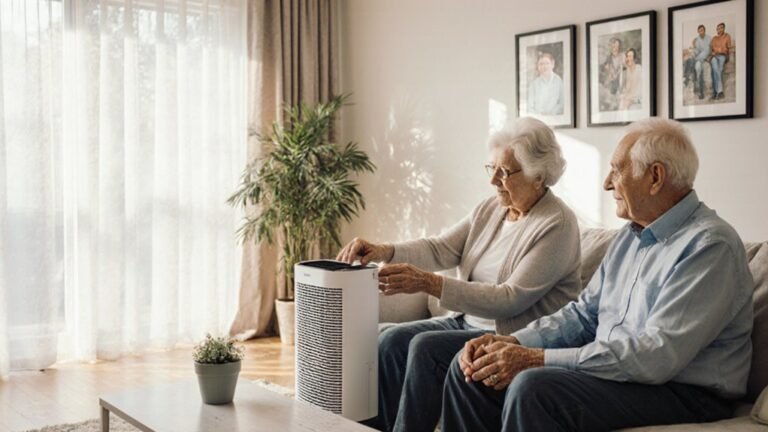
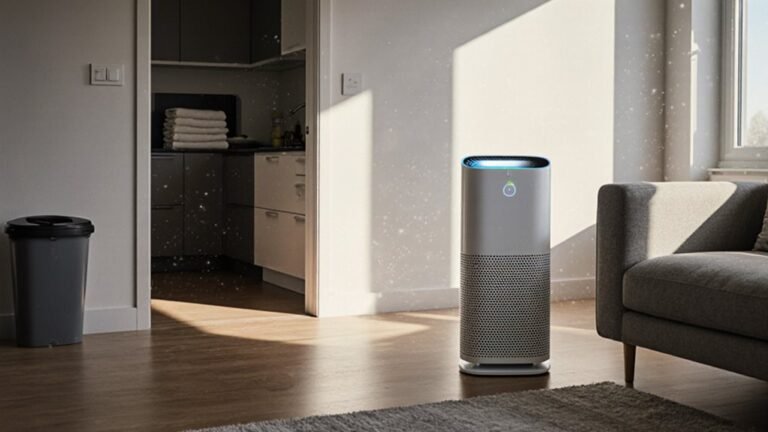
Air purifier filters usually need replacing on a schedule rather than guessing. HEPA filters typically last about 6 to 12 months. Carbon and pre-filters often require replacement more frequently, especially with pets, smoke, or heavy dust. Watch for reduced airflow, persistent odors, and filter indicator lights as signs it’s time. Regular checks and swapping filters on schedule keeps air clean and units running efficiently.
How Often Should You Replace Air Purifier Filters?
Usually, you should replace your air purifier filters based on the filter type and how hard the unit works in your home.
True HEPA filters usually need changes every 6 to 12 months, while carbon filters might need new ones every 3 to 12 months.
Pre-filters can last 3 to 18 months, especially if you clean them often.
Whenever you compare brand comparisons, always follow the model guide initially, because makers examine each unit differently.
Seasonal schedules can help you stay on track too, since pollen season, winter heating, and summer cooking can all change use.
If you run your purifier daily, check the filter more often.
You’re not guessing alone here. A simple replacement log helps you feel ready, and it keeps your air fresh with less stress.
What Shortens Air Purifier Filter Life?
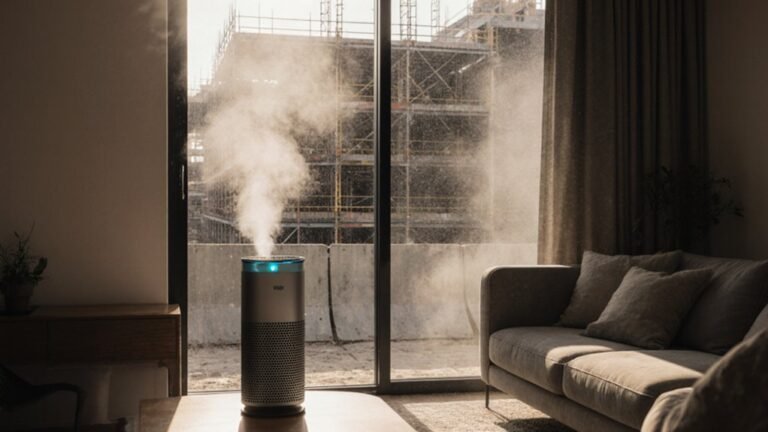
Several everyday things can wear out your air purifier filters faster than you’d expect. Smoke from cooking or candles can clog them quickly, and pets that shed a lot add even more load.
Dust from busy rooms, home projects, or open windows also piles up fast. Should you run your unit on high all day, you push more air through the filter, so it fills sooner.
That’s why maintenance myths can mislead you; a filter doesn’t last just because it still looks okay. Filter chemistry matters too, since carbon layers can tire out whenever odors and fumes stay strong.
Were you to notice weaker airflow, more smell, or louder fan noise, your filter might need attention sooner.
HEPA Filter Replacement Timelines
For most homes, HEPA filters need a swap every 6 to 12 months, but your own timeline can land a bit sooner or later. You’ll usually sit near the middle of that range unless your air stays fairly clean and the unit runs part time.
Still, HEPA longevity depends on Filter materials, room size, pets, dust, and how often you breathe easy with the purifier on. Should you live with heavy shedding pets, smoke, or nonstop use, you could need a new filter sooner.
Were your home to stay calm and tidy, yours could last longer. Check the filter monthly, and trust your senses too. As airflow drops or allergy relief fades, that’s your cue to act.
When to Replace Carbon and Pre-Filters
Your carbon filter usually needs replacement sooner than your HEPA filter because it soaks up odors and gases until it gets full. In case you notice smells coming back, that’s a strong sign it’s time for a new one.
Your pre-filter works as the initial shield, so clean or replace it whenever dust builds up and airflow starts to drop.
Carbon Filter Lifespan
Carbon filters usually wear out faster than the main HEPA filter, and that’s because they work hard in a different way. You rely on activated carbon to trap smells and gases, so you might notice odor breakthrough before anything else seems wrong.
In a normal home, you often replace this filter every 3 to 12 months, but smoke, cooking, pets, or lots of candles can shorten that time. Should your room start smelling familiar again, trust that cue. Your purifier can still run, yet the carbon media could already be full.
Check your model’s guide, because brands set different timelines. Also, write down the date you changed it. That simple habit helps you stay on track and keep your space feeling fresh.
Pre-Filter Replacement Timing
Pre-filters usually need a little more attention than the main HEPA filter, and that’s a good thing because they take the initial hit from dust, hair, and bigger particles.
You should check yours every month, especially should you notice dust buildup, pets, or heavy traffic at home. Whenever the layer looks gray, feels stiff, or blocks airflow, it’s time to clean or swap it.
In case your unit has washable maintenance, rinse the pre-filter gently and let it dry fully before you reinstall it. For nonwashable types, replace them about every 3 to 18 months, but follow your manual to begin with.
Carbon filters work differently, so they usually need replacement sooner whenever odors return. Through staying on top of both, you help your air purifier keep up with your home.
Signs Your Air Purifier Filter Is Clogged
Often, a clogged air purifier filter shows up in small but easy-to-notice ways, and once you know what to watch for, you can act before the unit starts struggling. You might hear the fan work harder, feel weaker airflow, or spot blocked vents around the intake. In case the air starts carrying filter odors again, that’s a clear hint the filter can’t trap particles like it used to.
| Sign | What you notice |
|---|---|
| Weak airflow | Air feels thin at the outlet |
| Blocked vents | Dust gathers near openings |
| Filter odors | Smells return after cleaning |
| Extra noise | Fan sounds strained or loud |
When these signs show up together, your purifier needs attention soon. Through checking sooner, you stay ahead of stuffy rooms and keep your space feeling fresh for everyone who lives there.
How to Check the Filter Change Indicator?
Most air purifiers make this easy, so you can check the filter change indicator in just a minute and feel confident about what to do next. To begin, look for a light, icon, or display on your unit, then compare it with the manual. Should the indicator be flashing, red, or showing a message, your filter likely needs attention.
Next, check whether the model uses a timer or a real sensor, because some lights count runtime, not dust. After you replace the filter, use the indicator reset button so the signal starts fresh. In case your purifier has sensor calibration, follow those steps too, since a misread sensor can worry you for no reason. Once you know what the light means, you stay in control and keep your room feeling like home.
How to Make Filters Last Longer
You can make your air purifier filters last longer through easing the work they’ve to do every day.
Start with routine maintenance: vacuum or wash the pre-filter on schedule, and dust nearby shelves, vents, and floors so less debris reaches the unit.
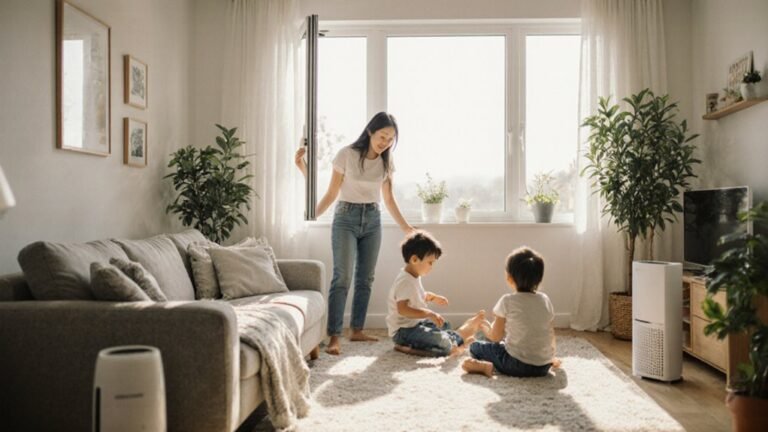
Keep doors and windows closed whenever outdoor air is rough, and place the purifier where air can move freely.
Should you cook often or have pets, run the unit on the speed you need, not all day on high. That steady balance helps the filter breathe easier.
Also, store spare filters in clean, dry filter storage, away from sunlight and damp rooms.
Then you’ll be able to swap them in fresh and ready, like your own little air-quality team.
What Happens If You Wait Too Long?
If you wait too long to change your air purifier filter, airflow can drop and the unit could work harder just to move air.
That means dust, smoke, and other trapped pollutants can build up inside the filter instead of leaving your home.
You may still hear the purifier running, but it won’t be doing its job as well, and that can be frustrating when you’re counting on cleaner air.
Reduced Airflow
Once an air purifier filter stays in place too long, airflow usually drops initially, and that small change can cause bigger problems than many people expect. You might notice weaker room coverage, slower odor control, and a unit that works harder just to keep up.
As the filter loads up, fan resistance climbs, so the motor pushes against a tighter path. That’s where airflow diagnostics help you spot the shift sooner. Should you hear more noise or feel less air at the outlet, don’t brush it off. Your purifier isn’t being dramatic; it’s asking for a break.
Check the filter, clear dust from the pre-filter, and compare the unit’s output to its usual feel. Whenever you stay ahead of that drop, you protect comfort, and your space keeps feeling fresh.
Trapped Pollutants
Provided an air purifier runs too long without a filter change, trapped pollutants don’t just sit there quietly. They can build up inside the filter, and that changes how your unit works.
As dust, smoke, and dander pack in, airflow drops, and some particles might slip back into the room through particle re entrainment. That means you’re breathing air that feels less fresh, even whilst the purifier sounds like it’s on the job.
Over time, the dirty filter can also affect indoor chemistry, especially should odors and gases stay stuck in the media and then leak out again.
You deserve clean air that helps you feel at ease at home. So whenever smells return or the purifier seems weaker, that’s your cue to swap the filter and keep your space working for you.
Frequently Asked Questions
Can Air Purifier Filters Be Cleaned Instead of Replaced?
Yes. Some filters can be cleaned instead of being replaced, depending on your unit. Follow the manufacturer’s instructions for maintaining and cleaning washable pre filters. HEPA filters and carbon filters still need regular replacement.
Do Washable Pre-Filters Need the Same Schedule as HEPA Filters?
No, you do not follow the same maintenance schedule. You can clean machine washable pre filters every 2 to 4 weeks, while HEPA filters usually last 6 to 12 months. Check your model’s guidance and adjust for dust, pets, or smoke.
Are Generic Replacement Filters Compatible With All Purifier Brands?
Not always. Check brand compatibility and filter sizes initially. Wouldn’t you want the right fit for your purifier? You will get better performance, protect your warranty, and feel confident your filter truly belongs in your unit.
Does Running an Air Purifier 24/7 Always Shorten Filter Life?
No, running an air purifier continuously does not always shorten filter life; however, constant operation can increase particle loading and require more frequent maintenance. You will likely incur higher energy costs, yet your purifier may still provide better protection for your home.
Can Old Filters Cause the Purifier to Smell Bad?
Yes. Old filters can make your purifier smell bad, like a damp basement in spring. They trap odors, allow mold growth, or release chemical off gassing in worn media, so replace filters as smells return and replace them together when applicable.