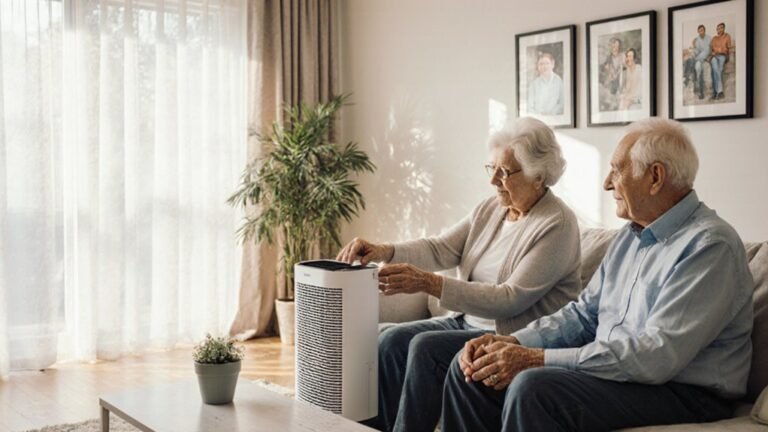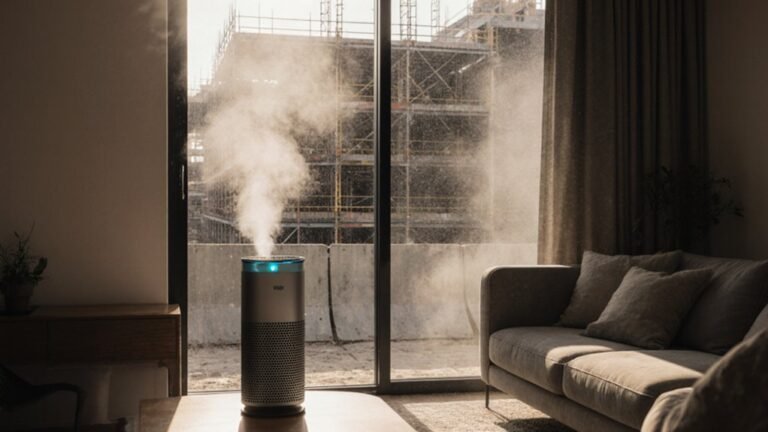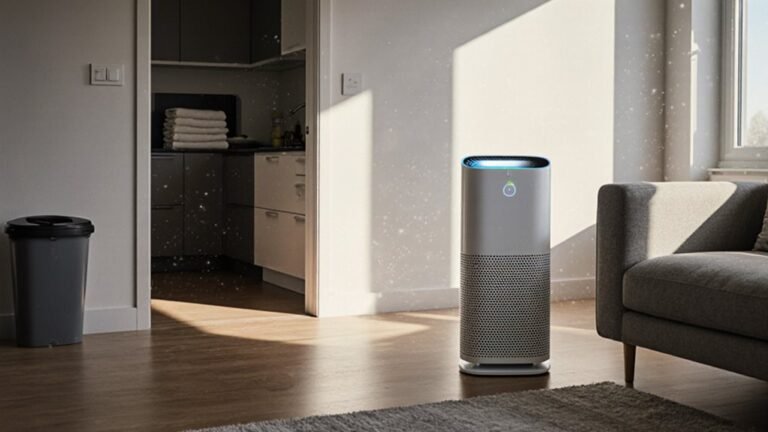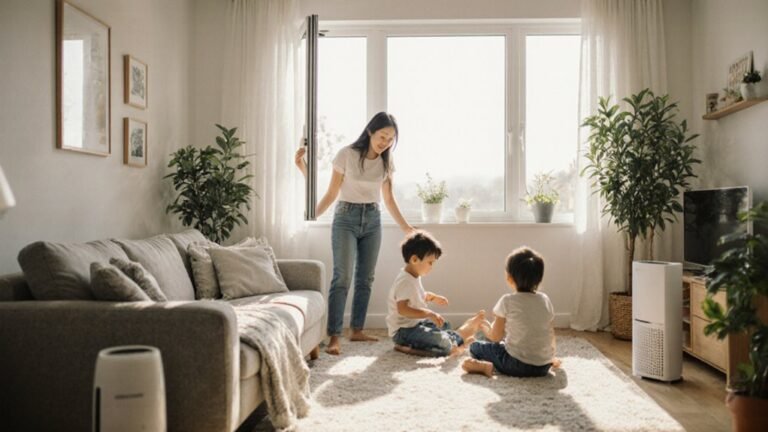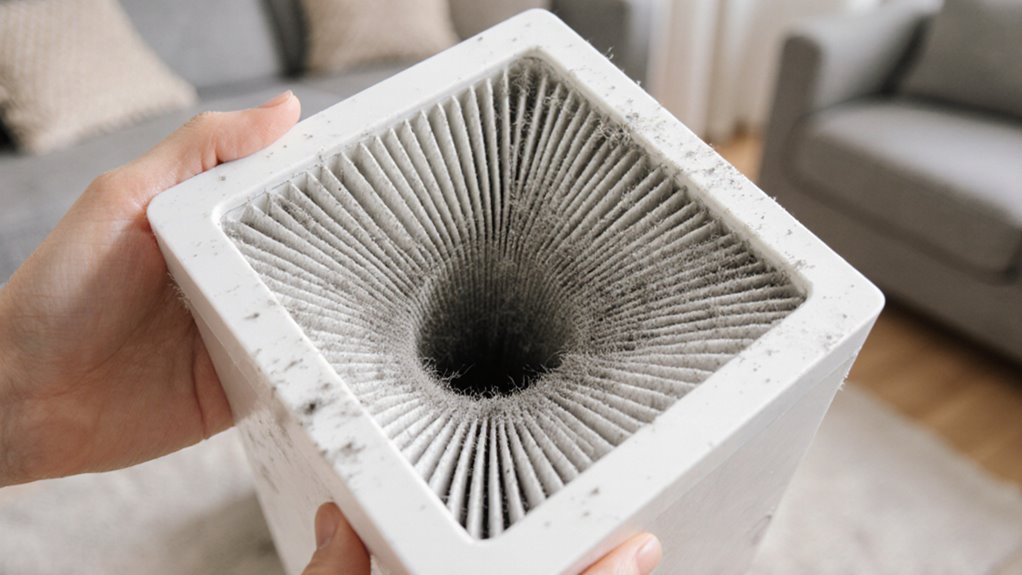

A clogged air purifier filter reduces airflow, forces the motor to work harder, and lowers particle capture efficiency. Accumulated dust and debris increase noise and can cause odors or tiny particles to recirculate into the room. Reduced efficiency raises energy use and shortens the unit’s lifespan. Early signs are subtle, so spotting changes in airflow and sound helps prevent bigger problems. Regular inspection and timely filter replacement keep performance steady and indoor air cleaner.
What a Dirty Air Purifier Filter Does
Whenever a purifier filter gets dirty, it doesn’t just look used, it starts changing how the whole machine works. You notice the unit pushing less air, so the room takes longer to feel fresh. That’s where airflow diagnostics help you see what your senses miss.
A loaded filter can slow the fan, raise noise, and make the purifier work harder for the same result. Over time, that strain can shorten filter lifespan and wear out the motor too.
You still belong in a cleaner, calmer space, but the purifier needs room to breathe. So, in case the airflow feels weak or the run time seems longer, the filter could be holding the system back. Catching that sooner keeps the machine steady and your air moving.
Signs Your Air Purifier Filter Is Dirty
Usually, a dirty air purifier filter gives you a few clear warnings before it fully gives up. You might notice your room still feels stuffy, even whenever the unit runs all day.
Next, the air can smell stale again, especially should pet dander or cooking odors come back fast. Then check the filter itself.
- The surface looks gray, brown, or packed with dust.
- Your air purifier sounds louder, and the fan feels less steady.
- The sensor calibration light keeps acting oddly, or the filter light stays on after reset.
Should you spot these signs, trust your gut. You know your home’s rhythm, and whenever the purifier seems off, it usually is. A quick check can help you stay comfortable and keep your space feeling like yours.
Why Airflow Drops as the Filter Clogs
A clogged filter makes your air purifier work like someone trying to breathe through a thick scarf, so the airflow drops fast.
As dust builds up, the tiny spaces in the filter close down, and you get more flow restriction with every run. That creates a bigger pressure drop, which means the fan has to push harder just to move the same air.
You might still hear the unit running, but less air reaches the room, and the purifier can’t keep up the way it used to.
Once this happens, you’re not doing anything wrong. Your purifier’s path is simply getting tighter.
How a Dirty Filter Affects Air Quality
As a filter gets dirty, it doesn’t just slow the purifier down, it starts changing what you breathe. You could still hear the fan, but the air can carry more tiny particles because the filter can’t catch them as well. That shift can affect indoor chemistry too, since trapped pollutants and gases might linger longer in your space. It can even nudge sensor accuracy off course, so the unit could believe things are better than they are.
- More fine dust can stay in the room.
- Allergens can slip past the filter.
- Odors can come back faster than you expect.
When your purifier struggles, you and your home lose that fresh, settled feeling. A clean filter helps your room feel like the safe zone you count on.
How Dust and Odors Build Up
As dust builds up on your air purifier filter, it starts to crowd the tiny spaces that air needs to move through.
That buildup can also hold onto smells from pets, cooking, and smoke, so your room might start to feel less fresh. Whenever both dust and odors stick around, you’ll notice your purifier working harder while doing less for you.
Dust Accumulation
Dust slowly builds up inside an air purifier because the machine pulls dirty room air through its filter day after day. As you keep using it, dust packs into the pleats, and the filter starts to look tired instead of fresh.
You might notice:
- weaker airflow
- stale dust odours
- filter pleat collapse
That buildup doesn’t just sit there. It can slow the fan, and it can make the purifier work harder for you and your home. Whenever dust fills the spaces between fibers, less air moves through, so cleaning feels slower.
Provided you live with pets, smoke, or heavy foot traffic, you’ll see this happen sooner. So, whenever the filter looks dark or smells musty, you’re not overreacting. You’re catching a real change that affects the air you breathe together.
Odor Trapping
Ever notice how a purifier can still run but stop helping much with smells? When dust coats the filter, it also holds onto tiny odor particles from cooking, pets, and smoke. You mightn’t see it, but odor chemistry keeps working, and the filter starts acting like a crowded sponge.
As that layer fills, fresh air has a harder path through, and smells linger longer in your room. Should your unit have a display, bear in mind that sensor calibration can miss this shift because the fan still turns on and the lights could look normal. So you may feel puzzled, even let down.
Still, you’re not stuck with that stale air. A dirty filter often traps odors until it can’t, then the smell comes back fast and clear.
Why the Fan and Motor Work Harder
As the filter starts to clog, the fan has to push air through a tight, blocked path, and that extra struggle changes how the whole purifier behaves. You can feel it in the weaker stream, and the motor feels it too.
- The fan spins harder to keep air moving.
- That added load raises bearing stress inside the unit.
- It also creates electrical strain as the motor draws more power.
When you and your purifier keep working through dirty media, the parts stay under pressure longer than they should. So the machine could still run, but it has to fight for every breath of air. That stress can shorten its smooth, easy life. Should you’ve ever heard a unit sound tired, you’re not imagining it. It’s your purifier asking for help before the clog gets worse.
How Noise and Energy Use Increase
As the filter gets packed with dust and particles, your purifier doesn’t just clean less air, it starts to sound and cost more too.
You might notice a stronger hum, a busier whir, or a faint strain whenever it runs on high. That happens because the fan loses fan efficiency and works harder to push air through the clog. As a result, the motor draws more power, and your electricity costs can creep up over time.
Even though the change feels small, it adds extra wear to the unit and can make the room feel less fresh than you expect. Whenever you hear that extra noise, it’s your purifier telling you it needs a new filter and a little care from you.
What Happens to HEPA Filter Performance
A HEPA filter can look fine on the outside while its work quietly changes on the inside. As dust builds up, you feel less steady airflow, and the purifier starts missing more tiny particles. That’s HEPA aging: the media still traps a lot, but pressure rises and particle breakthrough can creep in. You might notice the room doesn’t feel as fresh, even though the unit is on.
- Airflow drops, so less air gets cleaned each minute.
- Tiny gaps and heavy loading let more particles slip through.
- Allergies or dust sensitivity could flare before you see the problem.
How Often to Clean or Replace the Filter
How often you clean or replace your air purifier filter depends on the filter type, so a washable pre-filter might need regular cleaning while a HEPA or carbon filter usually needs replacement.
You can’t rely on hours alone, because dust, pets, smoke, and air quality all change how fast the filter fills up.
The safest habit is to check it often and replace it on schedule before airflow drops or odors come back.
Filter Type Matters
Filter type matters because not every purifier filter gets dirty in the same way or on the same schedule. Your filter lifespan depends on the media inside, and media compatibility matters whenever you pick a replacement. HEPA traps tiny particles until it loads up, while carbon fills faster as it absorbs smells and fumes. That means your clean-up rhythm changes with the filter you use.
- HEPA units often last longer in light dust, but pet hair and smoke shorten that window.
- Carbon filters need earlier replacement whenever odors creep back.
- Washable pre-filters can stretch the life of the main filter.
Whenever you match the right filter type to your air needs, you stay in control and feel right at home with cleaner air.
Cleaning Frequency Basics
Usually, the best cleaning schedule starts with what your purifier is actually facing in your home.
In case you run it near pets, smoke, or a busy kitchen, check it more often because dirt builds faster and airflow drops sooner. In a calmer room, you can stretch the time a bit, but don’t guess forever. Use usage tracking to remark hours, then pair that with quick monthly checks. Look at the filter, feel the air, and listen for louder fan noise.
Seasonal adjustments matter too, since pollen in spring or wildfire smoke in late summer can load the filter quickly.
Suppose the media looks dark, smells stale, or airflow feels weak, clean it now. That way, you stay in step with your home and your purifier.
Replace On Schedule
A regular replacement schedule can save you a lot of guesswork, and it keeps your purifier working the way you expect. Whenever you follow scheduled replacement, you stay in step with your home and your crew of clean-air helpers. Most filters need attention every 6 to 12 months, but pets, smoke, and heavy use can shorten that window.
- Check the filter monthly for dark buildup.
- Replace it sooner provided airflow drops or smells return.
- Reset the timer only after you install a new one.
That habit supports warranty compliance and helps you avoid surprise strain on the fan. In case your room feels stuffy, don’t wait for a warning light alone. Your filter can look fine while performance slips, so trust your checks and keep your routine steady.
How to Clean a Washable Air Purifier Filter
Cleaning a washable air purifier filter starts with a gentle touch, because rough handling can damage the mesh and shorten its life. You can keep washable maintenance simple by rinsing the filter with cool water, then letting dust loosen on its own. Use a soft brush only provided the frame needs help, and skip soap unless the maker says it’s safe.
| Step | What you do | Why it matters |
|---|---|---|
| 1 | Rinse gently | Protects the mesh |
| 2 | Shake off water | Speeds filter drying |
| 3 | Air dry fully | Keeps mold away |
Let the filter dry completely before reinstalling it, because damp fibers can trap smell and hurt performance. Whenever you handle it with care, you help your purifier keep working smoothly, and you stay part of a cleaner, calmer home together.
When a Filter Is Too Dirty to Save
When your filter gets too clogged, you’ll notice weaker airflow, louder fan noise, and less cleaning power in the room.
At that point, the filter isn’t just dirty, it’s holding your purifier back and could even let fine particles slip through.
Should you spot dark buildup, stubborn odors, or a big drop in output, it’s usually time to replace it instead of trying to save it.
Signs of Irreversible Clogging
Sometimes the clearest sign that your air purifier filter is beyond saving isn’t a dramatic breakdown, but a slow loss of performance that creeps up on you. You could hear the fan strain, yet the room still feels stale. That’s because deep clogging can trigger 1. permanent pleat collapse, 2. media delamination, and 3. particle bypass.
Whenever that happens, the filter no longer holds its shape or traps dust well. You may also notice odors returning fast, plus more sneezing or coughing. These clues tell you the filter isn’t just dirty, it’s worn out.
Replacing an Overloaded Filter
Once a filter reaches the point where airflow drops, odors creep back, and the media looks packed with dust, replacing it is usually the smartest move. You’re not failing the purifier; you’re just giving it fresh lungs. Check the model label, then follow installation tips so the new filter seats snugly and the airflow arrows point the right way. | Check | Why it matters |
| — | — | — |
|---|---|---|
| Fit | Stops leaks and bypass | |
| Seal | Keeps air moving through the media | |
| Date | Helps track the next swap |
A fresh filter restores speed, cuts noise, and helps your room feel cleaner again. Before you toss the old one, review warranty considerations, since some brands ask for proof of proper replacement. Provided you share your home with pets, smoke, or dust, you’ll likely feel the difference fast.
How to Keep Your Air Purifier Working Well
Usually, keeping your air purifier working well starts with one simple habit: checking the filter before the machine starts to struggle. With routine checks, you catch dust buildup early and keep airflow strong. Then use placement optimization by setting the unit a few feet from walls, curtains, and furniture so air can move freely.
- Look at the filter every few weeks and replace it once it turns dark or packed.
- Listen for louder fan noise, which can mean the purifier is working too hard.
- Smell for musty or stale odors, since they can signal a tired filter or carbon layer.
Next, keep the outside vents clear and wipe the case gently. Also, follow the maker’s schedule, but trust your eyes, ears, and nose too. Whenever you care for it this way, your purifier keeps helping your home feel fresher and easier to breathe.
Frequently Asked Questions
Can a Dirty Filter Make My Air Purifier Smell Worse?
Yes, a dirty filter can make your air purifier smell worse because it can amplify odors and harbor microbes that produce unpleasant smells. You may notice mustier air, stronger odors, and reduced cleaning effectiveness. Replace the filter and you should breathe easier again.
Does a Clogged Filter Increase Mold or Bacteria Growth?
Yes, a clogged filter can increase mold proliferation and bacterial colonization because trapped moisture and debris give microbes a cozy home. You should replace it quickly, especially if you notice musty or sour odors.
Will the Purifier’s Indicator Light Detect Actual Airflow Loss?
No, you cannot rely on the light to detect actual airflow loss. Most indicators track hours rather than airflow, so your purifier might operate with very low airflow without warning. Check the filter condition, verify the indicator accuracy, and confirm proper sensor placement yourself.
Can a Dirty Filter Cause More Asthma or Allergy Symptoms?
Yes, a dirty filter can worsen your asthma or allergy symptoms because impaired filtration performance raises increased allergen exposure in your home. You will likely breathe more dust, pollen, and particles, and feel it quickly.
Does Carbon Filter Saturation Happen Before HEPA Failure?
Yes, your activated carbon usually reaches filter saturation before HEPA failure, because its adsorption capacity fills initially. With proper prefilter maintenance you will delay clogging, keep odors down, and feel confident your purifier is working for you.