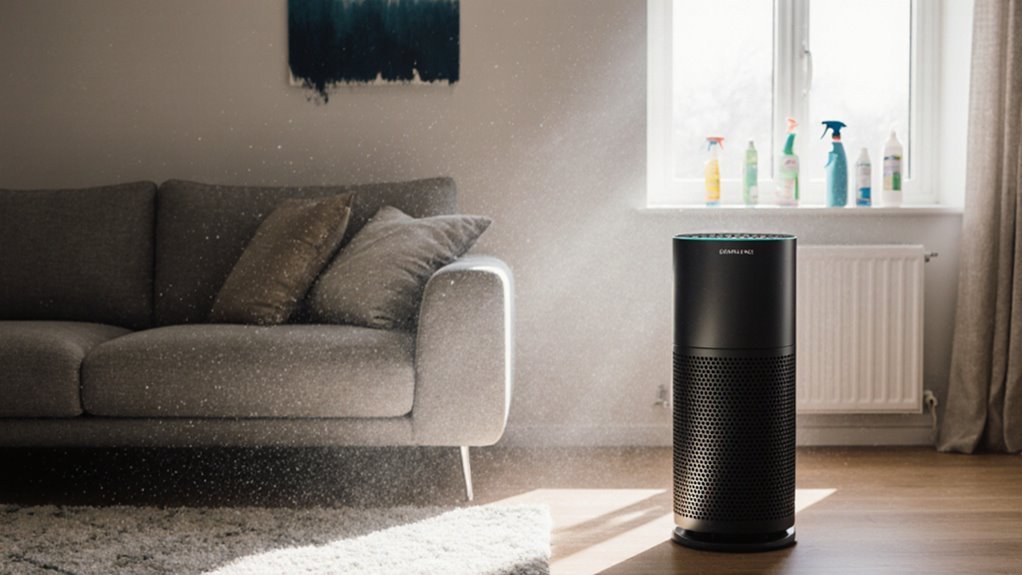

VOCs—volatile organic compounds—are common indoor gases from paint, pressed wood, cleaners, candles, and stored solvents. These gases can irritate eyes, nose, and throat quickly and sometimes cause headaches or dizziness. True air purifiers that reduce VOCs use gas-phase media like activated carbon or zeolite plus HEPA filters for particles. Not all purifiers remove gases; many only capture particles. Knowing which technologies work helps decide when ventilation, source control, or a purifier is needed.
What Are VOCs in Homes?
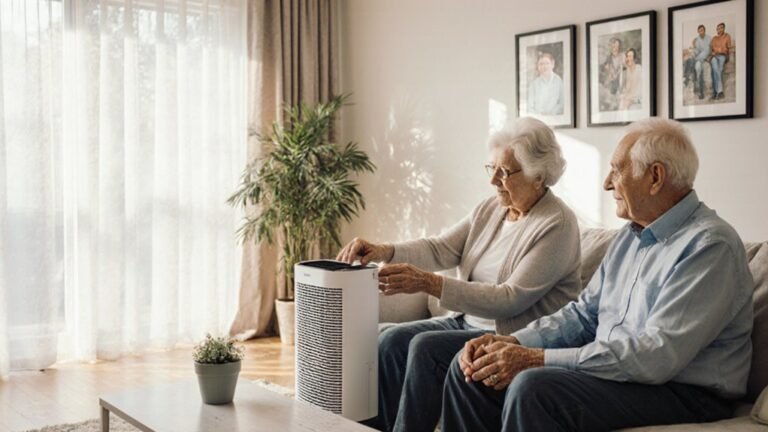
Whenever you hear “VOCs,” consider of gases that come off everyday things in your home. You mightn’t see them, but you can still breathe them in. These compounds, called volatile organic compounds, change from liquid or solid into air fast. With chemical speciation, you can tell one VOC from another, since they don’t act the same. Some cause irritation, while others raise bigger health worries. That matters because population vulnerability isn’t equal; infants, older adults, pregnant people, and anyone with asthma can feel effects sooner. In your home, VOCs can build up quietly, then fade, then return. So whenever you notice odors, new materials, or fresh products, you’re not being overly sensitive. Your body could be giving you useful feedback, and you deserve to trust it.
Common Indoor VOC Sources
The VOCs in your home usually come from a few everyday places, and that makes them easier to notice once you know where to look. You’ll often find them in new paint, pressed wood, and fresh carpets, which can keep releasing fumes for weeks. Then your cleaning products can add more VOCs, especially sprays and strong scents.
- Gas stoves and candles can send VOCs into the air fast.
- Air fresheners might mask smells while still adding chemicals.
- Indoor hobbies like painting, gluing, or crafting can leave vapors behind.
- Stored solvents and pesticides can linger in closets or garages.
When you connect these sources, you can spot patterns in your own space and feel more in control of the air you breathe.
Why VOCs Affect Your Health
In your home, VOCs can do more than create a bad smell because they can slip into your body as you breathe them in. Once inside, they might irritate your eyes, nose, and throat, and they can trigger acute symptoms like headaches or dizziness.
Should you have asthma or sensitive lungs, you could feel those effects faster, and that can make daily life feel harder than it should. Over time, some VOCs can also raise health concerns that go beyond comfort, including developmental risks for babies and young children.
That’s why your indoor air matters so much. Whenever you understand the harm, you can feel more confident asking for cleaner air and choosing products that help protect everyone at home, including the people you love most.
Signs Your Home Has High VOCs
Heavy VOC exposure often leaves clues you can notice before any evaluation results come back. You could smell unexplained odors that seem sharp, sweet, or chemical, and they could hang around after cleaning or cooking. Upon walking into a room, you could feel off before you can name why. Your eyes, nose, or throat could sting, and you could get headaches or dizziness more often than usual. You might also notice concentration spikes after painting, using spray products, lighting candles, or bringing in new furniture.
- Symptoms feel worse in one room
- Odors return after windows close
- Pets or kids seem bothered too
- You feel better outside the home
If this sounds familiar, trust your instincts. Your space should feel calm, not confusing.
How Air Purifiers Remove VOCs
Air purifiers can help with VOCs, but they only work whenever they use the right kind of filter. You need gas-phase media that can trap vapors, not just dust.
Inside the purifier, VOCs move through the filter and stick to the surface through adsorption, so the air leaving the unit can feel fresher. Good media selection matters because different chemicals behave differently, and adsorption kinetics control how fast capture happens.
Should the air pass too quickly, the purifier can miss more VOCs. In the event the media is too small, it can fill up fast. That’s why you should pick a unit with enough carbon or other sorbent material and replace it on schedule. Consequently your home team gets better support.
Which Filters Remove VOCs?
If you want to cut VOCs, activated carbon filters are the main tool because they can trap many gas pollutants that HEPA filters miss.
HEPA filters still help by catching dust and smoke particles, but they won’t remove VOC gases on their own.
For the best results, you’ll usually want a combined system that pairs strong gas-phase media with particle filtration.
Activated Carbon Filters
Activated-carbon filters are the part of an air purifier that can actually help with VOCs, because they trap gas molecules instead of just dust. Whenever you choose activated carbon, you’re giving your home a stronger chance against odors and fumes that linger after cooking, painting, or cleaning.
- Its pore structure gives VOCs more places to stick.
- Impregnated carbon can grab certain stubborn gases better.
- Bed depth matters, because a deeper layer holds more pollutants.
- A thin filter can fill up fast and lose strength.
You don’t need fancy jargon to pick well. Look for units that list real carbon weight, not just a tiny pellet layer.
Then pair that with good ventilation so the filter isn’t carrying the whole load alone. That way, you and your space can breathe easier together.
HEPA And VOCs
HEPA filters are great at catching tiny particles, but they don’t trap VOCs on their own. In case you’re trying to clean indoor air, that can feel like filter confusion, because the box could promise fresh air while missing gases. HEPA handles dust, pollen, and smoke bits well, so you still get relief from particle tradeoffs.
But VOCs are different. They pass through a HEPA filter unless the purifier also uses gas-fighting media, like activated carbon. That’s why you should check the filter type before you buy. Look for clear details about VOC removal, not just particle ratings. Then you can choose a unit that fits your space, your symptoms, and your need for real support at home.
Combined Filter Systems
A well-built purifier combo can do more than catch dust, and that matters a lot for VOCs. You need media collaboration, where filters work together, not alone. HEPA grabs particles, while gas media handles fumes. With filter layering, you get a steadier path from dirty air to cleaner air.
- A thick activated carbon bed adsorbs many common VOCs.
- Chemisorptive layers help with formaldehyde and other stubborn gases.
- Pre-filters protect the main media from dust buildup.
- HEPA supports the system through removing soot that can clog pores.
HEPA vs. Activated Carbon Filters
In the battle against indoor VOCs, the filter type matters a lot more than most people expect. You need HEPA for dust, pollen, and smoke particles, but it won’t catch gas fumes on its own.
Activated carbon steps in where HEPA stops, grabbing VOCs through adsorption kinetics and giving you real help with odors and chemical vapors. Its carbon longevity depends on bed depth, airflow, and how much pollution it faces, so thin pads can wear out fast.
Whenever you choose a purifier, look for both layers provided you want the strongest support at home. That way, you’re not just chasing cleaner air; you’re joining a smarter, calmer group of people who protect their space well.
Where to Place Your Air Purifier
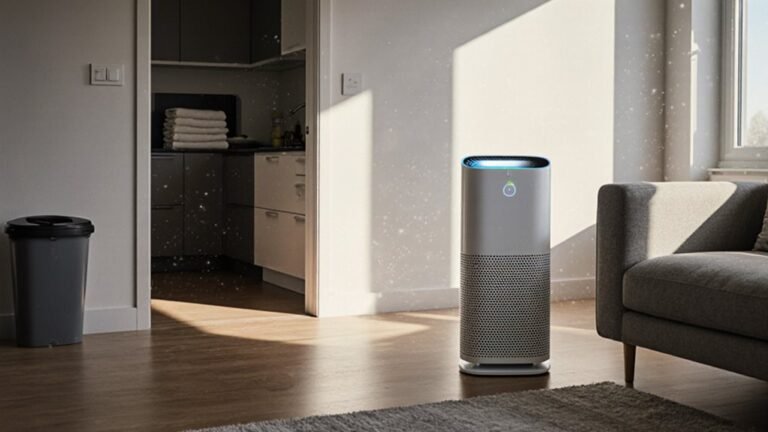
Where you place your air purifier can make a big difference in how well it clears VOCs from your home. Put it where you spend the most time, so you can breathe easier with your people close at hand. Keep it in open air, not tucked behind nearby obstructions like curtains, sofas, or shelves. Aim for ideal height, usually near chest level, so the unit can pull room air more evenly.
- Leave space around all sides.
- Set it near the room center.
- Keep doors open whenever possible.
- Choose the most lived-in room initially.
If one room feels worst, begin there. Then move the purifier as your needs change. This simple setup helps you feel supported, and it lets the filter work without fighting the room.
How to Reduce VOCs at the Source
Cutting VOCs at the source is the fastest way to make your home feel better, because it tackles the problem before the air gets loaded with fumes. Start with material substitution by choosing low-VOC paints, cleaners, and adhesives whenever possible. Swap old pressed wood items or fresh carpets for safer options, and let new items air out outdoors prior to their coming inside.
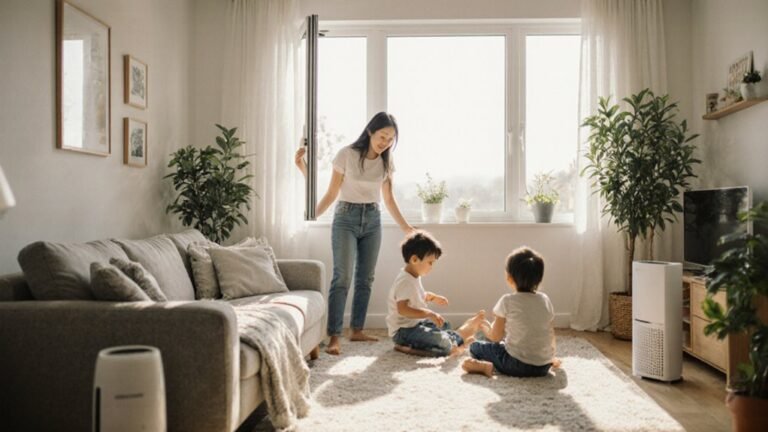
Next, set ventilation scheduling around the tasks that stir up fumes. Open windows, run exhaust fans, and air out the room while you paint, cook, or clean, then keep it going for a bit afterward. Store solvents, fuels, and hobby supplies in sealed containers. Also, skip extra sprays and scented products. Small changes like these help you protect your space and feel more at ease at home.
How to Choose an Air Purifier for VOCs
When you choose an air purifier for VOCs, start with the filter type, since HEPA alone won’t catch gases like formaldehyde or paint fumes. Look for a unit with a large bed of activated carbon or other gas-adsorbing media, because thin filters fill up fast and quit helping.
Then match the purifier to your room size so it can clean the air you actually breathe, not just the air near the machine.
VOC Filter Types
Choosing the right VOC filter can feel confusing at initially, but you don’t need to guess your way through it. You want media that traps gases well and keeps working in real life. Activated carbon is the classic choice, and thicker beds usually help more than thin pads. For stubborn odors, look for carbon impregnations that enhance capture. Should you face acidic or polar fumes, zeolite selection can matter too, since different minerals handle different gases.
- Heavy carbon beds last longer
- Impregnated media targets tricky VOCs
- Zeolite blends add extra gas capture
- HEPA alone won’t catch vapors
You also want clear replacement guidance, so you’re not stuck breathing yesterday’s fumes. A good filter should fit your daily life and help your home feel calmer, cleaner, and easier to share.
Room Size And Coverage
A purifier can only help with VOCs provided it matches the size of the space, because a small unit in a large room will leave a lot of air untouched. You want coverage that fits your room, your routine, and the people sharing it. In a busy household, occupancy based sizing matters because more breathing and more movement can spread fumes faster. Check the purifier’s rated square footage, then aim a bit higher should you cook, paint, or keep new furniture nearby.
Smart placement strategies matter too: keep the unit where air flows, not behind a sofa. For ceiling vs.floor, floor placement often pulls in more room air, while a higher spot can help in open layouts. Whenever you match size and placement, you give your home a better shot at feeling safer and calmer.
How Often to Replace Filters
Usually, the right time to replace a VOC filter depends on how much pollution your home puts into the air and how hard the purifier has to work. You can track filter lifespan by checking the manual, but your daily life tells you plenty too. Whenever replacement indicators show up, act fast:
- stronger smell after cleaning or cooking
- less airflow from the unit
- dusty, stale air that lingers
- a filter that looks dark or packed
If odor persistence keeps coming back, your media might be full. That matters for cost effectiveness, because a tired filter wastes money and gives you less support. In busy homes, you could need swaps sooner, especially near new furniture, paint, or frequent cooking. Set a reminder, stay with your routine, and let your purifier keep pulling its weight for you.
What Air Purifiers Can’t Remove
Even a good air purifier can’t catch every VOC, especially larger gas molecules that move through the air and slip past weak filters.
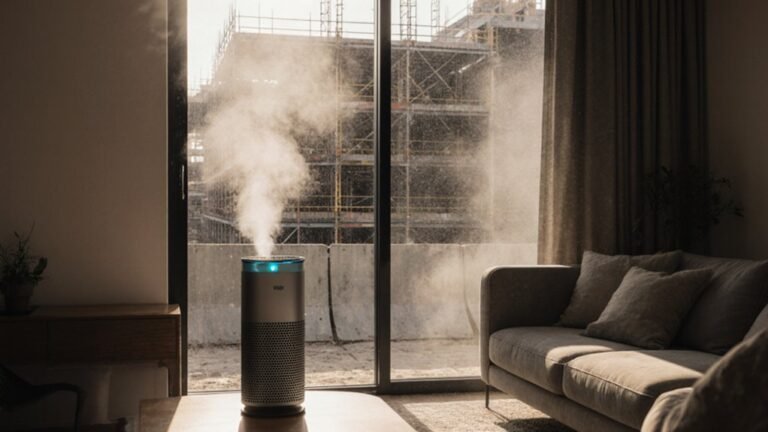
It also can’t erase concealed sources like fresh paint, pressed wood, cleaners, or stored solvents that keep releasing fumes into your home.
Large Gas Molecules
As you consider air purifier limits, large gas molecules are one of the biggest blind spots. You might expect every odor to vanish, but size and molecular weight shape how well filters work.
In many cases, sorption dynamics slow the capture process, so some gases slip through while you wait for cleaner air. That can feel frustrating, yet you’re not doing anything wrong.
- Heavy VOCs often stick better to carbon.
- Smaller gases move faster and escape more easily.
- Thin filters fill up sooner than deep media.
- Strong airflow can shorten contact time.
Hidden VOC Sources
Air purifiers can help a lot, but they can’t chase down every VOC concealed in your home. You can still breathe easier whenever you know the sneaky spots. Hidden adhesives under flooring, cabinets, and trim can keep releasing fumes long after the job looks finished. Fresh壁 paint, new carpets, pressed wood, and sealed furniture can also off-gas quietly.
Then there are cleaners, air fresheners, hobby solvents, and stored paints that wait in closets or garages, ready to slip into the air whenever you open a door. Because these sources keep feeding VOCs, your purifier works harder but can’t stop the release at the source. So you get the best relief whenever you pair filtering with ventilation, smart storage, and low-VOC choices that help your home feel safer and more like yours.
Other Ways to Lower VOCs Indoors
Provided that you want to lower VOCs indoors, start by tackling the sources that keep feeding the problem, because no purifier can fully fix a room that’s still “making” pollution.
You’ll feel better once you swap harsh sprays for green cleaning and pick plant selection that fits low-fume care.
Then you can support cleaner air with practical choices:
- Choose low-VOC paint and furniture if you can.
- Air out new rugs, curtains, and boxes before bringing them in.
- Seal solvents, fuels, and hobby chemicals in tight containers.
- Cut smoke, candle use, and strong room scents.
These small changes help you protect your space and the people in it.
Whenever you live with fewer triggers, your home feels calmer, kinder, and more like a team effort.
Building a Cleaner Air Routine
Now that you’ve cut back on the biggest indoor VOC sources, you can turn those small wins into a daily routine that actually holds up.
Start with daily habits that feel easy to keep: crack a window while you cook, run your purifier in the rooms you use most, and store cleaners tightly closed.
Then make a simple maintenance checklist for each week. Check the filter, wipe dust from vents, and look for new smells after painting, cleaning, or moving in new furniture.
Should you notice irritation, elevate fresh air and keep an eye on the source, not just the symptom.
You’re not trying to make your home perfect. You’re building a place that feels safer, calmer, and more like your own.
Little steps add up, and that matters.
Frequently Asked Questions
How Are VOC Levels Measured Accurately in a Home?
You measure VOC levels accurately with air sampling or calibrated sensors. For precise results, use laboratory analysis of collected samples. For trends, calibrate low cost sensors and compare readings to health based guidelines.
Are Low-Cost VOC Sensors Reliable for Health Decisions?
No — you should not trust them alone; they are the houseplant of health data, looking reassuring while sensor calibration drifts. Use consumer education, trends, and professional evaluation for decisions, so you and your family feel included, informed, and safer.
Can Air Purifiers Make VOCS Worse With Byproducts?
Yes, they can. If you use ozone producing purifiers or poorly designed photocatalytic units, you might create secondary pollutants that worsen air quality. Choose activated carbon units and you will protect your home and enjoy healthier air.
Which VOCS Are Hardest for Carbon Filters to Remove?
You will find small, highly volatile VOCs hardest to capture, especially formaldehyde due to its persistence and polar solvents such as alcohols and acetone. Carbon filters capture heavier compounds more effectively, so you will need strong chemisorptive media and good ventilation.
When Should Families Get Professional Indoor Air Testing?
You should get professional indoor air screening after renovation, after strong odors or symptoms, and during seasonal screening. You will protect your family, confirm risks, and feel confident your home s air supports everyone.