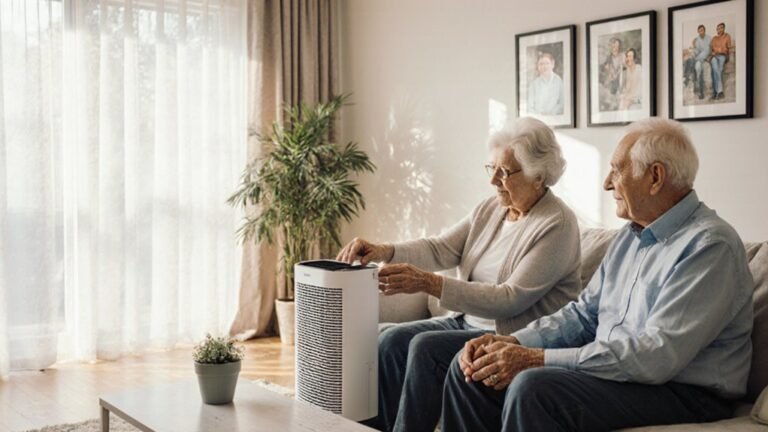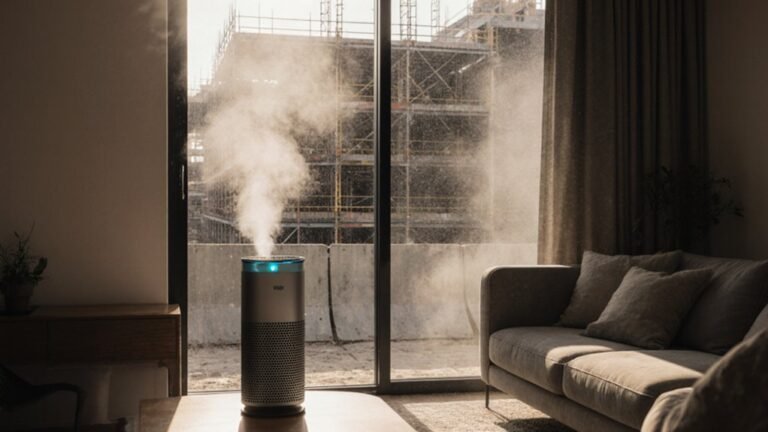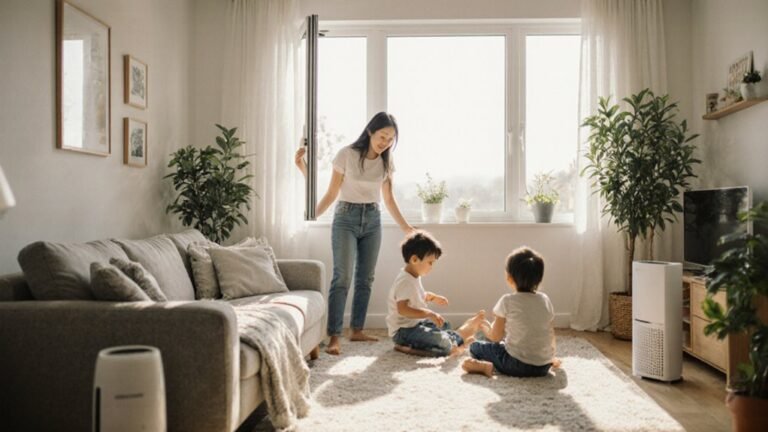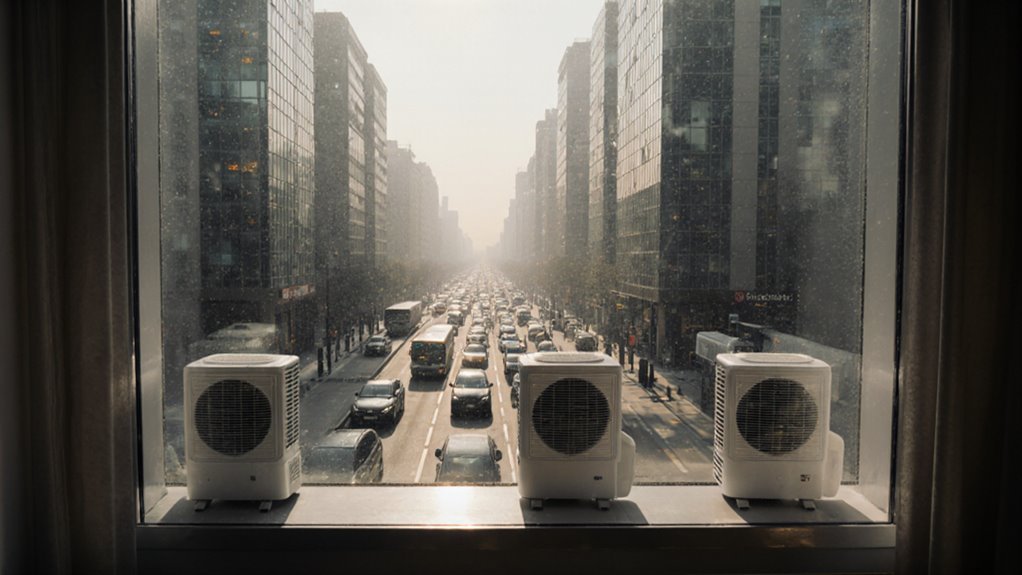

Air purifiers can reduce traffic-related particles that drift indoors by filtering out fine soot and some exhaust components. Placing a unit near windows or doors facing busy roads improves capture of incoming pollution. HEPA filters remove most PM2.5 and larger particles, while activated carbon helps absorb some gases and odors. Running purifiers at higher settings during peak traffic hours lowers indoor concentrations faster. No air purifier removes every pollutant, so combining filtration with ventilation changes and source reduction gives the best results.
What Is Traffic Pollution?
Traffic pollution is the mix of dirty air that comes from cars, trucks, buses, and other vehicles. You breathe it whenever vehicle emissions release tiny particles and gases into the air around busy roads.
These pollutants can build up where traffic stays heavy, especially in neighborhoods shaped through urban planning impacts, like homes near highways or crowded streets. If you live or spend time there, you might notice the air feels harsh or smells like exhaust. That’s because traffic pollution includes soot, nitrogen oxides, and other chemicals from fuel burning.
It doesn’t stay outside, and it can spread through a whole area fast. Understanding what it’s helps you protect yourself and your community with confidence.
How Traffic Pollution Gets Indoors
Traffic pollution doesn’t stay outside just because you close the front door. Tiny particles and gases can slip in through open windows, door gaps, vents, and tiny cracks in your building.
Should you live near a busy road, you may end up breathing some of the same exhaust that’s passing by outside.
Outdoor Air Leakage
Near busy roads, outdoor air doesn’t stay outside for long. It slips through gaps in your building envelope, around windows, doors, and vents. Whenever pressure differentials push air inward, traffic particles follow. You mightn’t see them, but ultrafine dust and black carbon can drift into your rooms and settle where you live, sleep, and breathe.
You can lower this leak with a few steady steps. Keep windows closed during heavy traffic times. Seal cracks, weatherstrip doors, and check old frames. In case your home uses HVAC, make sure filters fit well and get changed on time. A tighter home helps you feel more in control, and that matters. Small fixes can protect your space, support your family, and make indoor air feel safer every day.
Vehicle Emissions Indoors
Even though you stay inside, vehicle emissions can still find their way into your home. You breathe them in whenever you open windows, run fans, or whenever tiny leaks in walls and vents pull outdoor air inside.
Traffic smoke carries ultrafine particles, black carbon, and gases that move with emission chemistry, so your room can feel calm while pollution still slips through. Should you live near a busy road, you might notice more buildup during rush hour or windy days.
That can matter while you’re trying to protect your family and keep your space comfortable. Even resale value of a vehicle can hint at its age and emissions control, but your home needs its own defense.
Air purifiers help through catching particles, though closed windows, good seals, and clean filters matter too.
How Traffic Pollution Affects Your Health
While you live, work, or study close to busy roads, the air can carry more than just a little exhaust. You might breathe fine particles, black carbon, and gases that slip deep into your body. Over time, this can trigger cardiovascular inflammation, raise blood pressure, and strain your heart. It can also affect child development, because growing lungs and brains are more sensitive to pollution.
- You might cough more, wheeze more, or feel short of breath after long exposure.
- Your blood vessels can react fast, which could raise heart risk.
- Your kids might miss healthy growth if polluted air lingers around them.
You’re not overreacting should this feels stressful. Many neighbors share the same worry, and that shared concern matters.
Why Air Purifiers Help Near Busy Roads
Air purifiers can make a real difference whenever traffic pollution seeps indoors, because they help clear out the tiny particles that slip through windows, doors, and cracks in the building.
When you live near a busy road, you don’t have to just accept that gritty air. A purifier can lower what you breathe while you relax, sleep, or work at home. For the best results, consider placement timing and set it up in the room you use most, before rush hour hits. Keep windows closed during peak traffic, too. Then let the unit run steadily so it keeps up. You might notice some noise tradeoffs, especially at higher settings, but many people find the steady hum easier than breathing polluted air. That small choice can help you feel more at home.
Can HEPA Filters Remove Vehicle Emissions?
Yes, HEPA filters can remove a lot of vehicle emissions, but they work best on the solid particles in that pollution, not every part of it. You still breathe easier once soot and fine dust drop, and that can feel like a small win in a busy, stressful place.
- HEPA media traps PM2.5 and black carbon well.
- It can’t catch most gases, so filtration chemistry matters.
- Regulatory gaps leave ultrafine particles harder to control.
Best Air Purifier Filters for Traffic Smog
Whenever traffic haze keeps sneaking into your home, the right air purifier filter can make a real difference. You want a filter that tackles both soot and fumes, so you feel safer in your own space. HEPA handles fine particles well, while activated carbon helps trap odors and gases from cars. For an extra layer, some filters use photocatalytic oxidation to dismantle stubborn pollutants.
| Filter type | Best for | Tradeoff |
|---|---|---|
| HEPA | PM2.5 | No gases |
| Activated carbon | Odors, VOCs | Needs replacement |
| Photocatalytic oxidation | Some gases | Varies by design |
If you live near busy roads, choose a combo filter so you and your family can breathe easier together. Match the filter to your room size, and replace it on time so it keeps doing its job without fuss.
Air Purifier Features That Matter Near Busy Roads
Choosing the right purifier features can make your home feel much calmer while traffic hums outside. You want a HEPA unit that quietly traps fine smoke and dust, so your room feels like a safe pocket of air. Then, look for options that match your daily life and keep you comfortable.
- Quiet modes help you sleep without hearing a loud roar, yet they still clean well.
- Low energy use keeps bills kinder, so you can run the purifier more often.
- Simple filter alerts make upkeep easier, and fresh filters keep performance strong.
If you live near a busy road, these details matter because steady use builds trust in your space. Whenever the purifier fits your routine, you can breathe easier and feel more at home.
Choose the Right Air Purifier Size
A well-sized air purifier can make a big difference in case traffic stays close nearby, because a unit that’s too small could struggle to clean the air you breathe daily. You should match the purifier to your room volume, not just the room’s floor size, so it can move enough air for your space.
Check the CADR on the box and choose one rated for a little more than you need, especially in case you want steady relief from road dust and smoke. That extra strength can help your unit work harder without sounding overloaded.
In case you care about comfort, compare noise level settings too, since you’ll use it more when it runs quietly. Whenever the fit feels right, you can breathe easier and feel more at home.
Where to Place an Air Purifier
You’ll get better results when you place your air purifier near where traffic pollution gets in, like close to windows, vents, or leaky spots.
Then set it in the room where you spend the most time, such as your household room or bedroom, so it can clean the air you inhale most.
If possible, keep it centered in that room with space around it, because a purifier that can move air freely works a lot harder for you.
Near Pollution Sources
Whenever traffic pollution is sneaking in from outside, the best place for an air purifier is usually as close as possible to where you spend the most time, like your bedroom or main family room. That simple move helps you feel safer at home.
In case you live near busy roads, urban canopies can shape how pollution drifts, so placing the unit near the main source of incoming air can help. Keep windows closed during rush hour, and let the purifier work with noise mitigation from the room itself, not against it.
- Set it near the door, window, or vent that leaks most.
- Keep furniture from blocking the airflow.
- Use it where you sleep or gather, so you breathe cleaner air together.
Central Living Areas
In a central residential area, the air purifier can quietly pull its weight all day, especially in case that’s where your family spends the most time together. Put it where air moves freely, not tucked behind a couch or set inside a corner. Good furniture arrangement helps the purifier breathe, so it can clean more of the room you share. Keep it a few feet from walls, curtains, and toys.
If window placement brings in traffic smoke, close the window during busy hours and let the purifier work in the open space. You’ll notice steadier airflow and less stale buildup. In a living room, that calm matters, because this is where you relax, talk, and feel at home. A centered unit can help everyone breathe easier together.
Signs Traffic Pollution Is Affecting Your Home
Sometimes the clearest signs of traffic pollution show up right at home, and they can be easy to miss at the outset. In case you live near a busy road, look for little clues that your space is carrying outside air inside. These signs can make you feel less alone, because many homes share them.
- Window stains that return fast, even after cleaning.
- Rosting metal on rails, frames, or fixtures near open windows.
- A fine gray film on shelves, vents, or sills after traffic-heavy days.
You could also notice that rooms feel gritty or that odors drift in whenever cars back up outside. These clues don’t prove everything, but they do point to traffic pollution moving through your home. In case you spot them often, you’re not imagining it.
How to Reduce Traffic Pollution Indoors
Provided that traffic pollution is getting into your home, you can lower it a lot with a few steady changes. Start with window timing: keep windows shut during rush hour, then open them whenever roads are quieter. That small habit helps your air feel calmer and cleaner.
Next, watch occupant behavior in everyday moments. Ask everyone to avoid leaving doors open, and skip indoor smoking, candles, and heavy frying whenever traffic is worst.
Should you be able, run a HEPA air purifier in the rooms you use most, because it can catch many tiny particles from cars and trucks. Also, seal drafty gaps around windows and doors so polluted air has fewer easy paths inside.
These steps work together, and they help your home feel like the safe place it should be.
Air Purifier Maintenance for Cleaner Air
Keeping traffic pollution out of your home is a strong initial step, but your air purifier only works well provided you maintain it the right way. You’re not alone in this routine, and a few simple habits help your purifier keep pulling in dirty air.
- Check the filter monthly, and follow filter replacement timing so airflow stays strong.
- Wipe the outside and vents with a soft cloth so dust doesn’t build up.
- Keep your warranty registration handy, so you can track support should you require it.
Also, place the unit where air can move freely, and don’t block it with furniture. Should you hear extra noise, act fast, because a clean purifier should feel easy to live with. With steady care, you and your household can breathe with more confidence every day.
When Air Purifiers Aren’t Enough
Even with a good air purifier running, traffic pollution can still slip into your home in ways that are hard to control. You can close windows, but UFPs and black carbon might still seep in through leaks, vents, and hallway air.
| What gets through | Why it matters |
|---|---|
| Fine particles | They can still raise your exposure |
| Gases like NOx | HEPA alone won’t catch them |
| Peak traffic spikes | Your room air can jump fast |
Frequently Asked Questions
Can Air Purifiers Reduce Traffic Pollution During Wildfire Smoke Events?
Yes, you can reduce indoor wildfire smoke and nearby traffic pollution with a portable HEPA filter; clean air indoors, dirty air outside. Pair it with a smart ventilation strategy, and you will breathe easier together.
Are Smart Sensors Useful for Tracking Near-Road Pollution Indoors?
Yes. Smart sensors can help you track near road pollution indoors by revealing indoor hotspots, supporting adaptive monitoring, and guiding pollution mapping. They let you spot peak exposures, adjust ventilation, and protect your home more confidently.
Do Apartments Need Different Filtration Than Single-Family Homes?
Yes. Apartments often need different filtration than single family homes because you will face shared ventilation, duct leakage, and stacking effects. You will usually need tighter sealing, stronger HEPA units, and placement matched to your room’s airflow patterns.
How Much Do Air Purifiers Increase Electricity Bills?
Usually, you’ll add only a few dollars a month—why worry more? Most purifiers use 20–80 watts, so your energy cost stays modest; bigger rooms and higher fan speeds raise it, and filter lifespan affects aggregate savings too.
Oops — I left in an em dash. Here’s the corrected version without any em dashes or hyphens:
Usually, you’ll add only a few dollars a month. Why worry more? Most purifiers use 20 to 80 watts, so your energy cost stays modest. Larger rooms and higher fan speeds raise it, and filter lifespan affects aggregate savings too.
Can Air Purifiers Help Children and Pregnant People Specifically?
Yes, you can help protect children and pregnant people, since cleaner indoor air might lower child health risks and prenatal exposure to harmful particles. Use HEPA units, keep windows closed, and create a safer home together.