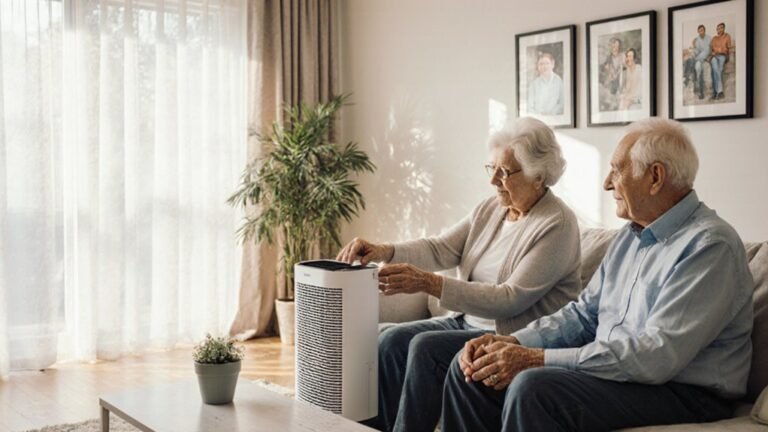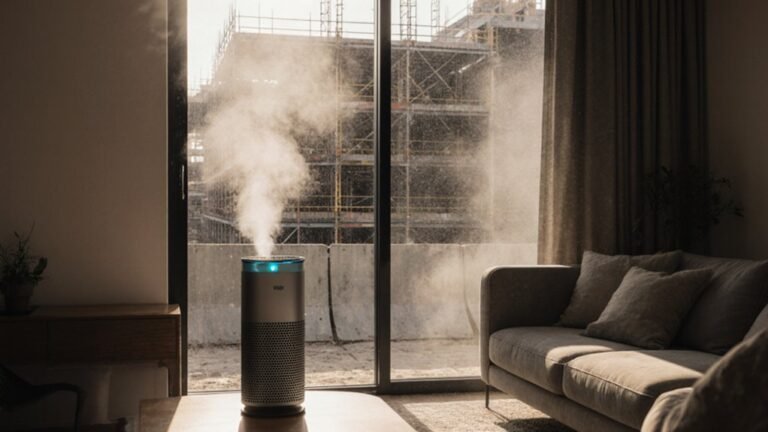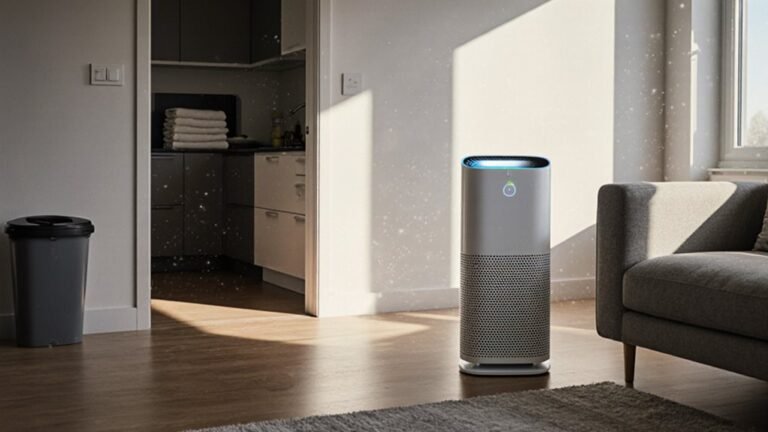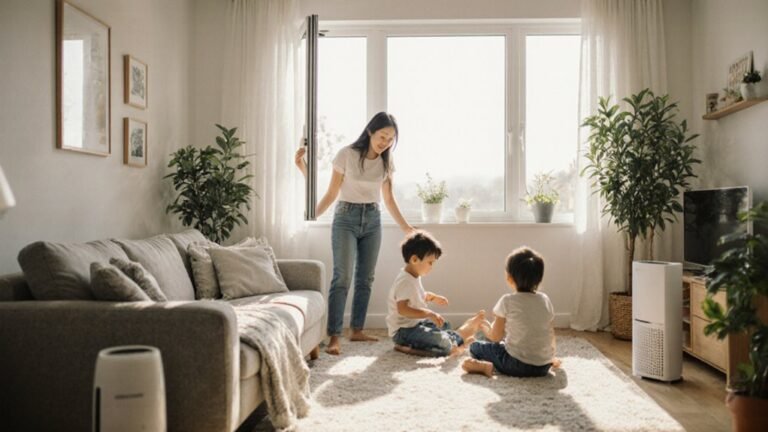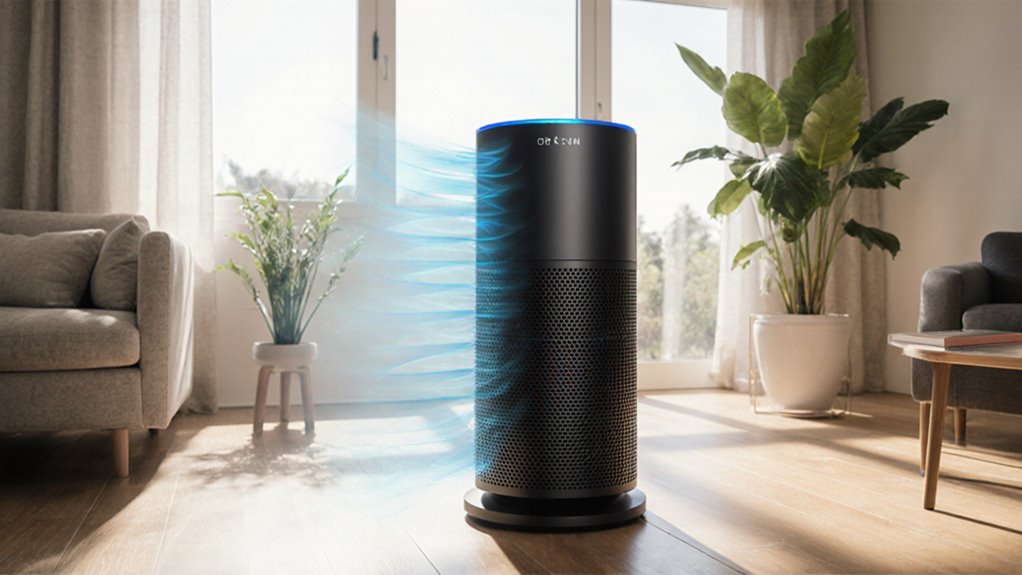

Running an air purifier continuously keeps dust, pet dander, pollen, and smoke from accumulating and makes indoor air feel calmer and easier to breathe. Continuous operation lets the unit respond faster to sudden spikes from an open window or a pet stirring up particles. Airflow rate, room size, and timely filter replacement determine how steady and effective that cleanup stays. Properly matched purifier capacity reduces airborne particles more consistently. Regular maintenance keeps performance high and prolongs filter life.
Why Run an Air Purifier Continuously
Because the air in your home keeps changing, running your air purifier all the time helps it stay ahead of the mess instead of chasing it. You keep particles low, so you’re not waiting for dust, smoke, or dander to build up.
That steady cleaning matters whenever pets, pollen, or wildfire smoke keep coming back. It also works better with the right placement strategies, since blocked vents can’t help you much.
Check your maintenance schedules, too, because a clean filter keeps airflow strong and steady. Once you size the purifier for your room and run it day and night, you protect the space it was built for.
Auto and Eco modes make that easier, since they adjust speed without you babysitting every setting.
How Continuous Use Improves Indoor Air
Whenever you run your HEPA purifier all day, it keeps pulling particles from the air instead of letting dust, pet dander, and smoke build back up.
That steady filtration helps you keep a lower particle level in bedrooms and family rooms, even whenever the source of the problem keeps going. It also gives you better air quality control, since smart models can adjust on the fly and hold cleaner air with less guesswork.
Steady Particle Removal
Steadily, a good air purifier keeps working in the background, and that constant effort makes a real difference in how clean your indoor air feels.
With continuous capture, you stop particles from piling up, so your air can move toward steady decay instead of rebound after a shutdown.
Whenever you run it often, the unit keeps cycling room air and holds particle levels lower for you and your household. That matters most in busy rooms with pets, cooking, or people moving around, because new dust keeps showing up.
A well sized HEPA purifier can lower particles fast, then keep them down with 4 to 6 ACH. Auto modes help too, since they adjust fan speed and protect energy, giving you steady relief without extra fuss.
Consistent All-Day Filtration
Running your air purifier all day keeps the air more stable, and that matters more than it could appear at outset. You avoid the quick rebound that can show up after shutdown, so your room stays easier to breathe in.
Whenever you run a properly sized HEPA unit nonstop, you’re more likely to hit the air-change target your home needs, especially in bedrooms where night cycles matter most. This steady pace can cut PM2.5 by half or more, which helps your lungs all day and night.
Assuming you choose Auto Mode, the purifier can speed up during spikes and ease back once the air clears, saving energy without losing protection. That helps during pet season, renovations, and wildfire smoke, while supporting humidity balancing too.
Better Air Quality Monitoring
With continuous use, your air purifier does more than clean the air, since it also gives you a truer portrayal of what’s happening in your room. You can trust the readings more because steady airflow supports sensor calibration and protects data integrity.
Whenever the unit runs all day, it keeps particles from bouncing back after shutdown, so your app shows real patterns, not confusing spikes. That makes blue, green, and yellow alerts feel useful, not random.
You’ll also spot changes fast, like cooking smoke, pollen, or pet dander, and the purifier can speed up before your space feels stuffy. Afterwards it settles back down, saving noise and power.
Over time, your filter estimates get sharper too, so you know on which occasions care is truly needed.
What ACH Means for Air Purifiers
Should you want cleaner air, ACH is one of the most vital numbers to understand. It tells you the air exchange rate, or how many times your room’s air gets filtered each hour. A higher filtration rate means faster particle removal, so you and your household can breathe easier together. | ACH | Meaning |
| — | — |
|---|---|
| 4 to 6 | Common home target |
| 5 | Often ideal indoors |
| 5 to 6 | Helpful for allergy bedrooms |
| 6+ | Used in clinics and classrooms |
| Continuous use | Keeps ACH steady |
For most homes, AHAM and CDC guidance points to 4 to 6 ACH, and allergy bedrooms often do better near 5 to 6. To keep that level, you need the purifier running nonstop at the right speed. Should you switch it off, particles bounce back fast, and nobody wants that comeback tour.
Room Size and Purifier Capacity
ACH only helps provided your purifier can actually handle the room you place it in, so size and capacity need to match. You deserve that fit. Check the CADR initially, then compare it with your room’s square feet and ceiling height, because more air means more work.
A 353 CFM unit can give five ACH in a 530 sq ft room, while a 706 CFM model fits about 1,059 sq ft. Should your space be larger, use a stronger unit or add another purifier. That helps you stay in the clean-air zone without guessing.
Portable placement matters too, since a small HEPA unit in the right spot can clear a room faster. Were HVAC flow to feel weak, choose standalone support that matches the space.
Allergy and Asthma Relief
For allergy and asthma relief, a continuously running true HEPA air purifier can make a real difference in how your room feels overnight. You’re not just filtering air; you’re lowering the load your body fights. HEPA traps 99.97% of particles at 0.3 microns, so fewer allergen carriers stay in the room. That steady help matters whenever breathing feels tight.
| Benefit | Why it helps |
|---|---|
| 5 to 6 ACH | Keeps allergens moving out |
| Auto Mode | Lifts fan speed during spikes |
| 24/7 use | Prevents rebound after shutdown |
With better bedroom sealing and the right bedding materials, you can support cleaner air and calmer sleep. Should you live with others, continuous use also keeps stirred-up particles from building back up while you rest.
Air Purifiers for Pets, Pollen, and Smoke
Assuming you’ve got pets, pollen, or smoke in your home, a properly sized air purifier can help you breathe easier through trapping pet dander and fine particles prior to them keeping floating around.
A true HEPA filter catches tiny allergens, and supposing smoke is part of the problem, activated carbon can also help cut odors and fumes.
For the best results, you’ll want to run it often, since particles can come back fast once the purifier turns off.
Pet Dander Control
As soon as pet hair starts to float around, a good air purifier can quietly take the edge off. For your home, pair pet grooming with dander screening so you know when the air needs extra help.
| What you do | Why it helps |
|---|---|
| Run true HEPA nonstop | It traps tiny dander fast |
| Add activated carbon | It cuts pet smells and cleanup fumes |
| Size for 5 to 6 ACH | It refreshes the room every 12 to 15 minutes |
With steady 24/7 use, you keep dander lower and stop that quick rebound after shutdown. Should your space have more pets or more people, choose a stronger CADR or use two units so you can breathe easier together. That kind of steady support makes your rooms feel more like home.
Smoke And Pollen Removal
Pollen and smoke can make a home feel stuffy fast, but a good air purifier can help you stay ahead of both. Whenever seasonal blooms hit or fireplace smoke drifts in, you can breathe easier with a true HEPA filter. It traps 99.97% of tiny particles, including pollen and most pet dander.
Add activated carbon, and you also cut smoke gases, VOCs, and lingering smells from cigarettes or wildfires. For shared comfort, keep the unit running in rooms that need 4 to 6 air changes per hour, and closer to 5 to 6 in bedrooms. Because particles come back after shutdown, continuous use matters. Should your purifier have sensors and Auto Mode, it can react fast whenever indoor air changes.
VOCs, Odors, and New Home Off-Gassing
New paint, fresh flooring, and brand-new cabinets can keep releasing VOCs for weeks or even months, so your home may smell “finished” before the air truly feels settled. That’s why material offgassing matters. In VOC chemistry, these gases and odor molecules drift into your space and can linger on surfaces and in the air.
Whenever you run an air purifier with activated carbon all day and night, you keep pulling down that chemical load instead of letting it bounce back after a break. HEPA alone can’t do this job as well, because it doesn’t adsorb odors. Should you be coping with heavy off-gassing, like fresh paint or new furniture, steady use and stronger fan speeds can help you breathe easier while your home becomes more comfortable. Some stubborn gases still need ventilation and curing.
Smart Features for 24/7 Use
Whenever you use Auto Mode, your purifier can react on its own by speeding up whenever particle levels rise and easing off as soon as the air clears, so you don’t have to keep adjusting it.
With real-time air monitoring in an app or on the display, you can see how your air changes through the day and set a schedule that fits your home’s busiest hours.
And once things stay calm, Energy-Saving Sleep Mode keeps the purifier quiet and efficient, so 24/7 protection feels easier to live with.
Auto Mode Efficiency
Because air can change fast throughout the day, Auto Mode helps your purifier keep up without you babysitting it. With solid sensor calibration and predictive algorithms, it reads particle levels and lifts the fan only once your room needs it. That means you get steady 24/7 protection without wasting power or adding extra noise to your home.
As the air stays clean, it eases back to a quiet, low setting, so you can sleep, work, and relax with less distraction. During a spike, it can push to higher CADR fast, then settle down again. This smart rhythm helps you stay near healthy ACH targets. It also tracks runtime, so filter life matches real use and your app can support easy scheduling.
Real-Time Air Monitoring
Real-time air monitoring takes the guesswork out of clean air, and it helps your purifier respond the moment your room changes. You can watch the color-coded display shift from blue to red as particles rise, then see the fan speed adjust on its own. That steady feedback feels reassuring because you know your home is staying on track.
- Continuous PM2.5 and VOC sensors catch smoke, dust, and cooking fumes fast.
- App logs show PM2.5 and PM10 trends, so you can spot patterns without losing sleep.
- Filter-life alerts use real use data, which helps you replace filters before performance drops.
If your unit has Wi-Fi, check its data privacy settings and watch for sensor drift so your readings stay useful. Whenever the air turns messy, you’ll feel like you’ve got backup.
Energy-Saving Sleep Mode
Sleep Mode can make all the difference should you wish your purifier to run all night without sounding like a jet engine. Whenever you switch it on, the fan slows down, noise drops, and you still get steady filtration. That’s how you keep your room fresh while saving power, often through 30 to 60 percent compared with high speed.
Smart Sleep and Auto Modes watch the air for you, then wake up should PM2.5 or VOCs rise. In bedrooms, aim for about 5 ACH at low speed so you stay protected without extra roar. Provided your unit has battery backup, you’ll keep that quiet protection during brief outages.
Also, seasonal scheduling helps you match sleep settings to pollen, smoke, or winter dust. Your filter could even last longer too.
Auto Mode, Sleep Mode, and Timers
As you use Auto Mode, the purifier does a lot of the contemplating for you, which can feel like a small relief in a busy home. It reads particles and VOCs with built-in sensors, and sensor calibration helps it react at the right moment. With user customization, you can match it to your rooms and routines.
- It speeds up during cooking or smoke.
- It slows down once air turns blue or green.
- It fits better with Sleep Mode and timers.
At night, Sleep Mode keeps a soft flow going so you can rest without fuss. Timers help you cover dinner, bedtime, or other peak windows, while smart schedules in the app track real runtime.
That way, you stay in the loop and feel more at home.
Energy Use and Noise Levels
Because a purifier could run for long stretches, energy use and noise matter just as much as clean air. Whenever you keep it on, check the power draw. A modern HEPA unit on low or Auto Mode often uses 10 to 60 watts, so it can feel as light on your bill as an LED bulb. At higher speeds, the fan rumble grows, and the draw can jump past 150 watts.
| Mode | Power | Sound |
|---|---|---|
| Low | 10-35 W | 20-35 dB |
| Auto | 15-60 W | 20-40 dB |
| High | 50-150+ W | 50-65+ dB |
If you size the unit well, you can share a quieter space with it. Smart sensors also help since your air feels healthier, so you get comfort without extra strain.
Filter Replacement and Maintenance Costs
Now let’s talk about the part many people forget until the reminder light starts blinking: filter replacement and maintenance costs.
Whenever you run your purifier nonstop, you’ll usually replace a HEPA filter every 6 to 12 months, and faster should your air be rough or your fan stays high. That means you should budget for replacement logistics, not just the machine itself.
- Portable units often need $30 to $100+ filters.
- Whole-home or specialty cartridges can cost several hundred dollars.
- Smart subscriptions can send filters on time, but they add a steady monthly charge.
Some systems use cleanable media, which lowers recurring costs, yet you might still face cleaning and service visits.
Check warranty implications too, since skipping upkeep can cause trouble later.
How to Choose the Right Air Purifier
Should your purifier have been running day and night, the next smart step is choosing a model that fits your space and your air.
Start with room size. You want a CADR that gives at least 4 to 5 air changes each hour, so a 300 square foot room could need about 300 to 350 CFM.
Then check filtration. True HEPA captures 99.97% of tiny particles, and activated carbon helps with smoke, paint fumes, and cooking smells.
In the event that you require whole-home coverage, pick a HVAC-integrated unit or a high-CADR model sized for your home’s volume.
Next, look for smart sensors, Auto or Eco modes, and app tracking.
Also, trust brand reputation and review warranty terms prior to purchase.
Frequently Asked Questions
Is It Safe to Run an Air Purifier Continuously?
Yes, you can run it continuously; it acts as a steady guardian for your room. You will need to watch filter maintenance and noise levels, but a certified, ozone free purifier usually remains safe and effective.