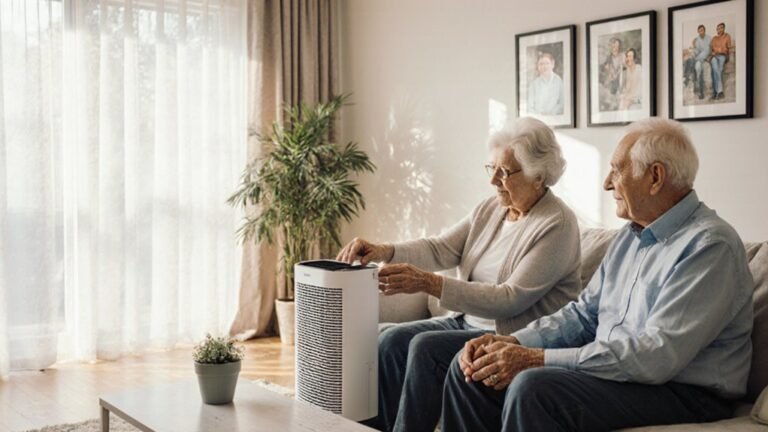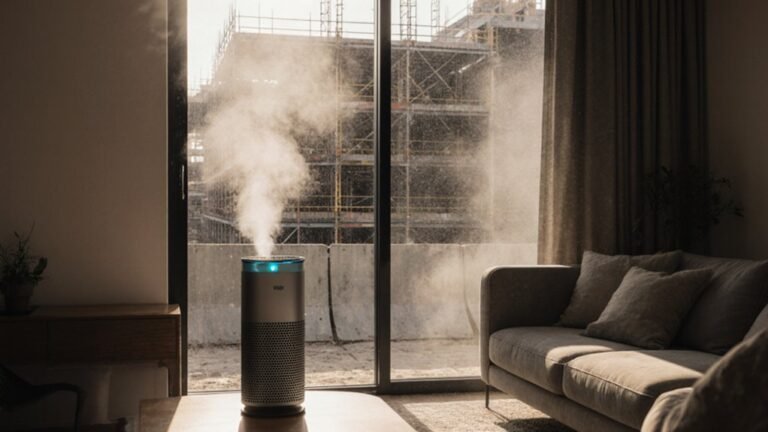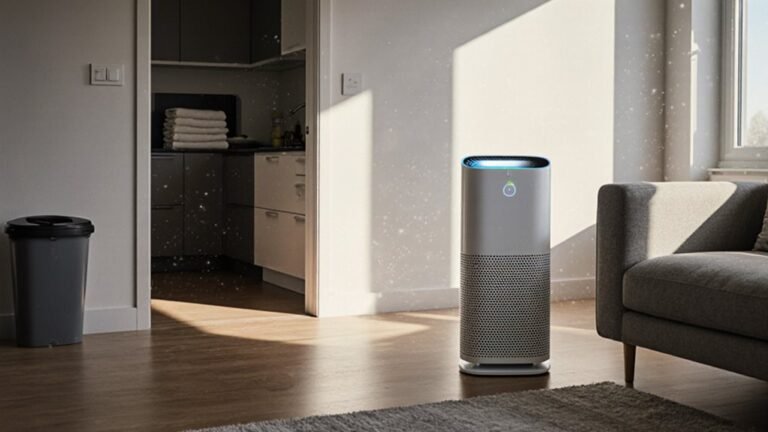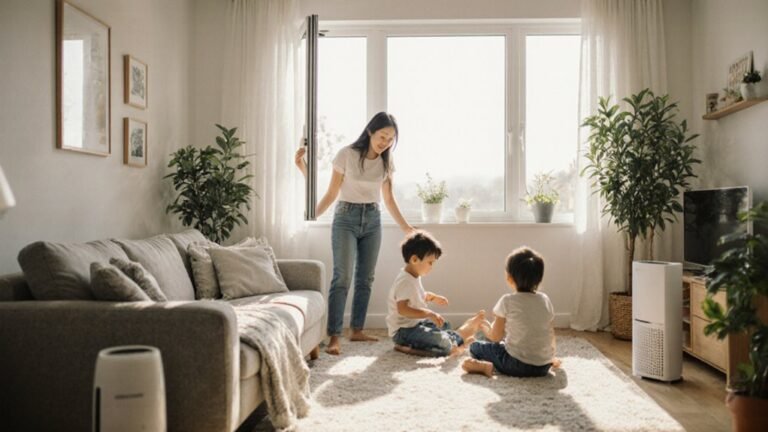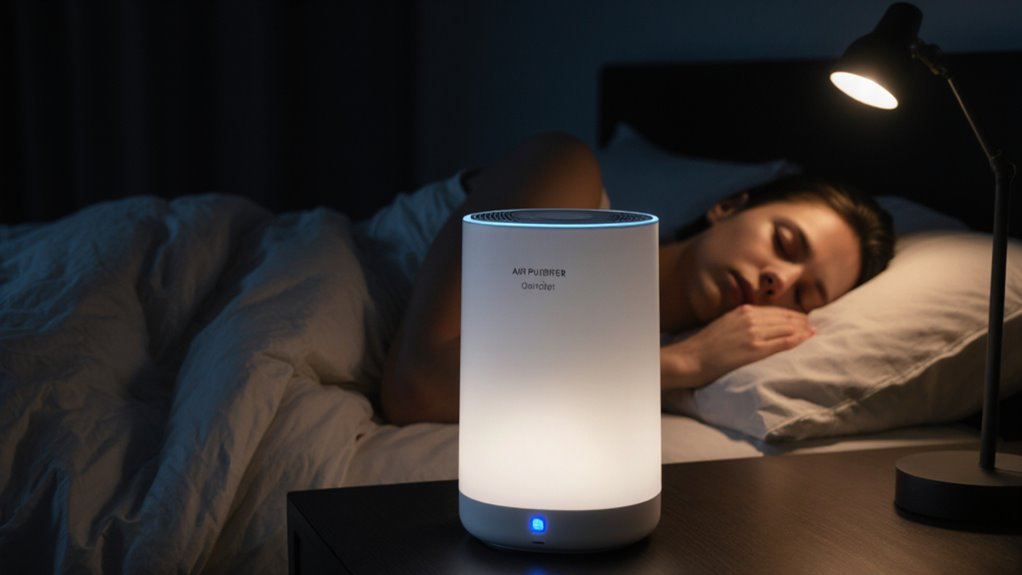

Yes — sleeping with an air purifier running is safe and often helpful. A properly sized purifier cuts dust, pollen, pet dander, and fine particles that can trigger nighttime coughing or congestion. Place the unit a few inches from walls and choose a low-noise or sleep mode to keep sound levels comfortable. Maintain filters per manufacturer guidance to keep performance consistent. For most bedrooms, a quiet, well-maintained purifier improves nighttime air quality without disrupting sleep.
Why Sleep With an Air Purifier On?
In case you deal with allergies, stuffy sinuses, or that scratchy, tired feeling in the morning, sleeping with an air purifier on can make a real difference. You breathe cleaner air all night, so dust mites, pet dander, pollen, and mold spores don’t pile up in your airways. That means less sneezing, less congestion, and fewer coughs that break up your rest.
A bedroom-sized unit can also keep air fresh for the full eight hours, which helps stop quick re-pollution after shutdown. Choose Night Mode or AUTO for a soft sound that can fit right into your sleep rituals and support a calm bedroom ambiance. Keep your door closed and place the purifier a few inches from walls so it works well while you sleep.
Can Clean Air Help You Sleep Better?
Yes, clean air can help you sleep better, especially should you wake up stuffy, sneezy, or wired from poor air in your bedroom. Whenever you cut airborne allergens like dust, pollen, pet dander, and mold spores, you ease nighttime congestion and coughing. That matters for your sleep hygiene, because fewer environmental triggers can help your body settle into rest instead of fighting irritation.
Studies also link purifier use with longer sleep and better sleep quality, especially provided you have allergies, asthma, sleep apnea, or heart risk. A correctly sized purifier can keep air clean through the night, so your room stays fresher while you sleep. With steady clean air, you might feel less interrupted and more welcome in your own bed, which can make bedtime feel calmer and safer.
How Loud Is a Bedroom Air Purifier at Night?
At night, a bedroom air purifier is usually quieter than people expect, so it can blend into your sleep routine instead of fighting it.
On low speed, many models sit around 25 to 35 decibels, which feels softer than a whisper and well below normal conversation. Some Sleep Modes drop near 32 decibels, giving you gentle white noise and sound masking without stealing attention.
Should you use AUTO or Night mode, the fan often stays low, so you can keep it running all night with less fuss. You can also move it a few feet from your bed and away from walls to soften the sound.
In case noise bothers you, pick a model with a low minimum level and check its nighttime performance.
What Your Bedroom Air Purifier Removes?
A good bedroom air purifier can take a lot off your lungs while you sleep, because it pulls in the tiny stuff that drifts through the air and catches it before you breathe it in.
| What it grabs | How it helps | Memo |
|---|---|---|
| Dust mite debris | Lowers airborne irritants | HEPA works well |
| Pollen, pet dander | Catches common triggers | Great for shared homes |
| Smoke, odors, VOCs | Freshens the room | Activated carbon helps |
Many models also move a lot of air, so your room stays cleaner through the night. In a closed bedroom, particles can build back up fast after shutdown, so leaving it on matters. Still, it won’t clear dust in bedding or fix high CO2. Check the filter lifespan and your maintenance schedule, since real performance depends on your room and setup.
Can Cleaner Air Improve Health While You Sleep?
Cleaner air can make a real difference during your sleep, especially in case you deal with allergies, asthma, or a stuffy nose at night.
A HEPA purifier can cut down dust, pollen, and mold spores, so you might wake up with less coughing, less congestion, and fewer sneezes.
Whenever you keep it running through the night, you help stop those irritants from building back up, which can support better sleep and a more rested morning.
Better Sleep, Cleaner Air
As you breathe easier at night, your body can settle down and do the work it’s meant to do during sleep.
Whenever you keep a HEPA purifier running in your bedroom, it can clear most airborne particles and help you stay asleep longer.
That cleaner air supports sleep hygiene because your room feels calmer, and it can help your circadian rhythms stay on track.
It also keeps pollutants from building up while you rest, which matters because closed rooms can get dirty again fast after shutdown.
In case you deal with allergies, asthma, or mold sensitivity, continuous filtration could ease morning fog and nighttime coughing.
Choose a unit sized for your room, then use Night Mode or AUTO for quiet, low-light comfort.
Nighttime Allergen Relief
Night after night, a HEPA air purifier can give your bedroom a cleaner start and your body a calmer place to rest. You breathe fewer dust, pollen, pet dander, and mold spores, so congestion and sneezing often ease while you sleep.
Keep it running through the full night, because particles can bounce back fast after it turns off, sometimes in about 80 minutes. That steady airflow might also help lower inflammation, so you can wake with less brain fog and fewer aches.
For the best fit, use a purifier sized for your room, close the door, and place it a few inches from the wall. With quiet Night Mode, low noise, sleep positioning, and pillow filtration, you can feel supported, not crowded, in your own bed.
Will Running an Air Purifier Waste Electricity?
You probably won’t waste much electricity by sleeping with an air purifier, because many models use about 35 to 140 watts and only a modest amount over an 8-hour night.
In the event that you switch on AUTO mode, the purifier often slows down after it cleans the air, so you get better savings without giving up clean air.
Additionally, keeping it running all night usually works better than using a timer, since on-and-off use can let dust build back up and make the purifier work harder later.
Power Draw In Sleep
Running an air purifier while you sleep usually won’t waste electricity, especially with an iAdaptAir model. You can rest easy because its energy consumption stays modest, from 35 to 140 watts. Over 8 hours, that’s about 0.28 to 1.12 kWh, and an average night is near 0.7 kWh. That’s like keeping a standard light bulb on, so it fits most sleep settings without stress.
Because the unit is built for 24/7 use, you get safe, efficient airflow all night. In the event you operate AUTO mode, it can ease into lower speeds while you rest, which keeps power use lower than high manual levels. So you can enjoy cleaner air, save energy, and feel good appreciating your room stays ready for tomorrow.
Auto Mode Saves Energy
At the time your purifier switches to AUTO mode, it usually gets smarter about saving power without asking you to think about it.
Your unit uses energy sensing to watch the air, then slows the fan whenever your bedroom stays calm. That matters because it can drop from higher wattage down to around 35 watts overnight, so you get clean air without a big electricity hit.
With adaptive scheduling, the purifier matches its work to real-time needs rather than pushing hard all night. Should you place it well, keep doors closed, and choose the right room size, AUTO mode stays efficient.
In fact, a nonstop AUTO run can use about as much power as a standard light bulb, which should help you feel good about sleeping with it on.
Continuous Use Vs Timers
Provided your purifier is operating while you sleep, it usually costs far less than people fear, and timers often save less than they promise.
In a sealed bedroom, particles can rebound fast, so switching the unit off prematurely can undo the clean air you worked for.
A modern purifier often uses about as much power as a light bulb, so steady use at night rarely feels wasteful. Should you pick the right size for your room and use AUTO or Night mode, you keep energy use low while still protecting your space.
You’ll also notice calmer fan acoustics, which makes rest easier. Plus, filter replacement stays on schedule because the unit keeps working as intended. For allergy-prone sleepers, that consistency can feel like a real win.
How Should You Place an Air Purifier in Your Bedroom?
To get the best results, place your air purifier where it can breathe freely and work without obstacles. Set it at least four inches from walls, and keep the air intake and outlet open. You’ll help the unit move air better, and your room will feel fresher faster.
Put it a little farther from your bed, not in a corner, so noise placement feels gentler while cleaning stays strong. Keep doors and windows closed at night, because that helps the purifier keep up with outside particles.
Also, don’t block vents or HVAC registers, and skip soft carpet piles that can choke airflow. Should you be choosing a unit, match it to your room so filter maintenance stays manageable and the whole space gets steady, reliable care.
Which Air Purifier Fits Your Room Size?
Choosing the right air purifier for your bedroom matters just as much as where you place it, because size affects how well it can clean the air while you sleep. Start with room sizing: measure length times width, then compare it with the model comparison below.
| Model | Coverage | Best fit |
|---|---|---|
| Small | 256 sq ft | Cozy bedrooms |
| Medium | 530 sq ft | Standard rooms |
| Large | 795 sq ft | Bigger spaces |
| Pro | 1,059 sq ft | Extra-large rooms |
| Tip | 4 to 5 ACH | Night comfort |
If your room sits between sizes, choose the next larger unit so it can run lower and quieter. That helps you feel settled, not crowded with noise. Keep doors closed, and leave a little space around the purifier so it can do its job well for you.
When Might an Air Purifier Not Be Enough?
Even a good air purifier can fall short whenever the problem goes beyond floating dust and pollen.
Should you be coping with odors, formaldehyde, or other gases, you might require activated carbon or a special filter, because HEPA alone won’t catch them. In a sealed room CO2 can rise while you sleep, and that can leave you sluggish no matter how clean the air feels. Also, in case your unit is too small for the room, it won’t move enough air to help much. And suppose pollution lives in carpets, bedding, or wall cavities, you can get embedded source re emission over time.
Real homes also have open doors, gaps, and shifting airflow, so lab numbers can look better than your bedroom really is.
Frequently Asked Questions
Is It Safe to Leave an Air Purifier Running All Night?
Yes, you can safely leave it running all night provided it is modern and well maintained. You will get cleaner air, low noise levels, and modest energy consumption, so you can sleep comfortably with peace of mind.