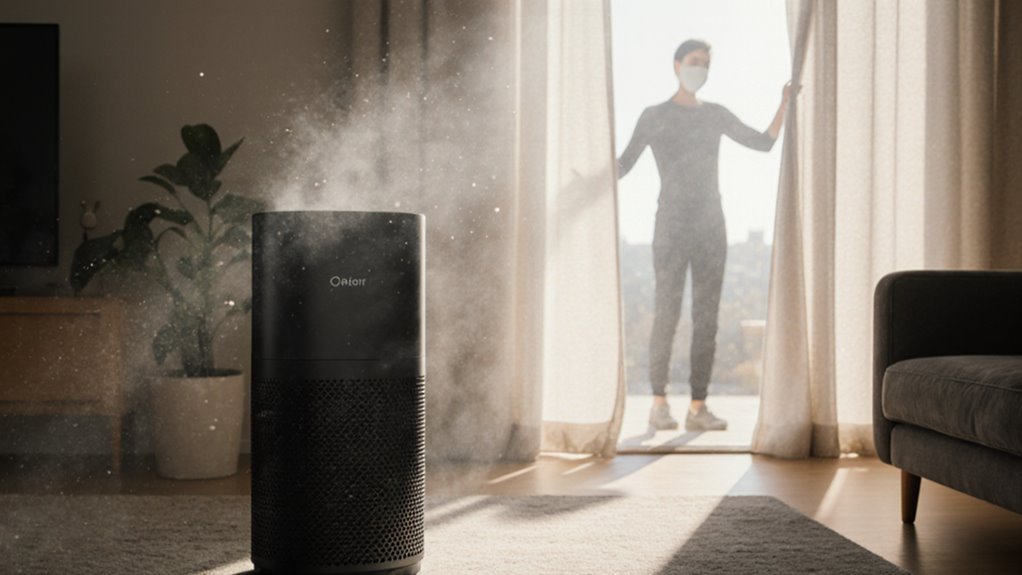

Yes — a quality air purifier can reduce airborne virus risk by removing particles that carry viruses. It captures those particles with a true HEPA filter rather than killing viruses directly. Effectiveness depends on purifier size relative to room volume, correct placement, and continuous operation. Filter type, CADR rating, and regular maintenance affect how much cleaner air becomes. Small mistakes in any of these areas can significantly reduce real-world protection.
Do Air Purifiers Help With Airborne Viruses?
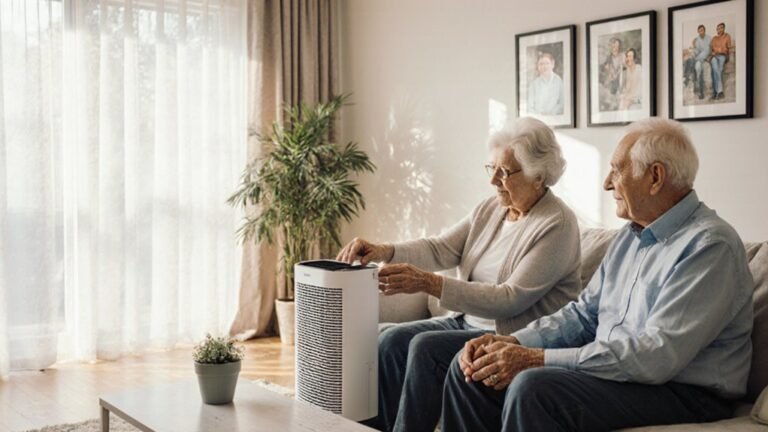
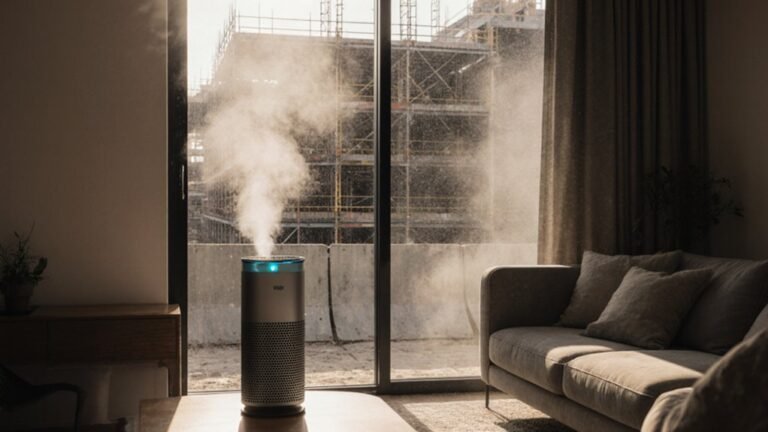
Yes, air purifiers can help with airborne viruses, especially once you choose a portable HEPA unit that matches the size of your room.
Whenever you size it well and give it enough CADR, it can lower viral transmission by removing more aerosol particles from the air you breathe.
In lab evaluations, strong HEPA models have cut airborne virus levels fast, which can reduce infection risk in the spaces where you spend time.
Still, you shouldn’t treat it like a magic shield. It only works while it’s on, and it doesn’t clean surfaces or replace ventilation, masking, vaccination, distancing, or good hygiene.
How Air Purifiers Capture Virus-Laden Particles
Provided an air purifier catches virus-laden particles, it’s not grabbing tiny free-floating viruses one at a time, because those are far too small on their own. Instead, you rely on it to pull in droplets and aerosols that carry them.
Inside the filter, particle behavior work through interception, inertial impaction, diffusion, and electrostatic attraction, so both bigger and smaller particles get trapped well. That’s why HEPA-rated filters can remove most particles near 0.3 micrometers and even more at other sizes.
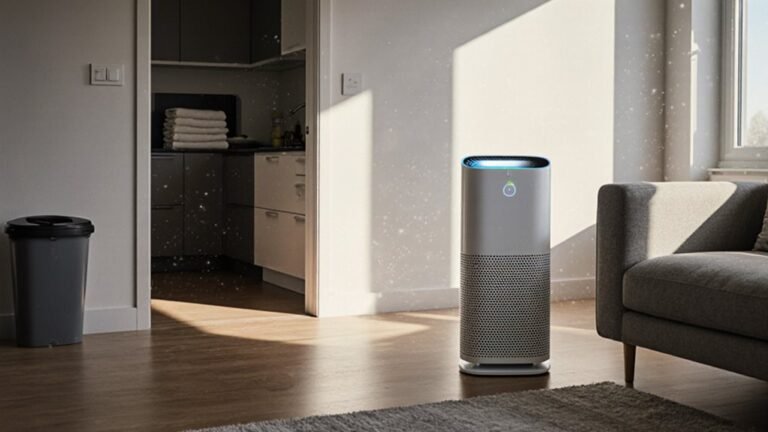
Because viruses often ride in those particles, you get cleaner air in the room, especially while the purifier’s CADR matches your space and you place it near the source.
For steady protection, keep the unit running and follow filter maintenance guidance carefully, since captured germs can stay viable.
What HEPA Filters Can and Can’t Do
HEPA filters do a lot of the heavy lifting, but they don’t do magic. You get real help because they trap tiny particles that carry viruses, especially whenever droplets ride along.
- They can catch virus-laden aerosols.
- They work through interception and diffusion.
- They don’t kill viruses.
- They need a maintenance schedule.
- Plan safe filter disposal after use.
Which Air Purifier Specs Matter for Viruses
To get real protection from airborne viruses, you need more than a label that sounds impressive. You should look for a True HEPA filter, ideally H13 or H14, because it traps tiny virus carrying aerosols well.
Next, check CADR and do the math for your room size. Good airflow matching matters, since a strong filter on a weak fan won’t help much.
Aim for enough clean air changes each hour, especially in rooms you use a lot. Also, trust filter testing from AHAM or other third parties, not just marketing words.
If odors or VOCs bother you too, choose a unit with activated carbon, but keep in mind it’s extra support, not the main virus defense. That way, you and your space can breathe easier together.
How to Place and Use an Air Purifier
Place your air purifier where it can catch the most particles, because location matters almost as much as the filter itself. Good room placement helps you feel safer together. Put it in the room you use most, or in the sick person’s bedroom, and keep it within 3 feet of the source provided you can.
- Match the CADR to the room size
- Run it continuously on high
- Leave space around the intake and outlet
- Keep doors and windows closed whenever possible
- Stay on top of filter maintenance
Then let airflow stay clear. Don’t aim it straight from one person to another. Assuming you can, add fresh air with ventilation too. Replace HEPA filters on schedule, clean pre-filters, and wear gloves and a mask whenever you change filters after illness.
Why Air Purifiers Work Best in Layers
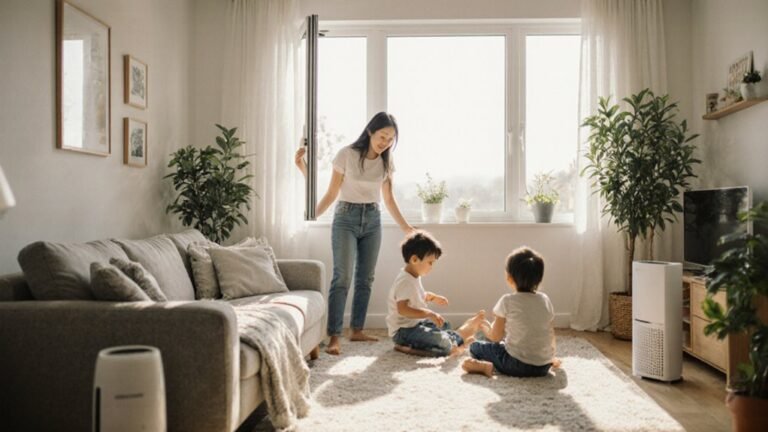
A layered defense works better than any single gadget because airborne viruses don’t play fair. You get better protection whenever you use multiple layers together: a True HEPA purifier, open windows whenever safe, HVAC fans, masking, vaccination, and distance.
Your purifier grabs virus-carrying aerosols from the air, but it can’t clean every surface or stop every breath. That’s why risk compensation matters; assuming you relax the rest, the gain drops fast. Choose a unit with enough CADR for your room, run it nonstop, and place it near where you sit or sleep. Keep the filter maintained, since clogged media slows airflow.
Whenever fresh air and filtration team up, you lower exposure in a way that feels practical, shared, and steady.
Frequently Asked Questions
How Long Do Viruses Stay in the Air Indoors?
Viruses can linger like invisible dust indoors for minutes to hours, sometimes longer. You will see aerosol persistence and ventilation decay shape the risk, so better airflow, filtration, and sunlight help you breathe easier together.