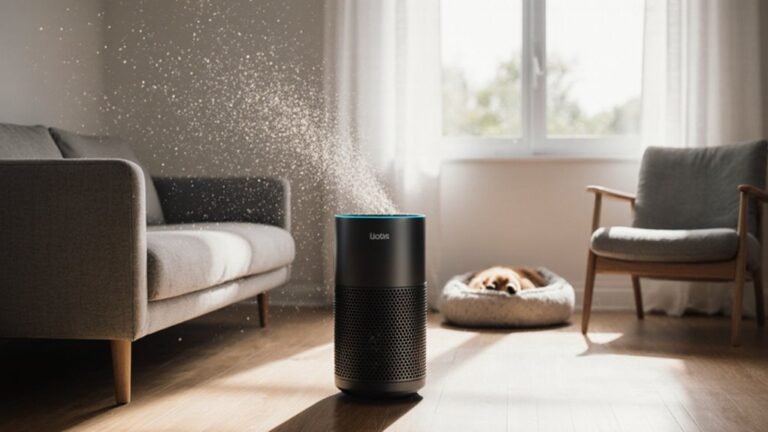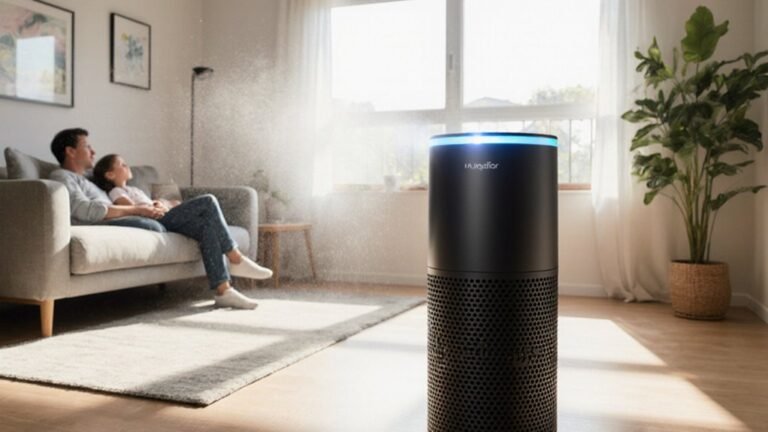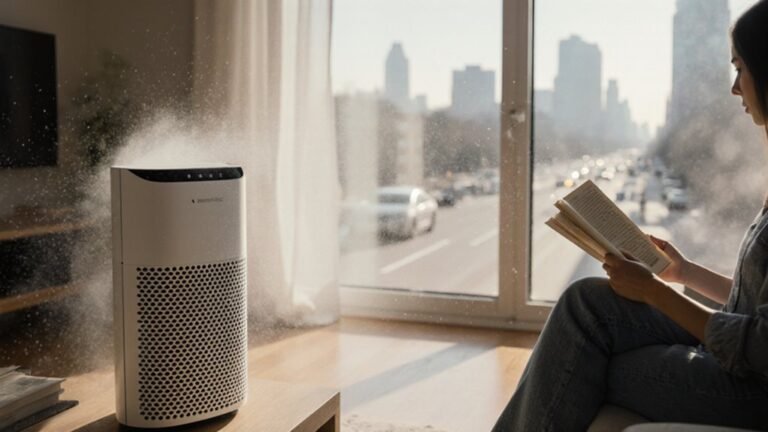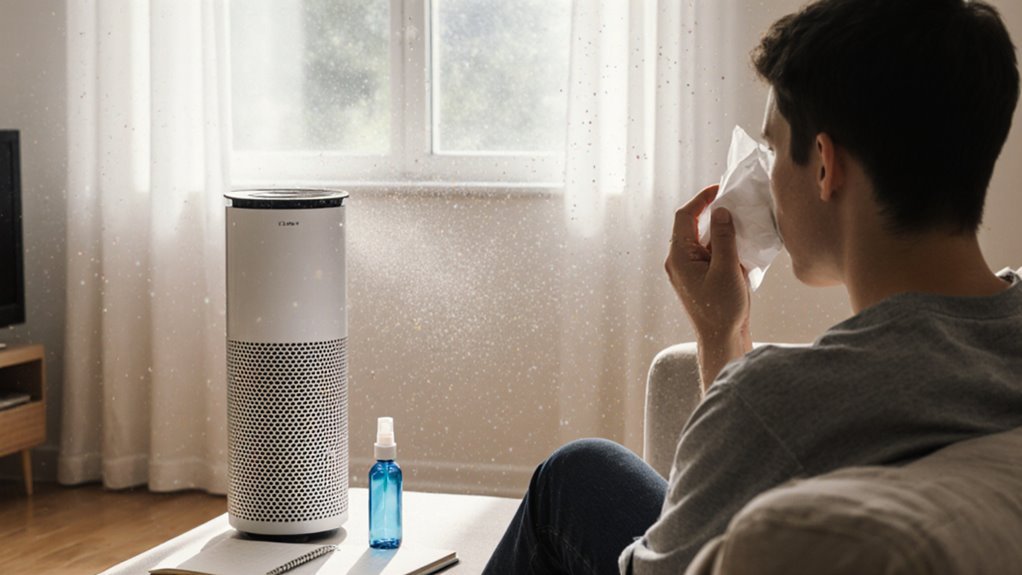

A quality air purifier with a true HEPA filter reduces indoor pollen, pet dander, dust, and mold spores. Proper unit size and correct placement determine how effectively it cleans a room. Running the purifier regularly during high-allergy periods keeps particle levels lower. Filters need timely replacement to maintain performance and air flow. Small changes in setup and use can make bedrooms noticeably more comfortable.
What Do Air Purifiers Do for Allergies?
Whenever allergy season kicks in, a good air purifier can help take the edge off through pulling tiny triggers out of the air you breathe. You can feel less boxed in whenever your room starts to feel like a safer zone.
With smart seasonal timing, you’ll get the most help during pollen spikes, and a True HEPA unit can catch most pollen, pet dander, and dust-mite waste. Should you keep it running in bedrooms and shared spaces, it can lower airborne particles by about half in some trials. That means less exposure while you sleep and relax.
For steady relief, match the size to your room and stay on top of filter maintenance. Also, pair it with clean bedding and low humidity, because no purifier can do everything alone.
Why HEPA Filters Matter Most
Once you start getting relief from cleaner room air, the next thing to know is why HEPA filters do the heavy lifting. They give you strong particle capture, taking out at least 99.97% of airborne bits as small as 0.3 microns. That means pollen, pet dander, dust, and mold spores get caught before they can float around your space and bother you.
- They cut PM2.5 and PM10 during allergy peaks.
- They lower exposure while you sleep.
- They keep dust-mite allergens from settling.
- They work without making ozone.
- They need simple filter maintenance.
When you use a true HEPA purifier often, you help your room feel calmer and more breathable.
Should you also share air with others, that comfort can spread through the whole home.
How to Choose the Right CADR
Next, look at CADR as the number that tells you how fast a purifier can clear a room, not just how fancy it sounds on the box. You want CADR benchmarking that matches your space, because a higher rating clears pollen, dust, and smoke faster.
For one air change each hour, pick a CADR in CFM that times 60 meets or beats your room’s cubic feet. In bedrooms and residing rooms, use Ceiling height adjustments and room size charts; a 300 square foot room often needs 200 to 300 CFM.
Check separate pollen, dust, and smoke ratings under ANSI/AHAM AC-1, since they don’t always match. Should your home has open areas, choose stronger units or add one purifier per room so everyone can breathe easier together.
Where Should You Place an Air Purifier?
Place your air purifier in the bedroom, near the bed but clear of walls and furniture, so it can pull air freely while you sleep.
You should also keep one in the lounge, because continuous HEPA cleaning there can drop PM2.5 and PM10 in the space you use most during the day.
If pollen is a problem, set a unit near the entryway or the spot where you take off shoes and outerwear, and keep the windows closed on warm days.
Bedroom Placement
For the best overnight results, put your air purifier close to the bed, ideally within 1 to 2 meters of your head or feet, so the cleaner air reaches the spot where you breathe most. Consider your sleep position, too, because airflow mapping works best whenever the unit faces your breathing zone. Choose a model with CADR sized for your room, so it can keep up all night without straining. Then give it 20 to 30 cm of space from walls and dressers, or it can’t move air well.
- Keep doors and windows closed during pollen peaks.
- Use a true HEPA filter, not an ionizer.
- Run it on low to medium through the night.
- Match the purifier to your bedroom size.
- Place it where furniture won’t block the flow.
Living Room Coverage
Once your bedroom setup is working well, the lounge room becomes the next big space to get right, because that’s where you and your family often spend the most time awake. Put your purifier near the main seating area, but keep it 1 to 2 feet from walls or big furniture so the airflow can move freely. Choose a model with a CADR that fits the room, so it can handle pollen, pet dander, and dust at 2 to 4 air changes each hour.
For corner placement, only do it if the intake still stays open. Also, set it downwind of pet beds or the door, and don’t hide it behind curtains or under tables. In larger homes, a strong HEPA unit in the lounge can cut overall exposure and give your space a calmer visual impact.
Which Allergens Can Air Purifiers Reduce?
An air purifier can make a real difference whenever allergies are making your home feel like a battle zone. With true HEPA pollen reduction, you can cut pet dander, mold spores, dust mite bits, and airborne dust from the air you breathe. Add a carbon layer, and you also get VOC capture for some odors and fumes, which can make your space feel calmer and easier to share.
- HEPA filters trap at least 99.97% of particles at 0.3 microns.
- They catch pollen grains and many pet dander particles.
- They reduce dust mite allergen carriers and airborne dust.
- They help limit mold spores floating through rooms.
- Continuous use during allergy season can lower indoor PM2.5, helping you breathe with more ease.
Why Some Air Purifiers Don’t Help
Even a well-made air purifier can fall short provided it uses the wrong technology or runs too weakly for your room.
Should you buy an ionizing unit, it could charge dust but leave it on your shelves, and ozone emissions can irritate your lungs. Whenever ionizer efficacy is low, you don’t get real relief.
Similarly, a purifier without a True HEPA filter might miss tiny allergens that keep you sneezing. Suppose the CADR is too small, the air won’t cycle fast enough, especially in your bedroom.
Poor placement, filter bypass, or maintenance neglect can also weaken results. So, check the fit, the filter, and the care schedule. You deserve cleaner air that actually helps your home feel calm and safe.
How to Use Purifiers With Other Allergy Steps?
You’ll get the best relief whenever you pair a true HEPA purifier with source control, like weekly hot-water bedding washes, HEPA vacuuming, and keeping pets out of your bedroom.
Run the purifier in your bedroom and lounge during allergy season, and make sure it fits the room so it can clean the air often enough.
Keep humidity below 50% and use good HVAC filters too, since that helps cut dust mites, mold, and the extra allergens your purifier has to catch.
HEPA Plus Source Control
A smart allergy plan works best whenever your purifier gets backup from a few simple habits at home. You’ll breathe easier once you keep windows closed on high-pollen days and check window seals for leaks. Pair that with pet grooming outdoors, so less dander rides back in with you.
- Remove shoes at the door.
- Run your true HEPA unit nonstop.
- Match CADR to your room size.
- Wash bedding weekly in hot water.
- Use mattress and pillow encasings.
- Keep humidity below 50%.
- Fix leaks and scrub damp spots.
- Swap HVAC filters for MERV 11 to 13.
This mix helps your purifier do its best work. It catches what floats, while your habits block fresh allergens from getting inside. That balance can make your home feel calmer, cleaner, and more like the place you want to rest.
Bedroom And Living Room
Whenever allergy season hits, your bedroom and residence room can work together as a real relief zone in case you place each purifier with care and pair it with a few smart habits. In your bedroom, put a True HEPA unit near the bed so it supports sleep ergonomics, while your family room unit handles the main seating area and keeps shared air cleaner. | Room | Best move |
| — | — |
|---|---|
| Bedroom | Set the purifier close to your bed |
| Living room | Use a higher-capacity unit near seating |
| Both rooms | Run them all day and night |
| Housewide | Close windows, skip smoke, and keep pets out |
Then keep ambient lighting calm at night, so you rest easier. Next, check filters on schedule and keep airflow clear, because a clogged unit can’t help your crew much. Together, these steps lower pollen and dander.
Humidity, Vacuuming, And Bedding
Even with a good air purifier running, humidity, vacuuming, and bedding care still matter a lot because they control the dust and mold your purifier can’t fully catch on its own. Keep humidity control under 50%, and aim for 30 to 50%, so dust mites and mold don’t get cozy. Skip humidifiers unless you truly need them.
Vacuum once or twice a week with a HEPA model, then let your purifier run for 1 to 2 hours to clear stirred-up dust.
For bedding maintenance, wash sheets, pillowcases, and pet bedding weekly in hot water. Use allergen-proof covers on mattresses and pillows. Together, these steps help you breathe easier and keep your space feeling safer.
- Lower moisture
- Use dehumidifier
- HEPA vacuum
- Wash hot weekly
- Cover pillows
Frequently Asked Questions
Do Air Purifiers Help During Allergy Season?
Yes. HEPA purifiers help during allergy season. As the saying goes, an ounce of prevention is worth a pound of cure: you will enhance HEPA effectiveness and pollen filtration, so your home feels calmer, cleaner, and more comfortable.