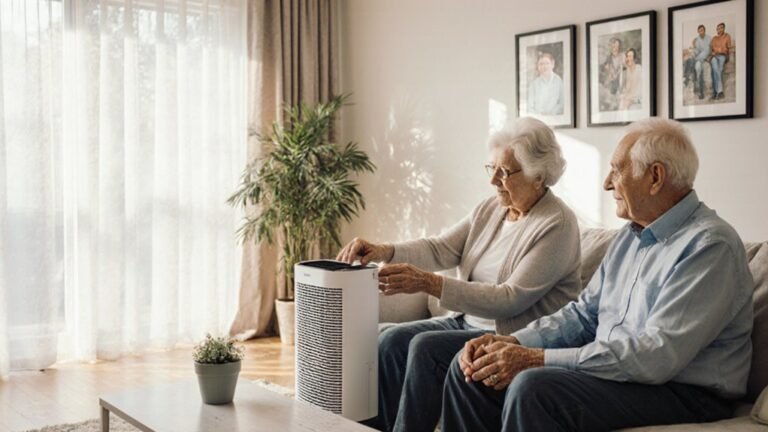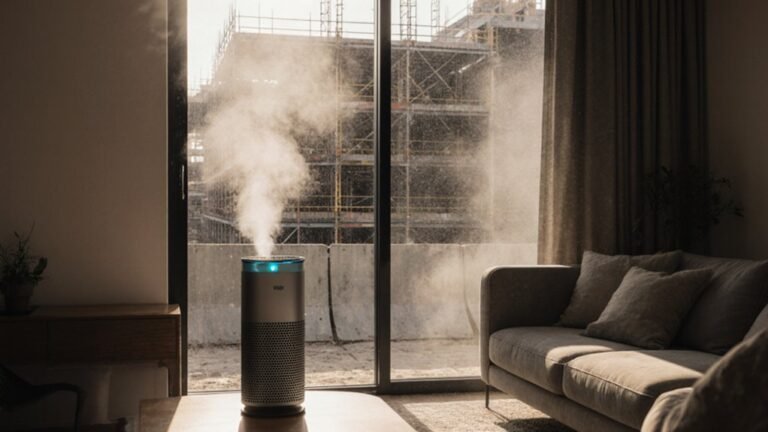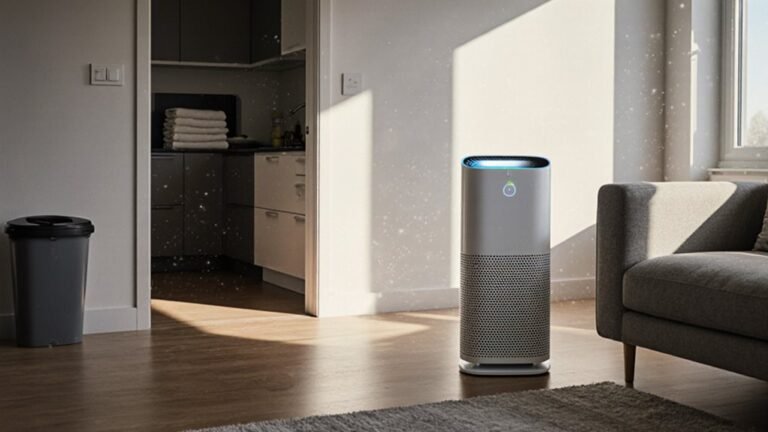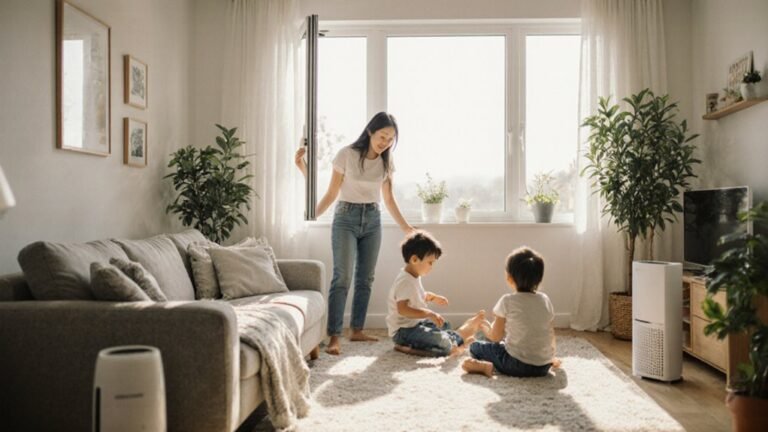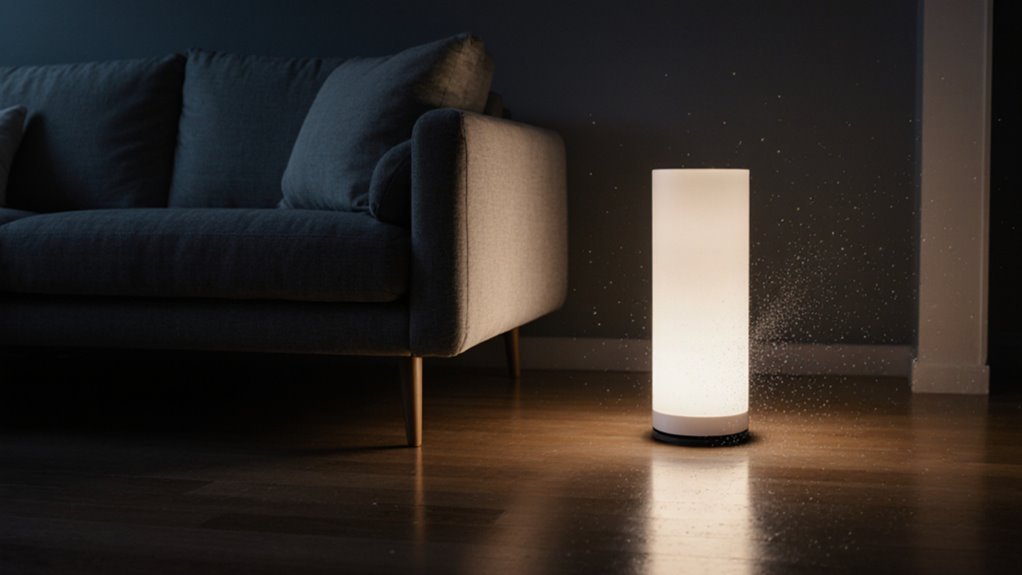

Air purifier noise often rises at bedtime and can disrupt sleep. Typical quiet units run about 20–40 dB, while comfortable night levels are closer to 20–30 dB. Placement a few inches from walls, clean filters, anti-vibration pads, and matching CADR to room size all reduce sound. Fan speed and motor design also strongly affect nighttime noise. Small changes in setup and maintenance can make the difference between restful sleep and constant disturbance.
How Many Decibels Is a Quiet Air Purifier?
Usually, a quiet air purifier falls in the 20 to 40 decibel range, which feels much gentler than most people expect. You’ll often hear a soft whisper at the low end and a light fridge hum near the top.
That range matters because decibels rise fast, so a small number jump can feel much bigger to you. Many models, like some Alen units, stay in the low 20s to 40s on gentle settings, which helps you keep comfort without losing airflow.
Makers use soundscaping techniques, precision motors, and smart sensors to shape the sound. They also rely on psychoacoustic masking, so the purifier blends into your space instead of standing out. That way, you can feel at ease and still breathe easier.
What Noise Levels Feel Comfortable at Night?
At night, the most comfortable room noise is often around 20 to 40 decibels, and many people sleep best once it stays near the lower end of that range. Should you be a light sleeper, aim closer to 20 to 30 dB so your room feels calm and shared, not harsh.
That steady hum can support sleep hygiene, especially whenever you dim bedroom lighting and settle into a routine that tells your body it’s time to rest. A soft, even sound often feels better than sudden clicks or rattles, because it gives you a familiar background you can trust.
Since a 10 dB jump can sound much louder, keep your purifier on the lowest setting that still cleans your air. Place it away from your bed, and check for blocked airflow too.
Which Alen Air Purifiers Run the Quietest?
Provided that quiet matters most in your home, the Alen BreatheSmart 45i is the calmest place to start, since it runs at about 23 dB on low and only rises to around 49 dB on high. Should you want a room that feels restful, this model helps you settle in without stealing the moment.
- The 45i fits bedrooms and nurseries best.
- The BreatheSmart 75i stays near 25 to 51 dB and still covers large spaces.
- The compact 35i runs about 29 to 42 dB for smaller rooms.
- WhisperMax maintenance matters, and a healthy Filter lifespan helps keep noise steady.
For sleep time, use low or auto settings, then place the unit away from walls so you stay part of a calmer, shared space.
Why Are Alen Air Purifiers So Quiet?
Alen air purifiers stay so quiet because the company designs them to move air with less friction and less shake from the start. You get WhisperMax, whisper technology, and motor precision working together in a sealed airflow path. That setup cuts turbulence, so the fan doesn’t have to strain.
Large HEPA filters also help by opening the path for air, which lets the unit breathe easier and stay calmer. In Auto Mode, smart sensors keep the speed low until you need more cleaning power, so you hear less whenever your room is already fresh.
On a BreatheSmart 75i, you might hear about 25 dB at low speed, which feels bedroom-friendly and easy to live with. Smaller models stay just as welcoming for sleep.
How Can You Reduce Air Purifier Noise at Home?
You can cut a lot of air purifier noise when running your unit on the lowest speed that still cleans the air well, since that often keeps the sound gentle enough for daily use.
Place it a few inches away from walls, corners, and soft furniture so airflow stays smooth and the unit doesn’t buzz or rattle.
Keep the filters and fans clean, because a clogged purifier works harder, gets louder, and turns quiet comfort into a little indoor drum solo.
Optimize Purifier Placement
Tuck your air purifier into the right spot, and the noise often drops fast. You can make the room feel calmer with smart fan placement and corner avoidance. Place it a few inches from walls and big furniture so air moves freely.
- Set small units on a stable table or stand.
- Keep curtains, rugs, and clutter away from the intake and outlet.
- Skip corners, where sound can bounce and airflow can slow.
- Choose a room-sized model so it can work on a lower setting.
When you give the unit breathing room, it doesn’t strain as hard. That means less vibration, less whir, and a quieter space you can actually enjoy with your people.
Maintain Quiet Operation
Now that your purifier sits in a better spot, the next step is keeping it quiet while it runs. Start with lower fan speeds whenever the air is already decent, because they often stay in the 20 to 40 dB range and feel much calmer.
As soon as the room needs more help, use Auto mode so the unit can rise only when it must. Make filter maintenance part of your routine, since clogged prefilters or HEPA and carbon filters push the fan harder and add noise.
Also, set the purifier on a stable, vibration-damping mat to cut buzzing and rattling. Keep it a few inches from walls, curtains, and furniture so airflow stays smooth and your space feels peaceful.
What Matters Besides Low Decibels?
Low decibels matter, but you also need to notice how the air feels as it moves through your room. A purifier that pushes air well without harsh whines or rattles can feel much calmer, and that often depends on the unit’s airflow and filtration design.
You’ll also get better comfort whenever you match the purifier to your room size and place it where it can breathe freely, because cramped spots can make it work harder and sound louder.
Airflow and Filtration
Beyond the decibel number, airflow and filtration do a lot of the real work in how quiet an air purifier feels in your home. Whenever you choose larger HEPA media and a smarter duct design, you help air move with less resistance, so the fan can stay calmer and the filter lifespan often improves too.
That means you get cleaner air without the extra buzz that can wear on you.
- Freer intake and exhaust paths cut strain.
- Aerodynamic fans reduce turbulence.
- Smart sensors keep speeds low whenever air is clean.
- Higher CADR lets you clean well at quieter levels.
In practice, this helps you feel part of a home that stays fresh, steady, and easy to relax in.
Room Size and Placement
Once you size an air purifier to the room and place it well, the whole machine can feel much calmer in daily life. Good room sizing matters because a higher CADR unit can clean more air at lower, quieter speeds. In a big space, that can keep sound around 40 dB or less, which feels easier to live with.
Then, airflow placement matters just as much. Give the purifier several inches of space from walls, curtains, and furniture, and skip corners whenever possible. In bedrooms and nurseries, set it near your breathing zone, but not right at your face. Should you lift it slightly off the floor, you might hear less vibration. Keep the unit and prefilter clean, too, so your space stays peaceful.
How Do Quiet Air Purifiers Improve Sleep?
Quiet air purifiers can make sleep feel calmer because they do two helpful things at the same time: they clean the air and they keep the room sounding steady and soft.
Whenever you breathe easier, you might wake less often from allergens and dust. Also, a gentle hum can feel like pink noise, which helps block sudden sounds.
- You hear fewer jolts from traffic or a hall door.
- You get steady airflow at 20 to 40 dB.
- You can use sleep masks and bedtime routines more easily.
- You stay comfy because smart sensors keep noise low.
If your model has Auto Mode, it could stay quiet while still cleaning well.
With clean filters and open vents, your purifier stays smooth and helpful, so your room feels like it belongs to rest.
Frequently Asked Questions
Can Air Purifier Placement Affect Perceived Noise?
Yes, you can place it where room acoustics soften sound and away from airflow obstructions, so it seems quieter. You’ll feel more at ease, and your space can stay welcoming, calm, and comfortable.
Do Filter Replacements Change Purifier Sound Levels?
Yes, fresh filters can lower noise, like a room exhaling. You’ll often hear less strain after replacement because filter degradation and motor wear both can make your purifier louder, and you deserve a quieter, cozier space.
Are Larger Purifiers Always Louder Than Smaller Ones?
No, you can’t assume that. Larger purifiers often use bigger motors and better housing materials, yet design, fan speed, and build quality matter more. You’ll find quiet models in every size, so you have choices.
Does Fan Speed Impact Energy Use and Noise Together?
Yes, it does: as you raise fan speed, you usually use more energy and hear more noise. In your room, a purifier on high could save air faster, but better fan efficiency and acoustic damping can soften both.
Can Smart Sensors Help Reduce Unnecessary Purifier Noise?
Yes, your smart sensors can cut unnecessary noise by adjusting fan output with adaptive thresholds and predictive maintenance, so you feel included in a quieter, more responsive space that fits your needs and habits better.