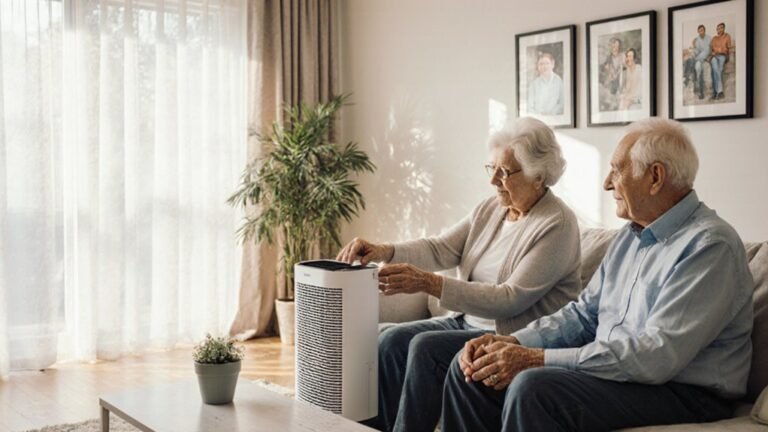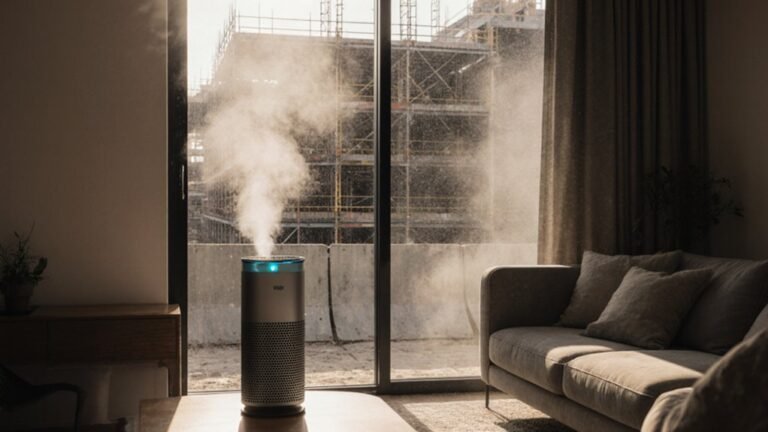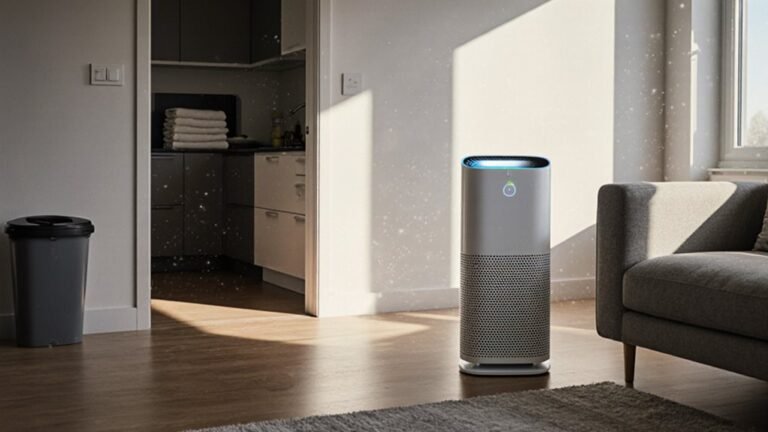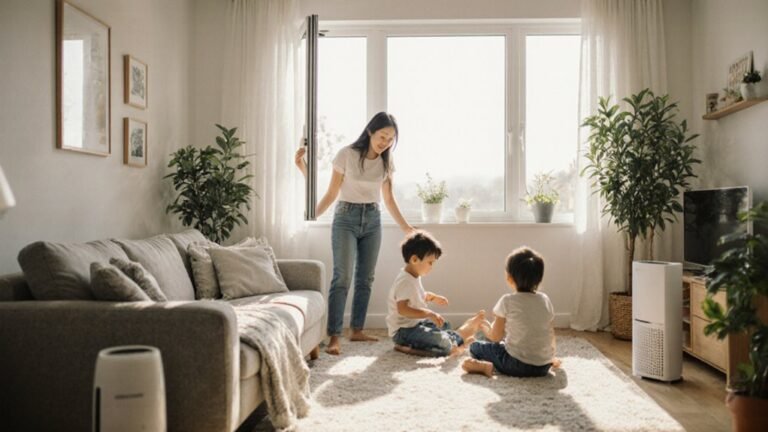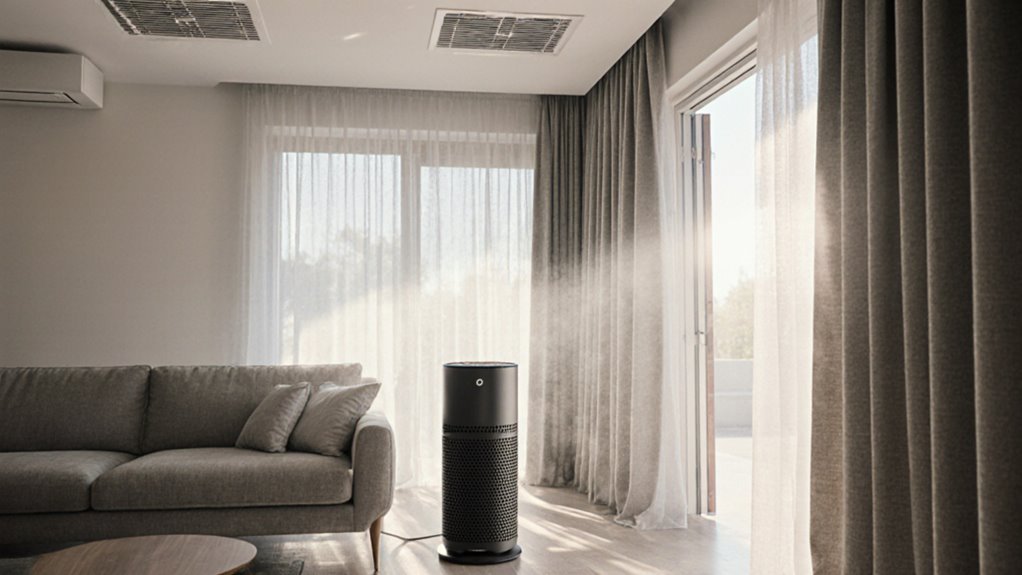

About 90% of people spend most of their time indoors, so indoor air quality affects health and comfort. An air purifier traps dust, pollen, and smoke but cannot circulate air across a room by itself. Fans and deliberate airflow transport filtered air into corners and reduce stagnant pockets. Combining a purifier with proper circulation helps maintain more consistent clean air throughout living spaces. Small changes in fan placement and airflow patterns can noticeably improve overall indoor air distribution.
Do Air Purifiers Replace Fans?
No, air purifiers don’t replace fans, even though they could seem like they ought to initially.
You still need a fan whenever you want real airflow, a cooler feel, or help moving air around the room. A purifier works through filtering indoor air, so its gentle breeze focuses on cleaning, not comfort.
A fan, by contrast, gives you convective cooling and can make you feel fresher right away. In the event you use both together, you often get better room-wide circulation, and more air reaches the purifier’s intake. That can improve cleaning and reduce dead spots.
For that reason, many people pair a purifier with a fan for daily comfort. You might also appreciate the quiet silent operation and energy savings some purifiers offer while they work alongside your fan.
What an Air Purifier Does
Once you turn on an air purifier, it pulls room air through its filters and traps the tiny particles floating around your home. You get help against dust, pollen, pet dander, mold spores, and many smoke bits, so the air can feel easier to breathe.
Many units also use carbon to catch odors and some gases, which can make your space feel fresher too. Since the purifier recirculates indoor air, it works best in one room and needs the right size for your space. Higher CADR units move that air faster.
For steady comfort, keep it running on low or medium speed, watch noise levels, and stay on top of filter maintenance. Whenever you care for it well, it keeps doing its quiet job day after day.
How Air Purifiers Clean Indoor Air
Air purifiers clean indoor air through drawing room air into a fan-driven filter system, then trapping tiny particles before that air cycles back into the room.
You get help from a prefilter, then a True HEPA layer that can catch about 99.97% of particles as small as 0.3 microns.
As air keeps moving, particle deposition drops, so dust, smoke, and pollen don’t settle as easily.
Many units also use activated carbon to reduce odors and some VOCs, which can make your space feel more welcoming.
To keep that support steady, stay on top of filter maintenance and choose a CADR that fits your room.
Whenever you run it at a low, steady speed, you usually get cleaner air than with stop-and-go use.
Why Air Circulation Still Matters
Keeping the air moving matters because a purifier can only clean the air that actually reaches it. You help your room work as a team whenever you guide air gently toward the unit, because that cuts stagnant spots and improves room dynamics.
Low-speed circulation all day often does more than short, strong bursts, since it keeps particles from settling in quiet corners. Whenever you place a purifier near the source and aim fans with care, you limit particle redistribution from dust, pet dander, or smoke into other spaces. This also helps air exchange happen faster, so levels drop sooner.
A fan might feel cool, but it doesn’t remove pollutants. Pairing steady circulation with a true HEPA purifier gives you comfort, cleaner air, and a home that feels more welcoming.
Air Purifier vs. Fan: Key Differences
Now that you know why moving air helps a purifier do its job, it’s easier to see how a fan and an air purifier aren’t the same tool at all. A fan only moves air, so it can make you feel cooler, but it won’t clean what you breathe.
- A purifier pulls air through filters.
- True HEPA traps 99.97% of tiny particles.
- Activated carbon helps with odors and VOCs.
- A fan could stir up dust and allergens.
- Check noise comparison and energy consumption before you choose.
If you want cleaner air, a purifier helps remove PM2.5 and other irritants. Whenever you want a breeze, a fan gives comfort fast. So, you can pick the right one for your room and feel more at ease.
How to Use an Air Purifier and Fan Together
To get the best results from both devices, you can team them up in a simple, smart way. Put the purifier in your main room, sized for steady low-speed use, and let it clean all day without shouting over your life. Then set the fan at floor or desk level so it nudges air from quiet corners toward the purifier’s intake. That gives you better noise management and energy savings, too.
| Move | Why it helps |
|---|---|
| Low purifier speed | Quiet, steady cleaning |
| Gentle fan flow | Fewer stale spots |
| Clean filters often | Keeps the pair working well |
Keep the fan from blasting straight at the purifier or open windows. That can waste effort. Instead, consider both devices as teammates that help you breathe easier and feel at home together.
Best Placement for Better Airflow
You’ll get better airflow whenever you place your purifier in the room you use most, like your bedroom, and size it for that space so it can work quietly but still clean well.
Keep it at least 12 to 18 inches away from walls, curtains, or furniture, and should you use a fan, set it so it helps move distant air toward the purifier instead of trapping stale pockets.
For wider coverage, put the unit near the center of the room or along the main airflow path, and keep it lifted off the floor and away from HVAC drafts so it can catch more of the particles floating around.
Purifier Placement Basics
A well-placed air purifier can make a room feel easier to breathe in almost right away, but placement matters more than many people believe.
Put yours in the room where you spend the most time, like your bedroom or living space, and match its size to the space. That helps it run quietly, which supports noise management and makes filter maintenance feel less like a chore.
Keep 12 to 24 inches open on all intake and exhaust sides, so curtains and furniture don’t choke airflow.
In case smoke, pet dander, or fireplace odors build up in one spot, set the purifier near that source or between it and you.
For better room mixing, let a fan guide air toward the unit. Use one purifier per main room.
Fan And Purifier Pairing
Once your purifier is already in the right room, the next step is helping the air move toward it instead of sitting still. Keep it a few inches from walls, then place a box or pedestal fan at a slight angle so it nudges distant air toward the intake. That gentle loop helps cut dead spots without making the room feel like a wind tunnel.
For noise mitigation, run the fan on low or medium and let the purifier stay on continuously at a steady setting. Assuming you chose the right size for the room, you’ll get cleaner air with less fuss. Good filter maintenance also matters, because steady airflow keeps the unit working evenly.
In shared spaces, a fan near a doorway can help guide stale air where it needs to go.
Circulation For Coverage
For better coverage, start by giving your air purifier some breathing room in the room where you spend the most time, like the bedroom or inhabited room. Keep it 12 to 24 inches from walls, curtains, bedding, and nightstands so air can move freely.
- Match the purifier’s CADR to your room size for stronger room zoning.
- Aim for 4 to 6 air changes per hour whether allergies bother you.
- Turn the intake toward pet beds, doors, or cooking spots.
- Point the exhaust into open space to support vertical mixing.
- Add a fan at a slight angle to push clean air into stale corners.
In your bedroom, place the unit near your bed’s head area, though not against soft items. Run it low and steady, around 50 dB, so you and your home feel calmer overnight.
Simple Ways to Keep Indoor Air Cleaner
Keeping your indoor air cleaner usually starts with a few simple habits that work together instead of one big fix. Run a True HEPA purifier in the room you use most, and let it work all day at low or medium speed. Then use a fan to move far air toward the unit, so stale spots clear faster. Also, use your kitchen hood and bathroom fan during cooking and showers to pull out smoke, moisture, and VOCs before they spread.
On top of that, skip indoor smoking, choose fewer strong cleaners, vacuum with a HEPA vacuum, and dust with a damp cloth. Clean or replace filters on schedule, and keep an eye on annual costs. You can even enjoy the houseplants benefits while staying realistic about humidity control and fresh air.
Frequently Asked Questions
Do Air Purifiers Increase Air Circulation?
Yes, they do a little. You’ll get gentle circulation as the fan pulls and returns air, especially with smart fan placement and regular filter maintenance, but they will not match a true fan’s airflow.