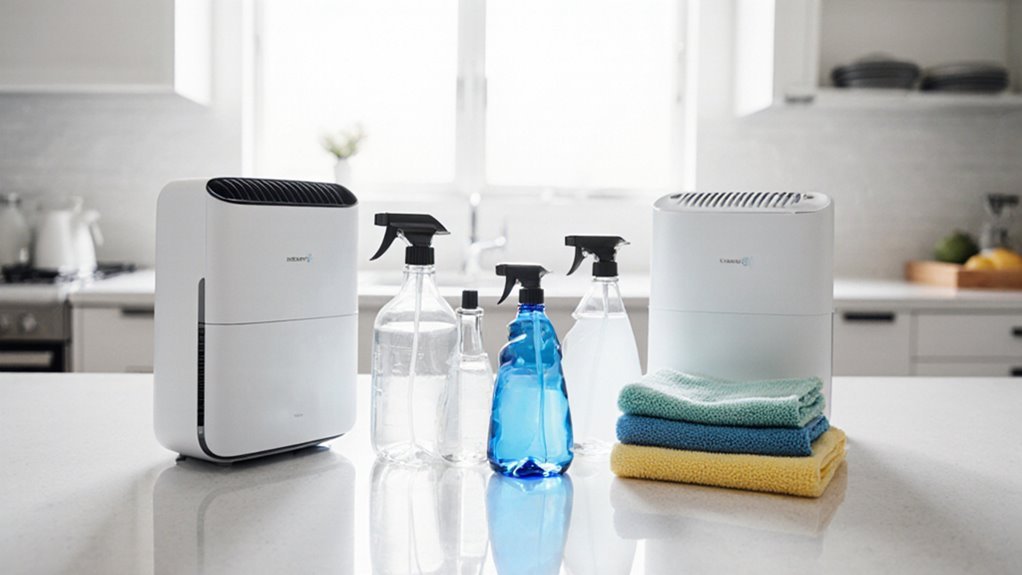

Yes — an air purifier can make cleaning fumes and particles safer to breathe. A unit with HEPA and activated carbon filters removes many dusts, allergen particles, and volatile organic compounds from sprays and cleaners. Filtration does not capture every gas or replace ventilation and safe product choice. Placement near the cleaning area and running the purifier during and after tasks improves performance. Combine filtration with proper ventilation and low-emission products for the best indoor air quality.
How Air Purifiers and Cleaners Affect Indoor Air
Air cleaners can make a real difference in your home because they lower the amount of floating stuff you breathe day after day. You get the best help when you pair them with source control, like choosing safer products and opening windows whenever possible. That way, you cut pollution before it spreads, and your cleaner doesn’t have to work overtime like a tired teammate.
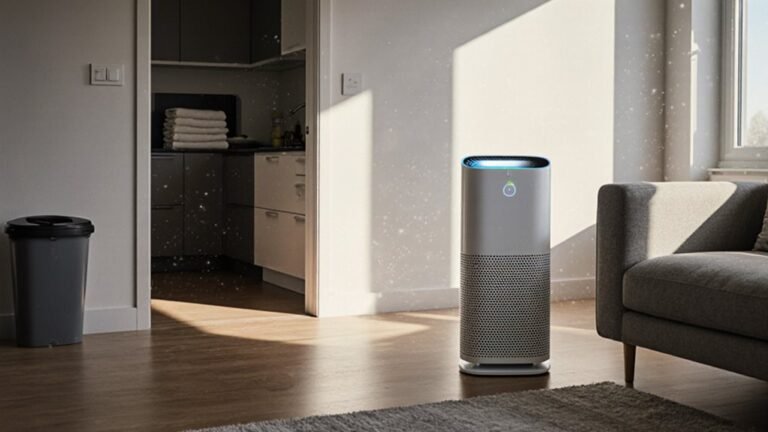
Cleaning timing matters too. Should you run the purifier during and after dusting or vacuuming, it catches particles before they settle again. Whenever you clean, you stir up tiny bits that can hang in the air, so steady filtering helps you breathe easier.
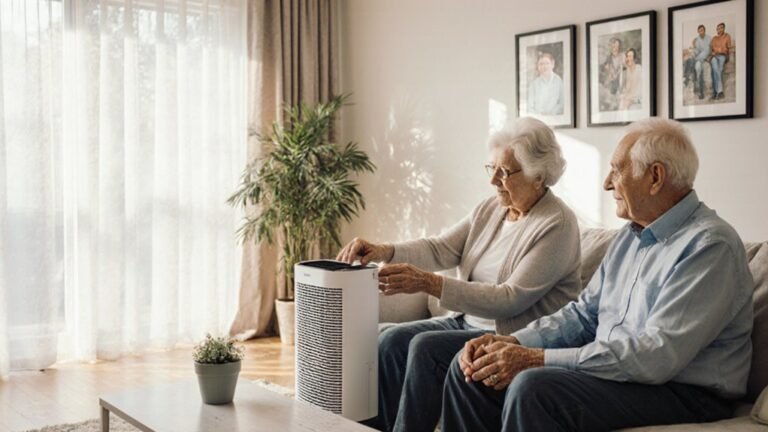
In shared spaces, this creates a calmer, more comfortable feel. You’re not fighting the air alone, because your home starts working with you.
Why Cleaning Chemicals Trigger Symptoms
Cleaning chemicals can trigger symptoms because they release tiny gases and particles that your body could react to right away.
Whenever you spray, wipe, or scrub, those fumes can settle in your nose, throat, and eyes, and that can spark respiratory irritation fast.
Should you have chemical sensitivities, even a small amount perhaps feel like a lot, and you may notice coughing, sneezing, chest tightness, or a burning feeling.
Strong scents often make things worse, because your body treats them like a warning signal.
This doesn’t mean you’re weak or alone. Your home should feel like a place where you can breathe easier, not brace yourself.
What Air Purifiers Remove From Indoor Air
Air purifiers can help you clean up the stuff you can’t always see, like dust, smoke, pollen, and other tiny particles floating around your home.
Many models also use activated carbon to cut down on odors and some gases from cleaning products, which can make the air feel fresher.
In case you’ve been bothered by that sharp cleaner smell, the right purifier can take some of that burden off your room.
Particle Filtration
Tiny particles drift through your home every day, and that’s where air purifiers can really help. With high efficiency filtration, you can catch dust, pollen, pet dander, and smoke that float past your breathing space. A true HEPA filter traps tiny bits before they settle on shelves or reach your lungs.
That matters after vacuuming or dusting, because particle resuspension mechanisms kick up settled grime again. So, whenever you run a purifier in your bedroom or household room, you help keep the air calmer and cleaner.
In case you share space with kids, guests, or anyone with allergies, this steady support can make your home feel more comfortable and more like it belongs to everyone.
Odor And Gas Reduction
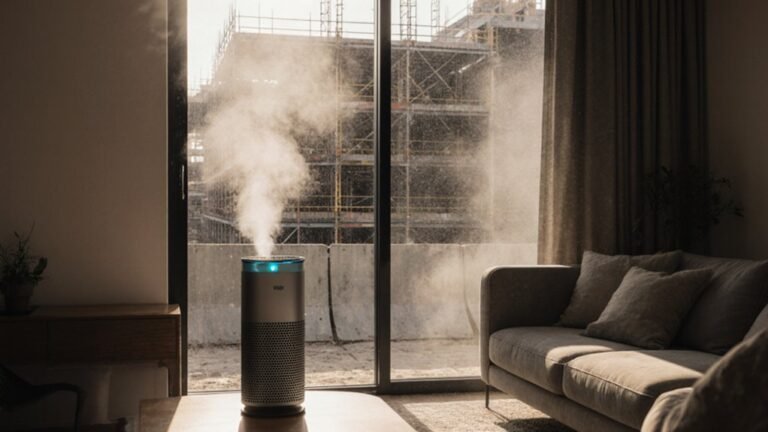
Particle filters do a great job with dust and pollen, but your home’s air can carry more than bits you can see. Whenever you spray cleaner or light a scented candle, you might notice sharp smells that linger. That’s where activated carbon helps. It gives gases a place to stick through gas adsorption, which can lower odors and some VOCs from cleaners, disinfectants, and smoke.
You’ll usually get the best results whenever the purifier runs near the source and has enough carbon inside to keep working longer. Still, no purifier can grab every gas, so fresh air and safer products matter too. In case your space feels stuffy after cleaning, a carbon filter can make it easier to breathe, and a little more like home.
What Air Purifiers Cannot Remove
Even a good purifier has clear limits, and that’s where many people get surprised. You can trust it to catch many particles, but it won’t erase everything from your air.
It can’t scrub away every odor source, so volatile gases from cleaners might linger unless you ventilate well or choose the right filter. It also can’t lift surface contaminants from counters, floors, or fabrics, because those stay put until you wipe or vacuum them.
Should dust get kicked back up, the purifier could help, but it won’t replace cleaning. That’s why you do best when you pair filtration with simple habits like opening windows, reducing strong sprays, and keeping rooms tidy. Once you know these limits, you can breathe easier and feel more in control.
Best Air Purifiers for Chemical Fumes
Provided that odors, spray cleaners, or fresh paint are making your home feel heavy, the right air purifier can help you feel more at ease. You want one that handles fumes well, so look for strong activated carbonadsorption and steady airflow. That mix helps trap VOCs from cleaners and paint, and it can make your space feel more welcoming.
| Feature | Why it helps |
|---|---|
| Activated carbon | Grabs gas fumes |
| Catalytic oxidation | Breaks down some VOCs |
| Strong fan | Moves air faster |
| Quiet mode | Lets you rest nearby |
| Room fit | Keeps coverage focused |
For deeper chemical smells, choose models that pair carbon with catalytic oxidation, since HEPA alone won’t catch gases. In the event that you keep windows closed during chores, run the unit before, during, and after cleaning. You’re not stuck breathing harsh fumes; a good purifier can help your home feel calmer, cleaner, and more like yours.
How to Choose the Right Filter
At the time you select the right filter, you make the whole purifier work harder for you, not the other way around. Start with true HEPA for fine dust and tiny particles, then add activated carbon whenever cleaning sprays or scented products leave smells behind.
If your room is small, a higher CADR can help you feel settled faster. For a larger space, check the filter size and match it to your square footage so the unit doesn’t strain.
Next, look at filter lifespan and replacement cost, because a cheap filter can turn pricey later. Also, consider noise tradeoffs. A louder setting might clean quicker, but a quieter one helps you keep it on longer.
Whenever you compare those details, you choose a filter that fits your home and your routine.
How Cleaners Affect Allergy and Asthma
Once you clean a home, the air can change fast, and that shift can hit allergy and asthma symptoms hard.
You stir up dust resuspension, so pollen, pet dander, and tiny bits drift back into your breathing space.
Strong sprays can also add irritants that make your chest feel tight or your nose itch.
If moisture hangs around, microbial growth could follow, and that can bring more triggers into the rooms you love.
- Open windows whenever you can.
- Let airflow move through each room.
- Wipe, don’t scrub wildly.
- Clean slowly around vents.
- Keep shared spaces dry.
You don’t have to choose between a tidy home and easy breathing.
Small habits help you feel safer, and they let your space feel welcoming for everyone.
Safer Cleaning Products for Better Air
You can make your air easier to breathe through choosing cleaners with non-toxic ingredients and skipping harsh sprays that add extra chemicals to the room.
Fragrance-free products help you avoid those strong scents that can linger and irritate your nose, throat, and lungs.
And whenever you clean, open a window or run a fan so fresh air can carry away fumes instead of letting them build up.
Non-Toxic Ingredients
Whenever you choose safer cleaning products, the ingredients matter just as much as the label, because many common cleaners release volatile organic compounds, or VOCs, that can linger in your air and leave rooms smelling sharp long after the job is done.
You can feel better whenever you pick plant based surfactants, simple solvents, and short ingredient lists that don’t hide harsh extras. Look for certified hypoallergenic claims should your home have sensitive noses or skin.
- Read the initial five ingredients.
- Skip bleach-heavy blends for daily use.
- Choose products with clear ingredient names.
- Pair cleaning with open windows.
- Run your air purifier during and after chores.
Whenever you clean this way, you support the air you breathe and help everyone in your space feel more at ease.
Fragrance-Free Options
Fragrance-free cleaning products can make a big difference whenever you want cleaner air at home, especially after choosing simpler ingredients that don’t hide extra chemicals. Whenever you pick unscented detergents and neutral cleaners, you cut down on strong VOCs that can linger after chores. That helps you feel more at ease in shared spaces, where everyone wants fresh air without a heavy scent.
| Product type | Air impact | Best use |
|---|---|---|
| Unscented detergents | Lower odor load | Laundry days |
| Neutral cleaners | Fewer added fumes | Counters and floors |
| Fragrance-free sprays | Less lingering smell | Quick touch-ups |
| Mild dish soap | Simple cleanup | Daily washing |
Then your air purifier has less work to do, and your home can feel calm, welcoming, and easy to breathe in.
Ventilation During Cleaning
Fresh air can make cleaning feel easier, and a little ventilation goes a long way while you’re wiping, spraying, and dusting.
Whenever you open windows, you help move cleaning fumes out and bring cleaner air in, so you don’t have to breathe as much of that sharp smell.
- Crack windows before you start.
- Use timed ventilation during and after cleaning.
- Turn on bathroom or kitchen fans.
- Keep doors open so air can move.
- Let surfaces dry with steady airflow.
This simple habit helps you feel more comfortable and less boxed in.
It also gives your air purifier less work to do, because it can focus on leftover particles instead of fighting every puff of vapor.
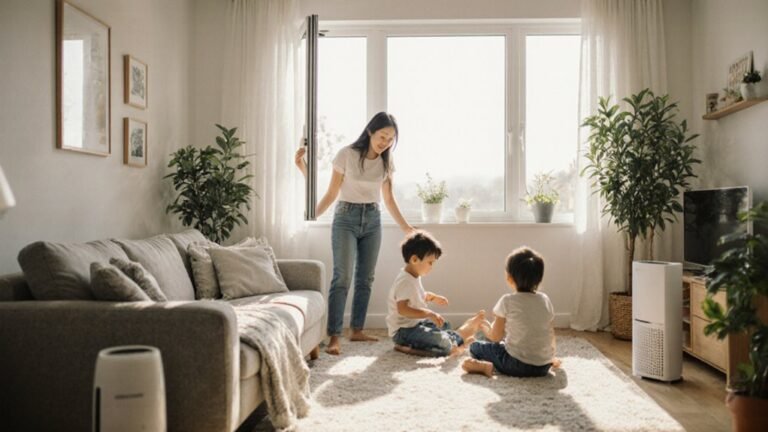
Should you share your home with kids, pets, or anyone sensitive, that extra airflow can make cleaning feel kinder for everyone.
Where to Place an Air Purifier While Cleaning
Provided that you set up an air purifier during cleaning, place it close to the main source of dust, dirt, or odor, but not right in the middle of the mess. That near source spot helps the unit catch what you stir up fast, so you feel more at ease.
For bigger rooms, doorway placement can help guide air from one space to another, especially when you clean a hallway or shared area. Keep the purifier on a flat surface with clear space around it, and aim the intake toward the active area.
In case you use strong-smelling products, set the purifier beside you, not behind a closed door. This way, you stay part of a cleaner, calmer room while you finish the job.
How to Clean Without Overloading Indoor Air
Cleaning smarter starts with the air itself, because every sweep, spray, and dust cloth can send tiny particles and fumes back into the room.
You can keep control through timing strategies that match the job. Open windows whenever you can, then clean in short bursts and let the room clear between tasks. Try surface pre treatment on sticky spots so you wipe less and stir up less dust. Use low-scent products and mix only what you need.
- Spray onto cloth, not into air
- Dust from top to bottom
- Vacuum slowly with a sealed bag
- Empty bins outside, provided possible
- Let cleaners dry before you stay close
That way, you and your home team share fresher air while the mess still gets handled.
Best Air Purifiers for Pets and Kids
Pets and kids can turn a quiet home into a busy little storm, so the right air purifier can help you breathe easier while life happens all around you. Look for a true HEPA model with a strong CADR, because it can trap pet dander, dust, and tiny bits that float up during play.
Add activated carbon should you want help with litter box smells or snack spills. A pet safe and kid friendly unit should have a locked control panel, a stable base, and no ozone feature.
Place it in bedrooms or the main play area, then run it often at a steady speed. You’ll notice cleaner air feels calmer, and that helps your family settle in, even on the messiest days.
Common Air Purifier Mistakes to Avoid
You can get less fresh air from your purifier in case you forget to replace or clean the filter on time. You may also place it where furniture, walls, or curtains block airflow, and that can make the unit work harder than it should.
With a few simple fixes, you’ll help your purifier do its job better and keep your space feeling calmer and cleaner.
Improper Filter Maintenance
Often, the biggest air purifier mistake isn’t the machine itself, but the filter inside it. Whenever you ignore filter neglect, your purifier works harder, traps less dust, and might even push odors back into your room. That’s frustrating, but fixable. Stay on top of care, and you’ll protect your comfort, your wallet, and your sense of control.
- Check the filter monthly.
- Replace it on schedule.
- Clean prefilters should yours have one.
- Use only approved parts.
- Keep receipts to avoid warranty voiding.
Once you pair fresh filters with routine cleaning, you help your purifier catch smoke, pollen, and cleanup particles more smoothly. Should your home feel busy with family, pets, or shared spaces, this habit helps you breathe easier together.
Wrong Placement Choices
If an air purifier sits in the wrong spot, it can feel like it’s working overtime for almost nothing. You might mean well, but blocked vents, floor obstructions, and tight corners can trap airflow and weaken cleaning power.
Give it space on all sides so air can move freely. Keep it away from curtains, furniture, and walls that crowd the intake or push dirty air back out.
If you place it near a door, window, or hallway, it could miss the room you actually share and care about. Instead, set it where you spend the most time, like your bedroom or household room.
Whenever you clear the path, your purifier can do its job better, and you can breathe easier with the people who matter most.
How to Build a Healthier Cleaning Routine
A healthier cleaning routine starts with simple choices that protect both your lungs and your home, and that can feel like a relief instead of a chore. You don’t need a perfect system; you need one your household can keep.
Start with a pre clean checklist, then open windows for timed ventilation before you spray or scrub. That small habit helps fresh air carry away fumes, and your purifier won’t have to do all the work alone.
- Choose low-VOC cleaners
- Keep a HEPA purifier running nearby
- Dust with damp cloths
- Vacuum with a HEPA filter
- Store products closed and away
When you clean in this order, you cut irritation and make shared spaces feel safer. You’re not just tidying. You’re caring for the air your family breathes every day.
Frequently Asked Questions
Can Cleaning Products React With Outdoor Ozone Indoors?
Yes, they can. You will trigger ozone reactions with terpenes in cleaners, and indoor chemistry can create formaldehyde and fine particles. Ventilate well, choose low VOC products, and reduce ozone exposure any time you clean.
Do Ionizers Create Ozone Harmful During Cleaning?
Yes, ionizers can create ozone, and that can raise health risks during cleaning. You should avoid them, especially near fragranced products, and choose HEPA plus activated carbon instead for safer, cleaner air.
How Often Should Air Purifier Filters Be Replaced?
Usually you will replace your air purifier filter every 6 to 12 months, because, naturally, dust loves a permanent lease. Your filter lifespan and replacement frequency depend on use, air quality, and manufacturer guidance; check monthly for clogs.
Will a HEPA Purifier Reduce Cleaning Dust Resuspension?
Yes, a HEPA purifier can help reduce cleaning dust resuspension by capturing airborne particles during and after cleaning, though airflow patterns and surface settling still matter, so you’ll get the best results with vacuuming and wiping.
Do PACS Help in Open-Plan Homes During Cleaning?
Yes, portable units can help in open plan homes provided you create airflow zoning, though they will not clean every corner. Even if you believe the space is too big, you will still reduce particles where you place them.