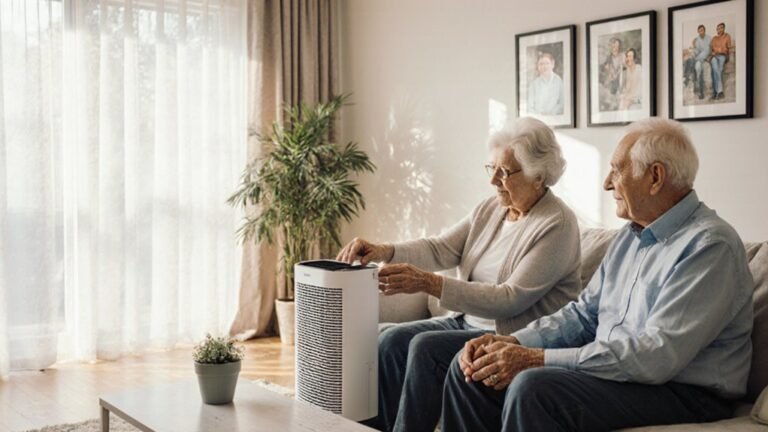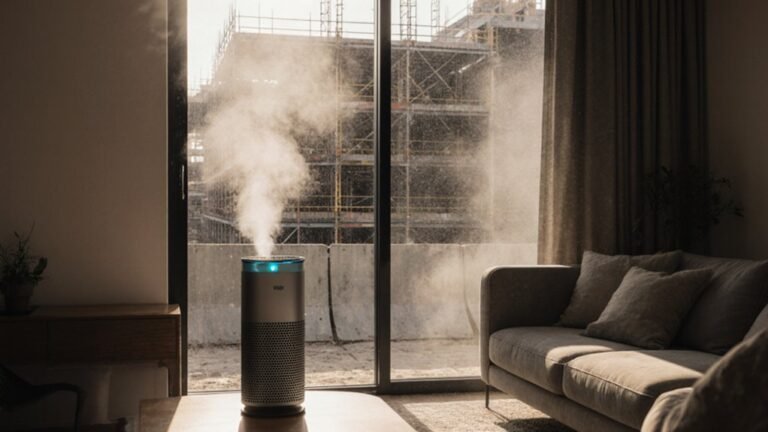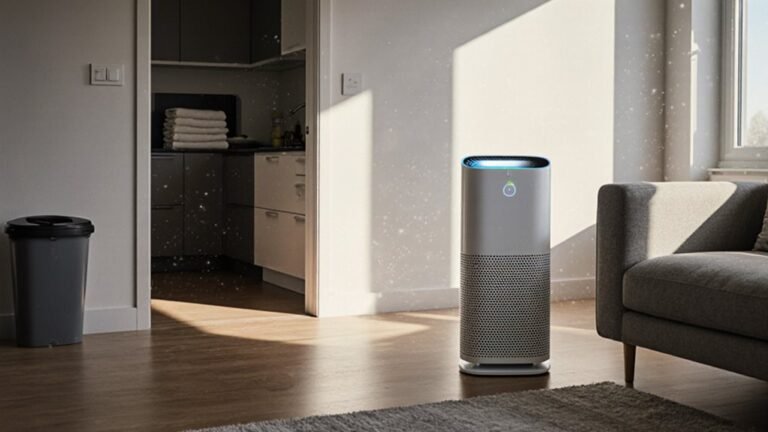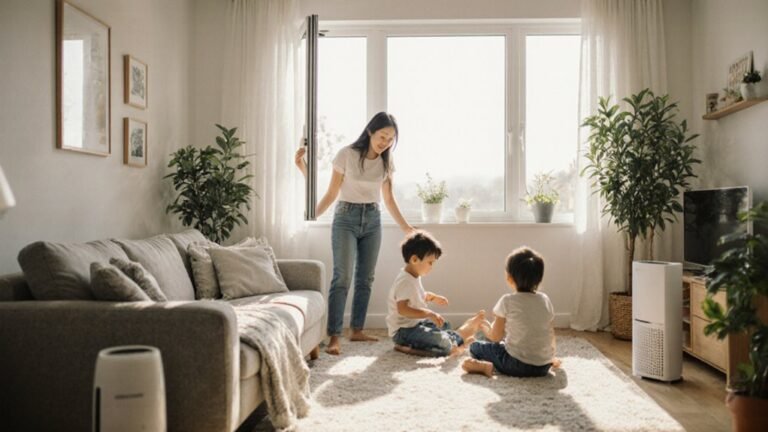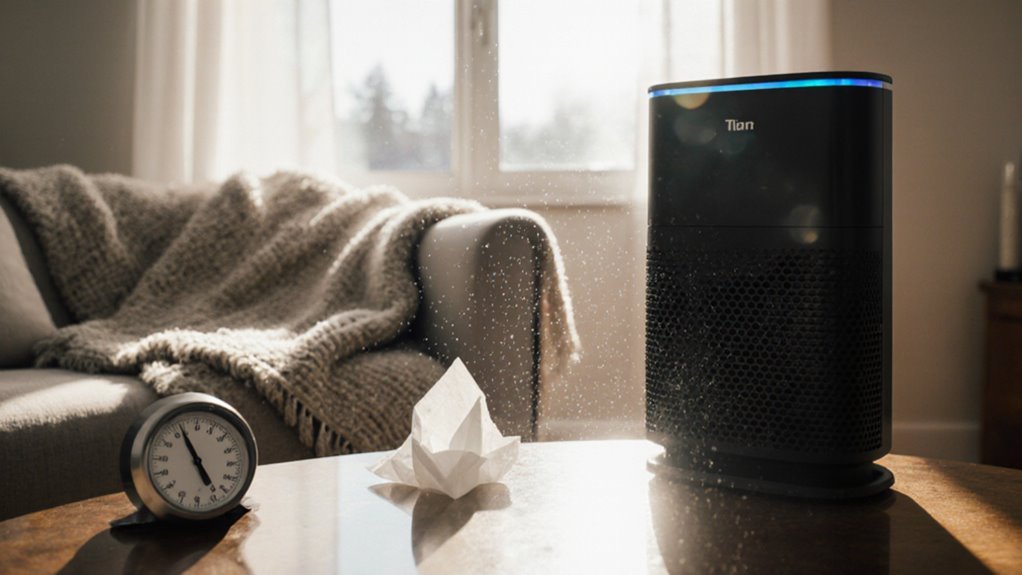

Air purifiers reduce airborne viruses, dust, pet dander, and mold spores to improve indoor air quality during flu season. Proper filter type, such as true HEPA, and correct unit size determine how effectively particles are removed. Strategic placement—especially in bedrooms and shared spaces—boosts performance. Coordinating purifier use with HVAC airflow prevents short-circuiting clean air. Routine filter replacement and running units at recommended settings maintain peak effectiveness.
Why Indoor Air Gets Worse in Flu Season
As flu season arrives, the air inside your home can change fast, and not in a good way. With closed windows, less fresh air moves through rooms, so viruses, pet dander, and mold spores can build up.
You might also spend more time indoors with family, friends, or neighbors, which gives droplets more chances to drift and spread. Winter air is often drier, and that can leave your dry mucosa less ready to block germs.
On top of that, some heating systems don’t filter fine particles well, so tiny contaminants can stay in the air longer than you’d expect. Because of that, your home can feel cozy yet still carry more concealed risk during flu season.
How Air Purifiers Help During Flu Season
A good air purifier can help you breathe easier during flu season via trapping tiny airborne germs that float around a room.
Once you choose a HEPA 13 or 14 model with the right CADR for your space, you lower the amount of virus-filled aerosol in the air. That means your indoor air feels cleaner, and you get another layer of protection while windows stay shut.
Trapping Airborne Flu Germs
Breathing easier during flu season starts with cleaner indoor air, and that’s where a good air purifier can make a real difference.
You help trap airborne flu germs before they get a chance to spread through your room. A HEPA 13 or 14 filter captures tiny droplets and aerosol particles, so fewer virus-filled bits stay in the air.
For best airborne settling control, choose a purifier with enough CADR for your room, and place it near the center, not shoved against a wall. Should someone’s sick, run it on a higher setting to enhance mask cooperation and lower risk.
Whenever possible, pair it with ventilation for about 5 air changes per hour. Replace filters on schedule so the purifier keeps doing its job well.
Improving Indoor Air Quality
As flu season settles in, your home can start to feel like a small, sealed bubble, and that makes clean indoor air even more essential. A portable HEPA purifier with the right CADR can help you and your people breathe easier through capturing tiny particles, including flu germs, in bedrooms and living spaces.
For better results, choose one sized for the room, aim for 5+ ACH with ventilation, and keep the fan on during gatherings. Then, place the unit away from walls so air can move freely. In case you also use activated carbon, you can cut odors and VOCs too.
During winter, whenever seasonal behaviors keep windows shut, this extra help matters. Even your houseplant effects won’t do enough alone, so change filters on schedule and run the purifier more often.
What to Look for in an Air Purifier
Choose your air purifier like you’re choosing a steady helper for flu season, because the right one can make your room feel safer and easier to breathe in.
Start with size: match the CADR to your room, or aim for 5 or more air changes each hour. Then choose true HEPA, ideally H13 or H14, since it traps tiny particles well. Should smoke, odors, or VOCs bother you, add activated carbon too.
Next, check independent evaluations, low ozone claims, and clear filter maintenance intervals, since a simple routine keeps the unit working well.
You should also consider noise tradeoffs, because a quieter model could invite regular use.
Finally, pick a purifier with strong airflow and keep it in your most used room.
Where to Place an Air Purifier at Home
The best place for an air purifier is usually the room where you spend the most time, because that’s where you’ll breathe the cleanest air for the longest stretch each day.
Put it in your bedroom or family room, then give it 1 to 2 feet of open space so air can move freely.
For bedroom comfort, keep it near the head of your bed or on the side you face most.
In open spaces, a centered spot works better than tight window placement or tucked-away corners.
With portable placement, you can move it where your family gathers most.
Avoid placing it behind TVs, under desks, or beside curtains.
Should one unit serve several rooms, keep doors open so the air mixes better and everyone feels included.
How to Use Air Purifiers With HVAC Filters
Provided that you use a portable air purifier with your HVAC filter, you give your home two layers of protection instead of one, and that can make a real difference during flu season.
Set your central fan to On whenever guests arrive so air keeps moving through the filter. Choose a pleated MERV 13 or higher filter, and watch filter maintenance closely alongside changing it every three months, or sooner should the maker say so. Check pressure drop too, because your system should breathe easily.
In busy rooms, add a true HEPA purifier and size it for the space, with good fan settings that help you reach 5 or more air changes per hour. Keep it away from walls and vents, and follow each unit’s care schedule.
Ventilation and Other Ways to Improve Air
Good air movement can make a big difference once flu season starts pressing into your home, and it works best provided you pair it with the filter setup you already have.
You can enhance natural ventilation by opening windows whenever weather allows and turning on exhaust fans to pull stale air out.
In case people are visiting, set your central HVAC fan to on and use pleated filters changed on schedule.
Whenever rooms stay closed, a portable HEPA unit sized for the space can help keep air fresher.
In case you can, take chats, meals, or playtime outside, where buildup drops fast.
Occupancy sensors can also help you match airflow to the room use.
These steps work best together, so you’re not relying on one fix alone during flu season.
When an Air Purifier Is Worth It
You’ll get the most value from a portable HEPA purifier whenever you use it in high-risk flu spaces like bedrooms, small offices, or crowded family rooms during flu season.
It also matters whenever your room feels stuffy, smells linger, or the windows stay shut, because those are signs that airborne particles are building up.
Should you want broader protection, choose a unit sized for the room so it can help clean the air throughout your home, not just in one corner.
High-Risk Flu Spaces
During flu season, some places carry a much higher risk than others, and that’s where an air purifier can really earn its keep. You’ll feel the biggest difference in crowded classrooms, transit exposure, and other enclosed spots where people gather close. In these settings, shared air can build up fast, so a HEPA purifier helps lower what you breathe.
- In classrooms, daycare rooms, and open offices, use one sized for the space.
- In waiting rooms and care areas, pick HEPA or 5+ ACH.
- In your home, place a room-sized unit where someone is sick.
- On buses, rideshares, or trains, add fresh air and filtration whenever possible.
If you’re sharing a dorm, shelter, or hostel, that extra clean-air layer can help you feel safer and more at ease.
Poor Ventilation Signs
Whenever that happens, a purifier can help you feel more comfortable with the people you live with.
A HEPA model catches fine particles, while carbon helps with smells and some vapors.
In case windows stay shut and fresh air barely moves, that extra filter support can really help.
It’s a simple way to make your room feel less trapped and more like home.
Whole-Home Protection Needs
Should flu season keeps circling through your home, a single room purifier may not be enough, and that’s where whole-home protection starts to make sense. You can build comfort with continuous filtration that reaches the rooms you use most.
- Use a whole-home unit or a central HVAC upgrade whenever you want homewide coverage.
- Aim for 5 or more ACH in occupied spaces.
- Match portable HEPA units to each room’s size.
- Pair higher-efficiency filters with ductwork sealing for better airflow.
If you choose portable units, place them where your family gathers and size them well. Then add fan-on HVAC use, pleated MERV-rated filters, or H14 HEPA where your system allows.
During higher-risk weeks, activated carbon and verified UV-C can help with odors and pathogens, as long as the device stays ozone-free and certified.
Frequently Asked Questions
Should an Air Purifier Be on When You’re Sleeping With the Flu?
Yes, keep it on while you sleep. You’ll breathe easier as it runs continuously through the night, and you’re not alone in wanting that comfort. Just change filters on schedule so it keeps helping.