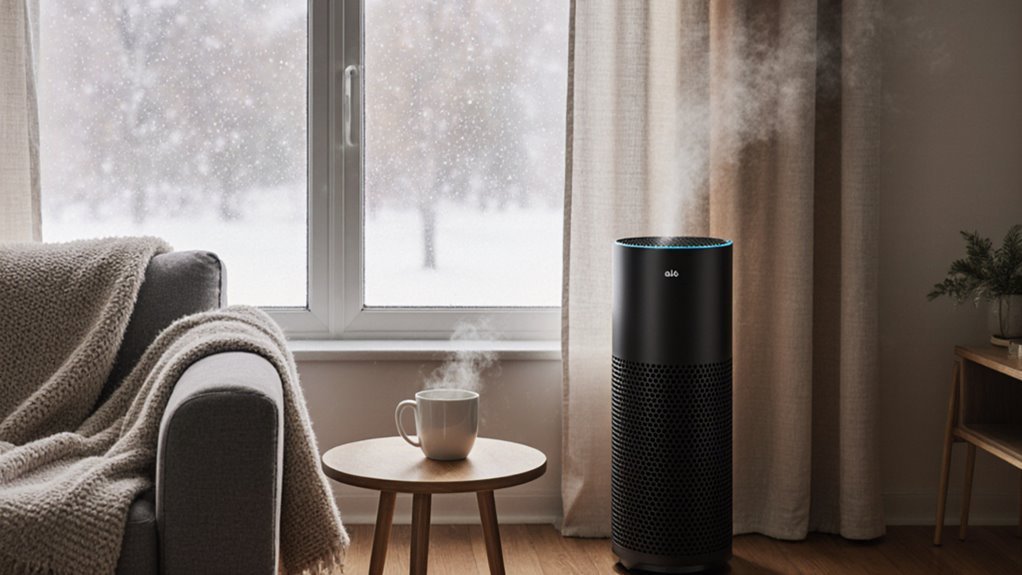

Winter often traps odors, dust, smoke, and extra moisture inside the home. Stale air and lingering fireplace smells make rooms feel stuffy and uncomfortable. A quality air purifier reduces particles, odors, and some airborne contaminants for clearer breathing. Correct unit size, strategic placement, and the right filter type determine purifier effectiveness. Choosing based on room area, filter specification (HEPA, activated carbon), and noise level yields the best results.
Why Winter Air Feels Staler Indoors
As winter closes the windows and the heat runs more frequently, the air inside can start to feel heavy, dry, and a little worn out. You’re not imagining it. In a sealed home syndrome setup, less fresh air moves through rooms, so odors, dust, and moisture hang around longer. That can make your space feel stuffy and less welcoming, even although it’s warm.
At the same time, heated air often lowers respiratory thermal comfort, so your nose and throat could feel dry or scratchy. Whenever you spend more time indoors, the buildup becomes easier to notice. You might breathe that stale mix all day, and it can leave you feeling tired, crowded, and a bit off-balance. Still, a few simple changes can help your home feel more like yours again.
How Air Purifiers Help in Winter
In winter, you’re often breathing the same indoor air for hours, so an air purifier can help by trapping fine particles from cooking, heating, and outside pollution that slips inside.
It can also ease dry, scratchy air by cutting down on irritants that make your nose, throat, and lungs feel worse.
With the right filter and room size, you can make your home feel cleaner and more comfortable whenever the weather keeps you indoors.
Trapping Winter Pollutants
Winter air locks can make your home feel cozy, but they also trap tiny pollutants that hang around longer than you’d like. Whenever you shut windows for warmth, window infiltration still lets in smoke, traffic dust, and other outdoor particles.
At the same time, cooking, candles, and heaters add more stuff to the mix, so your air can feel heavy fast. A good purifier helps you catch those particles before they keep circulating through your rooms. Choose a HEPA unit that fits your space, and let it run where you spend the most time.
Suppose you’re already using humidifier pairing, keep both devices apart so each can do its job. That way, you breathe easier, and your home feels more like the safe place you want.
Reducing Dry Air Irritants
As the heat kicks on and the air starts feeling extra dry, your nose, throat, and eyes can all notice it fast. You can ease that tight, scratchy feeling with an air purifier and a humidifier pairing, which helps your room feel more comfortable. Whenever dust swirls in dry air, a HEPA purifier catches the floating bits before they keep bothering you. That support can also help your skin hydration, so you don’t wake up feeling parched.
| Dry air sign | What you might feel |
|---|---|
| Scratchy throat | Talking hurts |
| Stuffy nose | Breathing feels harder |
| Itchy eyes | You rub them a lot |
| Flaky skin | Your face feels tight |
| Sleep strain | You wake tired |
Together, these tools help you settle in and feel more at home.
Improving Indoor Air Quality
Your home can feel cozy in winter, but the air inside often gets heavier, too. You can help your space feel fresher by using a HEPA air purifier in the rooms you use most. It traps fine particles from cooking, heaters, and outside smoke, so you breathe cleaner air while you relax with your people.
Whenever you pair it with ventilation retrofits, you bring in fresh air without losing as much heat. Your occupant behavior also matters: run vent fans, avoid unvented flames, and keep doors open whenever possible.
Choose a unit sized for the room, and replace filters on schedule. Then your home can feel safer, calmer, and more welcoming all winter.
Features That Matter Most in Winter
In winter, you need an air purifier that can catch tiny particles from dust, smoke, and cooking before they stay trapped in your home. High-efficiency filtration matters most because it clears the air without missing the stuff that irritates your lungs.
Quiet night operation matters too, since you’ll want clean air while you sleep without a loud hum keeping you awake.
High-Efficiency Filtration
HEPA filtration matters most in winter because that’s whenever your home tends to trap the stuff you’d rather not breathe. You’re not alone whenever the season makes your air feel heavy. A good purifier can help your space feel safer and calmer.
- Check particle sizing so the filter catches fine winter dust.
- Look for strong HEPA output in rooms you use most.
- Match CADR to your room so air moves well.
- Watch filter lifespan, because clogged filters lose strength.
- Add carbon layers whenever cooking or smoke bothers you.
Whenever you choose well, you help your household breathe easier without guessing. That matters on cold days whenever windows stay shut and everyone stays close. Then your filter keeps working for the whole group, and that shared comfort really counts.
Quiet Night Operation
Quietly, a good purifier can make winter nights feel easier to breathe through, especially provided the house is sealed tight and every small sound seems louder.
You want a unit with strong noise reduction so it hums softly instead of stealing your rest. Once sleep mode kicks in, the fan should slow down, dim lights, and keep working without turning your bedroom into a wind tunnel. That matters whenever dry air and winter dust keep hanging around after bedtime.
Assuming you share a room, a quiet purifier can help everyone settle in together, without that one person giving the machine the side-eye. Look for steady airflow, low decibels, and a timer, so you can relax, breathe better, and stay part of a calmer night.
Choose the Right Size for Your Space
The right air purifier can feel like a small relief on a long winter day, but size matters more than many people expect.
You want a unit that matches your room, so it can keep up without sounding exhausted. Check the CADR rating, then compare it with your room’s square footage and window sizing to judge how much air it must clean. In case you move it often, portable placement matters too.
- Pick a purifier built for the room you share.
- Match the CADR to the space.
- Choose HEPA for fine winter particles.
- Add carbon should odors or smoke bother you.
- Keep filters easy to replace.
When the fit is right, you and your home can breathe easier together.
Where to Place an Air Purifier
Often, where you place your air purifier matters almost as much as the unit itself. You’ll get better results whenever you set it in the room you use most, like the bedroom or family room. Keep it a few feet from walls, curtains, and furniture so air can move freely around it.
Good corner clearance helps the purifier pull in stale air without getting blocked. In the event you want to help circulation, try window placement only whenever the window stays shut and the unit isn’t stuck in a draft.
Put it where you sit, sleep, or gather, because that’s where you breathe the most. Also, keep doors open whenever you can, and avoid hiding the purifier under tables or behind couches. That way, it can work with you, not against you.
Winter Pollutants Air Purifiers Remove
Winter air can trap more than just cold, and that’s where air purifiers really earn their keep. You breathe easier whenever they pull winter pollutants from the room and help you feel less boxed in.
- They catch fine dust from dry indoor air
- They reduce smoke from fireplaces and space heaters
- They lower PM2.5 from cooking and candles
- They help with combustion byproducts like nitrogen dioxide
- They cut some odors and VOCs that linger
As humidity interactions change in heated rooms, particles can stay suspended longer, so clean air matters even more.
Whenever you run a purifier in your shared space, you’re not just filtering air, you’re making the room feel safer for everyone nearby. That steady support can make winter gatherings feel a lot more welcoming.
Air Purifier Filters and Maintenance
Swap in a good filter, and your purifier can do a lot more than hum in the corner.
You keep winter dust, smoke, and pet dander from building up whenever you check the filter often. Look at the filter lifespan on the package, but trust your eyes too. Should the surface look gray, clogged, or smell stale, replace it.
Wash prefilters if your model allows it, then let them dry fully. You’ll protect airflow and help the unit stay quiet and steady.
Also, mark replacement dates on your phone so you don’t forget during busy weeks.
As warm weather returns, clean the unit well before seasonal storage, then keep it dry and covered. That little habit makes next winter feel easier for everyone at home.
Use Air Purifiers With Better Ventilation
Provided you’ve already kept your purifier clean, the next step is to help it work with the room instead of against it. You can do that through pairing it with steady airflow, so stale air doesn’t linger in corners where you relax, work, and sleep.
- Open a window a little whenever outdoor air is safe.
- Run kitchen and bath fans to increase ventilation.
- Use balanced ventilation in case your home has it.
- Place the purifier where air moves freely.
- Keep doors open whenever you can, so clean air spreads.
This mix helps your purifier catch what ventilation misses. In winter, that matters because closed rooms trap more smoke, dust, and cooking fumes.
You don’t need perfect airflow to feel better. You just need a smarter rhythm that helps your home feel lighter, fresher, and more like everyone belongs there.
How to Choose the Right Air Purifier
As soon as you choose the right air purifier, you give your room a better chance to feel clean without guessing your way through the cold months. Start with the room size, then check CADR so the unit can keep up. Look for a true HEPA filter, and add activated carbon if smoke or cooking smells bother you. That matters because winter air can trap more particles indoors.
Next, consider energy efficiency, since you might run it for hours while you stay cozy inside. Also, pay attention to noise, because a quiet unit feels easier to live with. For purchase timing, shop before storms, smoke, or holiday gatherings push demand up. Then replace filters on schedule so your purifier keeps earning its spot in your space.
Frequently Asked Questions
Can Air Purifiers Reduce Winter Respiratory Infections?
Yes, you can reduce winter respiratory infections somewhat with a good HEPA purifier, since it helps virus reduction and bacterial spread control via lowering airborne particles; pair it with ventilation, humidity, and masks for best results.
Should I Run an Air Purifier All Night in Winter?
Yes, you should run it all night if you can; you will breathe cleaner air. For best results, choose smart bedroom placement, run continuously on a quiet setting, and keep doors slightly open for circulation.
Do Air Purifiers Affect Indoor Humidity Levels?
Not usually: your purifier won’t meaningfully change humidity, so keep humid balance with a separate humidifier should it be needed. HEPA filters mainly target particles, while moisture adsorption is minimal. You’ll breathe easier, together, through cleaner air.
Are Ionizer Air Purifiers Safe for Winter Use?
No, you shouldn’t rely on ionizer air purifiers in winter. Ozone concerns and static buildup make them a poor choice. You’re better off choosing HEPA units that keep your space cleaner and safer together.
How Often Should Filters Be Replaced During Winter?
Every filter won’t last forever. You should replace yours every 1 to 3 months in winter, or per manufacturer guidance, because heavy use shortens filter lifespan; seasonal maintenance keeps your air cleaner, and you’ll breathe easier together.