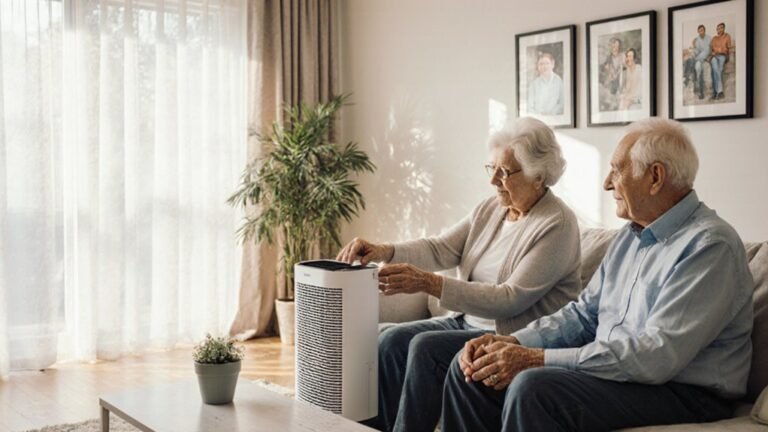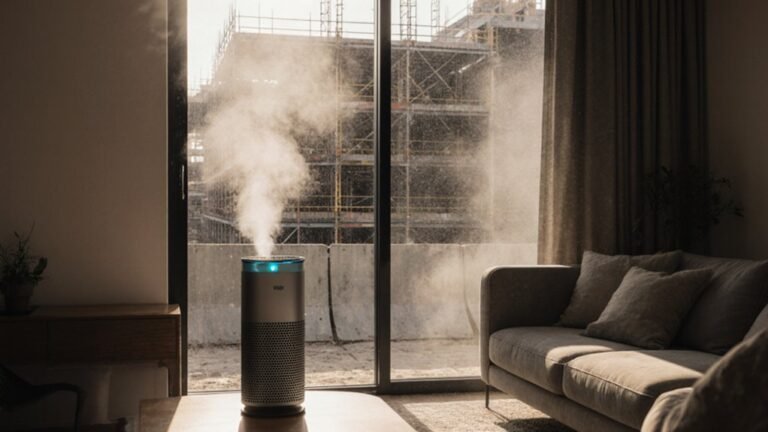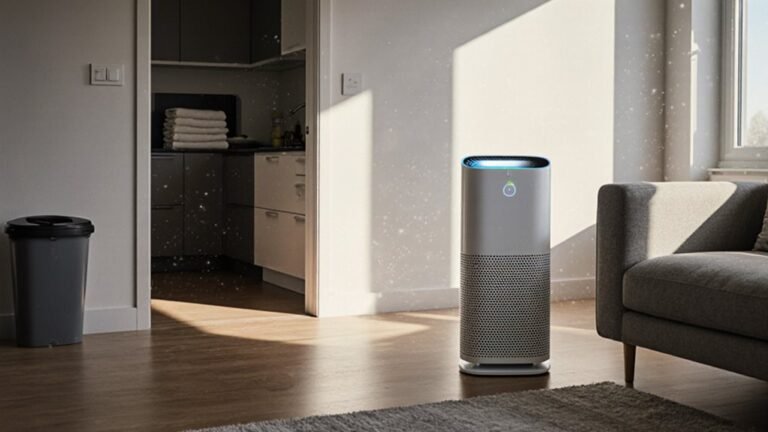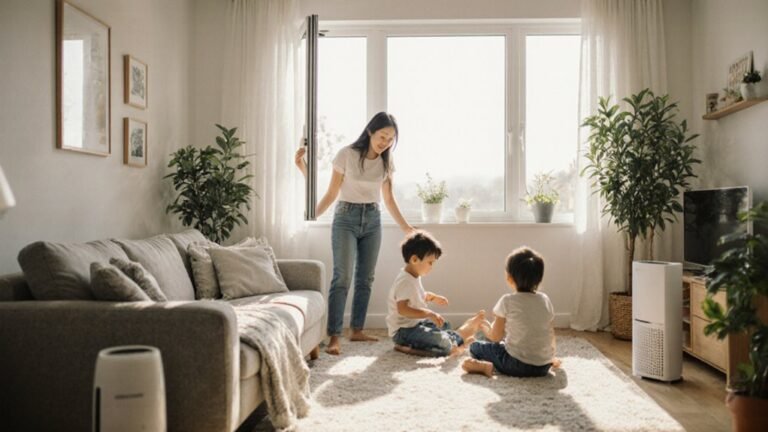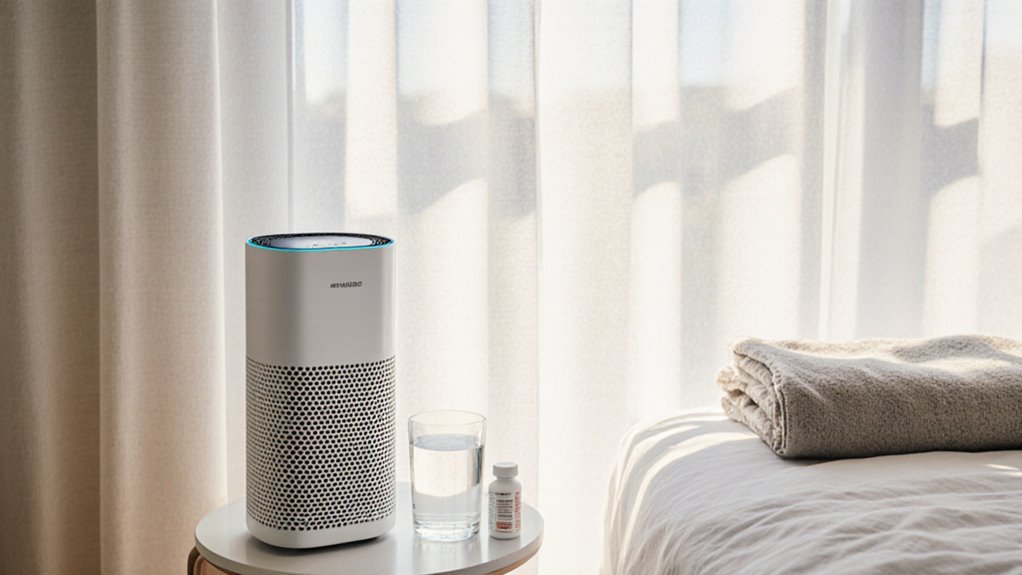

Air purifiers can provide long-term relief from household allergies by removing airborne particles. True HEPA models capture pollen, pet dander, and fine dust that trigger symptoms. Placing a purifier in bedrooms and high-traffic areas reduces repeated exposure during sleep and daily activities. Choosing the correct unit size and CADR for the room ensures effective air changes per hour. Proper placement and regular filter replacement keep performance consistent over time.
Do Air Purifiers Help With Allergies?
Yes, air purifiers can help with allergies, especially once you choose a true HEPA model and use it the right way. You can cut airborne pollen, pet dander, and many dust mite particles, so your space feels easier to breathe in. That’s why many air purifier myths miss the point. Still, pediatric studies remind you that results can vary, and no unit fixes everything.
For the best support, run it in your bedroom and household room, match the CADR to the room, and keep doors and windows closed. Replace filters on time, and avoid ionic or ozone models. Because purifiers don’t clean settled allergens, you still need encasings, washing, vacuuming, and humidity control.
What the Air Purifier Trial Found
In this trial, you saw a careful setup: adults with house dust mite allergy used either real HEPA purifiers or mock units for 6 weeks, with both bedroom and communal room air monitored.
The active purifiers lowered fine particle levels, especially in the bedroom, which often had the highest exposure.
Even so, you got mixed results, because medication use improved, but day-to-day nasal symptoms and quality of life didn’t change much.
Trial Design And Results
To find out what HEPA air purifiers could really do for dust mite allergy, researchers ran a multicenter, randomized, double-blind, placebo-controlled trial with 44 adults who’d persistent moderate-to-severe allergic rhinitis.
You’d be split 1:1 into active HEPA units or mock filters, and the trial methodology kept things steady for 6 weeks.
Two purifiers in each home, one for the household room and one for the bedroom, ran all day and night, while remote checks helped verify participant compliance.
You’d also track symptoms and medicines each day, then return for baseline, mid-study, and final visits.
The key takeaway was simple: medication scores improved in the HEPA group, and indoor PM2.5 and PM10 dropped, especially in bedrooms.
Yet symptom scores, VAS, and QoL didn’t separate clearly between groups.
Symptom Relief Vs Medication
| Measure | Result |
|---|---|
| Nasal symptoms | No between-group difference |
| Medication score | Substantially lower with HEPA |
| Bedroom PM2.5 | Fell up to 51.8% |
Why HEPA Filters Matter Most
Why do HEPA filters matter so much as allergies keep flaring up indoors? Because they handle the tiny stuff your body keeps reacting to.
A true HEPA unit gives you strong particle capture, catching at least 99.97% of airborne particles down to 0.3 microns. That means less pollen, pet dander, and many dust-mite related particles floating around your room.
In bedrooms, where you spend hours breathing the same air, a well-sized purifier can cut fine particles a lot whenever it runs all day.
So, choose one based on CADR and room size, then keep up with filter maintenance. Replace clogged filters on schedule, since they slow airflow and weaken performance.
And bear in mind, it works best alongside washing, encasings, and HEPA vacuuming too.
Which Allergy Symptoms May Improve
Often, the initial allergy symptoms that could ease are the ones you sense in your nose and breathing. You might notice less nasal congestion, fewer sneezes, and a calmer, less itchy nose whenever a HEPA purifier cuts airborne pollen, pet dander, and dust mite fragments.
Many people also feel less throat tickle and easier sleep, especially whenever the unit runs all night in your bedroom. In some homes, fine particles drop enough to bring down symptom flares, so your day feels more manageable.
Still, changes can be different for everyone, and eye irritation could improve more slowly than nasal symptoms. Should you keep expectations realistic, you can feel encouraged by small wins, not just big ones.
How Air Purifiers Lower Indoor Allergens
A well-sized HEPA air purifier can make a real difference because it traps tiny allergy triggers as air moves through the filter. You breathe easier whenever it keeps working, because it catches pollen, pet dander, and dust-mite particles before they float back to you.
In rooms with steady airflow patterns, the purifier keeps pulling polluted air through its layers and lowers indoor PM2.5, so your bedroom feels calmer at night.
- Put it in the room where you spend the most time.
- Run it day and night with windows closed.
- Keep up with filter maintenance so it stays effective.
If you use a multi-stage unit, it can also cut odor and VOC carriers that irritate you. That means less sneezing, less scratchy breathing, and more comfort for your home crew.
How To Choose The Right Air Purifier
Choosing the right air purifier starts with matching the machine to your space, because the best filter in the world won’t help much provided it’s too small for the room. Pick a true hepa model that removes 99.97% of tiny particles, and make sure its CADR fits your room volume and ACH goal. When smells, smoke, or VOCs bother you, choose a unit with activated carbon and enough carbon weight to trap gases well.
For bedrooms, a smaller unit can work, but communal rooms usually need a higher-capacity model. Place it where you spend the most time, so it helps you feel at home. Also, look for sealed housings, real-time monitoring, and easy filter replacement. Skip ozone ionizers.
How To Use Air Purifiers For Best Results
Once you’ve picked the right purifier, the next step is using it in a way that actually helps your allergies. Keep it running 24/7 in the rooms you use most, especially the bedroom and lounge, and match the CADR to the room size.
For smart room placement, set it away from walls and clutter, or near the allergy source when that works better for you.
- Close doors and windows so outside pollen stays out.
- Watch PM2.5 readings and turn up the fan during cleaning or bad air days.
- Stay on top of filter maintenance, changing HEPA and carbon filters on schedule.
Also, pair the purifier with weekly hot-water bedding washes, HEPA vacuuming, and mattress covers. That way, you and your space can breathe a little easier together.
Frequently Asked Questions
How Often Should Filters Be Replaced?
You should replace filters every 6 to 12 months, or whenever your apartment’s purifier starts smelling musty. Your filter lifespan depends on use, and replacement frequency increases if you have pets or heavy dust.
Can Air Purifiers Run Overnight Safely?
Yes, you can run them overnight safely provided you use a certified unit and keep it clear of bedding. Bedroom placement matters, and you will usually want low nighttime noise so you can sleep comfortably together.
Do Air Purifiers Use Much Electricity?
No, you usually won’t use much electricity. Your purifier’s steady hum is a small lantern, not a floodlight, so energy consumption stays modest and operating cost remains low, helping you feel right at home.
Are Smart Sensors Worth the Extra Cost?
Yes, provided you value convenience you are likely to appreciate smart sensors. You will get better sensor accuracy and smarter placement strategies, but the extra cost only pays off provided you want easy, shared comfort at home.
Can One Purifier Cover an Entire House?
Not usually; you’ll need whole house coverage through duct integration or careful portable placement. Like a kingdom with guarded gates, you can improve zone balancing, but one purifier rarely rules every room alone.