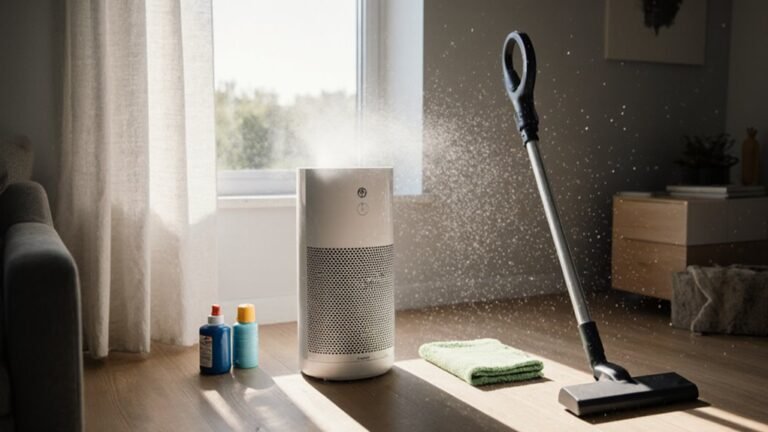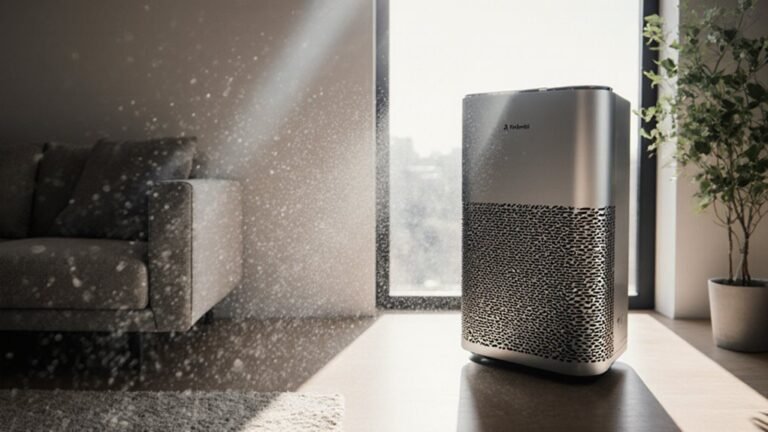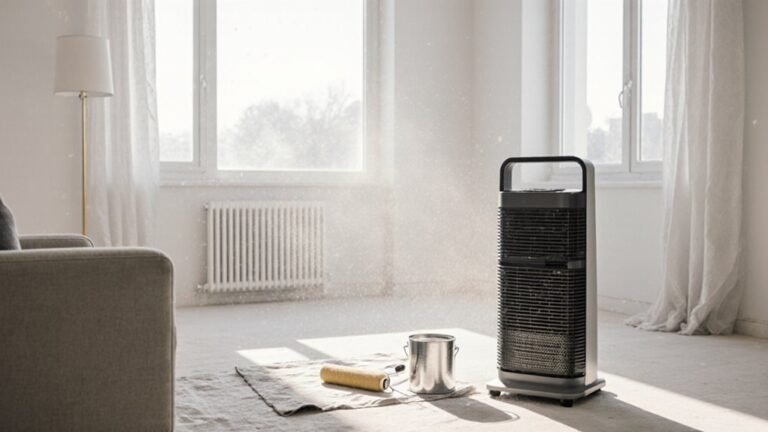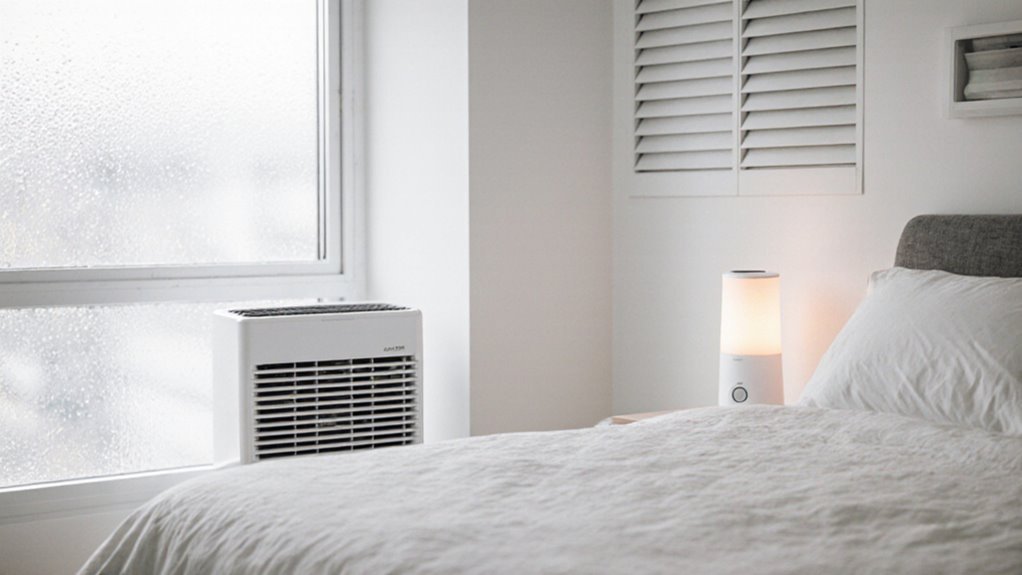

Air purifiers with true HEPA filters capture tiny mold spores and improve indoor air quality. They do not fix water leaks or wall moisture that feed mold growth. Choose a unit sized for the room and place it near damp areas for best airborne particle removal. Maintain indoor humidity below about 50% with dehumidification and ventilation to limit mold proliferation. Repair plumbing or roof leaks and dry wet materials promptly to stop mold from spreading.
How Air Purifiers Help With Mold
As soon as mold starts floating through your home, an air purifier can help take some of that burden off your lungs. You’re not imagining the sneezy, scratchy feeling; those tiny spores can spread fast and make your space feel less like a refuge.
A well-matched purifier supports spore reduction through pulling airborne particles through its filter, so fewer reach your nose and throat. That can bring real allergy relief while you’re trying to rest, work, or sleep in the same room.
It won’t fix wet walls or a concealed leak, but it can lower what you breathe as you handle the source. For many families, that steady support makes home feel safer, calmer, and a little more breathable, day after day.
Choose a HEPA Air Purifier
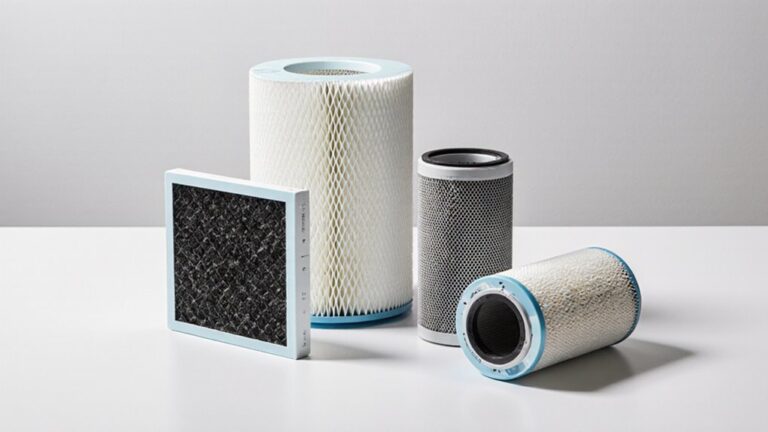
You’ll get the best mold help whenever you choose a True HEPA purifier, since it can trap most airborne mold spores before they spread through your room.
Make sure the unit fits your space, because a purifier that’s too small can leave too much air untouched.
Also, plan for replacement filters, since a clogged filter can’t keep doing its job and might start feeling like a tired old sponge.
HEPA Filter Efficiency
At the moment mold starts floating through your home, a true HEPA air purifier can make a real difference because it traps at least 99.97% of particles as small as 0.3 microns. That level of particle capture helps you breathe easier and feel less alone in the mess.
| What to check | Why it matters |
|---|---|
| True HEPA label | Confirms strong filter ratings |
| Particle capture rate | Shows spore control |
| Sealed housing | Stops leaks around the filter |
| Clean prefilter | Protects HEPA life |
| Replacement schedule | Keeps performance steady |
When you compare options, look for honest specs, not big promises. You want a unit that keeps mold spores moving into the filter, not back into your air. With the right choice, you can protect your space and feel more at ease in it.
Room Size Matching
Room size matters more than many people realize once you choose a HEPA air purifier. Provided you match the unit to your square footage, you give the filter a fair chance to clean the air you breathe. A small purifier in a large room can feel like a tired helper at a busy party, while the right size keeps airflow velocity strong enough to move air through the filter often.
Check the room’s length and width, then compare that space with the purifier’s rating. In bedrooms, occupied rooms, or basements, fit matters because stale corners can hold spores. Whenever the unit suits the room, you’ll notice steadier airflow, better coverage, and a calmer space that feels like it’s working alongside you.
Replacement Filter Needs
The filter inside your HEPA purifier works hard, so it needs regular care to keep doing its job. You’ll notice a shorter filter lifespan if mold, dust, or pet dander builds up fast. Watch replacement indicators like weak airflow, a stale smell, or a filter light that stays on.
| Check | What it means | What you do |
|---|---|---|
| Monthly look | Dust load | Inspect gently |
| Airflow drop | Clogged media | Replace soon |
| Smell return | Saturation | Change filter |
| Timer alert | End of life | Follow guide |
| High use | Faster wear | Plan ahead |
When you stay ahead of changes, your home feels fresher, and you’re not fighting the same spores again. Should you share your space with others, that steady care helps everyone breathe easier together.
Where to Place Your Air Purifier
Place your air purifier in the center of the room so air can move around it and reach more of the space you use most.
Should mold or dampness starts near a bathroom, basement corner, or leaky window, set the unit close to that moisture source, but keep it clear of walls and furniture.
That way, you’re not just cleaning the air where it’s easy, you’re helping catch spores where they’re most likely to show up.
Central Room Placement
Whenever you set up an air purifier for mold control, putting it near the center of the room usually helps it work more evenly. With central placement, you support airflow balancing, so clean air can reach more of your shared space. That means you’re not leaving one corner to fend for itself.
- Keep it open on all sides.
- Let the room’s air move freely.
- Check that furniture doesn’t block the intake.
- Keep the unit running so your space feels cared for.
Once you place the purifier in a balanced spot, you help everyone breathe easier and feel more at home. It can’t fix concealed mold on its own, but it can make the air feel lighter while you handle the rest.
Near Moisture Sources
Provided that a leak, damp wall, or musty corner is part of the problem, your air purifier can help most whenever you set it near that moisture source, because that’s where mold spores often start drifting into the air.
You’ll get better targeted extraction when the unit sits close to the problem area, yet still has space to pull air freely.
Should you be drying a basement, bathroom, or closet, pair the purifier with localized drying so the damp spot stops feeding new spores.
Keep the door open whenever you can, and don’t block vents or furniture in front of the intake.
Then the purifier can protect your breathing zone while you fix the source. That combination feels like teamwork, and honestly, your home deserves that kind of care.
Control Humidity to Prevent Mold
Keeping humidity in the right range is one of the simplest ways to stop mold before it starts. Whenever you stay between 30% and 50%, you make your home feel safer and more comfortable for everyone.
- Use humidity monitoring so you can spot damp air before it turns into trouble.
- Run a dehumidifier whenever rooms feel sticky, and keep it sized for the space.
- Seal crawl spaces with vapor barriers to cut concealed dampness from below.
- Check bathrooms, closets, and basements often, because mold loves quiet, moist corners.
You don’t need perfect conditions, just steady ones. Provided your place stays dry enough, your family can breathe easier, relax more, and feel like the home is truly yours.
Fix Leaks and Improve Ventilation
A dry home can still have concealed trouble provided water sneaks in through a roof, pipe, window, or vent, so fixing leaks has to come next. You can check ceilings, walls, and under sinks for stains, soft spots, or musty smells. Then repair the source fast, because every drip gives mold a tiny home.
Next, improve roof ventilation so warm, damp air can escape instead of settling on wood and insulation. Also, use window sealing to block rain and reduce drafts that carry moisture inside. Open windows whenever weather helps, and keep bathroom and kitchen vents clear.
Should you live with others, ask everyone to watch for new leaks, since shared attention makes the whole home safer and calmer.
Use Your Air Purifier to Support Prevention
Turn on your air purifier to help catch what you can’t always see. Whenever you pair it with preventive maintenance, you make your home feel safer and more cared for. A true HEPA unit can trap airborne mold spores while you handle moisture problems.
- Keep it running in rooms that stay damp.
- Choose the right size for the space.
- Replace filters on schedule.
- Teach every occupant education habit, like closing windows during humid weather.
This simple routine won’t fix a leak, but it can lower exposure while you work on repairs. With steady use, your purifier becomes a quiet teammate. It helps your household breathe easier, and that shared comfort matters.
Frequently Asked Questions
Do Air Purifiers Remove Mold Growing Inside Walls?
No, you can’t rely on air purifiers to remove mold inside walls; they’re like a net catching fish in the stream, not the source. You will need wall remediation, moisture control, and fixing the concealed spores’ source.
Can Activated Carbon Filters Eliminate Mold Odors Completely?
No, activated carbon will not completely eliminate mold odors, but it can greatly reduce them through odor adsorption. You will likely need moisture control and source removal as well so your space can feel truly fresh and safe.
How Often Should HEPA Filters Be Replaced in Moldy Environments?
You’ll usually replace HEPA filters every 6 to 12 months, but in moldy spaces your replace frequency might be shorter. Watch filter lifespan, airflow, and odors, and change it sooner should you be remediating.
Are Ionizers Safe for Continuous Mold Prevention Use?
No, you shouldn’t rely on ionizers for continuous use; ozone concerns and uneven long term efficacy make them a shaky choice. You’ll fit better with HEPA options that quietly, consistently protect your shared space.
Will an Air Purifier Lower Indoor Humidity Levels?
No, you won’t get humidity reduction from an air purifier; it doesn’t do moisture control. You’ll need a dehumidifier or HVAC fix to lower dampness and help your space feel healthier and more comfortable.