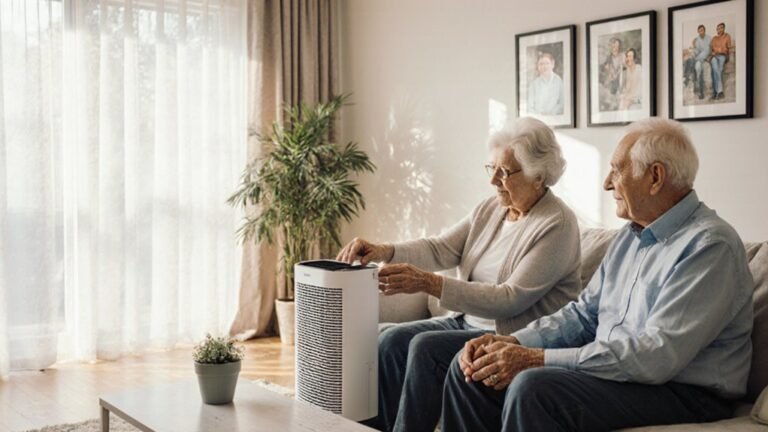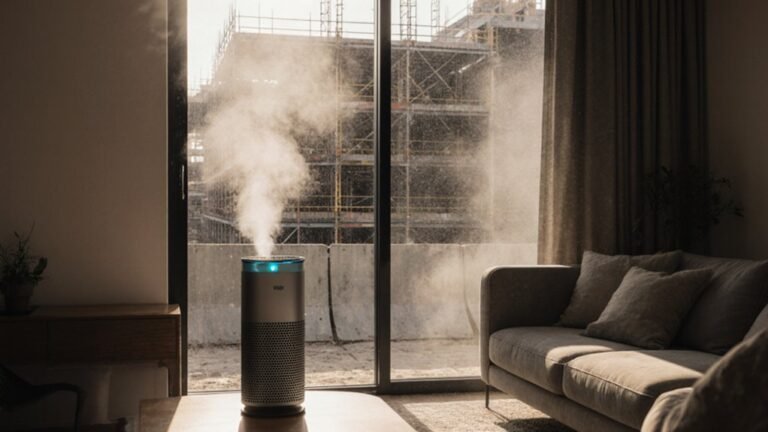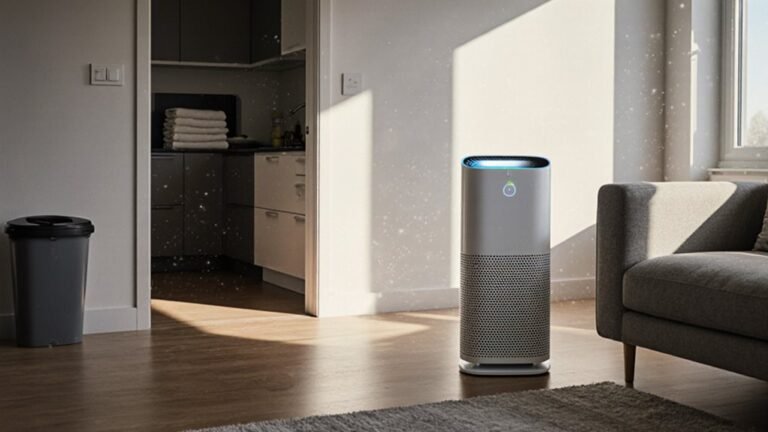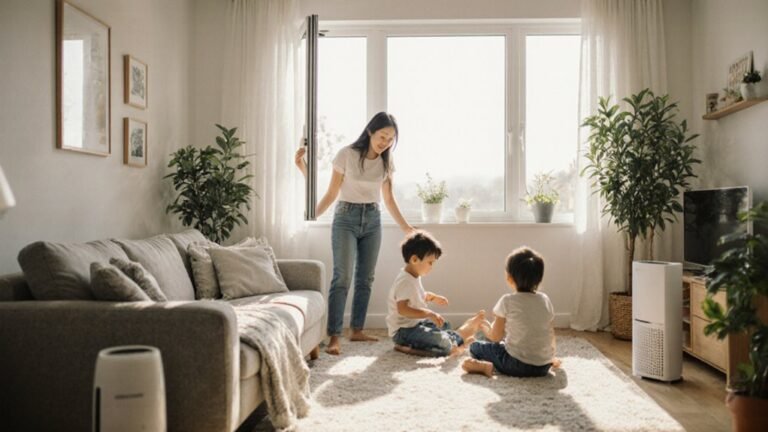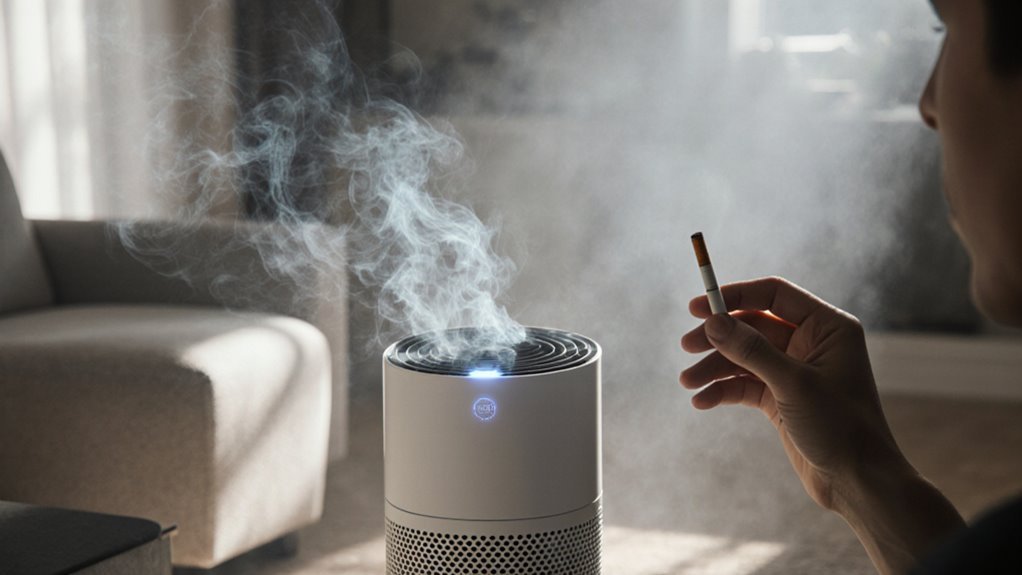

Air purifiers can significantly reduce smoke particles and odors from cigarette smoke indoors. HEPA filters capture tiny particulate matter while activated carbon removes many volatile organic compounds that cause odor. Effectiveness depends on correct unit size for the room and proper placement for good air circulation. Regular filter replacement and maintenance keep performance steady over time. Choosing a purifier with the right CADR rating and both HEPA plus carbon filtration delivers the best results for cleaner indoor air.
How Air Purifiers Help With Secondhand Smoke
Air purifiers can help whenever secondhand smoke is hanging in the air, but they work best in a smart, limited way. You can use a true HEPA unit to catch fine smoke particles, and an activated carbon filter can also help with odors and some gases. That matters when airborne nicotine lingers and you want your home to feel safer and more welcoming.
A good purifier can lower PM2.5 fast, so you might breathe easier in one room, even though the source isn’t gone. Still, exposure disparities mean some families face more smoke at home than others, so cleaning the air can offer real relief. Choose the right size, run it often, and replace filters on time.
Why Secondhand Smoke Lingers Indoors
Secondhand smoke doesn’t just vanish after the cigarette goes out, because tiny smoke particles stick to walls, fabric, carpets, and even dust.
You can also keep breathing it in as indoor air moves smoke around the room and carries it into nearby spaces. That’s why the smell can hang on so long, even whenever no one is actively smoking.
Smoke Particles Adhere Surfaces
Smoke does more than float through a room, and that’s why it can linger long after the cigarette is gone. You breathe it in, but it also sticks around as surface bound grime. Walls, curtains, and couches become nicotine reservoirs, and fabric adsorption pulls smoke into the fibers you touch every day. | Where it lands | What you notice |
| — | — |
|---|---|
| Walls and paint | Yellowing and odor |
| Sofas and drapes | Deep smoke smell |
| Clothes and rugs | Residue persistence |
This buildup can make your space feel less fresh, even after the smoke clears. You’re not imagining it provided the room still feels heavy. Whenever particles cling to surfaces, they keep releasing odor and chemicals slowly, so the air and your surroundings stay linked. That’s why cleaning matters, and why you deserve a home that feels comfortable again.
Indoor Air Recirculation Effects
As a room keeps drawing the same stale indoor air back through itself, tobacco smoke doesn’t just vanish, and that can make it feel like it’s hanging around forever. You’re not imagining it. Air mixing spreads smoke from one corner to another, so even a quick puff can reach the whole space. Pressure differentials pull air through gaps, then trap polluted air whenever windows stay shut.
- Smoke rides on tiny particles.
- Curtains and sofas slow airflow.
- Vents can recirculate dirty air.
- Purifiers help, but source control matters.
Whenever you breathe that recycled air, you share the same burden with everyone in the room. That’s why fresh outdoor air, provided it’s clean, can help break the cycle and make your home feel safer.
How HEPA Filters Capture Smoke
A HEPA filter traps smoke via pushing dirty air through a dense mat of tiny fibers that catch harmful particles before they can drift back into your room.
With smart HEPA mechanics, you get particle interception as smoke specks twist through the maze and stick to the fibers.
You don’t need to envision magic here, just a well built barrier that keeps the air moving through the filter instead of around it.
Because smoke has many fine particles, this design helps you lower what you breathe in while you relax, work, or sleep.
Whenever you run the purifier steadily, it keeps pulling in new air and catching more haze.
That steady help can make your space feel calmer, cleaner, and more like home.
What Air Purifiers Can’t Remove
Even the best air purifier can’t solve every part of secondhand smoke, and that’s frustrating while you’re trying to protect your home.
You can still breathe easier, but some smoke stays behind:
- gas phase toxins slip past particle filters
- odors can linger in fabrics and walls
- third hand smoke clings to dust and surfaces
- tiny particles keep drifting in from other rooms
Best Air Purifier Features for Smoke
Whenever smoke is in the air, the right purifier can make your home feel a lot less heavy and stale.
You should look for a true HEPA filter initially, because it catches tiny smoke particles that keep floating around. Then choose a unit with strong activated carbon, since that helps trap odors and some gases that HEPA alone leaves behind.
A higher CADR can clear smoke faster, so you won’t feel stuck in that foggy smell as long. Also, skip models that create ozone generation, because that can add another problem you don’t need.
Quiet operation and easy filter changes matter too, since you’re more likely to keep it running. Whenever you pick well, your space feels cleaner, calmer, and more like home.
Where to Place an Air Purifier for Smoke
Place your air purifier near the smoke source whenever you can, because that helps it catch particles before they spread.
In case the smoke comes from a wider area, set it in the center of the room so it can move cleaner air more evenly.
Make sure you leave clear space around it, so air can flow in and out without a fight.
Near Smoke Sources
Whenever smoke starts drifting through a room, your purifier works best provided it can catch it close to the source before it spreads. You’ll feel more in control once you place it where smoke source proximity matters most, like beside a doorway, window, or smoking spot. That way, the unit grabs particles promptly and helps your space feel safer and more welcoming.
- Put it between the smoke and the people you care about.
- Keep it clear of curtains, walls, and clutter.
- Pair it with portable exhaust systems when you can.
- Run it immediately, not after the room already feels hazy.
This close placement won’t fix everything, but it can calm the air fast and help your home feel like everyone belongs there.
Central Room Placement
Even should you’ve been catching smoke near the source, a purifier still needs a smart home base in the room. Put it where the air mixes best, usually close to the center, so your whole space feels included. That spot helps the unit reach more of the room and can soften smoke pockets before they linger.
| Spot | Effect | Feel |
|---|---|---|
| Center | Wider reach | Balanced |
| Corner | Narrow reach | Concealed |
| Shelf | Raised view | Tidy |
| Open floor | Better mixing | Calm |
| Beside seating | Local comfort | Welcoming |
Choose visual placement that fits your room without making you dodge it. Provided the unit’s noise impact bothers you, move it a little farther from your favorite chair, but keep it central enough to keep working well. That way, you stay comfy and connected to cleaner air.
Clear Airflow Space
Keep the air around your purifier open and easy to move through, because that’s what helps it catch smoke without working harder than it should.
You want clear clearance zones on every side, so smoke can reach the intake instead of getting trapped next to a couch or curtain.
Use airflow mapping to spot the path smoke follows from the doorway, hallway, or smoking area. Then place the unit where that stream can pass through it.
- Keep it a few feet from walls.
- Don’t tuck it behind furniture.
- Aim the intake toward the smoke path.
- Leave space for doors and vents.
When you give it room, you help your home feel safer and more welcoming for everyone breathing there.
How to Reduce Secondhand Smoke at Home
Breathing easier at home starts with cutting off the smoke at its source, because secondhand smoke can drift through rooms, settle into fabrics, and linger long after the cigarette is out.
Set clear visitor policies so guests know smoking stays outside, and use window signage to make the rule easy to see without awkward prompts.
Should someone in your home smoke, ask them to step outdoors and close doors behind them. Then keep an air purifier running in shared spaces to help catch fine smoke particles that float back in.
Choose one with HEPA and activated carbon filters for better support against smoke and odor.
Wash hands, change clothes after smoking, and clean soft surfaces often. These steps help you protect your space and feel more at ease together.
What Size Air Purifier You Need
Once you’ve cut back the smoke at the source, the next question is simple: how big of an air purifier do you actually need? You want a unit that matches your room CADR, because a small model can feel like a tiny fan in a big room.
- Check the room’s square footage initially.
- Match CADR to that space.
- Place the unit where smoke drifts most.
- Plan for filter replacement on time.
If you share a shared room with others, choose a stronger purifier so everyone gets cleaner air, not just the lucky chair near the machine. For secondhand smoke, a true HEPA model with some carbon works best. Then you can breathe easier together, and that’s a win your home can feel every day.
Frequently Asked Questions
Do Air Purifiers Help With Smoke Smell From Cigarettes?
Yes, you will notice less smoke smell with a purifier, especially one with activated carbon. It will not erase odors completely if air exchange keeps bringing smoke in, but it can make your space feel fresher.
Can Air Purifiers Lower Secondhand Smoke Exposure for Babies?
Yes, you can lower your baby’s exposure. HEPA mobile air purifiers can cut indoor PM2.5 by about 30 to 60 percent. With air quality monitoring, you will know while they are helping, and you will protect your little one together.
Are Ozone-Free Purifiers Safer for Smoke Removal?
Yes, you’re safer with ozone free purifiers for smoke removal because they avoid ozone concerns. You’ll still want strong filter efficacy, ideally HEPA plus activated carbon, so you can trap particles and reduce smoke odors effectively.
How Often Should Smoke Filters Be Replaced?
Replace smoke filters as soon as airflow drops or odors persist. Your filter lifespan and replacement frequency usually range from 1 to 6 months for prefilters and 6 to 12 months for HEPA filters, depending on smoke levels and use.
Can One Purifier Clean Smoke in an Entire House?
No, one purifier usually won’t clean smoke in your whole house. HEPA units can cut PM2.5 roughly 30 to 60 percent within one room, but you’ll need multiple units or ducted systems for broader coverage and cleaner air.