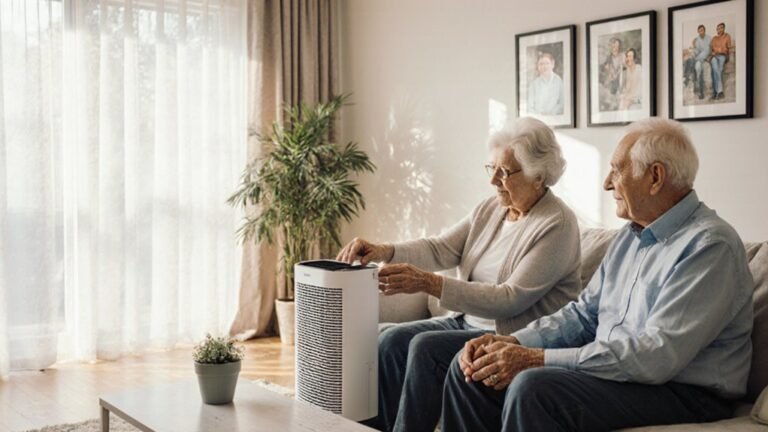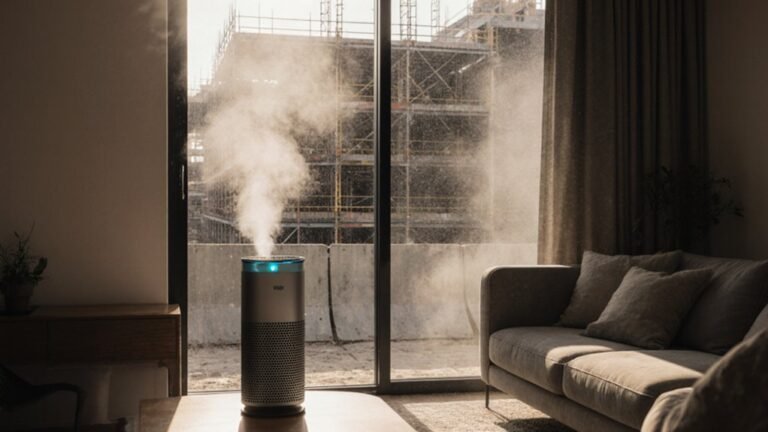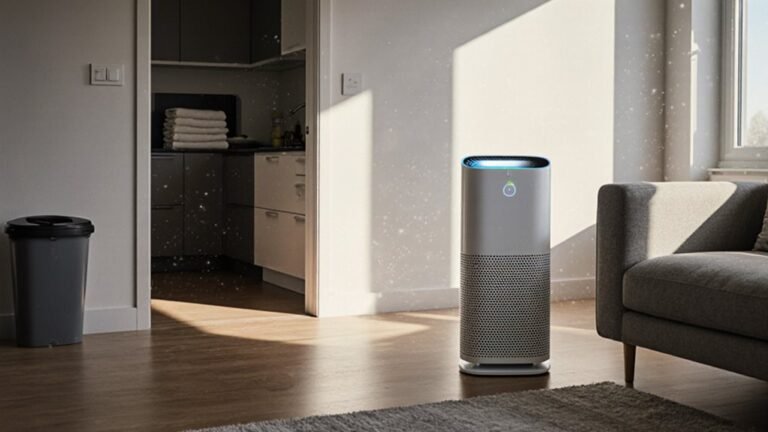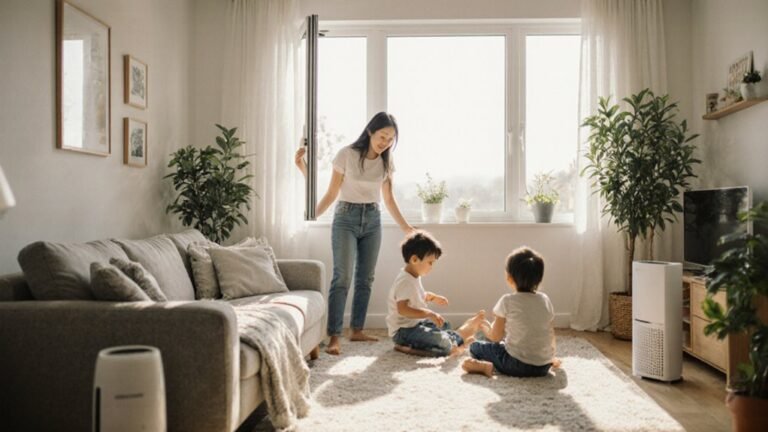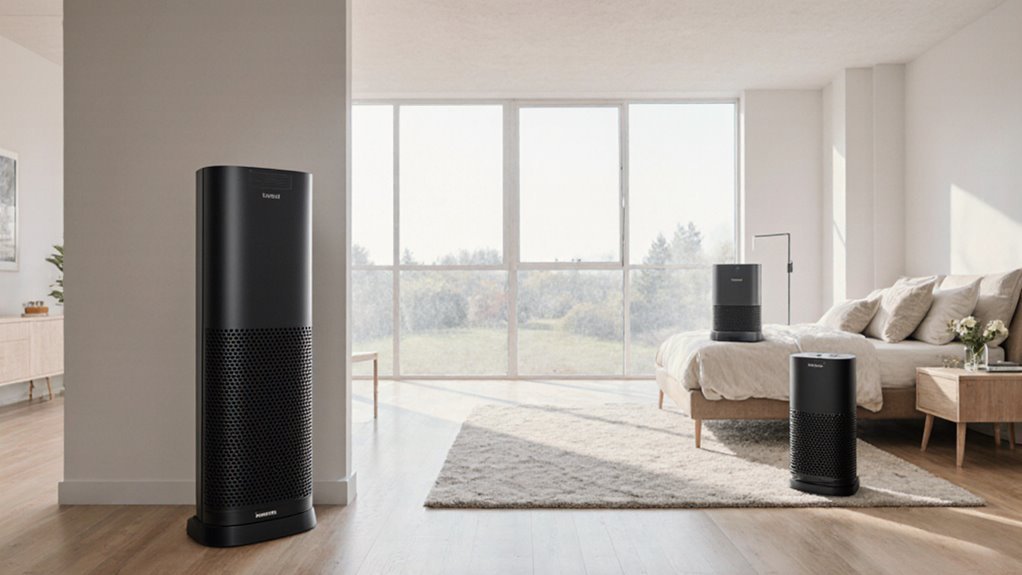

Room size dictates the right air purifier choice. Small bedrooms do well with quiet units and modest CADR ratings. Large lounges require higher CADR, strategic placement, and stronger carbon filtration for odors or smoke. Picking the wrong capacity wastes energy, increases noise, and leaves pollutants behind. This article explains how to match purifier specifications to room dimensions for cleaner, more efficient air.
What Room Size Needs an Air Purifier?
Provided you want an air purifier that actually helps, the room size has to match the purifier’s CADR, not just the big number on the box. You’ll get the best fit when you consider square footage, ceiling height, and how many people usually share the space.
Your occupancy patterns matter because a crowded bedroom needs more cleaning than a quiet guest room. Seasonal variation matters too, since smoke, pollen, and closed windows can change what’s in the air.
What CADR Do Large Rooms Need?
Large rooms need more than a purifier that just sounds powerful. You need CADR that matches the room’s air volume, not the marketing label on the box. For a big household room, aim for about 2/3 of the square footage for smoke, and closer to the full square footage whenever wildfire smoke hits hard.
Should your ceiling be taller than 8 feet, raise the CADR because ceiling effects stretch the air the purifier must clean. In open layouts, one unit can struggle to keep up. That’s where multiple units can help you feel covered, not crowded out.
Look for AHAM Verifide ratings, then choose enough clean air delivery to keep your space comfortable, clear, and truly yours.
Which Purifier Features Matter Most in Small Rooms?
In a small room, you don’t need a giant purifier to get good results, but you do need one with a CADR that matches the space.
You’ll also feel better with a unit that stays quiet on low speed, since it can run longer without turning your bedroom or office into a white-noise concert.
Whenever you choose the right size and a softer fan setting, you get cleaner air without giving up comfort.
Compact CADR Ratings
Whenever you size a compact purifier for a small room, the CADR number should do the heavy lifting.
You want portable CADR that matches the room, not a flashy box size claim. In a bedroom or office, a unit around 80 to 120 CFM usually gives you steady help.
That matters because real world decay depends on how much clean air the purifier can push through your actual space, doors closed, furniture in place, and filters kept fresh.
You’ll feel the difference whenever the room clears faster and stays that way.
Quiet Low-Speed Operation
For small rooms, quiet low-speed operation often matters more than raw top-end power, because you’ll usually run the purifier for hours, not minutes. You want low noise that blends into your day, so you can read, work, or sleep without feeling crowded by sound. Good fan tuning helps the unit move air smoothly at a gentle pace, and that often beats a loud burst of speed.
Should you share the room, sleep mode can make nights feel calmer for everyone. Also, look for soft lights and simple controls, since scratch views and harsh glare can feel distracting in a cozy space. Whenever the purifier stays quiet, you’re more likely to keep it on, and that steady habit helps your room feel fresher and more like home.
Where Should You Place an Air Purifier?
Right near the center of the room is usually your best starting point, because an air purifier works best once it can pull dirty air in and push clean air back out without anything blocking the flow.
That central placement helps you support smooth airflow pathways, so the unit can reach more of the room instead of circling one tight spot.
In case you can’t use the center, choose a spot with open space on all sides. Keep it away from walls, curtains, and big chairs, since they can slow circulation patterns.
Corner placement can work only whenever the room is small and the purifier still has room to breathe.
You’ll usually get the best results provided you let the machine sit where your family already gathers and where air can move freely.
How Do Noise and Energy Use Compare?
Noise and energy use matter just as much as cleaning power, because a purifier that sounds like a jet engine is hard to live with, and one that sips too much electricity can slowly nudge up your bills. In a small room, you might need less fan speed, so the unit often feels calmer and costs less to run. In a large room, you usually require more airflow, so noise can rise unless you choose better fan efficiency.
| Room size | Typical impact |
|---|---|
| Small room | Lower noise, lower power |
| Medium room | Balanced comfort |
| Large room | Higher airflow demand |
| Quiet mode | Less sound, slower cleaning |
| Daily use | Higher operational cost should oversized |
Which Filter Type Works Best?
You’ll usually get the best particle removal from a True HEPA filter, because it traps dust, pollen, and smoke so well.
Should odors, wildfire gases, or VOCs bother you too, you’ll want activated carbon along with HEPA, since HEPA alone can’t catch those.
In bigger rooms, that mix matters even more, because your purifier has to clean more air without losing strength too fast.
HEPA Filter Performance
A HEPA filter does the heavy lifting whenever you want cleaner air, because it traps tiny particles that you can’t see but definitely don’t want breathing around.
In a small room, that capture power can feel almost instant, since the purifier turns the air over faster and keeps particle penetration low.
In a large room, though, you need enough airflow to match the space, or dust and smoke can slip past before the filter catches them. That’s why HEPA longevity matters too; a well-sized unit loads more slowly and keeps steady performance longer.
Should you share your room with pets, pollen, or city dust, a true HEPA model helps you feel like you belong in your own space again.
Opt for the right size, and the filter can operate without straining.
Activated Carbon Use
Often, the best purifier for odors and gases is the one with a strong activated carbon bed, because HEPA alone can’t catch smells, smoke gases, or VOCs floating through the room. You should check carbon lifetime, since a thin layer fills up fast in a large room.
In a small bedroom, a compact bed may still work well provided you keep doors shut and run it often. In a bigger living area, you need more carbon mass, or the smell will stick around like an uninvited guest.
Adsorption kinetics matter too, because fast airflow can push air through before the carbon grabs enough gas. So, pick a unit with deep carbon, not just a shiny badge. That way, you’ll breathe easier and feel at home.
How Do You Choose the Right Purifier Size?
The right purifier size starts with the room, not the label on the box, because square footage alone can be misleading. You should check CADR initially, since it tells you how much clean air the unit really moves.
For a bedroom, a smaller purifier can work well, but a household room or open plan area needs more power. Then match the purifier to your ceiling height and keep doors closed so the room stays within its true volume.
Smart placement strategies matter too: set the unit where air can flow freely, not behind a couch. Should your needs change with pollen, smoke, or guests, seasonal scaling helps you stay ready without guessing.
Once you size it right, you breathe easier and feel at home.
Frequently Asked Questions
How Often Should I Replace Purifier Filters in High-Pollen Seasons?
During pollen season, you’ll swap filters more often; about every 2 to 3 months if allergen load runs high, and clean the pre filter weekly. Make a seasonal adjustment and you’ll keep your space breathing easier together.
Can One Purifier Clean Air in Multiple Connected Rooms Effectively?
Not usually; you will get better results by treating your open plan as one space or by using airflow zoning with separate units. Closed doors, furniture, and leaks weaken coverage, so you will want properly sized purifiers.
Do Air Purifiers Remove Wildfire Smoke Gases and Odors?
Yes, they can, but only if you choose a unit with activated carbon for gas adsorption, like a sponge for stubborn smells. You will still need enough CADR, and you will breathe easier together.
Is It Safe to Run an Air Purifier Continuously Overnight?
Yes, you can run it continuously overnight provided it is certified, well maintained, and placed safely. Continuous operation improves protection while fan noise impact might matter; choose a lower setting so you sleep comfortably and breathe easier.
How Do I Verify a Purifier’s CADR Claims Are Accurate?
Check for AHAM Verifide labels, compare the listed CADR testing results, and look for independent verification from third party labs. You can trust claims more when the published smoke, dust, and pollen numbers match your room size and needs.