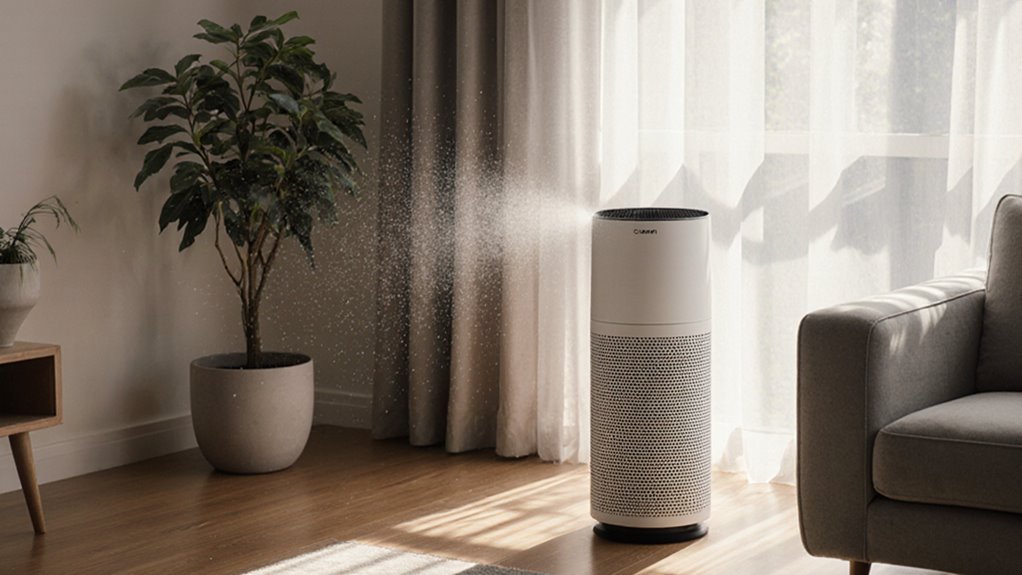

Yes — air purifiers can make a home feel noticeably cleaner. They trap particles like dust, pollen, smoke, and pet dander, and some models remove odors and certain gases. Filtration performance depends on filter type, unit capacity relative to room size, and placement. Higher-efficiency HEPA filters capture the smallest particles, while activated carbon targets smells and volatile compounds. Choosing the right purifier for the specific room and pollutant profile determines real-world effectiveness.
What Do Air Purifiers Do?
Air purifiers clean the air you breathe through pulling indoor air through filters or other cleaning parts that trap or decompose tiny pollutants. You get a quieter, fresher space whenever they remove dust, smoke, pollen, and pet dander from the room.
Many models use HEPA filters, while others add activated carbon for odors and gases. As you choose one, pay attention to noise levels, because a loud unit can feel hard to live with in bedrooms or shared spaces. Also check energy consumption so you can run it often without worrying about your bill.
Once the size fits your room, the purifier works steadily and helps your home feel more comfortable, familiar, and welcoming for everyone inside.
How Do Air Purifiers Improve Indoor Air Quality?
Air purifiers improve your indoor air through pulling in polluted air and trapping tiny particles before they keep floating around your room.
They can also cut down dust, pollen, pet dander, and other irritants that make breathing feel harder.
Once you use the right filter and size it well, you give your home cleaner air that feels easier on your lungs.
Particle Filtration
Clean breathing starts with what gets trapped before it reaches your lungs. You get that help from particle filtration, which catches dust, smoke, pollen, and pet dander before they swirl around your room. Once the filter fills up, filter loading can slow airflow, so you should check it often and replace it on time. That keeps your purifier working with your home, not against it.
Good filtration also cuts particle reentrainment, which means trapped particles don’t bounce back into the air. So you and your family can relax, breathe easier, and feel more at home in your space. A well sized HEPA unit works quietly, keeps the air moving, and gives you steadier comfort during busy days and restless nights.
Pollutant Reduction
Step inside a room with a good purifier, and you’ll often notice the change before you can explain it.
It pulls harmful particles from the air you share, so your space feels easier to breathe in.
That matters whenever dust, smoke, pet dander, and germs keep drifting around.
- HEPA filters catch tiny particles fast.
- Activated carbon helps cut odors and gases.
- Cleaner air can lower byproduct formation from some reactions.
- Better airflow can reduce lingering indoor irritants.
- With steady use, you might support better long term results.
You don’t have to fight the air alone.
Whenever your purifier matches the room, it keeps pollution from building up anew.
Which Filter Type Is Best?
At the time you’re choosing an air purifier, the “best” filter really depends on what you want to fix in your space.
Should dust, pollen, or pet dander keep bothering you, a HEPA filter is usually your strongest match because it traps tiny particles well.
In case smells from cooking, trash, or smoke bother you, look for activated carbon, since it helps with odor control and can calm the room fast.
Some units combine both, so you don’t have to pick only one path. That can feel like a small win on busy days.
You should also consider energy consumption, because a quiet, efficient purifier is easier to run every day.
Avoid ozone-producing models, as they can add problems instead of solving them.
How to Choose the Right Air Purifier Size
Start by looking at your room size, because a purifier that’s too small won’t keep up, and one that’s too large can waste energy and money.
Then match the CADR rating to the space so the unit can clean the air fast enough for where you actually use it.
You should also consider air changes per hour, since more frequent cleanings help cut dust, smoke, and allergens with less waiting around.
Room Size Matters
The room size you choose can make or break your air purifier’s performance, because even a strong unit can struggle in a space that’s too large for its design. You’ll get better results whenever you match the unit to your room layout and occupant density, since crowded rooms need steadier cleaning.
- Measure the floor area initially.
- Count people who stay there often.
- Check open pathways and corners.
- Pick one unit for a compact room.
- Use two smaller units in split spaces.
Once you place the purifier where air moves freely, it helps everyone breathe easier and feel more at home. Should your bedroom feel packed or your household room has odd angles, size matters even more. A well-fit purifier can support comfort without making your space feel noisy or awkward.
Match CADR Rating
A good CADR match can make your air purifier feel like a real helper instead of a noisy box in the corner.
Once you choose the right size, you join the people who breathe easier at home. Start by checking the room’s square footage, then compare it with the unit’s CADR matching numbers. A higher CADR moves more clean air, so your purifier won’t struggle in a space that’s too big.
You should also look at ACH targets, because they tell you how strongly the unit can refresh the air for your needs. For a bedroom or shared room, pick a model that meets your goal without pushing the fan too hard. That way, you get steady comfort, less fuss, and a setup that fits your space.
Consider Air Changes
Even while a purifier has the right CADR, you still need to take into account about air changes, because size alone doesn’t tell the whole story.
You want enough air change to refresh the room often, so the air feels easier to breathe.
A higher ventilation rate can help, but it won’t replace a purifier that fits your space.
- Check your room volume before you buy.
- Aim for several air changes each hour.
- Match the unit to bedrooms, offices, or shared rooms.
- Place it where air moves freely.
- Use more than one unit in larger spaces.
When you do this, you’re not just buying a device.
You’re making your space feel like it belongs to everyone in it, including you.
Where Should You Place an Air Purifier?
Place your air purifier where it can breathe as freely as you do, because location can make a big difference in how well it works.
For best placement, set it in the room where you spend the most time and keep it a few feet from walls, curtains, and furniture. Put it near the center of the space whenever you can, so air can move around your home with less effort.
Should your room has a bed, desk, or couch, place the unit close enough to serve that zone without crowding it. Also, consider noise considerations, since a quieter spot helps you keep it running longer.
In larger rooms, two smaller units can work better than one lonely box trying to do all the heavy lifting.
Can Air Purifiers Help With Allergies and Asthma?
Yes, air purifiers can help with allergies and asthma, especially provided they use a true HEPA filter that traps tiny particles like pollen, pet dander, dust, and many airborne irritants.
Whenever you live with allergen seasonal triggers, cleaner air can ease sneezing, coughing, and tight breathing.
You might also feel more at ease at home, which matters whenever you’re trying to breathe well and rest well.
- Place the purifier where you spend the most time.
- Match the unit size to your room.
- Choose low-ozone models for safer breathing.
- Use it during flare-ups and pollen spikes.
- Support pediatric asthma management with cleaner bedroom air.
Should you still notice symptoms, pair filtration with good cleaning and fewer triggers.
That teamwork can make your space feel calmer and more comfortable.
How Do You Maintain an Air Purifier?
Keeping your air purifier in good shape doesn’t take much, but it does matter because a clean machine works better and keeps your air cleaner too.
Start with filter maintenance by checking the prefilter weekly and replacing the main filter on schedule.
Wipe the outside with a soft cloth so dust doesn’t sneak back in.
Should you notice extra noise, look for loose parts and clear blocked vents, because noise management helps the unit run calmly in your room.
You can also watch energy usage through using the right fan speed instead of leaving it on high all day.
Once warm months end, clean it well, dry it fully, and plan seasonal storage in a dry spot.
That way, your purifier stays ready for the next season, right beside you.
What Air Purifiers Can’t Fix
Even though you keep your purifier clean and the filters fresh, it still can’t solve every indoor air problem. You might feel safer with it running, yet it can’t stop smoke from a stove, strong cleaning sprays, or damp walls that grow mold. It also won’t fix poor airflow in a room, and it can’t remove every gas or odor.
- You still need source control for cooking and smoking.
- Open windows or use exhaust fans whenever possible.
- Watch for secondary pollutant formation from certain devices.
- Don’t ignore noise pollution should a loud unit keep you from resting.
- Fix leaks, dust, and humidity to lower bigger risks.
Once you pair the purifier with smart habits, you build a healthier space for everyone around you.
Frequently Asked Questions
Do Air Purifiers Remove Cooking Odors and Smoke?
Yes, you’ll reduce some cooking odors and smoke, especially with activated carbon and HEPA filters, but you’ll get better results if you pair them with kitchen ventilation, source control, and quick cleanup after cooking.
Can Air Purifiers Help During Wildfire Smoke Events?
Yes. You’ll lower smoke particles by running a properly sized HEPA purifier continuously, sealing gaps with portable dampers, and wearing N95 masks outdoors. Together, you’ll breathe easier and protect your home.
Are HEPA Filters Effective Against Airborne Viruses?
Yes. HEPA filters can help curb viral transmission because you are trapping virus laden aerosols. Their HEPA efficacy is strongest in well sized rooms with continuous use. You will feel more secure once you pair them with ventilation and source control.
Do Air Purifiers Create Harmful Ozone Indoors?
Yes. You’ll want to avoid ion generators and some plasma cleaners since they can produce harmful ozone indoors. Choose certified low ozone models, and you’ll keep your shared space safer and more comfortable.
How Often Should Filters Be Replaced?
Replace filters every 3 to 12 months based on your maintenance schedule and replacement frequency. Why let dust choke your purifier’s breath? Check monthly, follow manufacturer guidance, and replace sooner if airflow drops or odors linger.