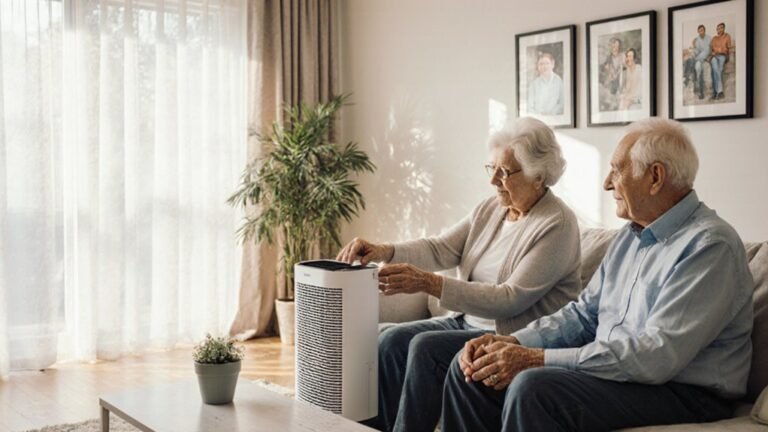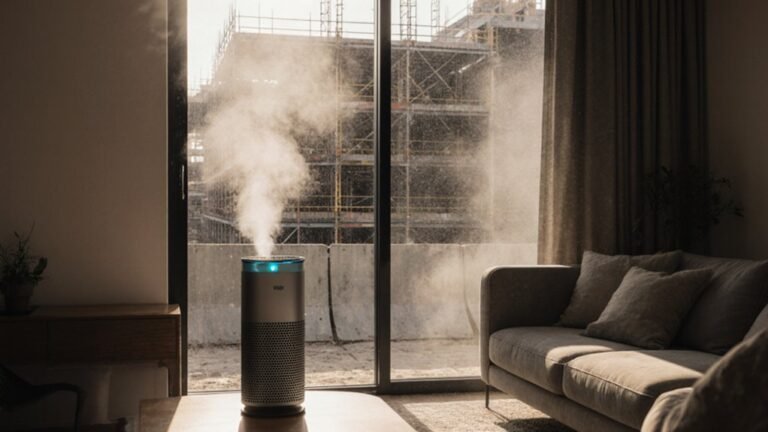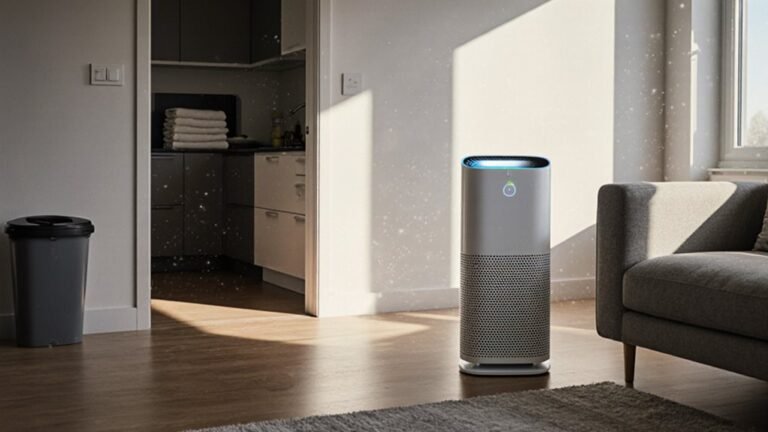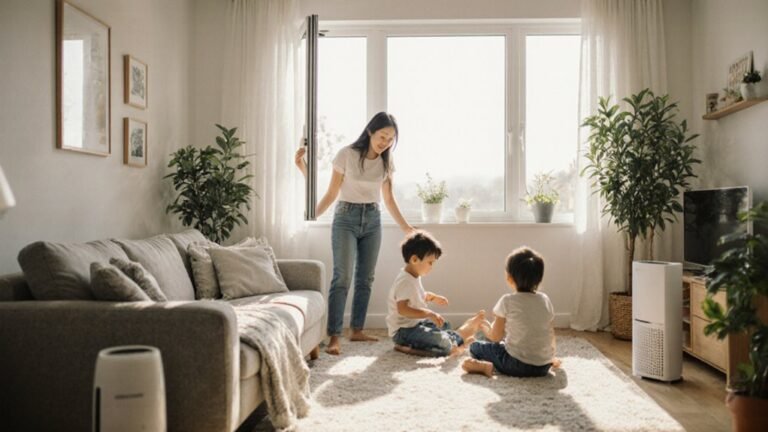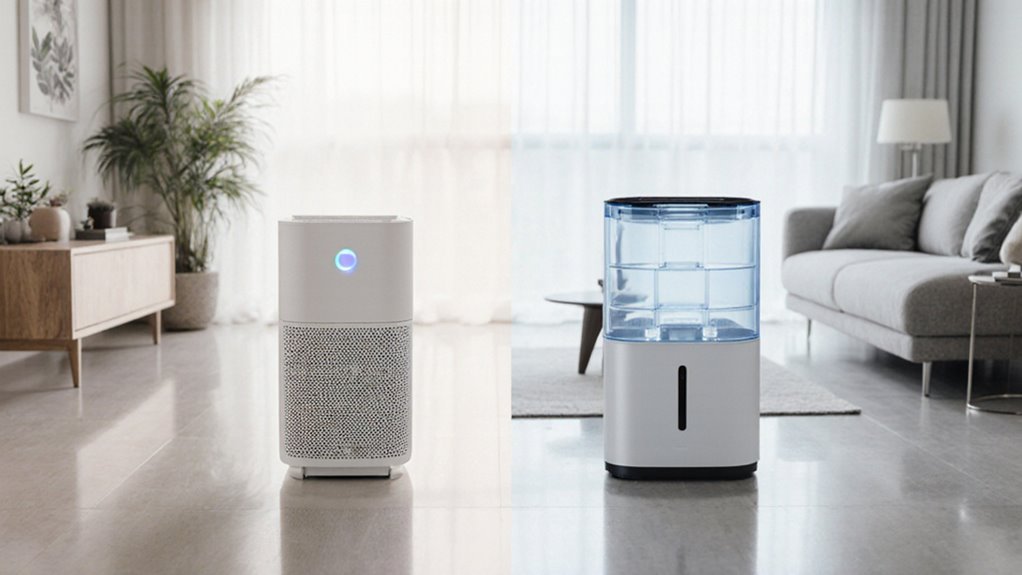

Air purifiers remove airborne particles like dust, pollen, pet dander, and smoke. Dehumidifiers lower indoor humidity to prevent mold growth and musty odors. Choose an air purifier for allergy triggers and smoke; choose a dehumidifier for persistent dampness and condensation. Some spaces benefit from both devices working together for cleaner, drier air. Picking the right device depends on whether particles or excess moisture cause discomfort.
What Does an Air Purifier Do?
An air purifier works via pulling room air through a set of filters that trap unwanted particles before the air flows back out cleaner. You can count on it whenever dust, pollen, pet dander, or smoke keeps bothering you at home.
To begin with, air moves through filtration stages, starting with a pre-filter that catches larger bits, then a HEPA layer that grabs tiny particles. Some models add carbon for odors, so your space can feel fresher too.
You also get control with fan speeds, which help you match cleaning power to a quiet night or a busier room. Once you choose the right size, it keeps the air moving in a steady, comforting way. That makes your home feel more welcoming for everyone.
What Does a Dehumidifier Do?
A dehumidifier pulls extra water out of the air, then collects it in a tank or drains it away. You’ll often notice it helps whenever rooms feel sticky, windows sweat, or a musty smell starts to creep in.
Through keeping humidity around 40% to 50%, it can make your home feel more comfortable and help slow mold and dust mites.
Moisture Removal Basics
Whenever you’re handling with damp air, a dehumidifier steps in to pull extra moisture out of the room and make the space feel healthier and more comfortable.
It works through drawing in humid air, cooling it, and collecting water in a tank or drain.
You don’t need to guess what’s happening, because you can watch the moisture level drop on a hygrometer.
That simple change supports condensation prevention on windows, walls, and cold corners.
It also pairs well with ventilation strategies, since moving air helps the unit work smarter.
Should your room feel sticky, your laundry dries slowly, or your basement smells off, you’re not alone.
A dehumidifier gives you a practical way to take control and feel more at ease in your own home.
Humidity Control Benefits
Whenever your home feels damp, a dehumidifier does more than just make the air feel nicer. It pulls extra water from the air, so your space can feel easier to live in and more like your own.
As moisture drops, vapor pressure changes, and water stops clinging to surfaces as much. That means your room dries faster, and materials like wood, fabric, and drywall get less stressed.
The unit also helps by removing latent heat as it condenses water, which supports cooler, steadier air. You might notice your rooms feel fresher and less heavy, which can make everyday time at home feel more comfortable.
If humidity stays in a healthy range, you protect the cozy, shared feel of your space without much effort.
Signs You Need One
In case your home keeps feeling sticky, musty, or slow to dry, you might be seeing the initial signs that you need a dehumidifier. You’re not alone, and that uneasy, clammy feeling often shows up whenever moisture hangs around too long.
Seasonal triggers like humid summers or rainy weeks can push the air past a healthy level, but occupant habits matter too, from long showers to drying clothes indoors.
- Windows fog up often.
- You smell musty air in closets or basements.
- Towels, floors, or laundry stay damp.
Once you notice these clues, a dehumidifier can pull extra water from the air and help your space feel fresher. It also makes it harder for mold and dust mites to settle in, so your home feels more comfortable for everyone.
Air Purifier vs Dehumidifier: Key Difference
Although both devices can make your home feel better, they solve very different problems: an air purifier cleans the air you breathe through trapping dust, pollen, pet dander, smoke, and other tiny particles, while a dehumidifier lowers moisture in the room so mold, mildew, and dust mites have a harder time growing.
Provided you care about indoor ventilation, a purifier helps freshen what moves through your space. Should damp air be the issue, a dehumidifier helps the room feel drier and more comfortable.
You might notice the purifier working around particles, whereas the dehumidifier works on water in the air. That difference also affects energy consumption, since each unit uses power in its own way. So you’re not picking a better machine, you’re choosing the one that matches your home’s problem.
When Should You Choose an Air Purifier?
You should choose an air purifier whenever allergies or asthma make the air feel rough on your nose, throat, or chest.
It can also help whenever smoke, odors, dust, or pet dander keep hanging around your home.
Should you want cleaner air to breathe, a purifier gives you a simple way to take that pressure off.
Allergy And Asthma Relief
Should sneezing, itchy eyes, or a tight chest keeps showing up at home, an air purifier can feel like a small relief machine humming in the corner. In case your symptoms flare in bedrooms or shared spaces, start there. Better bedroom ventilation helps, but a purifier adds steady support whenever pollen forecasting warns you of a bad day.
- It traps dust, pollen, and pet dander before they reach your nose.
- It can ease nighttime breathing, so you sleep with less worry.
- It works well whenever you want help without changing the whole room.
Provided you have asthma, choose a true HEPA model sized for your room and run it often. Keep doors open a little for airflow, and let it become part of your comfort routine, like a trusted chair that’s always waiting.
Smoke And Odor Removal
Smoke and stubborn odors can hang in a room long after the source is gone, and that’s often the moment an air purifier earns its keep. In case you’ve got lingering cigarette smell, cooking fumes, or a burnt-toast reminder, you’ll want a model with activated carbon to trap those gases and freshen the air you breathe. HEPA helps with fine smoke particles too, so the room feels easier to live in. You can also place it near the source for faster relief.
Dehumidifiers won’t remove odors, because they only pull moisture from the air. So in the event smell is the problem, they won’t help much. Skip ozone generators unless you’ve checked safety carefully, because they can irritate your lungs. For shared spaces, choose a purifier that fits your room and run it often.
Dust And Pet Dander
Once dust seems to settle on every shelf and your pet leaves a little trail of fluff behind, an air purifier can make daily life feel a lot more comfortable.
In case you sneeze, rub itchy eyes, or notice fur floating in sunbeams, you’re coping with airborne allergens. A purifier with HEPA filtration traps those particles before you breathe them in, while HVAC filtration helps support cleaner air throughout your home.
- Use pet grooming to cut loose fur at the source.
- Keep textile maintenance steady so sofas and bedding hold less dander.
- Choose a purifier with strong airflow for the room where you relax most.
This matters even more provided you share your space with kids, guests, or anyone sensitive to dust. Whenever the air feels cleaner, your home can feel calmer too.
When Is a Dehumidifier the Better Choice?
A dehumidifier becomes the better choice provided the real problem is too much moisture in the air, not just dust or allergens floating around. You’ll want one whenever you notice musty smells, damp walls, window sweat, or laundry that stays wet forever.
In spaces like basement remediation and crawlspace ventilation, it helps dry the air before mold gets a foothold. After a leak, water damage restoration crews often rely on it for structural drying, because trapped moisture can linger deep inside materials. A purifier can’t fix that.
Whenever you lower humidity, you make your home feel safer, cleaner, and more comfortable for everyone residing there. Use it in rooms that stay sticky, and you’ll help protect both your space and your peace of mind.
Can You Use Both Together?
Yes, you can use an air purifier and a dehumidifier together because they handle different problems in your home.
The purifier clears airborne dust, pollen, and mold spores, while the dehumidifier cuts moisture that helps mold and dust mites grow.
For the best results, place each one where it can work freely, then run them together in rooms that feel damp and trigger your allergies.
Separate But Complementary
You can use an air purifier and a dehumidifier together, and in many homes that’s the smartest move because they solve different problems at the same time. One clears floating dust, pollen, and pet dander, while the other keeps damp air from feeding mold and dust mites. Consider them as teammates, not rivals, and you get a calmer home.
- Your purifier helps you breathe easier.
- Your dehumidifier helps walls and fabrics stay drier.
- Together, they support comfort through seasonal storage and energy recovery habits.
If your room feels stuffy, allergy-prone, or a little swampy, using both can make it feel more like your space again. You’re not overdoing it; you’re covering both air and moisture.
Best Placement Tips
At the moment you place an air purifier and a dehumidifier in the same room, location matters more than most people believe. Put the purifier near source, like a bed, litter box, or window, so it can catch particles fast. Give the dehumidifier open floor space and keep it away from walls for steady airflow. Should you be able, try raised placement for the purifier on a sturdy table, not the floor.
| Device | Best spot | Why it helps |
|---|---|---|
| Purifier | Near source | Grabs dust and dander sooner |
| Purifier | Raised placement | Pulls air across the room better |
| Dehumidifier | Center of damp room | Moves moist air evenly |
| Dehumidifier | Open area | Prevents blocked intake |
| Both | Separate corners | Avoids airflow crowding |
Together, you’ll feel more at home, with cleaner, drier air.
When To Run Together
Whenever your room feels damp and the air also carries dust, pollen, or pet dander, running both devices together can make a real difference. You get cleaner air and drier walls, so your space feels calmer and easier to breathe in.
- Use the purifier for continuous runtime to catch floating particles all day.
- Run the dehumidifier whenever humidity stays above 50% or you notice musty smells.
- Share maintenance by checking filters, tanks, and drains on the same day.
This combo works well in basements, bedrooms, and laundry rooms where allergens and moisture team up. The purifier handles what you breathe, while the dehumidifier tackles what feeds mold and dust mites.
Anytime you keep both on the same schedule, you support each other’s work and keep your home feeling more comfortable, more often.
Signs You Need an Air Purifier
A stuffy room can wear you down fast, and that’s often the initial clue that an air purifier could assist. Should you keep sneezing indoors, wake up with itchy eyes, or notice dust returning right after you clean, your air may require support. You might also notice pet dander hanging around, or smoke smell sticking to fabrics.
Newer models with particle sensors can show when the air stays dirty, and that makes your choice feel less like guesswork. Should you’re comparing options, look at maintenance costs too, because filters need regular changing.
Whenever your home feels cleaner after running one nearby, that’s a strong sign you’re on the right track. In shared spaces, a purifier can help you breathe easier and feel more at home.
Signs You Need a Dehumidifier
Watching your windows fog up is often the initial clue that your home has too much moisture. In case you see basement condensation, feel sticky air, or notice paint peeling, your space might need help pulling water out.
- Walls stay damp after a shower or rainy day.
- Laundry takes forever to dry indoors.
- You smell a musty scent that won’t leave.
You deserve a home that feels calm, not clammy. A dehumidifier can ease that heavy feeling and help your rooms feel more livable. It also protects shared spaces like basements and laundry rooms from extra moisture.
Whenever your walls sweat and corners stay wet, the problem usually isn’t in your head. It’s in the air. Watch for these signs, and you’ll know at what point it’s time to bring in support.
Which One Helps Allergies More?
Whenever allergies keep making you sneeze, the better pick is usually an air purifier, not a dehumidifier. You want help that targets the stuff floating in your air, like pollen, dust, and pet dander. A HEPA purifier can trap those particles and give you real relief in bedrooms and communal rooms. In contrast, a dehumidifier mainly changes humidity rather than allergens, so it helps less whenever your nose is reacting to airborne triggers. Still, seasonal variability matters. In damp summer months, lower humidity can make the room feel easier to breathe within. In spring or fall, though, purifier support usually prevails. Provided you’re sharing space with family or roommates, a purifier can help everyone feel more at ease together.
Which One Helps Mold and Mildew?
Chasing away mold and mildew starts with fixing the moisture problem, so a dehumidifier usually does the heavy lifting here. You’ll cut the damp air that lets spots spread, and that matters for your home’s comfort and your peace of mind. Air purifiers can still help by catching floating spores, but they can’t stop new growth on wet walls or carpet.
- Use humidity mapping to find the wettest rooms.
- Pair cleanup with mold remediation for already damaged areas.
- Keep indoor humidity below 50% to slow regrowth.
When you lower moisture initially, you give your space a better chance to feel fresh again, and you won’t be fighting the same musty smell day after day.
How Do You Choose the Right Room Size?
Getting the room size right can save you a lot of frustration, because even a strong air purifier or dehumidifier will struggle provided it’s meant for a space that’s too large.
Start with square footage, but don’t stop there. You also need to check ceiling height, since a tall room holds more air than a low one. That means a basement and a bedroom of the same floor size can need different support.
For air purifiers, look for a model rated for your room or larger, so you can breathe easier without overworking it. For dehumidifiers, match the capacity to both room size and moisture level.
Whenever you choose well, you give your home a better shot at feeling calm, fresh, and comfortable for everyone inside.
Which Features Matter Most?
Once you know the right room size, the next question is what features will actually help you day to day. You want tools that make life easier, not fussier. For an air purifier, check filter lifespan, because longer life means fewer swaps and less stress. For a dehumidifier, look for easy tank access or a drain option, since nobody wants a surprise spill. Also pay attention to noise levels, especially should you sleep, work, or relax nearby.
- A clear display helps you see settings fast
- Simple controls help everyone in your home use it
- A child lock can add peace of mind
Should you be sharing space with family, pick the model that feels calm and easy, so it fits your routine without taking over.
How Do You Choose the Right One for Your Home?
Provided your home feels stuffy, dusty, or damp, the right choice depends on what problem is bothering you most.
In the event you sneeze, see pet hair floating, or breathe in smoke, choose an air purifier. It pulls particles from the air and can help you feel more at ease in bedrooms and living spaces.
Should you notice musty smells, window condensation, or wet spots, choose a dehumidifier. It lowers moisture and helps your space stay drier and calmer.
When both problems show up, you might need both machines. Before you buy, check room size, noise, cost comparison, and energy consumption. Then match the device to your daily routine, so your home feels like a place where you can truly relax, sleep well, and belong.
Frequently Asked Questions
Can Either Device Remove Smoke Odors Completely?
No, neither device removes smoke odors completely. You will improve smoke filtration with a purifier, especially carbon filters, but odor chemistry lingers in fabrics and surfaces. You will need cleaning, ventilation, and removal of the source for real relief.
How Often Should Filters or Tanks Be Cleaned?
You should clean filters monthly and empty or rinse tanks anytime they fill. Replace filters seasonally or according to the manufacturer instructions. That keeps your space fresh, helps everyone breathe easier, and supports a healthier home together.
Do Air Purifiers and Dehumidifiers Use a Lot of Electricity?
Usually, you will not see huge energy consumption from air purifiers, but dehumidifiers can raise operating costs more because they work harder. You will feel better using efficient models and running them only as required.
Are HEPA Filters Necessary for Effective Air Cleaning?
HEPA filters aren’t always necessary, but they are the gold standard when you want serious air cleaning. They provide the best filter efficiency and are especially important for removing dust, pollen, and smoke, helping you breathe easier.
What Humidity Level Is Ideal for Preventing Dust Mites?
You’ll want ideal humidity around 40 to 50 percent for mite prevention, because dust mites struggle below 50 percent relative humidity. Keep it there, and you’ll feel more comfortable, breathe easier, and support a healthier home.