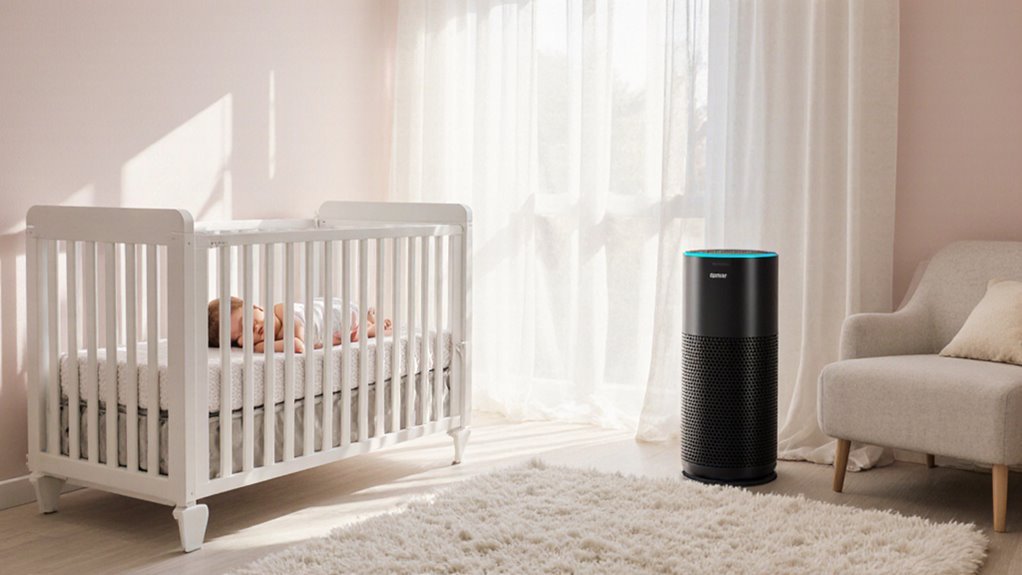

Yes — properly selected air purifiers are safe for babies and can improve nursery air quality. Choose a true HEPA unit with a fully sealed body and zero ozone output to trap dust, pollen, smoke, and pet dander. Correct placement and regular filter changes keep performance steady and prevent circulating trapped particles. Avoid ionizers or ozone-producing devices, and follow manufacturer safety guidelines. Small, consistent choices protect infant breathing and deliver real peace of mind.
Are Air Purifiers Safe for Babies?
Yes, air purifiers can be safe for babies provided you choose the right kind and use it the right way.
You can feel better appreciating that a true HEPA model with sealed filters helps protect your family without adding extra risks. Avoid ozone makers and weak ionizers, since they can upset tiny lungs.
In case you’re worried about prenatal exposure or long term neurodevelopment, it makes sense to prefer a quiet, certified unit and keep it clean.
You’ll also want to match the purifier to the room size, because a good fit supports steady air cleaning. Whenever you operate it as directed, you give your baby a calmer, safer space. That small choice can help you breathe easier too.
What Do Air Purifiers Do in a Nursery?
In a nursery, an air purifier works like a quiet helper that keeps the air cleaner while your baby sleeps, plays, and breathes. It helps improve air quality by pulling tiny dust, smoke, pollen, and pet dander from the room.
With particle removal, it can lower what floats around in the air and settles on soft surfaces. That means you might notice less stuffiness and fewer triggers that bother little noses and lungs.
It doesn’t change your whole home, but it can make one room feel fresher and calmer. Should your nursery have closed windows or busy indoor air, the purifier keeps working in the background, so you can feel more at ease while your baby rests nearby.
What Features Make a Nursery Air Purifier Safe?
At the time you choose a nursery air purifier, look for true HEPA filtration because it traps tiny particles that can bother your baby’s lungs and skin.
You should also pick a model with quiet operation, since a gentle sound level helps your baby sleep without extra fuss.
Together, HEPA filters and low noise give you cleaner air and a calmer nursery.
HEPA Filtration
A true HEPA filter is the heart of a nursery air purifier because it traps at least 99.95% of tiny particles, including PM2.5, dust, and many common allergens. Whenever you choose one, you give your baby cleaner air and a calmer space.
| Feature | Why it helps | What to check |
|---|---|---|
| true HEPA | Strong particle capture | H13 or H14 label |
| Sealed housing | Stops leaks | Tight filter fit |
| Easy filter changes | Keeps performance steady | Clear reminder light |
You’ll also want a model with a clean, vetted design and no ozone claims. That way, you can trust the purifier to keep doing its job in the room your family shares. Replace filters on time, because a clogged one can’t protect the air your little one breathes.
Quiet Operation
Even the best HEPA purifier can miss the mark in case it sounds like a loud fan or hums all night, because your baby needs cleaner air and calm sleep together. You should look for low noise ratings, especially provided the nursery stays quiet after bedtime.
A softer setting can protect sleep disruption while still moving enough air to help your baby breathe easier. You can also place the unit a few feet from the crib, which helps soften sound without blocking airflow.
Assuming the purifier offers a sleep mode, use it, since that feature often dims lights and lowers fan speed. Then check it during naps, because a device that seems fine at noon might feel much louder at midnight.
Once you choose a calmer model, you give your family a steadier night.
What Air Purifier Risks Should You Avoid?
You should avoid any purifier that makes ozone or uses ionizing technology, because those machines can irritate a baby’s airway and could do more harm than good.
Whenever you shop, skip ozone generators and check labels for ionizer hazards. Even small amounts of ozone exposure can bother tiny lungs, especially in a nursery where your baby breathes fast and rests for long stretches.
Also avoid units with loose grilles, flimsy cords, or exposed moving parts, since curious hands can reach them.
In the event a filter smells stale or looks dirty, replace it fast, because trapped dust and damp filters can spread back into the room.
Choose a model that says ozone-free, then you can feel more confident and settle in with less worry.
Where Should You Place an Air Purifier Near a Crib?
Near the crib, place the air purifier a few feet away, not right beside your baby’s face. That safe placement helps clean the room without sending a strong stream of air toward your little one. You want the unit to join the nursery, not take over it.
- Aim the airflow direction across the room, not at the crib.
- Keep the purifier on a flat, steady surface so it can’t wobble.
- Leave space around it so air can move freely.
This setup lets your baby breathe easier while you keep the space calm and cozy. Should the room feel crowded, shift the purifier until you can still walk around the crib with ease. A thoughtful spot can help you feel like you’re doing right for your baby and your home.
How Should You Use a Baby Room Air Purifier Daily?
Once the purifier is set in a safe spot, daily use is what really helps your baby breathe cleaner air. You can run continuously on low or auto mode, so the room stays steady and calm. Check the filter reminders each week, and swap filters on time so dust doesn’t build up.
| Time | What you do | Why it helps |
|---|---|---|
| Morning | Turn it on | Starts clean air sooner |
| Nap time | Keep it running | Supports easier sleep |
| Evening | Wipe the outside | Keeps airflow clear |
| Weekly | Review filter reminders | Prevents weak performance |
As you care for the nursery, pair purifier use with fresh air from safe ventilation and fewer scent sprays. That way, you’re building a room that feels cozy, cared for, and made for your little one.
Frequently Asked Questions
How Often Should HEPA and Carbon Filters Be Replaced in a Nursery?
You should replace HEPA filters every 6 to 12 months and carbon filters every 3 to 6 months, but follow your unit’s replacement schedule and filter lifespan indicators. If the air is dusty or odorous, you will need earlier changes.
Can Air Purifiers Help Babies With Eczema or Allergies?
Yes, you can help reduce allergy triggers with a HEPA purifier, but it will not treat eczema directly. Use hypoallergenic bedding, keep dust low, and follow emollient therapy; together, you will support your baby’s comfort and belonging.
Do Air Purifiers Reduce Viruses in a Baby’s Room?
Yes, you can lower virus laden particles in your baby’s room with HEPA particle filtration and viral capture, but you won’t eliminate every virus. Keep ventilation, source control, and regular filter changes to protect your little one.
What Noise Level Is Safe for an Infant’s Sleep?
You’ll want low decibels, ideally under 40 dB, so your baby can sleep soundly. Aim for a steady hum rather than sudden noises, because that gentle background sound usually will not disturb naps or bedtime.
Are Air Quality Monitors Useful With a Baby Air Purifier?
Yes, you can use air quality monitors with a baby air purifier for real time monitoring and mobile alerts, so you will spot PM2.5 spikes, ventilation issues, or filter problems fast and protect your little one better.