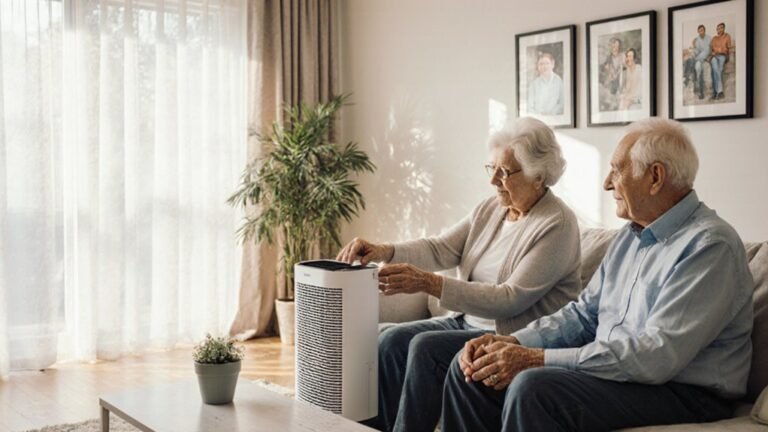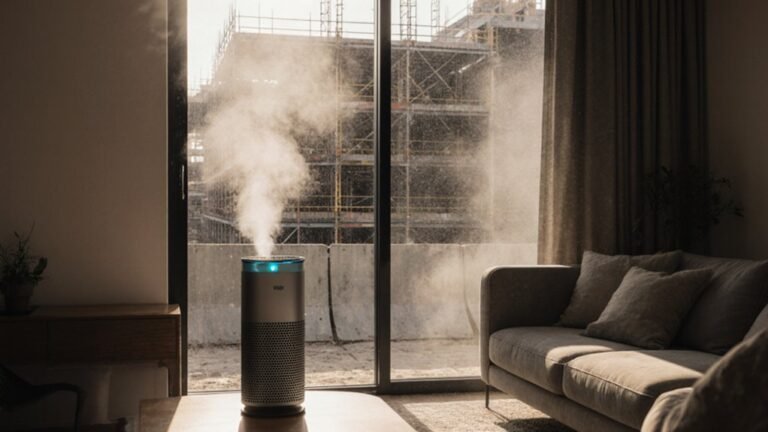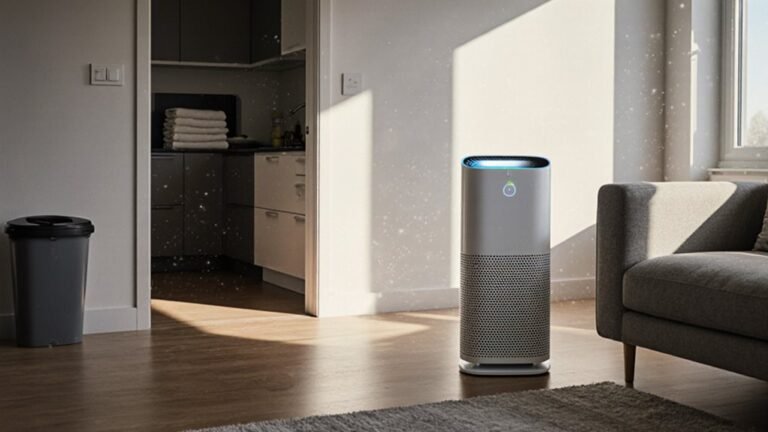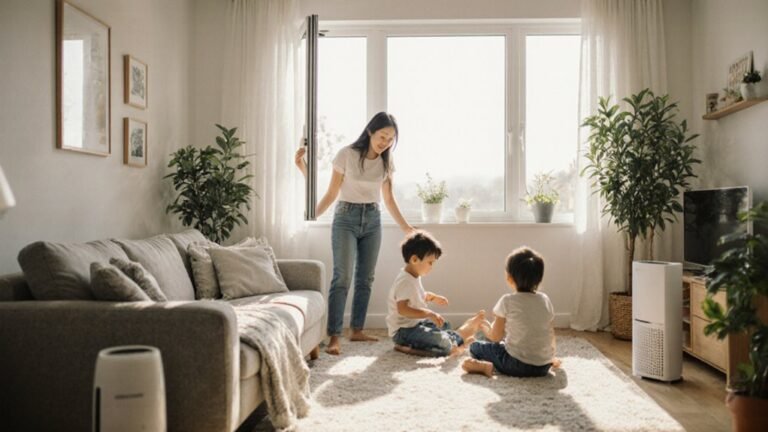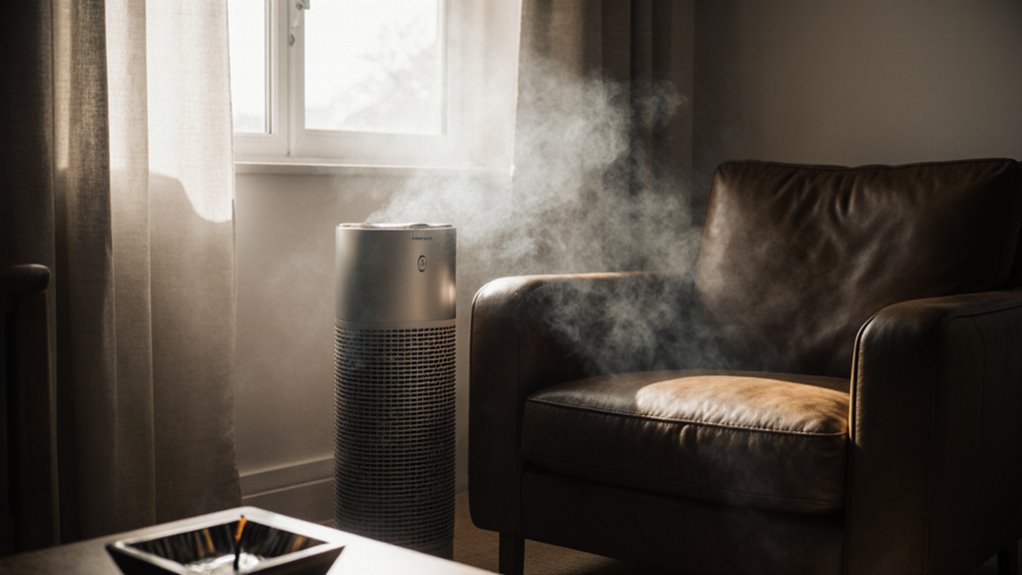

Yes — an air purifier can reduce cigarette smoke particles, odors, and some toxic compounds in indoor air. A HEPA filter captures fine ash and many tiny smoke particles. Activated carbon reduces volatile organic compounds and lingering smell. Performance improves when the unit runs continuously, is placed near the smoking area, and has fresh filters. Air purifiers cannot remove smoke residues already stuck to walls, furniture, or fabrics, so additional cleaning or ventilation is needed.
How Do Air Purifiers Help With Cigarette Smoke?
Breathe easier: air purifiers can help cut down the tiny smoke particles that drift from cigarettes and hang in the air long after the smoke looks gone. You get relief because a true HEPA filter traps most of those fine particles, while activated carbon helps catch the smell that lingers and can make a room feel heavy.
This won’t fix source control, so you still need to stop smoke at the source whenever possible. Even so, a purifier can make your space feel more welcoming and easier to share.
It also can’t clean surface residues on walls, fabrics, or dust, so you might still notice traces after the air looks clearer. Used well, it supports your comfort and helps you breathe with a little more ease.
What Air Purifier Features Help Most With Smoke?
Whenever you’re choosing an air purifier for cigarette smoke, HEPA filtration should be high on your list because it grabs the tiny particles smoke leaves behind.
You’ll also want a strong activated carbon layer, since that helps cut smoky odors and some gas fumes that can linger in the room.
Just as crucial, look for solid airflow and a good CADR rating, because a purifier can only clean smoke fast provided it moves enough air through the filters.
HEPA Filtration Power
A good air purifier can take a real bite out of cigarette smoke, but the HEPA filter is the part that does the heavy lifting for particles.
You get the best particle capture whenever the unit uses true HEPA media, because it traps tiny smoke bits before they spread through your room. That helps you breathe easier and feel like your space is working with you, not against you.
For the best fit, check CADR and room size, since a strong match improves filter lifespan and keeps performance steady.
In case you run it on time, replace the filter when it loads up, and keep doors mostly shut, you’ll notice cleaner air faster. It won’t erase every smell, but it can make your home feel far more comfortable.
Activated Carbon Layers
Carbon-capture layers do the quiet cleanup work that HEPA can’t, and that matters a lot with cigarette smoke. Whenever you’re trying to feel at ease in your space, a thick bed of activated carbon helps trap odor, VOCs, and that stale ash smell. Thin sheets fade fast, but activated carbonbeds give smoke more time to stick, so your room feels cleaner longer. Look for carbon impregnation too, since it enhances capture of stubborn gases.
| Feature | Why it helps |
|---|---|
| Thick carbon bed | More odor capture |
| Carbon impregnation | Better gas trapping |
| Replaceable cartridge | Fresh performance |
| Sealed housing | Less leakback |
You’ll notice the difference most after a smoking session, whenever the air stops clinging to you and your home feels more welcoming.
Airflow And CADR
The right airflow can make a big difference, especially whenever cigarette smoke keeps drifting through your room and making the air feel heavy. You want a purifier that moves air fast enough to catch smoke before it spreads. CADR tells you how much clean air it delivers for smoke, so a higher number generally means faster relief.
Still, airflow uniformity matters too, because the unit should pull air from the room evenly, not just one corner. Provided the fan feels weak, you might notice CADR decay as filters load up with smoke. So choose a model sized for your room, place it near the smoke source, and run it on a steady setting. That way, you get better coverage and a room that feels more like yours again.
Can HEPA Filters Remove Cigarette Smoke Particles?
Yes, HEPA filters can remove cigarette smoke particles, and they do it well provided you choose the right size and run the purifier long enough.
You can lean on them to cut PM2.5 and even much of the ultrafine exposure that makes smoke feel so heavy. That matters whenever you’re trying to breathe easier in your own space.
Still, your filter lifespan can shrink fast in a smoky room, so you’ll need to watch replacement timing closely.
A true HEPA unit traps tiny particles in the air, but it won’t fix smoke that already settled on walls or fabrics.
Do Carbon Filters Reduce Cigarette Smoke Odor?
Odor can linger long after the smoke itself starts to fade, and that’s where activated carbon really earns its keep.
You’ll notice it works through charcoal adsorption, which traps many of the smelly gases that HEPA filters miss.
Should your room smells stale after a cigarette, a carbon filter can make the air feel more like home again.
Still, it won’t erase every trace, because heavy smoke can cause odor breakthrough once the carbon bed fills up. That’s why you should expect strong help, not magic.
A larger carbon layer usually lasts longer and handles smell better.
For the best comfort, keep your purifier running during smoky moments and following them.
Once the odor eases, you can breathe easier and settle in with less worry.
How to Make an Air Purifier Work Better for Smoke?
You’ll get better smoke control whenever you choose an air purifier with a high CADR for smoke, because it can move and clean more air each hour.
Keep doors and windows closed as much as you can, so smoke doesn’t keep slipping back in through leaks and open spaces.
Replace the filters on time, since a clogged HEPA or carbon filter can’t keep up with cigarette smoke for long.
Use High CADR
A high CADR purifier can make a big difference whenever cigarette smoke hangs in the air. You want a high CADR model because it pulls more smoke out faster, which helps you breathe easier and feel less stuck in the mess. Put it close to the smoke source, since source proximity helps it catch particles before they spread.
| CADR level | What it means for you |
|---|---|
| Low | Slower smoke cleanup |
| Medium | Fair for small spaces |
| High | Faster particle removal |
| Very high | Better for busy rooms |
| Best fit | Matches your room size |
If you choose well, you give yourself a calmer space and a little more control. A strong purifier won’t fix everything, but it can help your room feel like yours again.
Seal Room Leaks
Even the strongest purifier works better whenever smoke has fewer places to slip through, so sealing room leaks can give you a real lift. You can seal leaks around windows, vents, and baseboards with caulk or weatherstripping.
Then add door sweeps to block the gap under the door, where smoky air often sneaks in like an uninvited guest. Should you share space with others, ask them to keep the door closed while your purifier runs. That helps the unit clean one room instead of chasing smoke through the whole home.
Check for thin cracks near outlets and use simple gaskets as necessary. These small fixes can make your purifier feel more effective, and that can help you breathe easier in the room you call yours.
Replace Filters Regularly
Just as essentially, dirty filters can turn a good smoke purifier into a tired one. You need to replace them on time so your unit can keep catching fine smoke and stale odor. Check the filter lifespan in your manual, then watch for replacement indicators like weaker airflow, a smoky smell that lingers, or a filter light that stays on.
Should you smoke indoors often, your filters will fill faster than usual, so don’t wait for them to look awful. Change the prefilter when it clogs, and swap the HEPA and carbon filters as directed. That keeps your purifier steady, quieter, and more helpful for your home. Whenever you stay ahead of upkeep, you give yourself cleaner air and a little more peace in the room.
What Air Purifiers Can’t Fix About Smoke?
What air purifiers can’t fix is often the part of smoke that lingers long after the visible haze is gone. You might clear the air, but smoke still sticks to walls, curtains, clothes, and your HVAC system. That’s where surface chemistry matters, because tiny toxins bind to surfaces and keep feeding thirdhand smoke.
So even if your purifier works well, your room can still smell stale and feel heavy. You can’t rely on filtration alone to protect your space or your people. To truly cut exposure, you need cleaning, fresh air, and no indoor smoking.
A purifier could help you breathe easier tonight, but it can’t erase the marks smoke leaves behind. That’s frustrating, yet you’re not stuck. Small changes still build a safer, more welcoming home.
Frequently Asked Questions
How Long Does It Take to Clear Cigarette Smoke From a Room?
You’ll usually clear it in 30 minutes to 2 hours with strong air exchange and a good purifier, but particle settling on fabrics and walls can leave odors much longer, sometimes all day.
Do Air Purifiers Remove Thirdhand Smoke From Surfaces?
No, an air purifier will not remove thirdhand smoke from surfaces. It can reduce airborne particles, but residues on surfaces remain, so health risks persist. Clean fabrics, walls, ducts, and dust to reduce lingering contamination.
Can Air Purifiers Help in Apartments With Multiple Smoking Rooms?
Yes, they can help, but you will need multiple high CADR units, tight door seals, and attention to shared ventilation. You will reduce smoke in each room, though source control and cleaning still matter most for lasting relief.
Should I Run the Purifier Before, During, or After Smoking?
Start it before, keep it running during, and leave it on after, because smoke loves company. With pre smoking ventilation and smart purifier placement near you, you will clear more air and breathe easier together.
How Often Should Smoke Filters Be Replaced in a Smoker’s Home?
You’ll need to replace smoke filters more often than usual because their lifespan shortens in a smoker’s home. Follow a replacement schedule of about every 1 to 3 months for prefilters, 6 to 12 months for HEPA filters, and replace sooner if odors return.