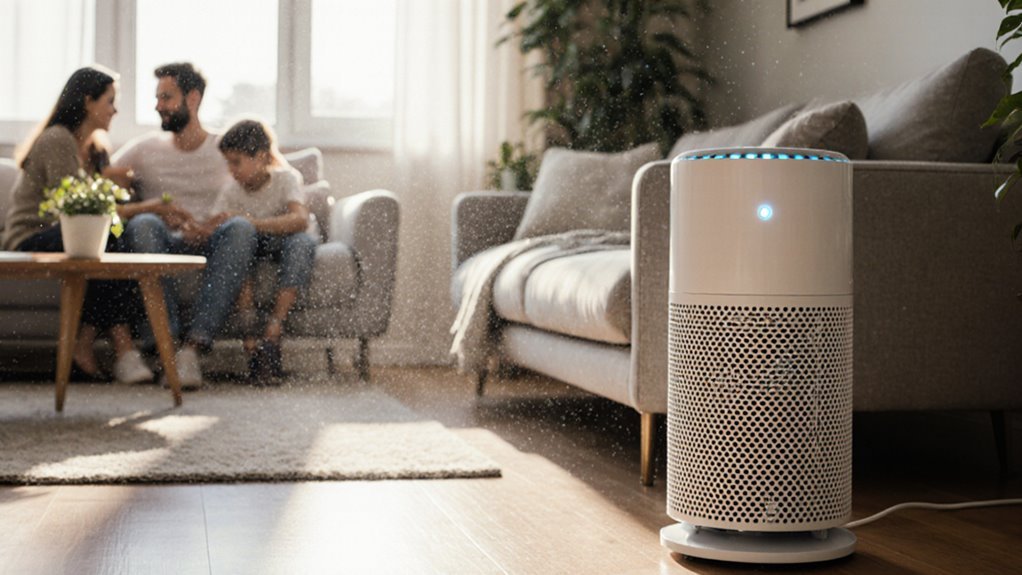

Yes — an air purifier can reduce many common indoor pollutants. A unit with a true HEPA filter removes most dust, pollen, pet dander, and smoke particles. Effectiveness depends on matching purifier capacity to room size and replacing filters on schedule. Air purifiers do not remove all pollutants; gases, some VOCs, and certain ultrafine particles require other technologies or ventilation. Combine a purifier with source control and proper ventilation for the best indoor air quality.
What Air Purifiers Can Actually Remove
Air purifiers can do a lot, but they don’t scrub every pollutant from your home like magic. You’ll get the best results whenever you match the device to the problem. HEPA filters grab tiny particles like dust, smoke, and pollen, so you can breathe easier in rooms where those annoy you most.
For gas removal, you need activated carbon, because it uses chemical adsorption to catch some odors and VOCs. Still, that carbon fills up over time, so it won’t work indefinitely. Some purifiers also help with indoor NO2, but performance depends on the filter size and amount. In plain terms, you’re not buying a cure-all. You’re picking a tool that can trim the pollutants that bother your space and your people.
How Air Purifiers Clean the Air
You can consider of an air purifier as a small indoor helper that pulls air in, traps unwanted particles, and sends cleaner air back out.
Inside, filters like HEPA catch tiny dust and smoke bits, while some units also use carbon to grab odors and gases.
As the fan keeps air moving through the device, it helps clean the room a little at a time, which can feel like a quiet relief whenever the air seems heavy.
Filtration Mechanisms
Inside an air purifier, the cleaning process starts with a fan that pulls room air through one or more filters, and that simple motion does a lot of the heavy lifting. You get steady airflow, and the purifier can keep working while you relax, sleep, or study.
Some models use dense media to strain tiny particles, while others add electrostatic charging to help particles cling to collection plates. A few also include UV C reactors, which can support cleaner air by targeting germs that pass through the chamber.
Whenever you choose a unit that fits your room, you give yourself a better shot at fresher air and a more comfortable space. Good placement and regular filter changes help the system keep up with your home.
Particulate Trapping
Tiny particles could be invisible, but they can still ride through your home and settle into the air you breathe. Whenever you use an air purifier, you give those specks a place to get caught instead of drifting around with you.
HEPA media traps dust, smoke, and pollen as air moves through tight fibers, and that particle deposition lowers what stays suspended in the room. You can feel better appreciating the purifier is doing quiet, steady work for your space.
This trapping also helps protect filter lifespan, since a well-sized unit collects more debris before it clogs. Provided you keep the unit running and replace the filter on time, you build a cleaner, calmer room where your household can breathe easier together.
Air Circulation Process
After the filter catches dust and smoke, the purifier still has to move air well enough to keep doing its job. You get the best results provided it pulls room air in, pushes it through the filter, and sends cleaner air back out in steady airflow patterns. Those circulation pathways matter because they help the purifier reach more of the room, not just the air right beside it.
Once you place it in an open spot and let it run often, you help create a stronger loop that keeps particles from settling. Supposing doors stay open or furniture blocks the unit, the flow weakens fast. With smart placement, you and your purifier work as a team, and your space feels easier to breathe in.
Why HEPA Filters Matter
HEPA filters matter because they give you a real, proven way to cut the particles that do the most harm in indoor air.
Whenever you choose one, you’re joining a smarter, cleaner routine that helps your home feel safer and more comfortable.
A good HEPA unit traps tiny bits that slip past ordinary filters, so you breathe easier during daily life.
To keep that protection steady, watch the HEPA lifespan and follow the maintenance intervals the maker gives you.
That simple habit keeps airflow strong and performance steady.
Also, place the purifier where you spend the most time, then let it run regularly.
In that way, you and your household get more reliable support without extra hassle.
And yes, your future self will thank you for not forgetting the filter date.
What Pollutants Air Purifiers Handle Best
Dust and fumes behave very differently, and that’s why air purifiers do their best work on some pollutants more than others. You’ll get the biggest relief from tiny particles like dust, pollen, and PM2.5, because HEPA filters trap them well and can lower health impacts for your home crew. In case you live with allergies or asthma, that steady drop can feel like a real win.
You’ll also see some help with gases when your unit includes activated carbon dosing, since carbon can adsorb certain VOCs and odors. Just keep in mind, performance depends on filter size, run time, and room fit. Whenever you choose the right model and keep it running, you give your space cleaner air and a calmer, more comfortable rhythm.
Can Air Purifiers Help With Smoke and Odors?
Whenever smoke fills your space, a good air purifier can trap many of the tiny particles that make the air feel heavy and harsh.
But in case you’re hoping it will erase strong odors, you’ll usually need activated carbon too, since HEPA filters mainly catch particles, not smells.
Smoke Particle Capture
Smoke can make a room feel heavy fast, but the right air purifier can really help you breathe easier through catching the tiny particles that float in the air after a fire, from a fireplace, or even from cigarettes. You get the best results with a true HEPA unit, because it traps fine smoke bits that slip past normal fans.
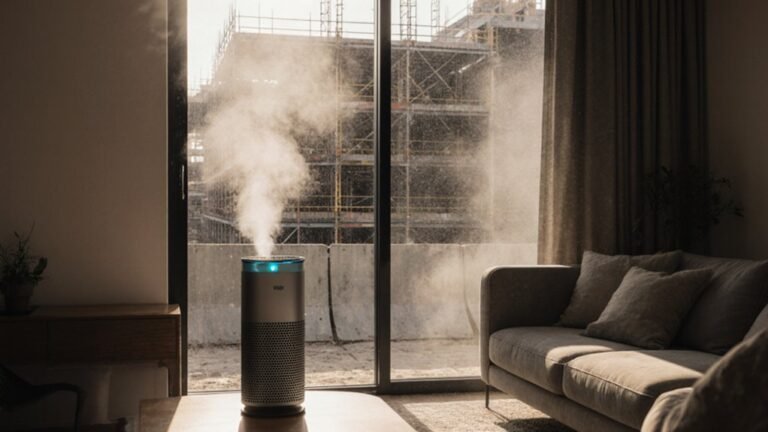
During wildfire infiltration, that matters a lot, since outside haze can sneak indoors and build up on your furniture and in your lungs. Smoke particle chemistry also plays a role, because tiny soot and ash pieces behave differently, yet a strong filter still grabs most of them.
Should you place the purifier in the room where you spend time, run it often, and keep doors closed, you’ll notice cleaner air and a calmer space.
Odor Removal Limits
A good purifier can make a smoky room feel much easier to live in, but odor is a different story. You might notice less haze fast, yet the smell can linger because scent chemistry works differently from tiny particles.
Smoke leaves behind gases, and those gases can slip past basic cleaning. That’s why your room could feel fresher without smelling fully clean.
Carbon aging also matters, because older carbon loses strength as it fills up. So, should you be hoping for relief, expect partial help, not magic.
A purifier can still support your comfort, especially after cooking, candles, or a short smoke event. But for strong or lasting odors, you’ll often need fresh air, time, and source control too.
Best Filter Types
For most homes, the best purifier for smoke and odor is a true HEPA unit paired with activated carbon. HEPA traps fine smoke particles from candles, cooking, and wildfire haze, while carbon helps adsorb smells and some gases.
You’ll want strong filter certifications, because they show the unit truly meets performance claims. Check the carbon mass, too, since carbon longevity affects how long odor control lasts before replacement.
Should you be contending with heavy smoke, choose a model with a high CADR and run it in the room where you spend time most. A sealed, well-fitted filter works better than a flashy gadget with weak airflow.
In case your home has gas cooking or lingering pet smells, this combo can make your space feel calmer, fresher, and more like yours.
Do Air Purifiers Work for Dust and Pet Dander?
Yes, air purifiers can help with dust and pet dander, and that’s often where they shine the brightest in a home.
Whenever you run a HEPA purifier in the room you use most, it can catch tiny particles before they keep floating around. You’ll usually notice the best results in allergen hotspots like bedrooms, family rooms, and near pet beds.
In case you keep the unit on and match it to the room size, you give your air a fair chance to stay cleaner. Still, your cleaning frequency matters too. Vacuum, wipe surfaces, and wash bedding often so you don’t keep stirring up the same dust.
With a little routine, your residence can feel calmer, fresher, and much easier to breathe in.
What Air Purifiers Can’t Remove
Even the best air purifier can’t solve every indoor air problem, and that can feel frustrating whenever you’re trying hard to breathe easier. You might still notice odors from paint, cleaning sprays, cooking smoke, or gas stoves because many units face chemical limits. HEPA filters catch particles well, but they don’t trap most gases.
Some devices use carbon, yet it can fill up fast and lose strength. Also, ionizers and electrostatic models can bring an ozone risk, which could bother sensitive lungs. So, you’re not doing anything wrong provided the air still feels off.
Air purifiers help most with dust, pollen, and smoke particles, but they can’t replace source control, fresh air, or fixing the thing that’s making the mess in the initial instance.
How to Choose the Right Air Purifier
Choosing the right air purifier starts with matching it to your room size, because a unit that’s too small won’t clean the air well enough.
Then look at the filter type, since HEPA helps with particles while activated carbon can help with odors and gases.
Finally, consider noise and energy use, because you’ll only keep it running if it fits your daily life.
Room Size Match
A purifier only helps provided it matches the room you actually live in, so the initial thing to check is size. Start with square footage and ceiling height, because both shape the air volume you’re asking one machine to clean. Should your bedroom feel cozy but has tall ceilings, it needs more help than the floor plan suggests.
Check the unit’s coverage rating, then compare it with your room’s actual size, not the biggest room in your home. Whenever you choose well, you’re joining the people who breathe easier in the same space, not fighting a weak machine.
Place it where you spend time, keep doors closed when you can, and let it work steadily. A right-sized purifier won’t need to struggle, and neither will you.
Filter Type Matters
Look beyond the shiny box and check the filter inside, because that’s where the real cleaning happens.
Should you want cleaner air, choose HEPA for fine dust and smoke, since it traps tiny particles well. In case odors, cooking fumes, or some gases bother you, add activated carbon, and look for enough carbon dosing to do real work. A thin layer could smell nice for a week, then quit on you.
You should also ask about filter lifespan, because a longer-lasting filter can save hassle and keep your routine steady.
For homes with mixed needs, a combo filter often fits best. That way, you’re not guessing, and you’re giving your space the support it deserves.
Whenever you match the filter to your air, you help everyone in your home breathe with a little more ease.
Noise And Energy
Even the best filter can feel like a bad fit should it roars all day or runs up your power bill. You deserve cleaner air that doesn’t steal your peace. Whenever you shop, check fan noise initially, because a quieter unit helps you sleep, work, and relax with your people nearby. Then look at energy draw, since a lower-watt model can run longer without adding stress to your bill.
- Pick a unit with a low night setting.
- Match the size to your room, so it won’t strain.
- Compare yearly energy use, not just the sticker price.
If two purifiers clean well, choose the one you can live with daily. That’s how you stay comfortable and feel at home.
Where to Place an Air Purifier
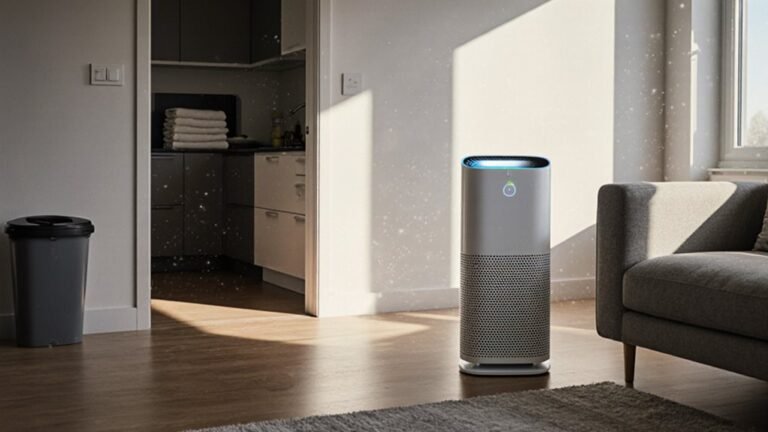
Near the center of the room, your air purifier can do its best work because it has room to pull in dirty air and push out cleaner air without bumping into walls or furniture.
Give it a little space on every side, then set it on a table or stand so the intake stays clear.
Avoid corner placement when you can, because corners trap flow and can leave dust hanging around. Should you must tuck it beside a wall, keep it away from curtains and tall chairs.
A spot near doorway traffic can help it catch air moving through the room, but don’t block the path.
In your bedroom or household room, place it where you spend the most time, so it can support the comfort you share with your home.
When an Air Purifier Helps Most
An air purifier helps most whenever the air in your home gets hit with a heavy load of particles or fumes, especially in the room where you spend the most time. You feel the biggest gain during peak exposure timing, like cooking, cleaning, or when guests crowd into high occupancy settings.
That’s when tiny particles build fast and spread with ease.
- Run it in bedrooms and common rooms where you stay longest.
- Keep it on before, during, and after the messy moment.
- Match the unit size to the room so it can keep up.
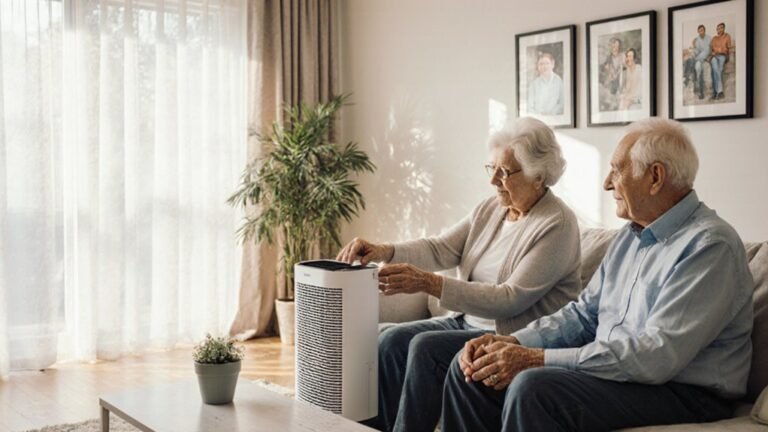
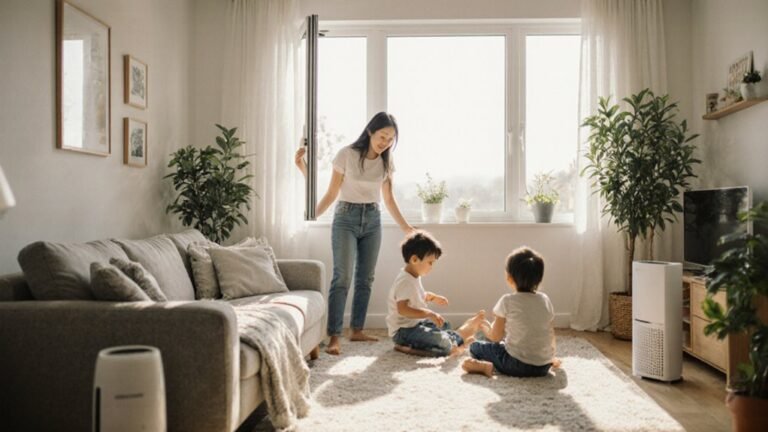
If you reside with kids, older adults, or anyone with asthma, steady cleaning can help the space feel calmer and easier to breathe in. This isn’t magic, but it can make your home feel more like a safe, shared retreat.
Frequently Asked Questions
Can Air Purifiers Reduce NO2 From Gas Stoves?
Yes, you can reduce NO2 from gas stoves with air purifiers that use NO2 filtration and activated carbon; some catalytic converters help too. You will still need ventilation and source control for the best results.
How Often Should Purifier Filters Be Replaced?
You should replace purifier filters every 6 to 12 months, or sooner if your filter lifespan drops or replacement indicators show it is time. You will breathe easier, protect your room, and keep your purifier working well.
Do Air Purifiers Create Ozone Indoors?
Yes, some air purifiers do create ozone indoors, especially ionizers and electrostatic models. You should choose low ozone units, because ozone generation can cause health impacts like throat irritation, coughing, and worsened asthma symptoms.
How Do I Verify My Purifier Is Working?
Check your purifier’s filter performance by using air quality monitoring before and during operation. You will see PM levels drop if it is working. Place it properly, run it continuously, and replace filters on schedule.
Can One Purifier Clean the Whole House?
No, one purifier usually won’t clean the whole house. It works best in a single room with doors closed, airflow managed, and runtime continuous. If you want whole house coverage, you will need more units or central filtration.