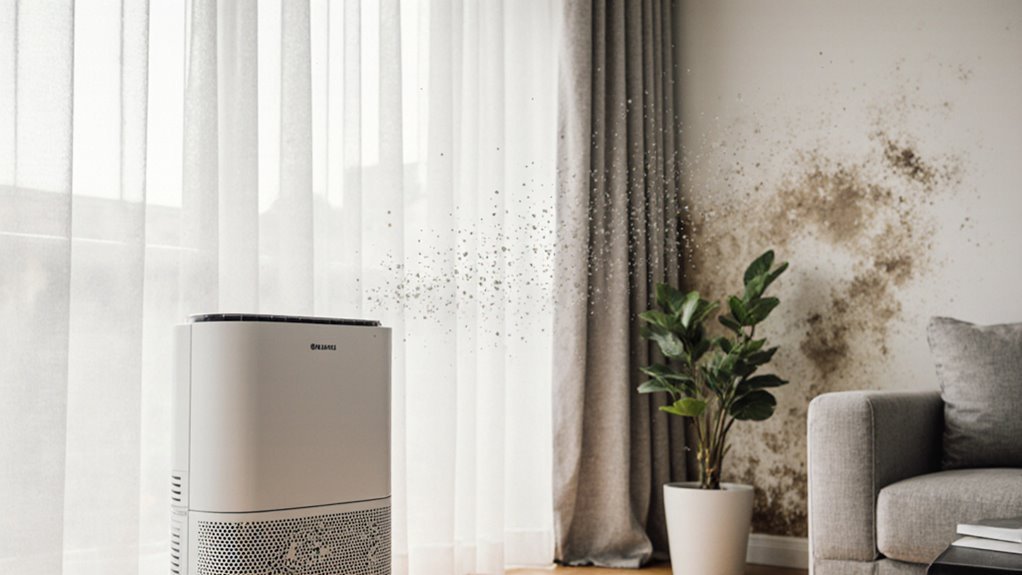

Yes — an air purifier can reduce mold odors. It needs a true HEPA filter plus substantial activated carbon to capture odor-causing volatile organic compounds, not just spores. Purifiers do not remove mold growing inside walls, carpets, or wet insulation. Fixing the moisture source and removing contaminated materials is required for a permanent solution. Choosing the right purifier and combining it with proper remediation yields the best results.
What Causes Mold Odors?
Even although you can’t see mold, its smell can still fill a room, and that’s usually because mold releases tiny gases as it grows. These microbial volatiles drift into the air and mix with dust, damp surfaces, and stale humidity.
Your human perception notices that scent as musty, earthy, or sometimes sharp, even whilst the colony stays concealed behind a wall or under carpet. You might also smell mold after a leak, because wet materials give it food and a place to spread.
The odor often gets stronger in closed rooms, basements, and bathrooms, where air moves slowly. So in case you notice that familiar smell, trust your senses. They’re often picking up a real moisture problem that needs attention, not just a passing scent.
Can Air Purifiers Remove Mold Odors?
Yes, an air purifier can help with mold odors, but it usually works best as part of a bigger fix, not as the only one.
You might notice the room feels fresher whenever the unit runs, especially in case it has enough carbon for odor capture. Still, should you skip air testing and leave the moisture source alone, the smell can keep coming back.
That’s because the problem could live in wet walls, carpets, or concealed corners. So, treat the purifier as support, not magic.
It can reduce the musty edge and make your space feel more comfortable, while you address leaks, dry the area, and clean affected materials.
Skip ozone gadgets and scent masking tricks, since they only disguise the issue and can add new worries.
How HEPA Filters Help With Mold
HEPA filters help with mold via pulling tiny airborne spores out of the air while your purifier runs, so you’re not breathing in as many of them.
Once you place the unit in the right spot, it tracks room airflow patterns and improves spore capture in the spaces you use most.
- You’ll breathe cleaner air during daily routines.
- You’ll lower the spore load that keeps floating around.
- You’ll support a calmer, fresher-feeling room.
That matters because mold can make a room feel heavy and unwelcome.
A True HEPA filter can trap very small particles, so you get steadier help while it runs.
For the best fit, choose a purifier sized for your room, then let it work where you sleep, study, or relax.
Why Activated Carbon Matters Most
While HEPA filters help with mold spores, activated carbon often makes the bigger difference provided the smell is what’s driving you crazy.
You can breathe easier whenever the purifier also traps odor gases that cause that damp, musty feeling.
Carbon works through adsorption kinetics, so the faster air moves across a well sized bed, the more odor molecules stick to it.
That’s why a tiny carbon pad won’t do much for long.
Once the bed fills up, carbon regeneration or replacement becomes necessary, or the smell can creep back.
Should your room feel shared with old basement air, strong carbon gives you more relief.
It won’t fix the mold source, but it can help you feel less stuck with the odor.
Which Air Purifier Features Help Mold Odors?
At the time you’re trying to cut mold odors, a True HEPA filter helps via trapping airborne spores so they can’t keep circulating through your room.
You’ll also want a strong activated carbon stage, since it can adsorb some of the musty gases that HEPA alone can’t catch.
Just as crucial, choose a purifier with the right air exchange rate for your space, because more clean air moving through the room usually means less lingering smell.
HEPA Filtration
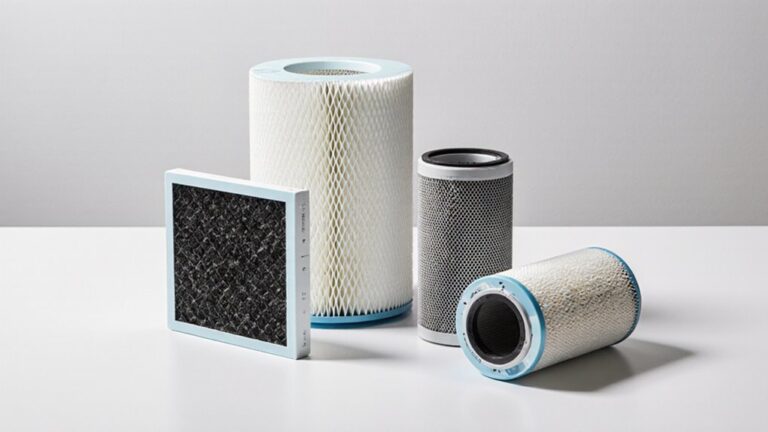
A good purifier can take some of the sting out of moldy air, and that starts with a true HEPA filter. You get real help whenever filter efficiency stays high and particle sizing matches mold spores well. True HEPA traps at least 99.97% of particles down to 0.3 microns, so you can feel more at ease in your room.
- It catches airborne spores before they drift around.
- It supports cleaner breathing while you wait on repairs.
- It works best whenever the purifier fits your room size.
Whenever you choose the right unit, you join others who want a calmer, fresher space. Keep the fan running, and let the filter do its steady job. It won’t fix mold on walls, but it can lower what you breathe every day.
Activated Carbon
Activated-carbon help can make a musty room feel more livable, because this filter stage tackles the smell itself, not just the spores in the air.
You get the best results whenever your purifier uses a thick carbon bed, not a tiny scent pad. That larger surface can trap more odor gases, so carbon longevity improves and you replace it less often.
Still, once the carbon fills up, it stops working well, and adsorbent regeneration in home units usually isn’t practical. So you’ll need fresh filters once the odor returns.
Should you want to feel more at ease in your space, choose a purifier that pairs strong carbon with HEPA filtration. Together, they can help your room smell cleaner while you keep moving toward real relief.
Air Exchange Rate
Carbon helps with the smell, but air exchange rate decides how fast your room actually feels fresher. As you choose a purifier, look past the shiny case and check how many air changes it can deliver in your room size. Higher ventilation rates move musty air through the filter more often, so odors fade sooner and you feel less stuck with that damp, closed-in vibe.
- Match CADR to the room, or the unit will feel sleepy.
- Aim for 4 to 6 air changes each hour in problem rooms.
- Keep doors and windows managed so the purifier’s airflow stays useful.
Once you pair strong air exchange with HEPA and carbon, you give your space a real chance to breathe with you. That matters whenever you want your home to feel safe, calm, and yours again.
What Air Purifiers Can’t Fix About Mold
An air purifier can help with the smell, but it can’t fix mold that’s hiding behind walls, under floors, or inside insulation.
In case there’s a leak, damp spot, or ongoing humidity problem, the mold can keep growing even while the air feels cleaner.
That’s why you need to find the moisture source and repair any structural damage so long as you want the odor to truly go away.
Hidden Moisture Sources
Concealed moisture sources often stay out of sight, but they keep feeding mold long after you’ve turned on an air purifier. You can breathe easier for a while, yet the obscured wet spot still needs your attention.
- Check concealed plumbing under sinks and in cabinets.
- Look for behind wall seepage near windows, tubs, and basement corners.
- Watch for damp spots near vents, laundry lines, and crawl spaces.
When you find the source, you join a group of homeowners who don’t just mask odors, they solve them. A purifier can catch spores in the air, but it can’t dry a leak or stop fresh growth. So, pair it with fast repairs, lower humidity, and steady airflow. That simple teamwork helps your home smell cleaner and feel like a place where you belong.
Structural Mold Damage
Even though your air purifier is working hard, it can’t repair mold damage that’s already built into your home. In the event mold has eaten into building materials, the smell could keep coming back no matter how strong the filter is.
You might notice stained drywall, soft wood, or crumbling insulation, and those signs mean you need structural remediation, not just cleaner air. The purifier can catch spores floating nearby, and that helps your space feel safer, but it can’t reach mold concealed inside walls or floors.
How to Choose the Right Size Air Purifier
To choose the right size air purifier for mold odors, start matching the unit to the room, not just the problem. Should the room size be too large for the purifier, you’ll still smell musty air, and that can feel frustrating whenever you’re trying to breathe easier at home.
- Check the CADR and match it to your room size, so the purifier can move enough air.
- Look for a filter lifespan that fits your routine, because worn filters lose power fast.
- Choose a model with enough activated carbon, since odor control needs more than particle capture.
Once you size it well, you give yourself a better chance at steady relief. You’re not just buying a machine. You’re making your space feel fresher, calmer, and more like your own.
Where to Place an Air Purifier
Now that you’ve picked the right size purifier, placement is what helps it do its job without working harder than it should. Put it where mold smell feels strongest, but keep it a few feet from walls, curtains, and furniture so air can move freely. Should you be unsure, use ideal placement near the room’s center or beside the doorway that brings in the odor.
Watch airflow patterns, too. Don’t hide the unit behind a couch or under a desk, because trapped air won’t reach the filter well. In a bedroom, place it close enough to support your sleeping space without blocking your path.
In a basement or bathroom, set it where damp air gathers, yet still leaves room to breathe around the machine. That way, you and your purifier work as a team.
How Long Until You Notice Results?
How fast will you feel a change? Usually, you notice a lighter smell within your purifier’s initial runtime, often 30 minutes to a few hours. Your perceptual timeline depends on room size, filter power, and how strong the odor is.
- Fast relief: Should the musty smell be mild and the purifier has enough carbon, you could feel the air freshen the same day.
- Slower shifts: In larger rooms, you might need several hours or a full day before the odor feels easier to live with.
- Steady progress: Were the smell to keep creeping back, the purifier is helping, but the source is still feeding it.
That’s why you and your home team need patience. A good unit can make your space feel more comfortable, and that can be a real win for your room.
Can Air Purifiers Help After Mold Cleanup?
Yes, air purifiers can still be a big help after mold cleanup, especially should your space have lingering spores, dusty debris, or that stubborn musty smell that seems to hang around like an uninvited guest. You’re not imagining it, and you’re not stuck with it either. A True HEPA unit can catch leftover particles, while carbon helps soften odors.
| What You Need | Why It Helps | Watch For |
|---|---|---|
| HEPA filter | Traps spores | Filter maintenance |
| Carbon stage | Cuts odor gases | Replace once spent |
| Proper CADR | Matches room size | Weak airflow |
| Low ozone | Keeps air safer | Skip ionizers |
| Post remediation monitoring | Tracks improvement | Check humidity too |
Keep the unit running, stay on top of post remediation monitoring, and pair it with dry air and clean surfaces. That way, you’ll feel more at ease in your space.
When Mold Odors Signal a Bigger Problem
Supposing that musty smell keeps coming back after you run an air purifier, it can point to concealed moisture or mold growth that’s still active.
You may notice it more in basements, bathrooms, or near walls, where leaks, damp materials, or poor ventilation can feed the problem.
Once you catch these signs promptly, you can focus on the source instead of just masking the odor.
Hidden Moisture Sources
Behind a stubborn mold smell, there’s often a moisture problem lurking in plain sight. You could clean the air, but concealed leaks, damp drywall, or wet crawl spaces keep feeding it. That’s why your purifier can only do so much.
To start, look for the source, then act fast with structural drying. Second, use moisture mapping to find damp spots behind walls, under floors, and near vents. Third, watch for condensation around windows, pipes, and bathrooms.
Once you fix the wet area, you give your home a chance to heal, and you help everyone breathe easier together. A purifier can support you, but it can’t replace repairs. Should you keep chasing the smell alone, you might miss the real problem quietly growing nearby.
Persistent Musty Smells
A stubborn musty smell can be more than an annoyance, and it often tells you that mold is still active somewhere in the home.
You might run an air purifier and still notice the odor because airborne chemicals can keep drifting from concealed damp materials. Also, fabric adsorption lets carpets, curtains, and furniture hold onto that smell like a clingy guest who won’t take the hint.
That’s why the room can seem cleaner, yet the scent stays close at hand. Should you keep breathing it in, pay attention to how long it lingers after cleanup or ventilation.
A purifier can help, but it can’t fix the source on its own. So, whenever the smell won’t leave, you deserve a deeper look and real support.
Signs Of Mold Growth
Whenever that musty odor hangs around, your home could be trying to tell you something more serious than “needs a cleaning.” Mold often leaves clues long before you spot a fuzzy patch, and the smell can be one of the initial signs.
You might notice:
- Visible colonies on walls, ceilings, or around vents
- Damp spots near leaks, windows, or pipes
- Peeling paint, warped wood, or stained fabric
These clues often show up together, and that’s your cue to look closer. Should you smell mold in one room, check concealed corners, closets, and under sinks.
You’re not alone should this feels stressful. Many homes deal with it, and catching it sooner helps you protect your space. An air purifier can ease airborne odors, but it can’t fix the source growing behind surfaces.
How to Prevent Mold Odors
Stopping mold odors starts with stopping the moisture that feeds them, because no purifier can truly keep a damp space smelling fresh for long. You can stay ahead with routine maintenance and steady odor prevention that makes your home feel like it’s working with you, not against you. Check leaks, wipe damp spots, and keep fabrics dry.
| Habit | Why it helps |
|---|---|
| Inspect sinks | Stops concealed drips |
| Clean vents | Cuts stale buildup |
| Wash soft items | Removes trapped odor |
| Seal small cracks | Blocks damp air |
| Change filters | Keeps air moving well |
When you care for your space this way, musty smells have less chance to settle in. You’re not alone in this, and small daily habits can help your rooms feel fresher, calmer, and more welcoming.
How to Pair Purifiers With Moisture Control
Now that you’re keeping up with daily habits that help block musty smells, it makes sense to pair those efforts with tools that can handle the air itself. You’re not alone in wanting a room that feels fresh and safe. A purifier helps most as you guide it with moisture control, so the mold can’t keep feeding on damp air. Use these 3 steps:
- Run continuous ventilation in bathrooms, basements, and laundry spaces.
- Check moisture sensors so you catch wet spots before they spread.
- Keep your purifier sized for the room and let it run while you dry the air.
Once you lower humidity, your filter can work on spores and odor bits more effectively. That combo gives you a cleaner, calmer space that feels like yours again.
Frequently Asked Questions
Do Air Purifiers Make Mold Smell Worse at First?
Usually you will not notice initial worsening, though 99.97% HEPA filtration can shift odors as air stirs. If your purifier uses ionizer effects you could smell ozone, so choose a non ionizing model and keep belongings dry.
Can an Air Purifier Remove Mold Spores From Carpets?
Yes, you can reduce airborne mold spores from carpets with an air purifier, but it will not clean the carpet itself. Use vacuum agitation and carpet encapsulation, then keep running a True HEPA unit.
Will a Purifier Eliminate Mold Odor in HVAC Ducts?
No, a purifier alone will not fully eliminate mold odor in HVAC ducts. You will need duct cleaning and a professional inspection plus moisture control so you can breathe easier and keep your home feeling fresh.
How Often Should Carbon Filters Be Replaced for Mold Smells?
You should replace carbon filters every 3 to 6 months for mold smells, but your filter lifespan depends on odor load, room size, and use. Check monthly; whenever smells return you will know replacement frequency needs rising.
Are Ozone-Producing Purifiers Safe for Mold Odors?
No, you should not rely on ozone producing purifiers for mold odors. They pose ozone risks and health impacts, and they will not fix the mold source. Choose HEPA plus carbon instead and protect your home and loved ones.