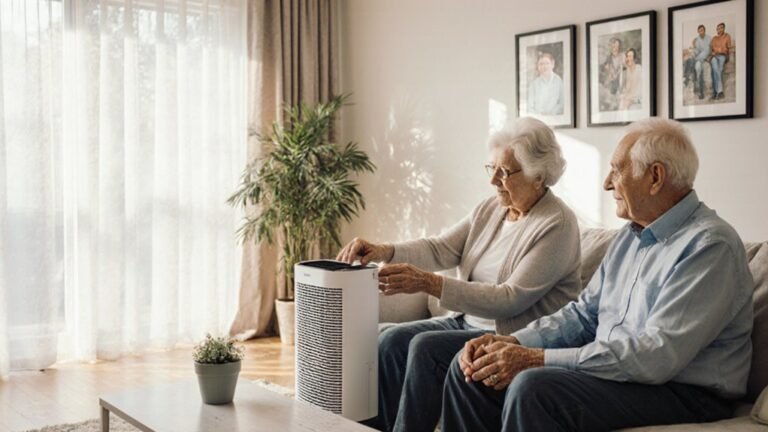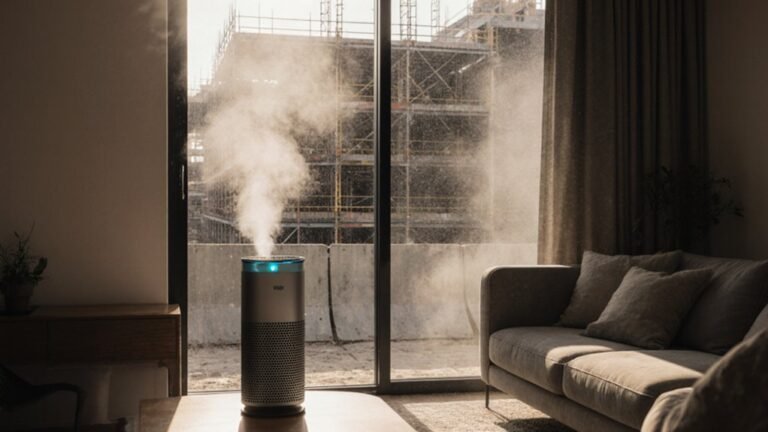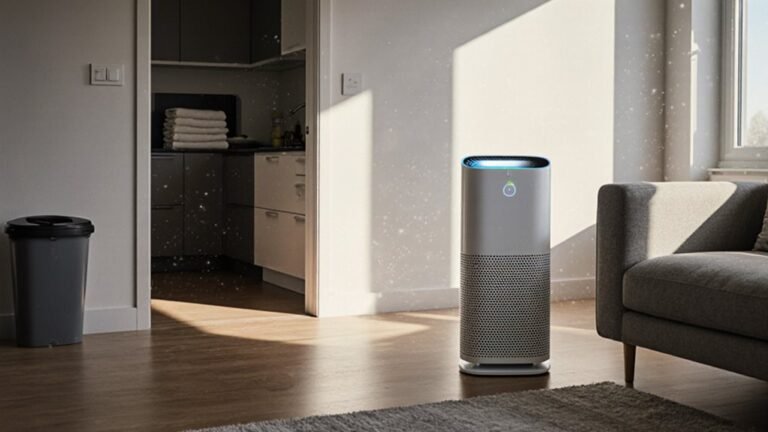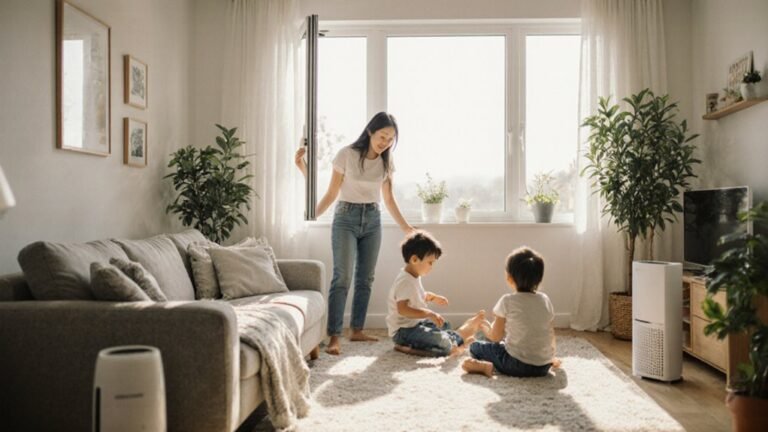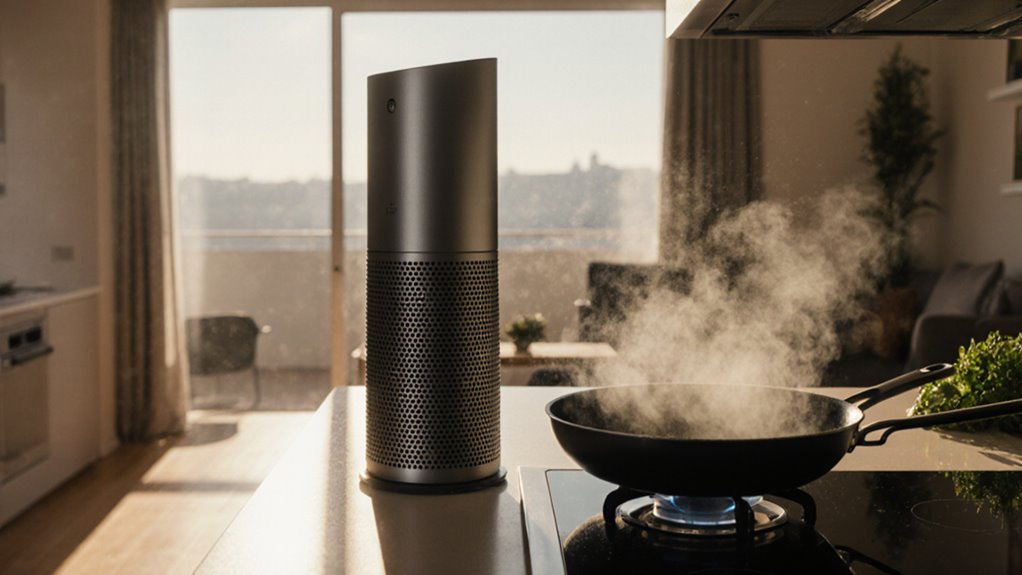

Yes — air purifiers can reduce cooking odors. HEPA filters capture smoke and tiny particles from frying and grilling. Activated carbon filters adsorb odor-causing volatile organic compounds (VOCs) and many food smells. Placing a unit near the kitchen and running it during and after cooking speeds odor removal. Choosing a purifier with both HEPA and sufficient activated carbon provides the best results for most household cooking smells.
Do Air Purifiers Help With Cooking Odors?
Yes, air purifiers can help with cooking odors, but they work best while you use the right type and pair them with good kitchen airflow.
You’ll notice the biggest help whenever you cook strong cultural cuisines, like garlic, fish, or spices, and you keep ventilation etiquette in mind through turning on the hood, cracking a window, or opening the door.
A purifier with enough carbon can reduce lingering smells, while a HEPA filter can catch tiny smoke bits that ride along with them.
Still, you’ll want to place it near the kitchen, not tucked behind furniture.
For shared homes, that balance matters because it helps everyone breathe easier and feel respected after dinner.
Should your meals stay aromatic, choose a stronger unit and run it during and after cooking.
How Air Purifiers Remove Cooking Smells
Air purifiers remove cooking smells via tackling two different problems at once: tiny smoke particles and smell-causing gases.
You get the best results whenever air moves through a true HEPA filter and then across carbon media that adsorbs odor molecules. That means your kitchen air feels fresher because less smoke stays floating and fewer scent compounds keep drifting around.
Good sensor calibration helps the purifier react the right way, while cross sensitivity testing helps makers check that the unit responds to real kitchen odors, not random changes in air.
Whenever you run the purifier during and after cooking, you help clear the air your family shares. It won’t erase every trace at once, but it can make your space feel much more comfortable.
Why HEPA Alone Won’t Remove Odors
HEPA filters do a great job with tiny smoke particles, but they don’t catch the gas-like odor molecules that make your kitchen smell like last night’s dinner.
That’s why you can still notice garlic, fish, or burnt toast even as the air looks clearer.
To really cut those smells, you need carbon filtration, which traps many odor-causing compounds that HEPA simply lets pass through.
HEPA Captures Particles Only
The fine haze from a sizzling pan tells the real story: a HEPA filter can trap tiny cooking particles, but it can’t catch odor on its own.
You’ll see this whenever smoke, oil mist, and crumbs of soot move through the air.
HEPA works through studying particle behavior, so it grabs solids that float past the fibers. That helps your room feel cleaner, and it can stretch filter lifespan because less grime settles inside your unit.
Still, the smell you notice often comes from gases that slip right through.
So you get a fresher-looking space, but not always a fresh-scented one.
Should you cook often, that difference matters, especially whenever you want your kitchen to feel comfortable for everyone nearby.
Odors Need Carbon Filtration
Cooking smells don’t vanish just because the haze looks gone, because most odors come from gas-phase compounds that slip right past a HEPA filter. You need carbon filtration to trap those invisible molecules and help your kitchen feel like home again. HEPA handles particles, but carbon grabs odor-causing gases like garlic, fish, and burnt oil.
| What you need | Why it matters |
|---|---|
| Carbon bed | Adsorbs odors |
| Thick media | Gives gases more contact |
| High airflow | Moves smells through the filter |
| Carbon regeneration | Restores some capacity |
| Sorbent lifespan | Tells you at which point to replace it |
At the time you choose a purifier, look for real carbon mass, not a tiny sprinkle. That helps your space smell cleaner and keeps your routine easier, especially after dinner with friends.
Why Smells Linger Longer
Even after the smoke clears, smells can hang around because most of them are gases, and gases are much harder to catch than visible particles. That’s why your HEPA filter perhaps leaves you frustrated. It grabs tiny smoke bits, but it lets odor molecules slip through like they own the place. In case you cooked garlic, fish, or burnt oil, those scents can keep moving through the room.
Then chemical sorption starts to matter. Carbon media can grab many of those gases, but plain HEPA can’t. On top of that, fabrics and rugs can hold odors and slowly send them back out, which is called fabric re emission. So even though the air looks clean, your kitchen might still smell lived-in, warm, and a little stubborn.
Why Activated Carbon Helps With Odors
Activated carbon helps with cooking odors because it traps the tiny gas molecules that carry those smells. Whenever you cook garlic, fish, or fried food, the air fills with odor compounds, and the carbon’s tiny pores grab them before they drift around your home. Consider it like a quiet teammate on your side.
The better the carbon dosing, the more odor it can hold, so thin filters usually fade fast. Over time, those pores fill up, and sorbent regeneration or replacement becomes necessary. That’s why a purifier with enough carbon feels more reassuring after dinner. It won’t make your kitchen smell like fresh rain, but it can help you breathe easier and feel more comfortable whenever guests come along.
Best Air Purifier Features for Kitchens
For your kitchen, a strong air purifier starts with a high CADR rating so it can clear smoke and fine particles quickly while you cook.
You’ll also want a model with plenty of activated carbon, since that’s what helps trap the odors from garlic, fish, and burnt oil.
Once you pair both features, you give your kitchen a much better shot at feeling fresh again quickly.
High CADR Ratings
Whenever you cook often, a high CADR rating can make the difference between a kitchen that clears out fast and one that keeps smelling like last night’s stir-fry. You want that strong peak CADR because it pulls smoky particles through the unit quickly, so you can breathe easier and keep your space feeling fresh.
- Choose a CADR that fits your kitchen size and layout.
- Look for steady airflow, not just one big number on the box.
- Balance speed with noise tradeoffs, so you’ll actually run it while you cook.
Whenever the purifier moves enough air, it helps your whole cooking area feel less crowded by smoke. That matters because you deserve a kitchen that feels welcoming, not heavy. With the right rating, you can keep dinner going and still enjoy the room after the pans cool.
Activated Carbon Filters
A good carbon filter can possibly make a kitchen feel a lot calmer after you cook, because it goes after the smells that plain particle filters leave behind.
You’ll notice the difference most after garlic, fish, or burnt toast, at which point odor molecules linger in the air.
Good carbon uses pore chemistry to trap those gases, and more carbon dosing usually means more room for smells to stick.
That matters because thin carbon layers fill up fast, so you might need a purifier with a real carbon bed, not a token strip.
For best results, run it while you cook and keep it going after dinner.
Then you give the filter time to do its quiet work, and your kitchen feels more like home again.
Where to Place an Air Purifier
When placing an air purifier in the right spot, it can work much harder for you with less noise and frustration.
For best placement, consider airflow patterns in your kitchen and nearby rooms. Put the unit where air can move freely, not tucked beside cabinets or behind chairs.
- Set it a few feet from walls so it can pull air in and push clean air out.
- Keep it near, but not right next to, the cooking zone.
- Place it in the room where smoke and smells spread most often.
That way, you help your purifier fit into your home’s rhythm. You’re not fighting the room. You’re working with it, and that makes cleanup feel easier for everyone.
How Fast Can an Air Purifier Clear Odors?
Odors can fade faster than you could expect, but the speed depends on what’s in the air and how strong your purifier is. Should you cook a little garlic or toast bread, you might notice a quick response time, sometimes in minutes.
For heavier smells from frying, you’ll need more time because breakthrough behaviors kick in as the air fills with new odor molecules. A purifier with strong airflow and enough carbon can keep up better, especially in a room where air mixes well.
You’ll usually feel the change initially in the space around you, then across the room. That can be a relief whenever you want your home to feel fresh again. Keep it running during cooking and a bit after, and you’ll give yourself the best shot.
What Air Purifiers Can’t Do for Kitchen Smells
Even a good air purifier has clear limits in the kitchen, and that matters whenever you’re handling stubborn smells from cooking. It can’t stop smoke at the pan, and it can’t pull away steam or grease stuck on walls.
- HEPA filters catch particles, not most gas smells.
- Thin carbon layers often fade fast, which feeds filter myths.
- Strong scent psychology can make you believe the room is clean before the odor is gone.
You still belong in a fresher kitchen, but the purifier only handles what reaches its intake. Suppose burnt garlic or fish smell lingers, the unit could lower it, yet it won’t erase every trace from fabrics or cabinets. That’s why your nose might notice leftovers after the air feels better.
Other Ways to Reduce Cooking Odors
Along with using an air purifier, you can cut cooking odors at the source with a few smart habits that make a real difference. Turn on your range hood before heat builds, and crack a window provided you can. These ventilation upgrades help move smoke and scent out fast, so they don’t settle into your home.
Keep lids on pots, simmer instead of hard boil, and wipe spills right away. Whenever you fry or sear, lower the heat a bit and stir often to reduce burnt smells. After cooking, set out baking soda near the stove or trash area because it helps absorb leftover odor.
You can also empty scraps quickly, wash pans soon, and air out dish towels. Small steps like these help your kitchen feel fresher and more comfortable.
How to Choose the Right Air Purifier Size
Choosing the right air purifier size can make a big difference whenever you cook a lot at home, because a unit that’s too small will struggle to keep up with smoke and smells. You want one that matches your room volume and can move air fast enough to stay ahead of dinner chaos.
- Check the square footage and ceiling height initially.
- Look for a smoke CADR that fits your space.
- Choose a model with strong fan speed options for busy cooking nights.
If you share your kitchen with a inhabited room, size for the whole area, not just the stove zone. That way, you and your people get cleaner air together, and the purifier doesn’t sound like it’s working a double shift. Also, a larger carbon filter often helps with odor control, which makes the fit feel worth it.
Keeping Cooking Odors Down Every Day
Everyday cooking odors can build up fast, but a few steady habits can keep them from taking over your home. On weekday routines, start the fan before you heat the pan, then keep windows cracked whenever you can.
After dinner, wipe the stove, empty the trash, and wash greasy towels so smells don’t linger. For odor prevention, cover simmering foods, stir less splatter into the air, and take the garbage out often.
You can also run your purifier for a while after cooking so the room feels fresher before you settle in. Should you cook fish, onions, or fried foods, these small moves matter even more. They help you feel proud of your space, and they make home smell like home, not last night’s dinner.
Which Air Purifier Filters Work Best?
The right air purifier filter can make a big difference once dinner gets smoky or the garlic starts to linger. You want a true HEPA filter for the tiny smoke bits, because it traps particles that float through your home and settle into the air you breathe.
- Use true HEPA for frying, searing, and toast smoke.
- Add thick activated carbon for odor gases like onion and fish.
- Check filter lifespan so you know at what point performance starts to slip.
Provided you cook often, choose a unit with a real carbon bed, not a thin pad. That extra sorbent gives smells more time to stick, and sorbent regeneration matters should the maker offer it.
Pair the filter with strong airflow, and you’ll feel more at ease in your own kitchen, with less “who burned the onions?” drama.
Frequently Asked Questions
How Long Do Carbon Filters Last With Frequent Cooking?
They can seem to vanish in a flash. Frequent cooking can reduce your carbon filter lifespan to three to six months, sometimes sooner. You should follow a tighter replacement schedule when you fry, sear, or cook every day.
Can Air Purifiers Remove Fish Smell Completely?
No, you usually can’t remove fish smell completely. You’ll reduce it a lot with activated charcoal and odor adsorption, but you’ll need good ventilation, cleanup, and filter changes so your home feels fresh again.
Do Air Purifiers Help With Grease Buildup on Surfaces?
No, old timey contraptions like a lantern won’t stop grease buildup. You’ll get some airborne droplets, but you still need surface protection and filter maintenance; your purifier can’t clean sticky residue already settled on counters, walls, or cabinets.
Will High Humidity Reduce an Air Purifier’s Odor Removal?
Yes. High humidity can reduce your purifier’s odor removal because water competes for activated carbon sites and slows adsorption kinetics. You will notice less odor capture, so keep your kitchen drier, ventilate well, and replace the carbon filter sooner.
Can One Purifier Cover an Open-Plan Kitchen and Living Room?
Yes, one purifier can guard your open plan, but you will need to read the room’s airflow patterns, choose smart purifier placement, and accept some noise tradeoffs. Like a lone sentry, it will help, not fully rule.