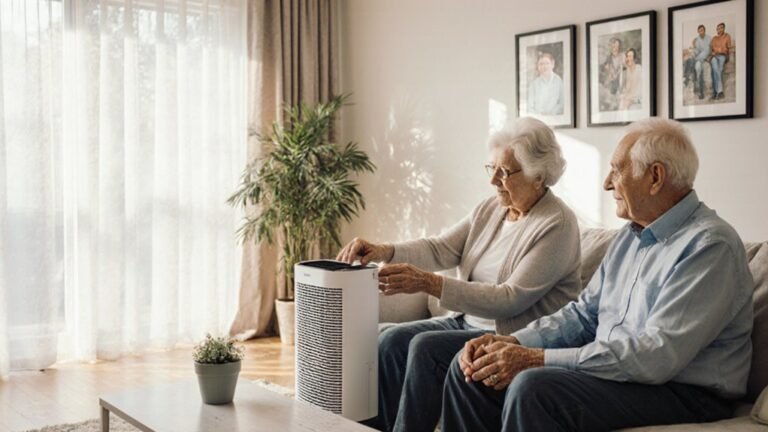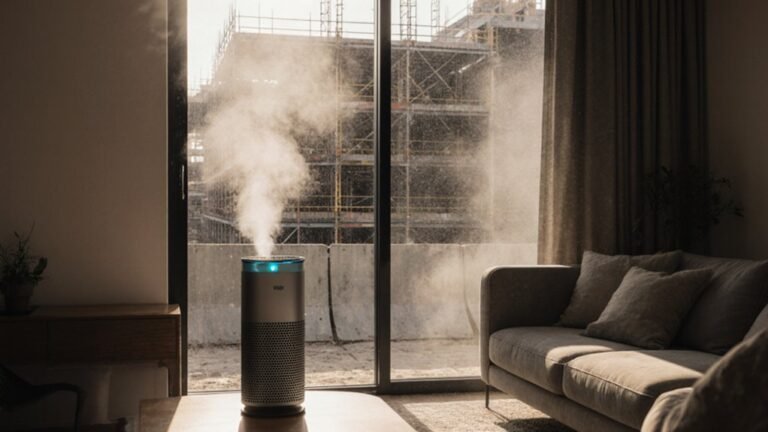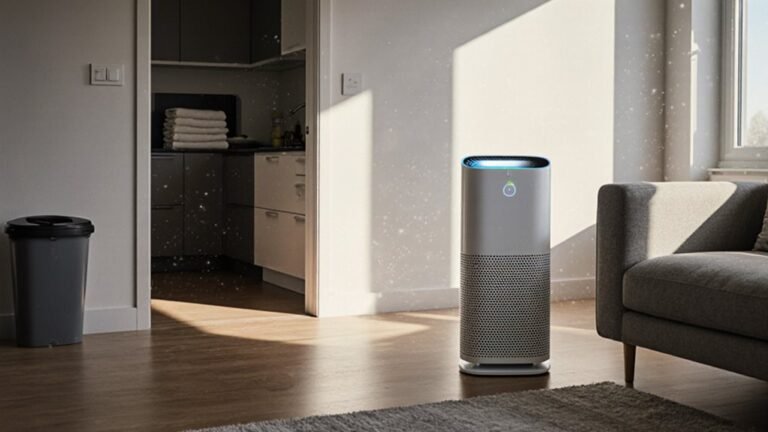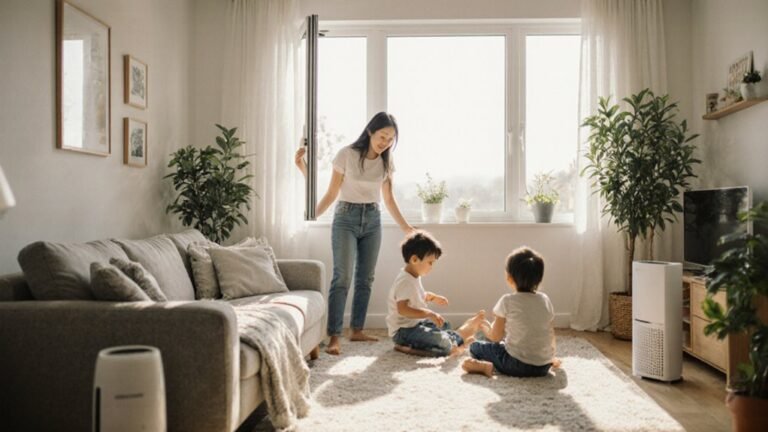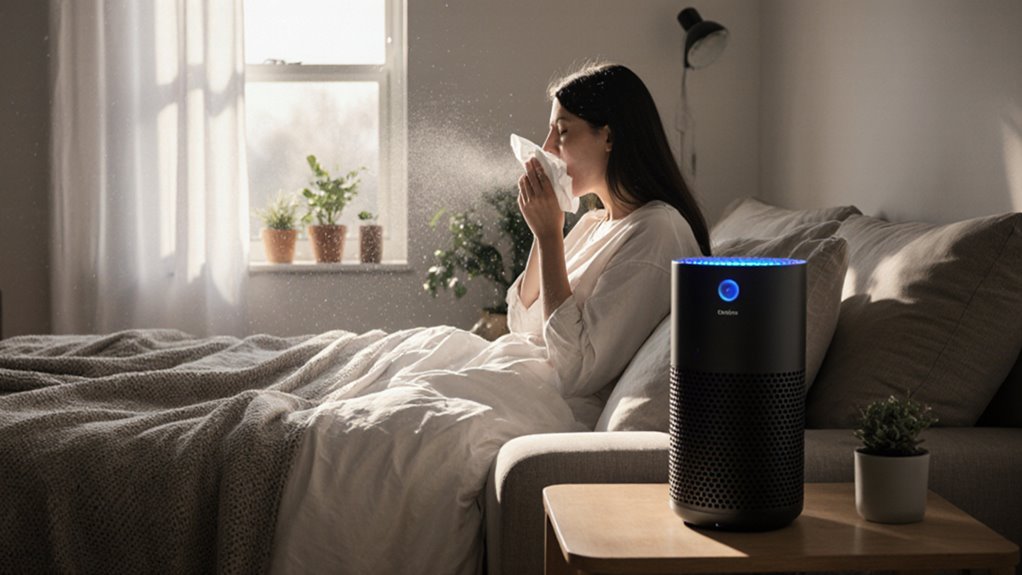

Yes — air purifiers can reduce sneezing and nasal congestion by removing airborne triggers like pollen, pet dander, mold spores, and dust. A high-quality purifier with a true HEPA filter captures most fine particles that irritate nasal passages. Placement, room size, and continuous operation affect performance. Regular filter replacement and matching purifier capacity to the space keep effectiveness high. Avoid units that produce ozone or lack certified filtration, since those can worsen respiratory symptoms.
Do Air Purifiers Help With Allergies?
Yes, air purifiers can help with allergies, but they work best whenever your symptoms originate from things floating in the air, like pollen, mold spores, pet dander, and some dust particles.
You can breathe a little easier whenever a true HEPA filter runs in your bedroom, especially at night. That matters because sleep hygiene improves whenever fewer allergens drift around while you rest.
Unless you also keep windows closed on high-pollen days and support cleaning with mask wearing during dusty tasks, you could lower irritation even more.
Still, you’ll get the best results whenever you pair filtration with other habits, like washing bedding and reducing clutter. In your home, that mix can help you feel more settled, more comfortable, and less alone with allergy flare-ups.
Can Air Purifiers Reduce Sneezing?
Air purifiers can cut down on sneezing while the problem comes from tiny irritants floating in the air. You might notice fewer fits whenever a true HEPA unit pulls pollen, mold spores, and some dust-mite bits from your room.
That matters most during sleep timing, at which point you breathe these particles for hours and your nose gets less of a break. Better air can support calmer nasal physiology, so your nose could react less sharply.
Still, results can vary, because strong smells, dust in fabric, and open windows can keep triggers around. For the best chance of relief, keep the purifier running in your bedroom, choose the right size, and replace filters on schedule. That way, you and your space work together a little better.
Can Air Purifiers Ease Congestion?
Whenever congestion keeps your head heavy and your nose stuffed, a good air purifier can sometimes give real relief. You might notice easier breathing, especially in the bedroom at night, whenever cleaner air can calm irritated nasal passages and support sleep hygiene.
A true HEPA unit works best, and a model with activated carbon could also help should odors or fumes be part of the problem. Keep it running while you rest, because steady use matters more than short bursts.
Still, you’ll get the best results whenever you pair it with simple care, like nasal irrigation, regular cleaning, and dampness control. Should your home stay dusty or moldy, the purifier can only do so much. Even so, it can be one helpful teammate on your side.
How Air Purifiers Cut Allergens
Whenever you run a true HEPA air purifier, it traps tiny particles from the air, including pollen, mold spores, and bits of dust that can set off sneezing and congestion.
That means fewer allergens are floating around your room, so your nose gets less exposure during the day and whilst you sleep.
Over time, this can ease the irritation that makes you feel stuffy and keep reaching for tissues.
HEPA Filters Capture Particles
A true HEPA filter can make a real difference because it traps the tiny particles that often set off sneezing and congestion in the initial place. Whenever you choose one, check the HEPA lifespan so you know how long it can keep working well in your room. Also look for Filter evaluation, because trusted assessment shows the filter meets the standard, not just a catchy label.
You’ll usually notice that this matters most in spaces where you sleep and breathe for hours. The filter catches pollen, mold spores, and fine dust in the air, so your nose gets fewer irritants to react to. That can help you feel more comfortable and less on edge.
In a crowded home, that relief can feel like a small win you can actually count on.
Reduce Airborne Allergen Levels
Even with a true HEPA filter working well, the real payoff comes from lowering the amount of allergen floating in your air, because that’s what your nose keeps meeting all day and night. You feel it most in bedroom timing, whereas steady cleaning can ease the load while you sleep.
A purifier pulls pollen, pet dander, mold spores, and tiny dust bits out of the air, so less of them reach your nose and throat. That can mean fewer sneezes, less stuffiness, and a calmer wake-up.
For best results, keep the unit close to where you rest, and stay on top of filter maintenance so it keeps catching what drifts past. Pair that with closed windows during high pollen days, and you’ll make your room feel more like your safe space.
Which Allergens Air Purifiers Catch
Dust in the air is only part of the story, but it’s the part an air purifier can actually grab. You’ll usually see the biggest help with pollen, mold spores, pet dander, and some dust mite fragments. These particles have the right particle size to get trapped, especially in a true HEPA filter. That matters whenever your nose feels stuffed and you just want to breathe like everyone else in the room.
Smaller irritants, like smoke particles, can also drop, which could ease extra swelling in your nose. Still, purifiers don’t catch every trigger. Strong odors and some gases need carbon help, and fixed allergens in carpets or bedding stay put. Check filter lifespan too, because a worn filter can miss more of what you’re trying to clear.
Best Air Purifier Filters for Allergies
Whenever allergies keep making your nose run or feel stuffed, the right filter can make a real difference. You’ll want a true HEPA filter because it traps tiny pollen, mold spores, and dust fragments that keep bothering your nose. Should odors or chemical smells also bug you, choose a carbon blend, since it helps catch those irritating gases too. Together, these filters give you cleaner air that feels easier to breathe at home.
For the best results, match the purifier to your room size, especially your bedroom, and run it all night. Also, replace filters on time so performance stays strong. Then pair it with regular vacuuming and clean bedding. In that case, you’re not just buying a machine. You’re building a calmer space where you can finally exhale and sleep better.
What Air Purifiers Can’t Fix
Air purifiers can ease sneezing and congestion, but they can’t fix every cause behind your symptoms.
In case dust, mold, pet dander, or VOCs keep coming from concealed spots in your home, the purifier can only do so much.
Whenever your symptoms stay strong even with good filtration, it’s a sign you might need deeper cleaning, source control, or medical help.
Not A Cure-All
Even though a good purifier can make your bedroom feel easier to breathe in, it can’t fix every reason you sneeze or feel stuffy. For real long term expectations, you need to see it as one helpful tool, not a magic box. Your user behavior matters too, because steady use works better than turning it on only whenever symptoms flare.
- It can’t clean dust hiding in fabric.
- It won’t stop a drafty window.
- It can’t replace regular vacuuming.
- It won’t help unless filters stay dirty.
- It can’t calm every nose on its own.
Hidden Cause Triggers
A purifier can make the room feel cleaner, but it can’t fix every concealed trigger that keeps your nose on high alert. You might still breathe in hidden allergen reservoirs in mattresses, carpets, and upholstered chairs, where dust and pet dander keep building up.
A purifier only catches what floats by, so these tucked-away spots can keep feeding sneezing and stuffiness. It also can’t erase chemical irritants from cleaners, paint, candles, or smoke that linger in the air and sting your nose.
When To Seek Help
Should your sneezing and congestion keep hanging around, it could be time to look beyond the purifier and ask for help. Air cleaners can trim airborne dust, pollen, and dander, but they can’t fix every cause. In case you notice symptom escalation, fever, facial pain, wheezing, or thick mucus, seek help fast.
- You still feel stuffed up after a few weeks
- Your eyes, ears, or throat keep getting worse
- Over-the-counter meds barely touch it
- Damp rooms or mold keep coming back
- Breathing feels tight, noisy, or off
That’s the moment to seek help for a medical evaluation. You deserve answers, not guesswork, and a clinician can check for allergies, sinus infection, asthma, or another issue. A purifier can support you, but it can’t replace care when your body needs more.
Where to Place an Air Purifier
For the best relief, place your air purifier where you breathe the most, because that’s where it can do the most good. Bedside placement helps you cut nighttime exposure, so you wake up less stuffed up and less sneezy. Keep it near your bed, but not pressed against walls, curtains, or furniture. That corner avoidance lets air move freely and reach you faster.
| Spot | Why it helps | Best use |
|---|---|---|
| Bedside | Reduces sleep-time triggers | Night use |
| Open wall | Supports smooth airflow | Daily use |
| Near doorway | Catches incoming particles | Shared rooms |
If you share a room, choose the spot closest to your pillow and let everyone enjoy cleaner air. A clear path makes the purifier feel like part of your space, not an awkward guest.
How to Size an Air Purifier Correctly
Whenever you size an air purifier correctly, you give it enough power to clean the air in your room without working itself to exhaustion.
Pick a unit with a room CADR that matches your room’s square footage. Should your space feels cozy, a smaller purifier might fit, but a larger bedroom needs more cleaning power. Check the room size on the box, then compare it with your ceiling height and daily use.
- Match CADR to room volume
- Choose true HEPA filtration
- Keep the purifier near you
- Run it day and night
- Watch filter lifespan
Once you choose well, you and your purifier work as a team. That steady fit helps cut sneezing and congestion without guesswork or wasted effort.
Air Purifiers in Allergy Season
During allergy season, you can use an air purifier to catch pollen before it settles into your room and stirs up sneezing or congestion. A true HEPA filter helps trap tiny airborne particles, so you breathe cleaner air while pollen counts stay high outside.
If you keep it running in your bedroom, you also cut down the irritants that move through indoor air as you sleep.
Pollen Filtration Benefits
Pollen season can feel unending, but a true HEPA air purifier can make your bedroom much easier to breathe in. Whenever indoor pollen drifts in from open windows or your clothes, the filter catches tiny bits from flowering plants before they settle on your pillow. That matters because you spend hours there, and less pollen in the air can mean fewer sneezes and less stuffiness.
- It traps airborne pollen fast.
- It helps whenever windows stay closed.
- It works best in your sleep space.
- It can support cleaner morning breathing.
- It gives you a calmer room vibe.
If you’re trying to feel less alone in allergy season, a purifier can be part of your routine. Pair it with clean bedding, and you’ll make your room feel like a safe place again.
Seasonal Trigger Reduction
As allergy season hits, your home can feel like a trap, but a good air purifier can take some of that pressure off. You still need smart Timing exposure, though. Run it before you settle in, especially in the bedroom, so pollen has less time to build up around you.
Use Window management wisely, too. Keep windows closed on high-pollen days, then open them briefly once counts drop. Check Outdoor tracking each morning, because your plan works better whenever you know what’s drifting in.
Should you must go outside, Mask use can cut how much pollen you bring back inside. Together, these small moves help you breathe easier, feel less alone in the struggle, and keep sneezing from running the whole day.
Indoor Air Circulation
As soon as your nose is already on edge, steady indoor air circulation can feel like a small relief that makes a real difference. You help the air move, so fewer sneaky particles linger near your face. Good airflow patterns can send pollen, dust, and dander toward the purifier instead of letting them swirl around your bed.
- Put the unit where you sleep.
- Keep doors partly open whenever you can.
- Pair it with ventilation strategies that bring in cleaner outdoor air.
- Avoid blocking vents with furniture.
- Run it all night for steadier relief.
If you combine circulation with filtration, you give yourself a calmer room and a better chance to breathe easier with your people.
Do Air Purifiers Help With Pet Allergies?
Yes, air purifiers can help with pet allergies, but they work best as part of a bigger plan. Whenever you run a true HEPA purifier in your bedroom, it can catch floating pet dander before it settles on blankets and rugs, which act like allergen sinks.
That means you might breathe easier at night and wake up with less sneezing or stuffiness. For the best support, keep the unit on as you sleep, choose one sized for the room, and pair it with regular vacuuming and bedding washings.
In case you live with pets, you don’t have to feel like the odd one out. Small steps can make your space calmer, cleaner, and more comfortable for you.
Mistakes That Lower Air Purifier Performance
At the point an air purifier seems to “do nothing,” the problem is often a simple mistake you can fix. You’re not alone, and small changes can help you breathe easier again.
- Check for blocked vents and give the unit space.
- Match the purifier size to your room.
- Run it all day, not just whenever you recall.
- Replace the filter on schedule.
- Don’t ignore noisy operation, because it can mean strain.
Should you tuck the purifier behind a chair, airflow drops fast. Should you choose a tiny model for a big bedroom, it can’t clean enough air.
Once filters clog, dust stays in the room and your nose feels it. A loud unit may push you to turn it off, so comfort matters too. Keep it in open view, where it can join your space and work with you.
Other Ways to Reduce Sneezing Indoors
Beyond the purifier, a few steady habits can make a big difference whenever sneezing hits inside your home.
You can start with humidity control, because air that’s too damp helps mold and dust mites thrive. Aim to keep rooms below 50% humidity with a simple dehumidifier or good ventilation.
Next, wash sheets weekly in hot water and use bedding encasements on pillows and mattresses to trap allergens where they belong.
Vacuum carpets and rugs with a HEPA vacuum, and dust with a damp cloth so you don’t kick particles back up.
Should pets share your space, keep them out of your bedroom whenever possible.
Also, skip smoking and strong sprays indoors.
These small moves work together, and they can help you breathe easier with less sneezing.
Frequently Asked Questions
How Long Before an Air Purifier Starts Helping Symptoms?
You’ll often notice symptom relief within hours to a few days, especially overnight. Full onset time varies. Run the purifier continuously in your bedroom and you’ll lower triggers faster with steady use.
Are Air Purifiers Safe to Run All Night?
Yes, you can usually run one all night provided you use a true HEPA model, keep fan settings low, and replace filters on time. You’ll sleep easier, breathe cleaner, and feel more at home.
Do Air Purifiers Make Room Noise Worse?
Yes, air purifiers can add a gentle filter hum, and higher fan speed usually makes them louder. You can choose a low setting so your room stays comfy, calm, and easy to share.
Can One Purifier Clean Multiple Rooms Effectively?
Usually not; you’ll get better results in one room unless you have an open plan space and smart airflow zoning. For multiple rooms you will need more than one purifier or strong, deliberate airflow.
How Often Should HEPA Filters Be Replaced?
You should replace HEPA filters per the manufacturer’s schedule, usually every 6 to 12 months. I once forgot mine for a year; dust quickly reduced performance. Watch replacement indicators like reduced airflow, odors, or signs the filter has reached the end of its lifespan.