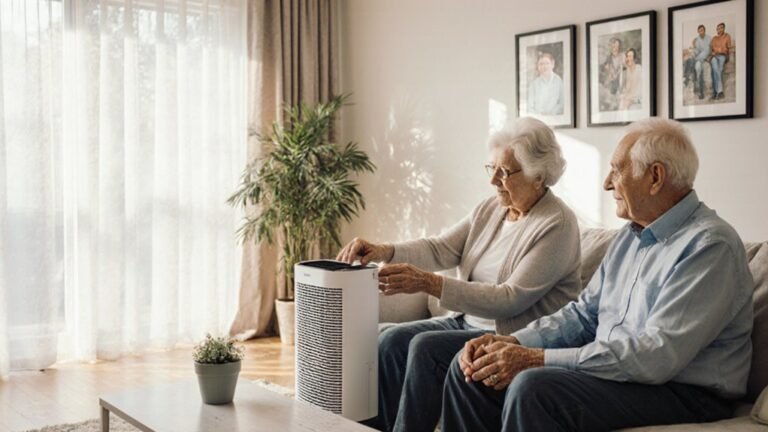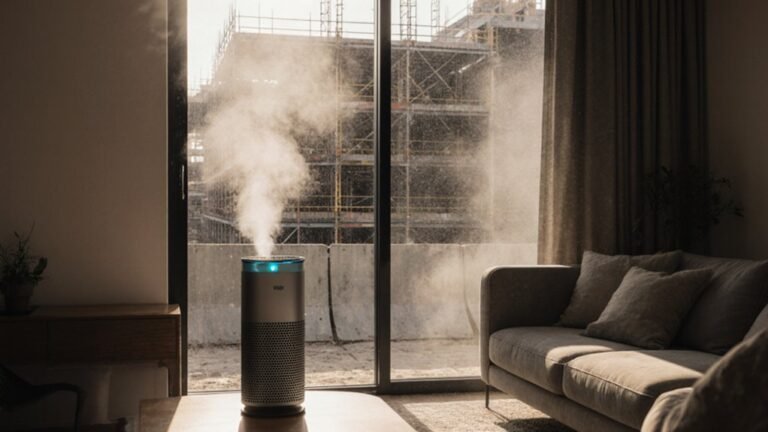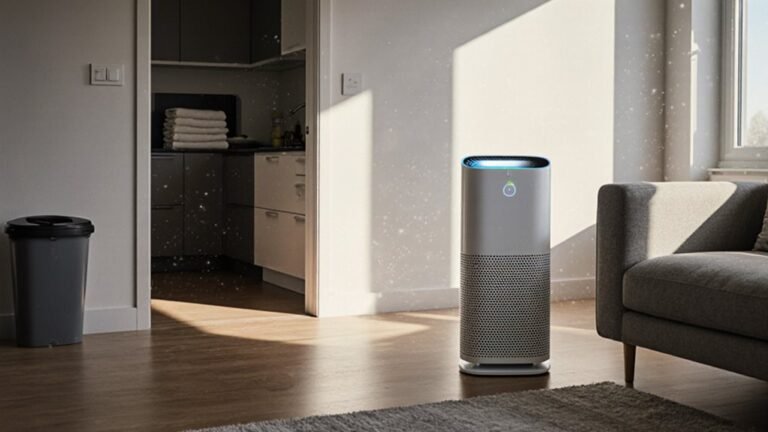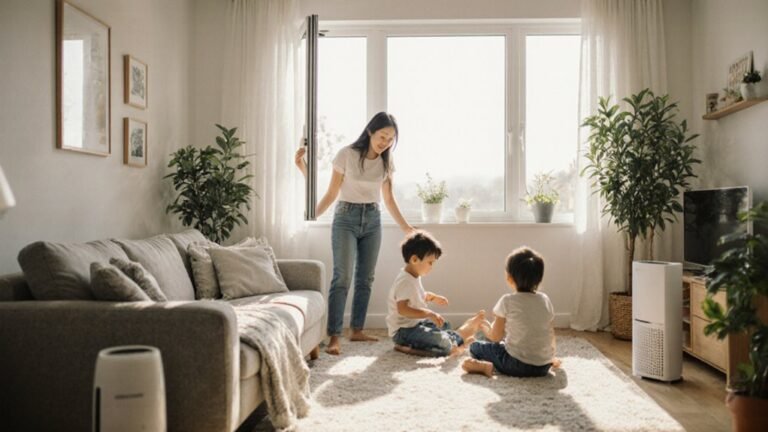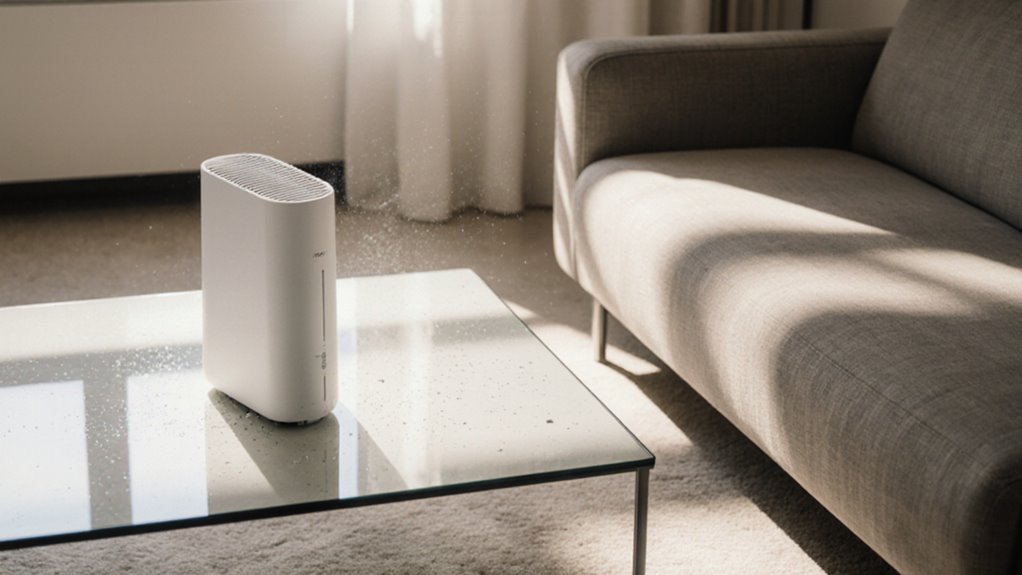

Air purifiers reduce dust by pulling room air through layered filters that trap particles before they settle. They capture pet dander, skin flakes, pollen, and fine dust that make surfaces look dirty. Placing a purifier strategically and running it continuously changes indoor airflow and reduces how much dust accumulates. HEPA filters remove most particles down to 0.3 micrometers, and pre-filters catch larger debris to protect the main filter. Regular filter replacement keeps the system effective and maintains lower dust levels.
What Causes Dust to Build Up Indoors?
Dust sneaks in from many places, and then it hangs around longer than you’d like. You track it inside on shoes, clothes, and bags, and outdoor infiltration brings in tiny bits from the air outside.
Your home also adds its own supply through human shedding, which implies skin flakes, hair, and fabric fibers collect on floors, beds, and couches. Pets stir it up too, and every step you take lifts settled dust back into the air.
Cooking, open windows, and dry air can cause the mix grow faster. Whenever rooms get busy, dust builds in corners, vents, and soft surfaces. That’s why you might notice it most where people live, rest, and move often.
How Air Purifiers Trap Dust
Once you turn on an air purifier, it starts pulling room air through its filters and giving dust fewer places to hide. You’re not just breathing cleaner air; you’re joining a quieter, calmer space that feels cared for.
Initially, a pre-filter catches hair and larger bits. Then HEPA layers trap tiny dust with tight fibers, while electrostatic capture helps charged particles stick fast. Some models also use UV inactivation to handle biological bits in dust, like mold spores and bacteria.
- You’ll notice less floating dust in the air.
- Your filters work in stages, not all at once.
- Strong airflow helps more air pass through.
- Clean filters keep capture strong over time.
Why Air Purifiers Reduce Dust
Air purifiers reduce dust because they keep tiny particles moving toward filters instead of letting them float around your room and settle on every surface. That steady pull changes airborne behavior, so you breathe easier and your space feels calmer.
| What You See | What It Does | How You Feel |
|---|---|---|
| Soft gray specks | Gets drawn in | Relief |
| Busy filter fibers | Traps dust | Confidence |
| Cleaner air flow | Lowers buildup | Belonging |
When the unit runs, it also helps with allergen inactivation in some models, which supports your comfort whether dust mites or pet dander bother you. So, you’re not just cleaning air; you’re helping your home feel like a shared, safer place where you can relax, stay present, and keep dust from winning the room.
Where Should You Place an Air Purifier?
Place your air purifier near the spots where dust builds up most, like beside your bed, couch, or pet area, so it can catch particles before they spread.
Put it in a central spot in the room whenever you want cleaner air to move more evenly around you.
Keep it out in the open, because walls, curtains, and furniture can block airflow and make it work harder than it should.
Near Dust Sources
Near the main dust makers in your home, an air purifier can do a lot more with every breath of clean air it pushes out.
Put it in close proximity to pet beds, busy doorways, or craft tables for better source capture. This kind of targeted placement helps you and your family breathe easier, especially when dust seems to show up out of nowhere.
- Keep it near the room where dust starts.
- Give it open space around the intake.
- Use bedroom focus should you wake up stuffed up.
- Move it closer during vacuuming or grooming.
Whenever you place it beside the problem area, you join your home in fighting back, and that feels good. A purifier near the source catches more particles before they drift, so your space stays calmer and friendlier.
Central Room Placement
In the middle of the room, your purifier often works best because it can pull dust from the air before it settles on tables, beds, and floors. That central spot gives you better airflow mapping, so the machine can move cleaner air across the space people actually use. For optimal placement, consider the room as a shared circle, not a corner.
| Spot | Benefit |
|---|---|
| Room center | Broad pull |
| Open floor area | Smoother flow |
| Bedroom center | Better breathing zone |
| Living space core | Shared comfort |
When you place it here, you help the whole room feel included, and that can make daily dust control feel less like a chore. Keep it in the main occupied path, and let it work with the room around you.
Avoid Obstructions
As you set an air purifier, keep it clear of furniture, curtains, and tight corners so the unit can breathe as well as you do. That simple space around it helps intake clearance stay open and lets airflow pathways move dust toward the filter instead of bouncing it back into the room. Whenever you give it room, you help your purifier work with you, not against the wall.
- Leave several inches around the sides.
- Keep it off thick rugs or stacks of stuff.
- Point the exhaust into open room space.
- Check that pets and bags can’t block it.
You’ll notice steadier cleaning whenever air can circle freely, and that makes your home feel more like a shared, calm space.
Which Filters Work Best for Dust?
HEPA filters are the gold standard whenever dust is your main worry, because they trap tiny particles that other filters often miss. You’ll feel better appreciating true HEPA can catch fine dust, pet dander, and mite debris before they settle on your shelves.
In case your unit includes washable prefilters, use them too, since they grab hair and larger flakes initially and help the main filter last longer. Electrostatic precipitators can also help through charging particles, but their results vary, so check reviews and specs prior to trusting one.
For best dust control, choose a purifier with a sealed design and replace filters on time. Then run it regularly in the rooms where you relax, sleep, and breathe most.
How Does Air Purifier Size Affect Dust Control?
Air purifier size matters more than many people expect, because a small unit can only clean so much air in a room before dust starts winning again. You want a purifier that matches your square footage, so the fan can move enough air through the filter. Should the room be larger than the unit’s rating, dust lingers and settles faster.
Once you pick the right size, you give your space a steady, calmer feel.
- Check the room’s square footage initially.
- Match fan speed to the room’s airflow needs.
- Use a bigger unit for open layouts.
- Keep the purifier running so dust doesn’t build up.
That way, you fit in with a cleaner home rhythm, and your purifier pulls its weight without sounding like it’s trying out for a wind tunnel.
Do Air Purifiers Help With Pet Dander?
Yes, air purifiers can help with pet dander, and that can feel like a real relief whenever your home seems to stay fuzzy no matter how much you clean. Whenever you share space with a cat or dog, tiny flakes float in the air and can linger. A true HEPA unit enhances filtration efficacy by trapping those particles before they settle on you and your stuff.
| Feature | What it does | Why you feel better |
|---|---|---|
| HEPA filter | Captures pet dander | Less sneezing |
| Pre-filter | Catches hair | Longer filter life |
| Carbon layer | Cuts odors | Fresher rooms |
| Right size | Matches room air | Stronger cleaning |
| Continuous use | Keeps air moving | Steadier comfort |
You’ll usually notice the biggest help in bedrooms and family rooms, where you spend time close to your pets.
Simple Habits That Reduce Dust
Small habits can make a big dent in dust, and that matters while you’re tired of wiping the same shelf over and over.
You don’t need a perfect home to feel better; you just need steady habits that help everyone breathe easier.
Start with decluttering routines, because fewer knickknacks mean fewer places for dust to hide.
Then fold in humidity control, since balanced air keeps dust from floating around as much.
- Wipe high-touch spots with a damp cloth.
- Wash bedding each week.
- Shake out rugs outside if you can.
- Keep shoes near the door.
These small moves work well alongside your air purifier, too.
It catches what’s still in the air, whenever you cut down what settles on surfaces.
That teamwork can make your space feel calmer, cleaner, and more like home.
Common Mistakes That Limit Dust Reduction
Even a good purifier can fall short provided a few common mistakes keep it from doing its job.
You could place it in a corner or behind furniture, and incorrect placement blocks airflow right whenever dust needs a clear path.
You can also expect too much from intermittent operation, because turning it on only after you see dust lets particles settle initially.
Should the room be large, one small unit might struggle, so the air never gets cleaned enough for your comfort.
Open doors, pet activity, and cooking can add bursts of dust too, and a weak setting can’t keep up.
Whenever you give the purifier room to breathe and let it run steadily, you help it support the calm, cleaner space you want to share.
How to Maintain Your Air Purifier
To keep your air purifier working well, start with the parts that take the most dust and attention. You’ll feel better whenever it’s running strong, because clean air helps your home feel like a team space.
- Check the pre-filter every 2 weeks and vacuum it gently.
- Follow filter replacement dates so airflow stays steady.
- Wipe the outside with a dry cloth to stop buildup.
- Complete warranty registration promptly, so help is ready should something go wrong.
Also, keep the unit in open space and away from walls.
In case you hear new noise or smell dust, inspect it right away. A little care keeps your purifier ready for busy days, pet hair, and the small messes that make a home feel lived in.
Frequently Asked Questions
Can Air Purifiers Reduce Dust Mite Allergens in Bedrooms?
Yes; like a shield, a HEPA air purifier can lower dust mite allergens in your bedroom. You will get best results with mattress encasements and humidity control, plus regular filter changes and continuous use.
How Much Dust Reduction Can I Expect in Real Homes?
You can expect realistic reductions of about 25 to 60 percent less airborne dust, with measured results often near 40 to 60 percent in bedrooms and lived-in rooms. Larger spaces, strong sources, and weak filters will lower that.
Do Air Purifiers Remove Settled Dust From Surfaces?
No — you won’t lift settled dust from tables or floors with a purifier. Consider it as a guardian catching drifting specks through surface agitation and electrostatic deposition, while you still need wiping and vacuuming for belongings.
Can Activated Carbon Help With Dusty Odors?
Yes, activated carbon can help with dusty odors via odor adsorption, trapping scent molecules that cling to dust. You will notice fresher air, but it will not remove inert dust itself, so you will still need cleaning.
How Often Should Filters Be Replaced for Best Dust Removal?
Replace your filters on the manufacturer’s schedule, usually every 6 to 12 months, but check pre filters monthly. Your filter lifespan and replacement frequency depend on dust levels, pets, smoking, and how often you run it.