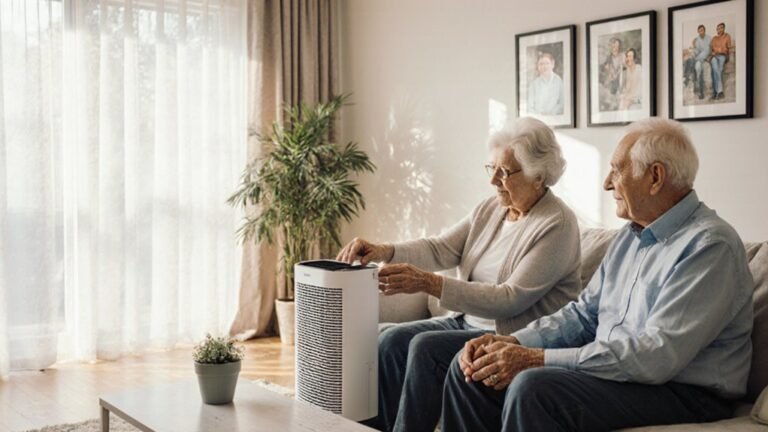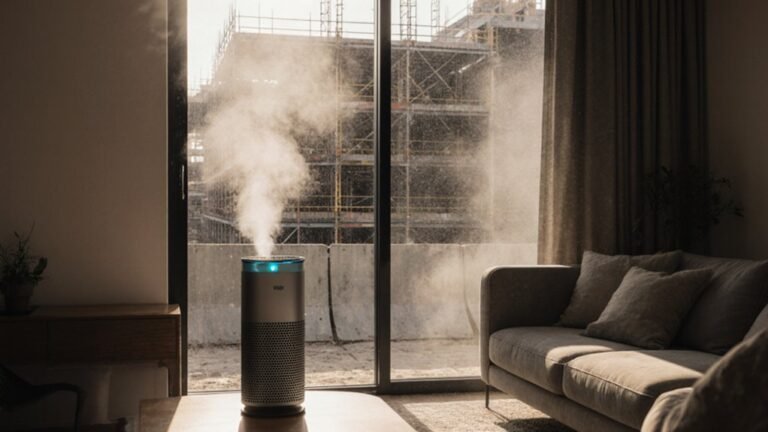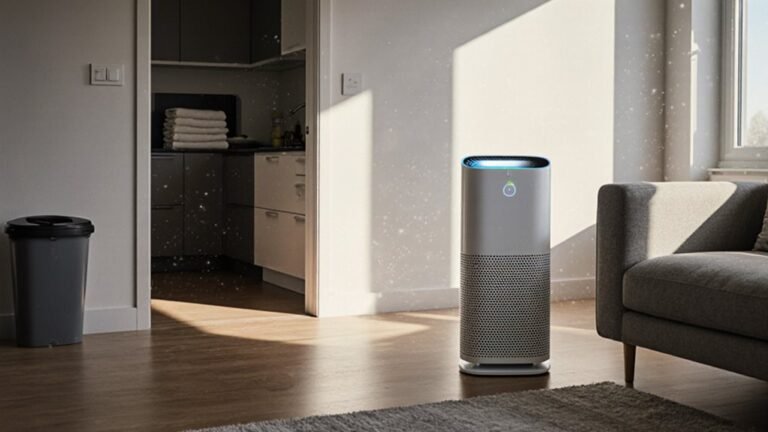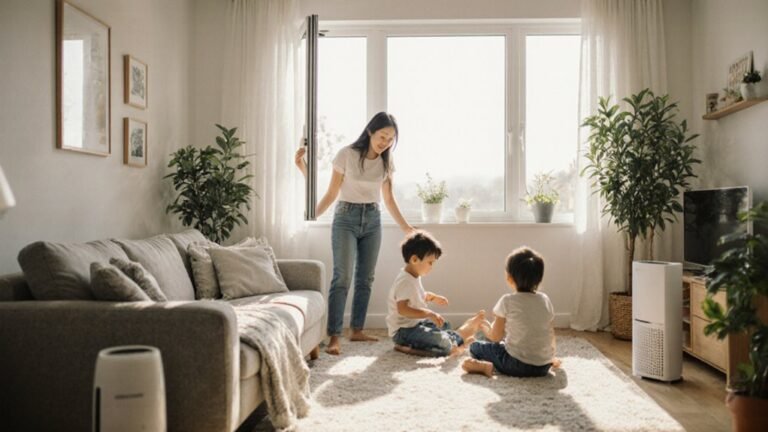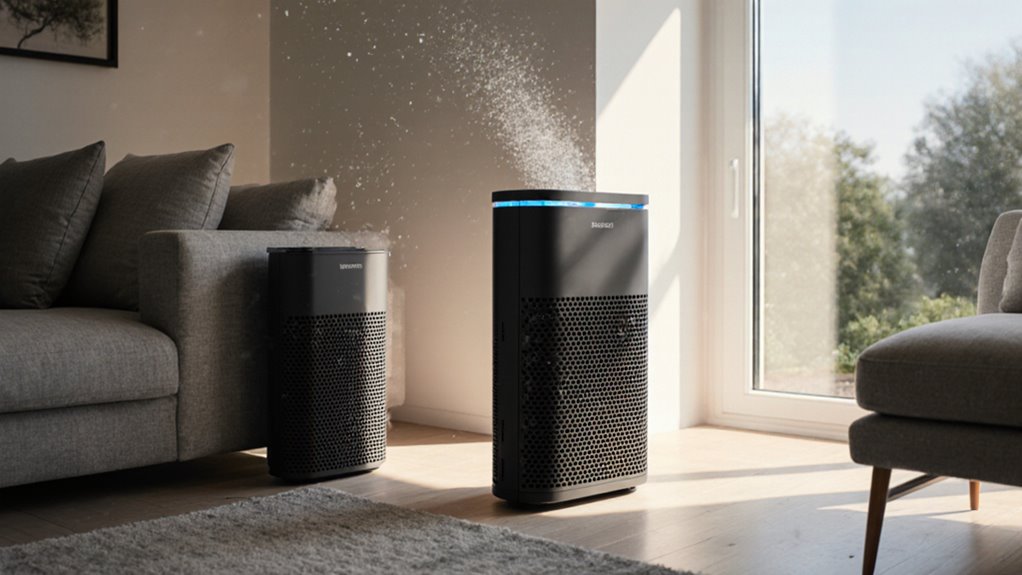

Proper placement makes an air purifier far more effective. Placing it away from walls and furniture allows roughly half the room’s air to circulate through the unit. Positioning the purifier near pollution sources speeds up removal of contaminants. Keeping intake and exhaust grilles clear prevents reduced airflow and noisy operation. Choosing a model sized for the room and setting it centrally or along airflow paths delivers faster, quieter cleaning.
How Air Purifier Placement Affects Cleaning
Whenever you place your air purifier in the right spot, it cleans the air faster and more evenly, and that can make a real difference in how you feel day to day.
You get cleaner breathing in the room where you spend the most time, and that helps you feel more settled at home.
Keep it in your breathing zone when you can, because air moves where you live and rest.
Also, give it raised placement on a shelf or stand so it can catch floating particles before they sink.
In case you tuck it behind furniture, you block airflow and slow the clean up.
Whenever you leave clear space around it, you help the unit work with your room, not against it.
That small choice can make your space feel easier to share, breathe in, and enjoy together.
Put the Purifier Near the Pollution Source
Right beside the source, your purifier can do its best work before dust, smoke, or cooking fumes spread through the room. Whenever you place it with source proximity in mind, you help it start emission interception fast, which makes the whole space feel calmer and easier to breathe in.
This kind of localized filtration gives you immediate capture, so particles don’t get a chance to drift into your favorite chair, bed, or family gathering spot. In case you cook often, keep it near the kitchen area. Should pets shed a lot, set it close to their hangout. You’re not just cleaning air; you’re creating a safer, more welcoming bubble for everyone who shares your space.
Keep Vents and Grilles Unblocked
Even the best purifier can only do its job provided air can actually move through it, so after you place it near the pollution source, take a quick look at the vents and grilles. You want clear space on every side, because blocked intake or exhaust can slow the whole unit and make filter maintenance harder.
| What to check | Why it matters |
|---|---|
| Toys, curtains, or boxes | They can choke airflow |
| Grille orientation | It should face open space |
| Dust buildup | It can cut performance fast |
When you keep the front and back open, your room feels fresher sooner, and you help your purifier work with the whole household, not against a pile of clutter. In case the unit sits close to a wall, shift it a bit so the grilles can breathe. That small habit keeps your space calmer, cleaner, and easier to share.
Center It for Better Air Circulation
Centering your air purifier helps it push clean air in more even directions, so you don’t end up cleaning only one side of the room.
You’ll often get better coverage this way because the airflow can reach more of the space without furniture or walls getting in the way.
In case your room is a shared space, this setup can feel a lot more fair to everyone, since the air gets cleaned more evenly where you actually breathe.
Balanced Airflow Distribution
Keeping your purifier near the middle of the room usually helps it move air more evenly, and that matters more than people believe. You create better supply balancing, so clean air reaches more of your space without one side feeling left out.
Whenever air swirls from a central spot, you also get gentler draft mitigation, which keeps the room comfortable while the unit works. Provided you share the room with family, pets, or guests, this setup can help everyone feel included in the cleaner-air zone.
Keep the unit away from tight corners, because open space lets airflow spread in a steadier pattern. Then, let your daily routine guide you. Place it where you spend time, and you’ll support calmer circulation and a more welcoming room.
Unobstructed Room Coverage
A purifier can really open up a room provided you give it space to breathe, and that’s why center placement often works so well.
You help the air move in a wider loop, so fewer spots feel left out.
Whenever you keep it clear, you also protect sensor placement and make maintenance scheduling easier because dust builds up more evenly.
- Leave open space around the unit so intake and exhaust aren’t blocked.
- Place it where you spend time, so the room feels like yours, not just filtered.
- Check nearby furniture often, since a chair too close can quietly slow flow.
Provided you share the room with family or roommates, this setup can feel fairer too.
Everyone gets steadier coverage, and that can make the whole space feel calmer and more welcoming, without much extra effort.
Central Placement Benefits
Room-center placement gives your purifier a much fairer shot at moving clean air through the whole space. Whenever you place it away from walls, you let airflow reach more of the room, so you’re not stuck with stale pockets near the edges.
This matters even more whenever occupant density shifts, since a centered unit can support more balanced circulation around your breathing zone. In case you can, use height optimization too. Lifting the unit a few feet often helps it catch floating particles before they settle.
In contrast, peripheral placement can leave one side working harder while the other side gets less help. So, in a shared room, center it, keep space around it, and let everyone feel a little more at ease.
Match Placement to Room Size
When you match your purifier to the room’s size, you give it a fair chance to clean the air you actually inhabit. A unit that fits the room’s dimensions and coverage area can move air far enough to reach more of the space instead of working hard in just one spot.
In a small bedroom, the reach feels different than in a large family room, so placement matters as much as power.
Room Dimensions
Provided you want your air purifier to do real work, you need to match it to the size of the room, not just its label. Whenever you check ceiling height, you see why a roomy bedroom needs more than a small den unit. Use volume calculation: length x width x height, so you’re sizing for the air you actually breathe. After that you can feel confident, not guessed-out.
- Measure the room initially, because square feet alone can mislead you.
- Compare the purifier’s rated area with the room’s true air volume.
- Keep the unit in the space you use most, so it stays part of your daily routine.
That simple fit helps you belong in a room that feels fresher, calmer, and more yours.
Coverage Area
Now that you’ve matched the purifier to the room’s true size, the next step is making that coverage actually work where you live every day.
In case you choose a unit for a bedroom, keep it there so it can clean one space well instead of chasing different rooms. That steady use helps you breathe easier where you rest, and it keeps fan noise from jumping around your home.
In larger shared areas, you might need more than one purifier, because one small unit can’t cover every corner with the same care. Also, a proper match can protect filter lifespan, since the machine won’t strain itself trying to do too much.
Whenever you fit the purifier to your space, you’re helping your home feel calmer, fresher, and more like yours.
Airflow Reach
Air purifier placement only works well once the unit can actually reach the air you breathe, so its size and spot have to match the room. Provided your room is bigger than the purifier’s range, you’ll feel let down by slow cleanup and stale pockets.
- Choose a unit that fits the room volume, not just the floor space.
- Keep doors closed whenever you want better ventilation coupling and faster cleanup.
- Place it where stratification control helps, like near your breathing zone or open traffic paths.
Whenever you match airflow reach to the space, you help the purifier move clean air where you live, sleep, and relax. That gives you a steadier sense of comfort, and it helps you feel like the room is working with you, not against you.
Follow the Room’s Airflow Patterns
Watching how the room moves can make your purifier work much harder for you. Start with ventilation mapping and simple airflow visualization.
Walk around and feel where breezes enter, rise, or swirl, so you can place the unit where air naturally travels. You’ll often notice that a doorway, vent, or fan changes the room’s rhythm, and that clue helps you fit in with the flow instead of fighting it.
Keep the purifier where air can pass through it cleanly, then let that movement carry fresh air across the space you share. Should you sleep, work, or relax in one spot, watch how air reaches that area.
Once you match the purifier to the room’s pattern, you help it clear particles faster and make your space feel more comfortable.
Avoid Corners, Curtains, and Tight Spots
Even though a corner looks like the easiest hiding place, it can quietly hold your purifier back. You want it where air can move freely, so don’t tuck it behind chairs, drapes, or tall lamps. Nearby textiles can trap the flow, and tight spots make the fan work harder without helping your room much.
Keep these three checks in mind:
- Leave space on every side.
- Watch outlet proximity so the cord fits safely.
- Keep curtains and rugs from covering vents.
When you give your purifier room to breathe, it feels like it belongs in your space, not concealed from it. You’ll hear steadier airflow, and you’ll likely notice fresher air without the extra struggle.
That small shift can make your home feel calmer and more welcoming.
Best Air Purifier Placement for Bedrooms
A bedroom is where your purifier can do its best work because it helps you breathe cleaner air for the hours that matter most. Place it near your bed, but keep it off to the side so sleep positioning isn’t blocked and the airflow can reach your breathing zone. For a cozy room, this setup feels like a small win you can count on each night.
| Placement | Why it helps |
|---|---|
| 3 to 5 feet high | Catches drifting particles |
| Near the bed | Supports breathing-zone relief |
Leave space around it, and keep doors closed whenever you can. That helps mattress filtration by reducing extra dust in the room. Should the unit sit too far away, it works harder and you feel less of the benefit.
Best Air Purifier Placement for Living Rooms
For your lounge room, place the purifier where air can move out in all directions, not tucked into a tight corner.
A centered spot often helps you clean the whole room more evenly, especially when you have a bigger seating area.
Keep it a few feet away from walls, sofas, and tables so it can work without bumping into obstacles.
Centered Airflow Coverage
Centered airflow coverage often works best in common rooms because it helps the purifier push clean air into the space you actually use most. Whenever you place it near the room’s middle, you help the air move toward your breathing zone instead of drifting away. That feels better for everyone sharing the room.
- Center it so airflow spreads evenly.
- Choose a spot that supports heightened capture of floating particles.
- Keep the unit where it can serve the whole group, not just one seat.
You don’t need a perfect setup to belong in a cleaner-feeling room. A centered purifier can make your space feel calmer, fresher, and more welcoming. It works with your room’s rhythm, so you and your people breathe easier together.
Distance From Obstacles
Whenever you set your purifier in the middle of the occupied room, the next job is to give it some breathing room. Keep at least three feet of intake clearance on every side, and watch your obstruction distance from sofas, curtains, and side tables. When you crowd the unit, you choke airflow, and the room keeps more dust than it should.
You’ll do better when air can move in, circle, and leave without hitting a wall of fabric or wood. In an occupied room, that usually means placing it where feet won’t bump it, but airflow still feels open and calm. Provided you’ve got pets or kids, check the path often, because small shifts can block vents fast. Clear space helps your purifier work like it belongs there.
Place Air Purifiers Away From Windows
Keep your air purifier away from windows, because an open window can let in outdoor air faster than the purifier can clean it. Whenever you place it too close, you invite more exterior infiltration and force the unit to work harder. To help your room feel calmer and more welcoming, keep it where the air stays steady.
- Close windows whenever you want cleaner indoor air.
- Position the purifier where it can avoid drafts from outside.
- Give it space so clean air can spread evenly.
This small shift helps you and your space feel more settled. In case you live with pets, kids, or roommates, that steady airflow can make everyone breathe a little easier. You’re not just moving a machine. You’re protecting the comfort you share.
Common Air Purifier Placement Mistakes
One of the easiest ways to lose the benefit of your air purifier is to place it in the wrong spot. You could tuck it behind a couch, trap it in a corner, or crowd it with a lamp. That blocks airflow and makes the unit work harder.
You also don’t want to park it beside an open window when outdoor air is rough, because you’re asking it to chase new dust all day. Keep it in the room where you spend time, with space around the intake and exhaust. Check filter maintenance so buildup doesn’t slow it down.
Also, watch sensor placement; if you put the purifier near a vent or humidifier, it may read the air poorly and react badly.
Get Better Results From Your Air Purifier
Should you want your air purifier to really pull its weight, start matching it to the room and the way you live in it. Put it where you spend the most time, keep doors closed, and leave space around the intake so air can move freely. That’s how you help the unit protect your breathing zone and feel like part of your daily routine.
- Place it near the couch, bed, or desk, not behind furniture.
- Use noise management through choosing a lower fan speed at night.
- Stay on top of filter maintenance so airflow stays strong.
If you live with pets, cooking smells, or street dust, this setup helps you settle in faster and breathe easier. Small changes matter, and your room starts working with you instead of against you.
Frequently Asked Questions
Should I Use Multiple Purifiers for Large Open-Plan Spaces?
Yes, you should use multiple units in large open plan spaces. You’ll get better coverage mapping, fewer flow interactions, and less noise layering. Place them near occupancy zones, and you’ll help everyone breathe easier together.
Does Closed-Door Placement Improve Purifier Performance?
Yes. Closing the door contains room airflow, strengthens the door seal, and lets your purifier clean faster and more effectively. You will notice the difference in the room you occupy.
How Does Purifier Height Affect Particle Capture?
Height changes capture: you will usually catch more particles at breathing zone height, about 3 to 5 feet up. Near the floor works better for dust, while ceiling level misses more air unless your purifier is designed for it.
Can I Move One Purifier Between Rooms Effectively?
No, you cannot move one purifier between rooms effectively; you will get better results from portable rotation only if you use targeted timing. Keep it where you sleep or spend the most time, and you will notice the difference, mate.
Should the Purifier Stay in My Bedroom Overnight?
Yes, keep it in your bedroom overnight so you get the biggest benefit while you sleep. You will improve sleeping airflow, reduce noise management stress, and breathe cleaner air all night in your most used room.