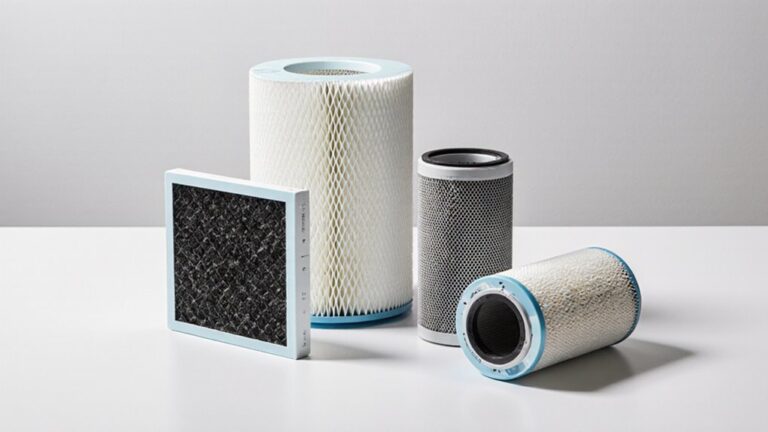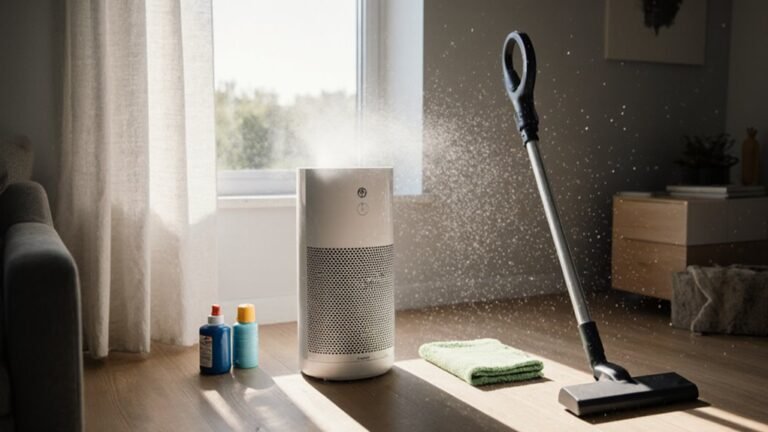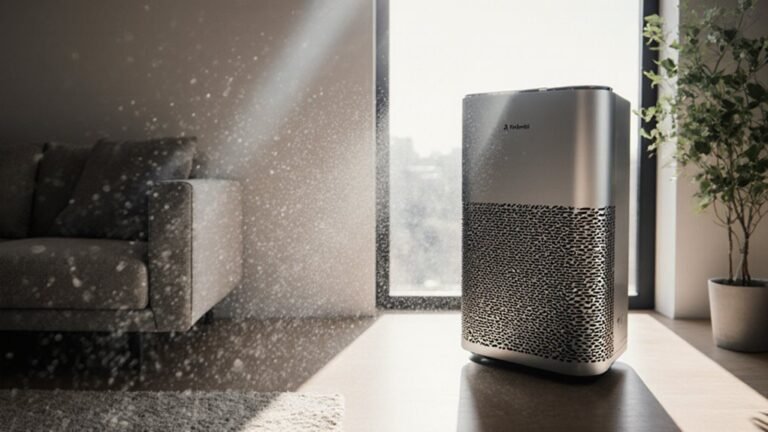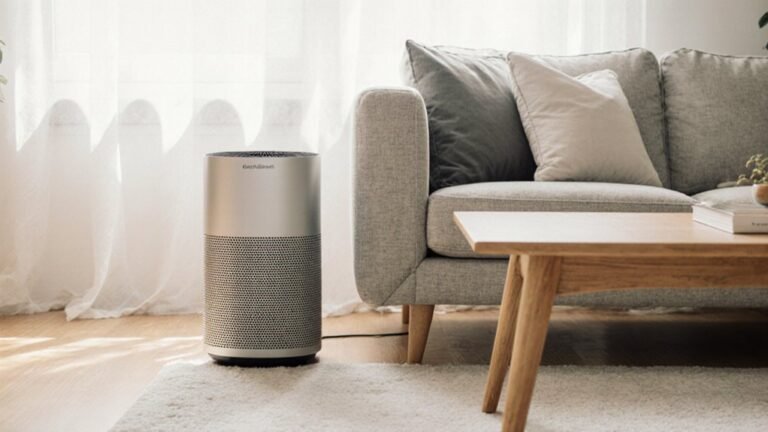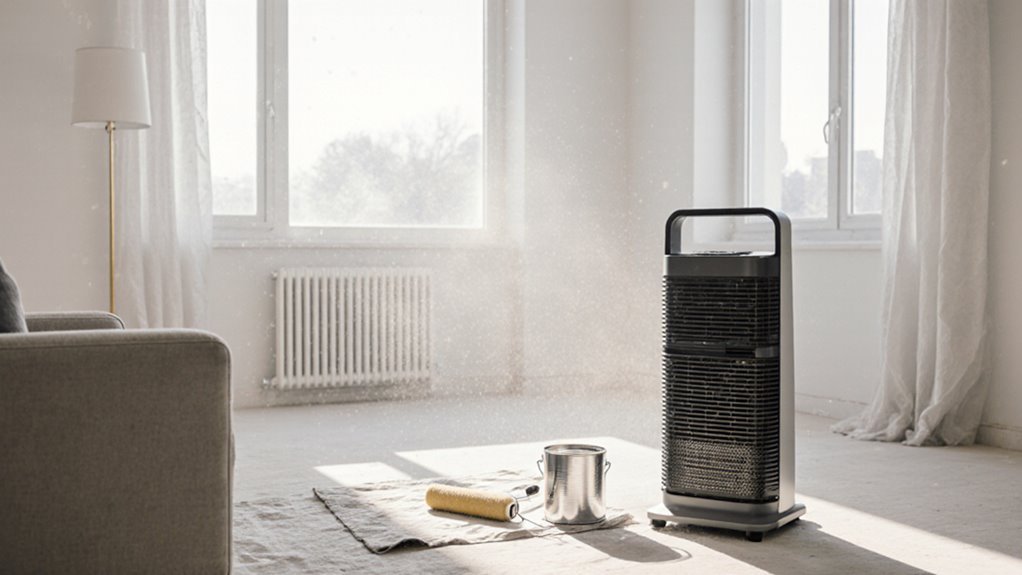

Yes — air purifiers can reduce some paint fumes, but they won’t eliminate all of them. Activated carbon filters absorb many volatile organic compounds (VOCs) responsible for paint odor. HEPA filters capture paint particles and dust but do not remove most VOC gases. Proper ventilation and source control remain essential alongside a purifier. Match the purifier’s filter type and capacity to the room size for best results.
What Air Purifiers Can Remove
Whenever you’re trying to clear paint fumes, it helps to know that air purifiers don’t all remove the same things.
You’ll get the best results whenever you match the filter to the pollutant. HEPA filters catch tiny paint droplets and dust, so they help whenever spraying leaves haze in the air.
For gases, you need activated carbon or another sorbent, because those materials trap VOCs like toluene and xylene. Thick media works better than a thin layer, and sorbent regeneration matters provided your unit supports it.
In case your purifier has sensor calibration, trust it more for reading air changes. Still, no single unit fixes everything, so use ventilation too. That way, you’re not fighting the room alone, and your space starts to feel safer.
Why Fresh Paint Smells Strong
Fresh paint smells strong because it keeps releasing chemicals into the air as it dries, and that release can happen fast at the outset.
You notice it most in the initial hours, whenever solvent evaporation pushes those odors out quickly.
This chemical off gassing comes from the ingredients that helped the paint stay smooth and spread easily.
So, even when the wall looks dry, you might still catch that sharp, familiar smell.
Warm rooms can make it seem stronger, while fresh air can help you feel more at ease.
Should you be painting a shared space, that smell can be a reminder that everyone nearby is managing the same thing.
It’s not just annoying. It’s the paint finishing its job.
How VOCs Spread Indoors
Once paint releases VOCs, those gases don’t stay in one place for long. You breathe them, and your room does too. Warm air lifts them upward, then airflow patterns carry them across hallways, through vents, and into nearby rooms. Should a fan be running, the plume can move faster than you expect.
Some VOCs also cling to walls, fabric, and floors through surface sorption, then slowly let go back into the air. That means the smell can fade and return, which feels frustrating while you’re trying to settle in. Open windows, door gaps, and HVAC ducts all shape the spread. So even one painted wall can affect your whole space, especially provided the air is still and the coating is fresh.
Which Air Purifiers Work Best for Paint Fumes
Whenever paint fumes linger, you’ll get the best results from an air purifier with a thick activated carbon filter, because that’s what helps trap the gases HEPA can’t catch.
In case you also want to handle paint mist and tiny droplets, choose a HEPA with carbon combo so you’re covering both particles and odors.
A high airflow model can help more air pass through the filter faster, which matters a lot whenever fresh paint is still giving off strong fumes.
Activated Carbon Filters
Activated-carbon filters are the part of an air purifier that can actually help with paint fumes, because they grab many of the gases that HEPA filters miss.
Whenever you choose activated carbon, look for heavy media, not a thin layer, because adsorption kinetics depend on how much gas can touch the carbon. The carbon porestructure matters too, since larger, mixed pores can catch more VOCs from fresh paint.
Should you see chemisorptive impregnants, that’s a bonus for stubborn compounds like formaldehyde.
You don’t need to guess alone. A strong carbon bed can make your room feel safer and less sharp-smelling while you paint or let walls dry.
Still, it works best provided there’s good airflow and regular filter changes, so the filter keeps doing its job on your behalf.
HEPA With Carbon
A good air purifier for paint fumes usually uses both HEPA and carbon, because each part does a different job. HEPA catches tiny paint droplets and dust, so you breathe cleaner air while the room settles.
Carbon then adsorbs VOCs that cause that sharp paint smell, and that’s the part you need for fresh walls and sanity. Whenever you shop, look for a unit with real carbon mass, not a tiny sprinkle concealed in plastic. That helps the filter lifespan, since heavier media fills up more slowly.
You should also check whether the brand explains media regeneration or replacement, because some filters can’t recover once they’re saturated. Whenever both stages are working together, you’ll feel more at ease in your space and less stuck with lingering fumes.
High Airflow Models
In case you want the fastest relief from paint fumes, high airflow matters a lot because it pushes more room air through the purifier in less time. You’ll feel better whenever the unit can pull smoky air across the room, not just near the wall. Look for a high flow model with true HEPA plus a thick carbon bed, since particles and odor travel together.
A variable speed fan helps you amplify power during fresh paint time, then drop to low noise later when you’re trying to sleep or relax. Choose an energy efficient unit so you can run it for hours without worry. Should you match the purifier to your room size, you’ll get steadier comfort and less lingering smell.
HEPA vs. Activated Carbon for Paint Odors
HEPA filters can help with the tiny paint droplets in the air, but they won’t do much for the odors you smell.
Activated carbon does the heavy lifting for paint fumes because it adsorbs VOC gases instead of just catching particles.
HEPA Limitations
While a HEPA filter can grab tiny paint droplets and other particles, it won’t catch the gases that make fresh paint smell so strong. You can count on its high filter efficiency for particle capture, especially with spray mist and dust. Still, the filter only traps solids, so your room could look cleaner while odors linger.
That’s why a HEPA-only unit can make you feel better without fully easing the paint smell. Should you want real relief, you need a purifier with activated carbon or another gas sorbent, because that layer handles the invisible fumes HEPA misses. So, whenever you’re choosing a unit, check what it can trap, not just what it can move. That simple step helps you feel supported and less stuck with lingering paint air.
Carbon Odor Adsorption
Compared with a HEPA filter, activated carbon works in a very different way, and that difference matters a lot whenever you’re handling paint odors. HEPA catches tiny paint droplets, but carbon adsorbs gaseous VOCs like toluene and xylene onto its pores. You need enough carbon mass, because a thin layer fills up fast and loses its grip.
That’s why room size and smell strength matter to you. Good carbon also depends on carbon sourcing, since pore quality changes how well it holds odor. Whenever the media gets loaded, adsorbent regeneration is usually not realistic for home units, so replacement is the safer path.
In case you’re in the same room with fresh paint, carbon can help you feel less trapped by the smell, although it won’t fix poor ventilation on its own.
Best Filter Pairing
Pair the right filters, and paint odor control gets much easier. You need HEPA for the mist and dust that spray jobs kick up, but HEPA won’t catch the gases that keep your nose busy. For that, activated carbon does the heavy lifting. Choose a purifier that pairs true HEPA with a thick carbon bed, because thin layers fill up fast. Good sorbent engineering matters here, and more media usually means better capture. Also, look for enough residence time, since air must linger with the carbon to let odors stick.
Should your room feels sharp after painting, run the unit near the source and keep windows open. That way, yourself and your space can breathe easier together.
How Long Paint Fumes Last
Paint fumes can linger longer than most people expect, and that’s because they don’t all disappear at the same pace. You might smell the strongest burst during painting, then feel the room settle while concealed vapors keep drifting out. This duration uncertainty comes from off gassing behaviors, which change with the paint type, room heat, humidity, and how much surface you coated.
In many cases, you’ll notice the sharp odor fade in hours, but lighter VOCs can hang around for days, and some products keep releasing fumes for weeks. Should you ever thought, “It smells fine now,” you’re not alone. Still, your space could need more time before it feels truly comfortable. That’s why patience matters, especially whenever you want your home to feel safe and easy.
Where to Place an Air Purifier
Right after you turn on an air purifier, where you place it can make a big difference in how well it handles paint fumes. Put it in the room where you painted, and keep it a few feet from the wall so air can move freely.
You’ll get better results whenever you avoid corners, because tight spots trap stale air and slow circulation. Should you be able, set it near the source of the smell, but not so close that dust or wet splatter can reach the unit.
For better airflow, choose a central spot or doorway path. Also, use raised placement on a small stand or table should the floor block intake vents. That little lift can help your purifier pull fumes from more of the room.
How Many Air Purifiers You Need
How many air purifiers you need depends on the room size, the strength of the paint fumes, and how fast you want the air to clear.
In a small bedroom, one strong unit could do the job provided you keep doors shut. In a larger inhabited area, you’ll likely need multiple units so the air keeps moving from every corner.
For open layouts, try staggered placement, with one purifier near the fresh paint and another across the room. That setup helps you and your space feel more settled faster.
Should the smell still linger, add another unit instead of pushing one machine too hard. You’ll get better coverage, less strain on each purifier, and a more comfortable room for anyone residing there.
What Air Purifiers Can’t Remove
Even though an air purifier can help with paint fumes, it can’t remove everything that floats into the room. You might still notice VOCs, because standard filters don’t catch gases well. HEPA helps with tiny paint droplets, but it leaves many odors behind.
Should your unit has only a thin carbon layer, it could fill up fast, and filter aging can make that happen sooner than you expect. You should also watch for ozone concerns with some devices, since ozone can irritate your lungs and add to the problem.
Even a strong purifier can miss certain chemicals like formaldehyde or very light solvents. That’s why you could feel safer with the right setup, but you shouldn’t treat the machine like magic.
How to Clear Paint Fumes Faster
Opening windows and pushing fresh air through the room is the fastest way to cut paint fumes. You’ll feel better sooner whenever you pair strong ventilation strategies with a fan that pulls stale air outside, not back around the room.
Provided you can, keep the air moving for several hours after painting. Also, choose source substitution before you start. Low-VOC or zero-VOC paint gives you a lighter load from the beginning, so your space clears faster and smells less harsh.
For a smoother recovery, close off the painted room from the rest of your home, then reopen it once the odor drops. Small steps like these help you protect your comfort, breathe easier, and get back to your space without that heavy paint smell hanging around.
How to Choose the Right Air Purifier
At the time you choose an air purifier for paint fumes, start with the filter type, because HEPA and carbon filters do different jobs.
HEPA helps catch fine paint particles, but you’ll need a thick activated carbon or sorbent filter to tackle the gases that cause most of the smell.
You also want a unit sized for your room, since a purifier that’s too small won’t clean the air fast enough as fumes build up.
Filter Type Matters
Pick the right filter, and you can make a real difference in how paint fumes feel in your home.
A HEPA filter helps with tiny paint droplets, but it won’t catch the gases that cause most smells and sting your eyes.
For that, you need activated carbon or, even better, chemisorptive media. These media grab VOCs like a sponge with a plan, and they do it longer when the adsorbent lifespan is strong.
You’ll want a purifier with enough carbon weight, not just a token layer. That matters because thin filters fill up fast.
Should you’re sharing space with fresh paint, choose a unit built for gas removal, so you and your family can breathe with a little more ease.
Room Size Coverage
Room size can make or break how well an air purifier handles paint fumes in your home. In case you pick a unit that fits your space, you’ll breathe easier and feel more settled while the smell fades. Consider room by room, because a small bedroom needs less power than a big residential area with high ceiling height.
- Match the purifier’s coverage to the room’s square footage.
- Check the ceiling height, since taller rooms need more air moving through them.
- Place the unit where paint fumes collect, then keep doors closed for better flow.
When you size it right, you’re not just buying a machine. You’re making your space feel safer, calmer, and more like home while the paint dries.
Safer Tips for Indoor Painting
To make indoor painting safer, start reducing the fumes prior to them building up, because that’s what protects your eyes, lungs, and peace of mind. Pick low-VOC paint, open windows, and set ventilation scheduling before you stir the inaugural can. Then keep fans moving air out, not around, so fresh air joins your space.
For extra support, choose mask selection with a respirator rated for vapors, since a cloth mask won’t do much. You can also paint one room at a time, take breaks outside, and keep kids and pets away.
After you finish, run your purifier with HEPA and carbon media, but don’t let it replace airflow. Whenever you plan this way, you help your home feel safer, calmer, and easier to share.
Frequently Asked Questions
Can Air Purifiers Cause Ozone While Removing Paint Fumes?
Yes, some air purifiers can produce ozone while removing paint fumes, particularly ionizing purifiers. You should avoid ozone producing models because they can irritate your lungs and will not safely handle VOCs by themselves.
Do Paint Fumes Trigger Alarms or Sensors in Air Purifiers?
Yes, paint fumes can trip your purifier’s sensors much like a smoke alarm at a candlelit dinner. VOCs might cause sensor interference, and alarm sensitivity varies, so you should check settings and ventilate well.
Can an Air Purifier Remove Paint Fumes From Adjacent Rooms?
Yes, you can reduce paint fumes from adjacent rooms, but doorway leakage and HVAC interaction still matter. You will need strong ventilation and a purifier with substantial carbon; otherwise, odors will drift faster than it can catch them.
Should I Run an Air Purifier Overnight After Painting?
Absolutely, you should leave on your air purifier overnight after painting; it can help you breathe easier. Keep a window open too, provided you can, and you’ll wake to a fresher room and calmer lungs.
Can New Filters Absorb Paint Fumes Better Than Used Ones?
Yes, new filters absorb paint fumes better than used filters because they have not saturated yet. You will get stronger VOC capture initially, while used filters may lose effectiveness and let odors slip back.