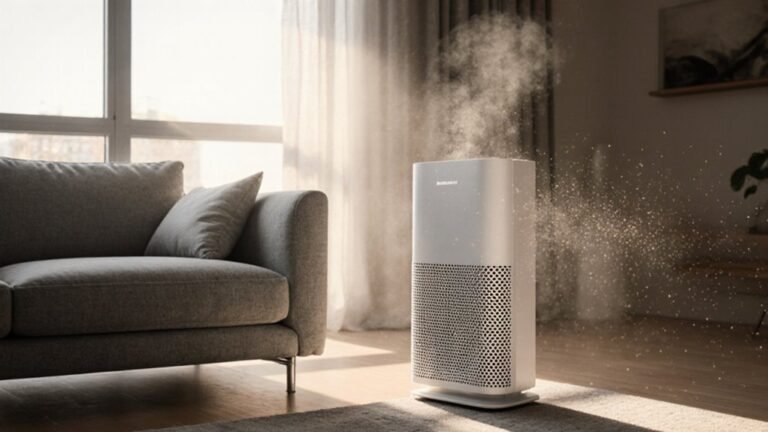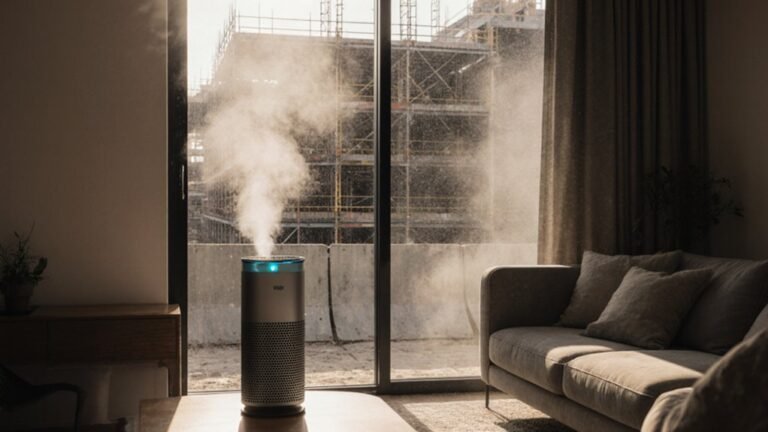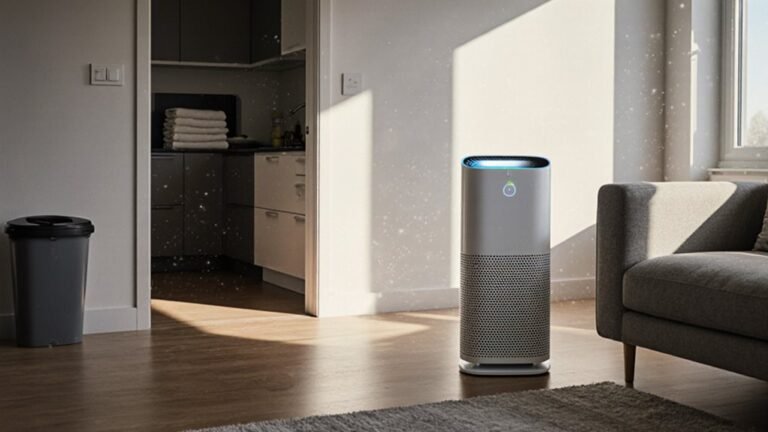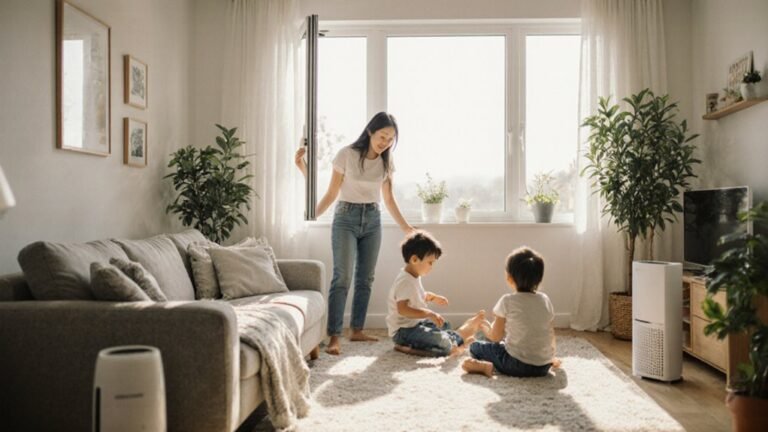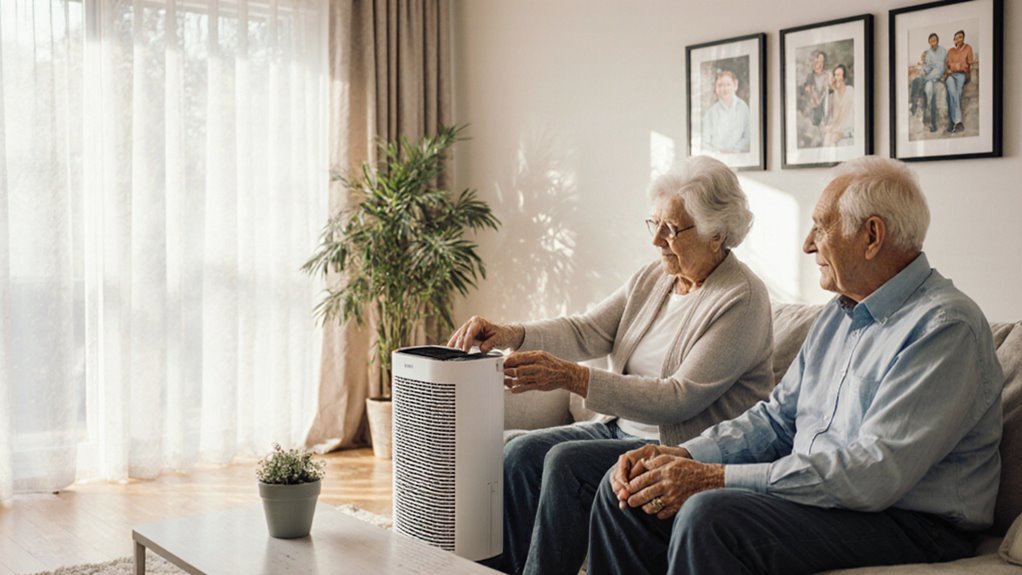

Indoor air affects seniors’ comfort, breathing, and heart health every day. Dust, smoke, pet dander, and volatile organic compounds (VOCs) increase breathing effort and trigger allergies. A properly sized True HEPA air purifier with activated carbon reduces particles and odors effectively. Place the unit near sitting or sleeping areas and run it continuously for best results. Avoid common mistakes that undo those benefits, such as wrong placement, infrequent filter changes, or undersized units.
Why Seniors Benefit From Air Purifiers
As you get older, cleaner indoor air can make a real difference in how you feel day to day. You might face more indoor vulnerability because fine particles can irritate your heart and lungs more easily. A HEPA air purifier helps through trapping at least 99.97% of tiny particles, and that can lower smoke, pollen, and other triggers in your home. Should you live with asthma, COPD, or heart disease, steady filtration can also help you stay more comfortable.
In many homes, especially where cooking fumes or indoor combustion build up, source control plus a HEPA and activated-carbon unit can help. Run it all day, every day, so short pollution spikes don’t catch you off guard. Cleaner air could even support cognitive benefits, helping you feel clearer and more settled.
How Indoor Air Impacts Senior Health
Even though you stay inside, the air around you can still shape how you feel each day. You breathe that air for most of your life, and seniors spend about 90% of their time indoors, so indoor exposure pathways matter a lot.
Tiny particles and fumes can reach deep into your lungs, move into your blood, and strain your heart and brain. That helps explain links to COPD, asthma, heart disease, stroke, and dementia, plus cognitive decline links that worry many families.
Allergens and mold can also make you cough, wheeze, and need more medicine, which can leave you feeling worn down. In some homes, smoke or cooking pollution adds even more stress.
Cleaner indoor air can help you feel safer, steadier, and more at home.
Common Indoor Pollutants in Senior Homes
Inside a senior home, the air can carry more than dust, and that’s why it matters to know what you’re breathing.
You might face fine particles from gas cooking, candles, tobacco, or solid-fuel heat, and these can slip deep into your lungs.
You could also breathe VOCs from paint, cleaners, new furniture, and air fresheners, which can leave you uneasy or foggy.
On top of that, dust mites, pet dander, mold spores, and cockroach residues can settle into carpets and bedding.
Tiny droplet nuclei can linger for hours, too.
With mobile monitoring, you can spot changes sooner.
Then humidity control helps limit mold and dust mites, so your home feels safer, calmer, and more like the place you belong.
Which Pollutants Trigger Breathing Problems?
Breathing trouble often starts with tiny pollutants that you can’t see, but your lungs still notice them fast.
In your home, PM2.5 from traffic emissions and cooking smoke can slip deep into your airways and make COPD or asthma flare. Ultrafine particles go even farther, sometimes into your bloodstream, so they can stir up more swelling in your body.
You can also react to nitrogen oxides and sulfur dioxide, which often come from busy roads and industry and can tighten your airways.
VOCs from cleaners, paint, and new furniture might leave you with irritation or headaches.
Dust mites, mold, pet dander, and tobacco smoke can trigger coughing, wheezing, and that tired, breathless feeling that robs comfort from your day.
What HEPA Filters Remove
HEPA filters grab tiny particles that often float around your home, including dust, pollen, and other common allergens.
They also catch fine PM2.5 and many droplet particles that can carry bacteria or viruses, which helps make your air feel safer.
Even so, they won’t remove most odors or gases unless your purifier also has activated carbon.
HEPA Particle Capture
Usually, a good HEPA filter does one job very well: it traps tiny particles floating in your indoor air before they settle on your furniture, lungs, and nerves. With solid HEPA mechanics, you get steady protection, and that can help you feel safer at home.
- It catches 99.97% of 0.3 micron particles.
- It also helps with PM2.5, smoke, and fine soot.
- Ultrafine capture works through diffusion and interception.
You mightn’t see these particles, but your filter can still grab them.
In a bedroom or main communal room, continuous use can lower what you inhale each day. That matters when you contend with asthma, COPD, or heart concerns. HEPA won’t take out gases, so pair it with carbon if odors trouble you.
Common Indoor Pollutants
Once you run a true HEPA purifier, it starts working on the small things that bother your lungs most. It catches pollen, pet dander, dust mite allergens, mold spores, and many tiny droplet particles from indoor smoking or coughing.
You also get help with fine PM2.5, which can slip deep into your lungs and strain your heart and breathing. In a room sized right for the purifier, you can feel the air clear faster and breathe with less worry.
HEPA also lowers airborne bacteria and virus-filled particles, though it won’t clean your surfaces or kill germs. It won’t remove gases, odors, or most VOCs either, so a carbon layer can help with some smells and fumes.
Do Air Purifiers Help With Allergies?
Yes, air purifiers can help with allergies, especially provided you choose a true HEPA model and use it the right way. You’ll feel the biggest difference in one room whenever you match the unit to the space and run it nonstop.
- HEPA filters catch pollen, pet dander, and dust-mite bits.
- Put the purifier in your bedroom or main household area, and pair it with pet grooming and seasonal timing to cut flare-ups.
- Use carbon prefilters for odors, but keep HEPA for the allergen capture.
Also, change filters on schedule so they stay effective. A dirty filter can make your air feel worse, not better.
While a purifier won’t stop every trigger, it works well alongside cleaning, ventilation, and humidity control. That mix helps you breathe easier and feel more at home.
Can Air Purifiers Help With Asthma and COPD?
In case you live with asthma or COPD, a good HEPA air purifier can help lower the dust, smoke, and tiny particles that often trigger flare-ups.
You might notice easier breathing and fewer symptoms whenever you run the right-sized unit all day in the rooms you use most.
Just keep in mind, it works best whenever you also keep smoke and other pollution sources out of your home.
Asthma Symptom Relief
For many people with asthma or COPD, the air inside the home can make a big difference in how they feel, and a well-chosen air purifier can help ease that burden. Whenever you breathe cleaner air, you might notice less coughing, less wheezing, and fewer flare-ups. HEPA filters work best provided you use them in the right-sized room and keep them running.
- Choose a purifier with a true HEPA filter.
- Run it on low speed all day.
- Replace filters on schedule.
Activated carbon can also cut some smoke odors that bother your lungs. Still, avoid ozone machines, since they can irritate you more. Should you use breathing techniques or worry about medication interactions, talk with your care team so your plan fits your needs.
COPD Air Quality Support
Provided your lungs already work hard, the air in your home can feel like one more challenge, but a good air purifier can take some of that pressure off. For COPD support, place a true HEPA unit in your bedroom or main room. It can cut fine dust, pollen, smoke, and other particles that often trigger flare-ups. A HEPA plus activated carbon model works well for odors and some VOCs too.
Choose a size that matches your room, and run it continuously so the air stays cleaner even at low fan speed. Replace HEPA filters every 6 to 12 months, and carbon filters about every 3 months. Still, keep smoking out, manage cooking smoke, and use good ventilation. Should you’ve had occupational exposures or worry about medication interactions, ask your clinician.
Can Air Purifiers Lower Infection Risk?
Yes, air purifiers can lower infection risk, especially whenever you choose a true HEPA model and use it the right way. You help cut airborne transmission by pulling tiny droplet particles from shared air, which can ease worry in close spaces.
- Run the purifier while people are in the room.
- Use a mask complement, not a replacement.
- Choose a HEPA unit with enough clean air delivery.
Whenever you keep it on during visits, it can reduce aerosol buildup and support ventilation.
That matters for flu, tuberculosis, and other illnesses spread through small particles. Still, the purifier only traps particles; it doesn’t kill germs or remove gases. So you get the best protection whenever you pair filtration with masking, staying home whenever sick, and good hygiene. Avoid ozone machines and weak ionizers, since they can add risk instead of comfort.
How to Choose the Right Size Purifier
You want a purifier that fits your room, because the right size helps it clean the air without working too hard or too loud. Check the room size rating and CADR so the unit can cover your space well, especially in a bedroom where quiet, steady cleaning matters.
In case you need better protection from smoke, odors, or fine dust, pick a model with stronger airflow and enough coverage for the whole room.
Room Size Match
Getting the right size air purifier matters just as much as picking a good filter, because a unit that’s too small can leave stale air hanging around and make the room feel no fresher at all. You want a purifier that fits your space and helps you breathe easier without working too hard. Check CADR, room area, and ceiling height considerations, then compare them with the maker’s rating. Whenever you size up a little, you also support noise level optimization, since the purifier can often run slower and quieter.
- For a 12 by 12 bedroom, look near 115 cfm or AHAM ratings for 150 to 200 square feet.
- Choose a room rating 25 to 50 percent larger than your real room.
- For more than one room, match each space or place one unit in the largest room.
Airflow and Coverage
A properly sized air purifier can make a room feel calmer and easier to breathe in, especially for seniors who spend a lot of time in one bedroom or residential area. Choose a unit with CADR that matches the room and gives you 4 to 5 air changes each hour.
For a typical bedroom, aim for quiet placement under 50 dB so it can run all night without waking you. Should your space be open, use airflow mapping to see where one purifier falls short, then add another in the main room instead of moving one big unit around.
Check HEPA and CADR ratings for smoke, dust, and pollen, then place the purifier in the center with 12 to 20 inches of space around it.
Best Air Purifier Features for Seniors
While you’re choosing an air purifier for a senior, the best features are the ones that make clean air easy, quiet, and low-effort to keep up. You want a True HEPA model sized for the room, with AHAM-verified CADR so it can run softly and still do the job. That helps your loved one breathe easier without extra fuss.
- Look for quiet operation, near 50 dB or less on low speed.
- Pick filter ergonomics with washable prefilters, clear change lights, and simple filter swaps.
- Choose Energy Star units with True HEPA plus activated carbon, and skip ionizers.
Also, built-in sensors, simple controls, and remote options can help you and your family keep things steady.
Where to Place an Air Purifier
You’ve picked the right purifier, and now placement can help it do its job without extra effort. For bedroom placement, set it near the bed or favorite chair, about 3 to 6 feet away, so you breathe cleaner air where you rest most.
| Spot | Why it works | Watch for |
|---|---|---|
| Bedroom | Best daily exposure | Keep 6 to 12 inches open |
| Table or stand | Breathes at 2 to 4 feet | Avoid curtains |
| Centered wall | Spreads clean air well | Skip corners |
Place it away from stoves, steam, and furniture that blocks airflow. Should you be covering more than one room, use a unit sized for each space. For noise considerations, choose a steady setting that still handles wildfire smoke or outdoor pollution, so your room feels calm and cared for.
How to Maintain an Air Purifier
You can keep your air purifier working well through cleaning the filters on a regular schedule, since dust buildup can slow airflow and weaken performance.
Check the seals and vents too, because gaps or blockages can let dirty air slip through or reduce the clean air you get.
Then replace the HEPA and carbon filters on time, so the unit keeps protecting the room the way it should.
Clean Filters Regularly
How often should an air purifier be cleaned to keep it working well? You can keep yours steady with a simple maintenance schedule. Check HEPA filter replacement every 6 to 12 months, or sooner assuming the indicator light asks for help.
Swap activated carbon filters about every 3 months to keep odors and VOCs down. Also, wash or clean prefilters monthly assuming they’re washable, since they catch bigger bits and protect the main filters.
- Turn the unit off and unplug it before filter replacement.
- Seal dusty used filters in a bag before you toss them.
- Note the date, then follow app alerts or service lights.
Assuming you run the purifier at a low, steady speed, you’ll support clean air and feel more at home.
Check Airflow And Seals
Even a well-cleaned purifier can lose its strength provided air can’t move through it freely or provided outside air sneaks in around it. Keep the intake and outlet clear, and give the unit 12 to 18 inches of space from walls or curtains. That grille spacing helps the fan move room air the way it should. Then do a quick seal inspection on doors, windows, and the filter housing so smoke and dust don’t slip past the machine.
| Check | What you want | Why it matters |
|---|---|---|
| Grilles | Open and clear | Better airflow |
| Room seals | Tight and fitted | Less outside pollution |
| Latches | Snug and aligned | Cleaner air path |
If airflow feels weak, look for dust buildup or a loose latch. Small checks like these help you breathe easier at home.
Replace Parts On Schedule
Staying on schedule with part replacement keeps your air purifier doing its job whenever you need it most. Whenever you follow scheduled replacements, you help your unit keep strong airflow and steady particle removal.
Check the manual for HEPA or pleated filters, and swap them every 6 to 12 months. Replace carbon filters about every 3 months, or sooner whenever your home has smoke or strong odors.
- Clean washable prefilters monthly and dry them fully.
- Use the filter-life indicator or app alerts, and record each date.
- Unplug the unit initially, then use genuine parts and fit them the right way.
Good part sourcing matters too, because real filters protect performance and warranty coverage. By planning ahead, you can budget for costs and keep the air cleaner for everyone who shares your space.
Simple Ways to Improve Indoor Air
A cleaner home can make each breath feel a little easier, and that matters a lot whenever you’re caring for your lungs. Start with low cost tips that fit your routine. Run a HEPA purifier sized for your room all day, and keep the filters fresh. Then choose cleaner cooking with electricity whenever you can, and skip smoking, incense, biomass, and mosquito coils. These small steps cut the particles that often bother you most.
Next, use plant selection wisely and open windows or exhaust fans whenever outdoor air is cleaner, especially after cooking or painting. Should odors linger, add activated carbon filtration, since HEPA can’t catch every gas. With a few steady habits, you help your home feel calmer, safer, and more comfortable.
When Poor Air Quality Needs Help
As the air in your home starts to feel heavy, your body often notices before you do, and that matters even more as you age. You could breathe the same amount as anyone else, but your heart, lungs, and immune system can react faster to dirty air. Whenever smoke, dust, or ozone rise, you may feel more coughing, chest tightness, or fatigue.
- Use an HEPA cleaner in your bedroom or main room.
- Keep windows open whenever outside air is safer.
- Follow emergency protocols should alerts say air is dangerous.
- Leave for temporary shelters should your home stays smoky.
Also, stop indoor smoking and cook with cleaner fuels whenever possible. Then keep filters fresh, because a tired filter works about as well as a screen door on a submarine.
Frequently Asked Questions
Are Air Purifiers Good for the Elderly?
Yes, air purifiers can help older adults by reducing dust, smoke, and allergens, especially when used with good home ventilation and proper mask use. You will breathe easier, feel safer, and support your lungs if you choose HEPA models and keep them well maintained.
Will Medicare Pay for an Air Purifier?
No, Medicare usually will not pay for an air purifier; it is almost never covered. Your Medicare coverage depends on equipment eligibility and a doctor’s proof of medical necessity. You are not alone; check Advantage plans and local aid.