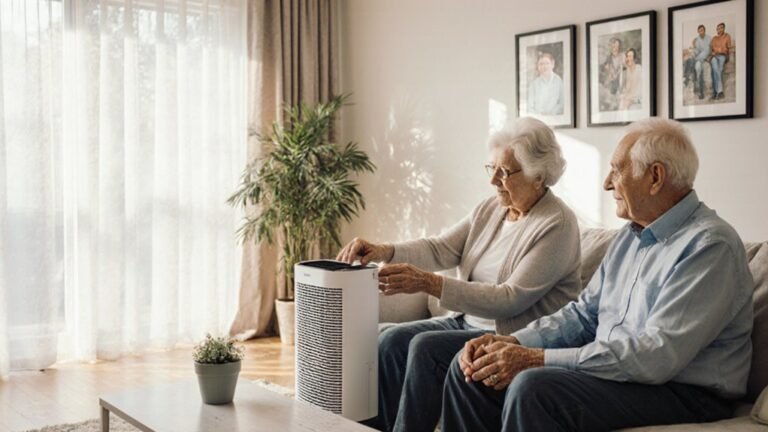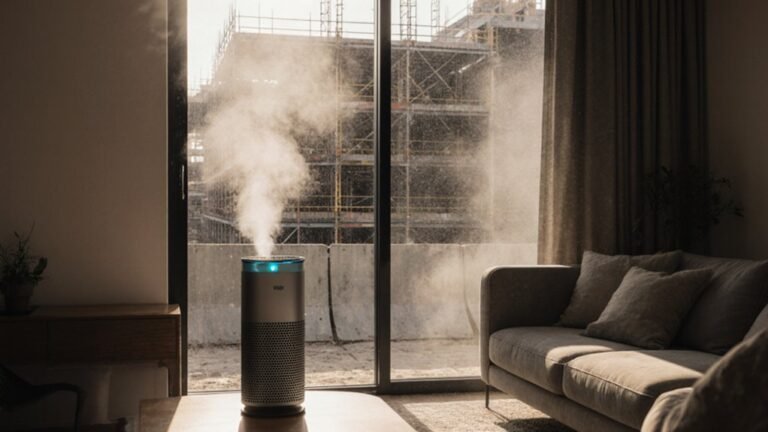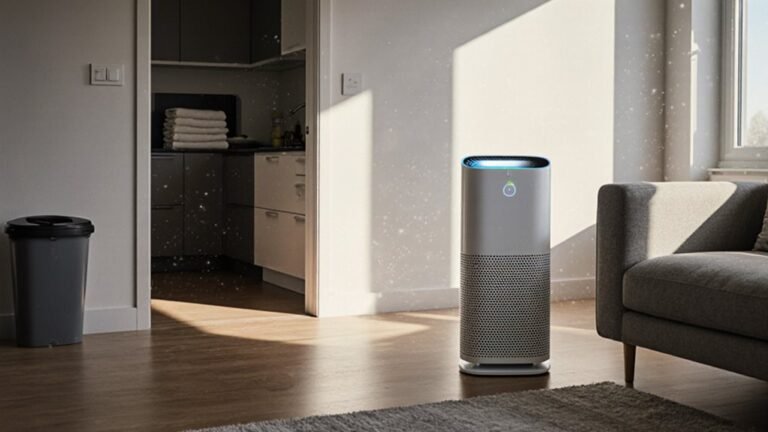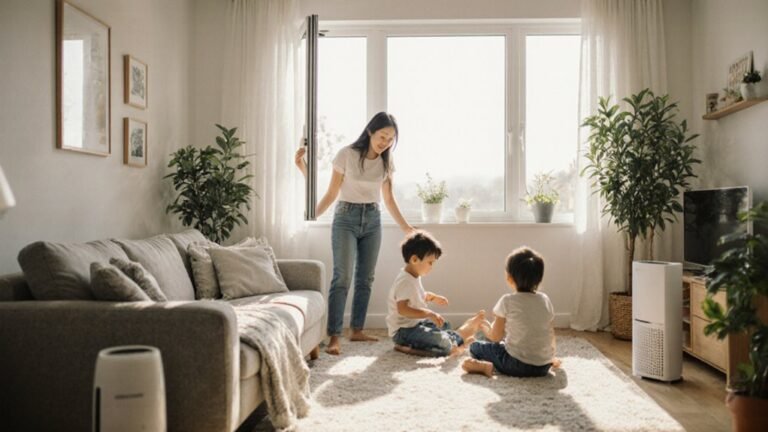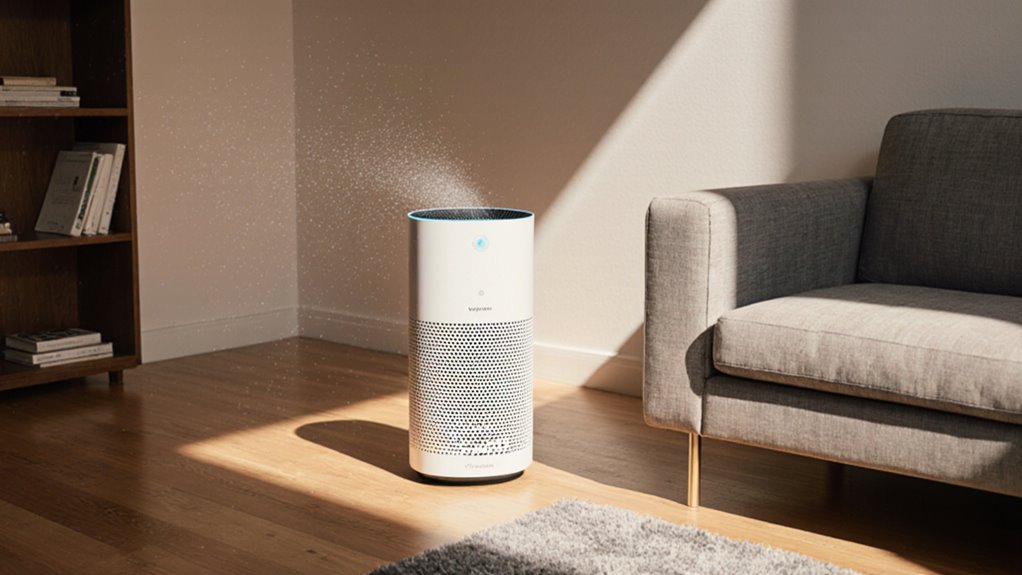

A properly sized True HEPA air purifier cuts airborne dust significantly in rooms it serves. Place the unit centrally or near dust sources and run it at a higher fan speed for initial cleanup. Continuous, moderate airflow keeps particles from resettling without constant loud operation. Combine the purifier with regular cleaning and source control like vacuuming and reducing clutter. These steps together reduce dust buildup and make maintenance quicker and easier.
Best Air Purifiers for Dust
As dust keeps landing on your shelves, floors, and even your electronics, the right air purifier can make your home feel a lot calmer. For large rooms up to 635 square feet, you can trust the Levoit Core 600S, since it moves 410 CFM and cut dust 96% in testing.
Should your space be closer to 361 square feet, the Coway AP-1512HH gives you steady four-stage cleaning and strong results.
Whenever you want a budget-friendly pick, the Levoit Essential 200S offers solid dust removal for about 380 square feet.
In case quiet matters most, the CleanAirKits Luggable XL-7 and AirFanta 3Pro give you strong airflow without much noise.
Check sensor calibration, then set maintenance scheduling and place the unit away from walls so you fit in the room’s clean-air flow.
Best Features to Look for in Dust Purifiers
Whenever dust keeps coming back no matter how often you clean, the right purifier can feel like a real relief.
You should look for enough CADR to turn your room’s air over about five times an hour, so dust doesn’t settle again so fast.
Next, choose a model with high CADR for the noise and power it uses, because you want quick cleaning without a loud hum or a big bill.
Smart connectivity helps too, especially whenever it pairs with built-in PM sensors and auto mode, so the unit works harder whenever you need it and eases off whenever you don’t.
Also, check filter longevity, replacement cost, and easy-to-clean pre-filters.
For quiet daily use, pick a low-speed performer that still keeps your space feeling fresh and comfortable.
Why HEPA Filters Matter
HEPA filters matter because they trap tiny dust particles that you can’t easily see, including pollen, pet dander, and fine skin flakes.
Whenever you live with allergies or just want cleaner air, a True HEPA filter can help you breathe easier and feel more comfortable at home.
Still, the filter works best once the purifier has strong airflow, the right room size, and a clean filter that hasn’t clogged up.
HEPA Particle Capture
Whenever dust keeps floating through your rooms, a true HEPA filter gives you a real chance to catch it before it settles on every shelf and surface. You can trust its filtration mechanics because particle behavior works against dust.
| What it grabs | What it means |
|---|---|
| Pollen and pet dander | Cleaner air around you |
| Fine dust and tiny bits | Less drift on furniture |
HEPA capture uses interception, impaction, and diffusion, so even very small particles can get trapped. Once your purifier matches the room size and pushes enough air, you can see dust levels drop within 30 to 120 minutes. In case airflow is too low, more particles settle beforehand. Therefore, choose a unit that fits your space, and replace the filter about every 6 to 12 months. That keeps your room feeling like it belongs to you.
Dust Allergy Relief
Should allergies keep making your bedroom feel like a battlefield, a true HEPA purifier can give you real relief through pulling tiny triggers out of the air before they land on your sheets, floors, and furniture. You’ll breathe easier whenever it captures pollen, pet dander, dust mite bits, and airborne molds that stir up nasal irritation.
For your room, choose a purifier with enough CADR and at least 4.8 ACH, or higher in case your symptoms hit hard. Then keep it running day and night, because many rooms show big drops in particles within 30 to 120 minutes.
Place it near the center, or beside the pet spot or doorway, so it can pull in more irritants. Also, swap old filters on time so airflow stays strong and your relief stays steady.
Filter Efficiency Matters
A true HEPA filter can feel like the quiet hero in a dusty room, because it traps at least 99.97% of airborne particles as tiny as 0.3 microns. You get cleaner air whenever that fine mesh catches pollen, pet dander, and fine dust before they settle on your shelves.
Still, efficiency works best provided airflow keeps up, so check CADR and room size together. A purifier with strong CADR, like one built for larger spaces, can support about 4.8 ACH and help you feel at home in the room again.
Also, watch the filter lifespan, because a clogged filter slows airflow and weakens results. Look for True HEPA or H13 and H14 filtration standards, since flashy labels don’t always mean real protection.
How to Choose the Right Room Size
Choosing the right room size starts with one simple goal: give your purifier enough power to clean the air fast enough for your space. Start with room volume, not just square feet, because ceiling height changes the load.
- Match the unit’s CADR or AHAM coverage to your room so it can reach at least 4.8 ACH.
- For heavy dust, aim for 8 ACH, which means choosing about 1.7 times more capacity.
- Check the formula: CADR × 60 ÷ room volume tells you the actual ACH.
- Pick a model rated a bit larger than your room so it can run quietly and still keep up.
If you share a bedroom or run it all day, look for strong low-speed performance. That way, your space feels cleaner without the fan shouting over your day.
Best Air Purifiers for Large Dusty Rooms
As dust keeps coming back in a large room, you need an air purifier that can move a lot of air without sounding like a jet engine. For spaces around 560 to 645 square feet, pick a model with strong AHAM and CADR ratings, like the Levoit Core 600S or AirFanta 3Pro, which can cut airborne dust fast.
You’ll also want true HEPA filtration, because it catches tiny particles that keep floating around your home. For easy airflow optimization, place the unit near entryways or other dusty spots, then run it on high initially.
After the air clears, switch to automatic or low mode for steady comfort. Keep up with filter maintenance, too, so your purifier stays ready for the next wave.
Best Air Purifiers for Medium Rooms
For medium rooms, the right air purifier can make dust feel a lot less stubborn and a lot less exhausting. You want strong airflow, smart maintenance, and seasonal adjustments that fit your space and routine.
- Choose a model rated for 300 to 380 sq. ft. and at least 4.8 ACH.
- The Coway AP-1512HH covers about 361 sq. ft. and uses four-stage filtration for steady dust control.
- The Levoit Essential 200S reaches about 380 sq. ft., adds app control, and works well whenever you want easy day-to-day support.
- Pick a unit with a PM2.5 sensor and auto mode so it can join you in keeping the air calm without extra noise.
Place it near the room center, not against a wall. Replace filters every 6 to 12 months, and you’ll keep your space feeling cleaner together.
Best Budget Air Purifiers for Dust
Whenever you want to clear dust without overspending, budget air purifiers can still give you strong results provided you pick the right size for your room.
The Levoit Crucial 200S stands out as a smart, low-cost choice because it cleans well, has a three-stage filter, and still keeps upkeep simple.
Provided your space is very small, cheaper compact models can work too, but you’ll usually get better dust control from a slightly larger budget unit.
Budget Dust Picks
Budget dust cleaning doesn’t have to cost a lot, and the right small purifier can still make a big dent in floating dust, lint, and pet dander. You can join the clean-air crowd without overspending.
- The Levoit Essential 200S is your best budget choice, with enough CADR for rooms up to about 380 sq. ft.
- Its filter lifespan runs near 12 months, and its energy efficiency helps you keep it on for daily use.
- In real trials, it lifted air quality by 96% in a 320 sq. ft. space, so you get strong cleanup.
- Should your room be tiny, the Xiaomi 4 Compact gives you a small footprint and a friendlier price.
Choose enough CADR for about 5 ACH, and keep a washable pre-filter to trim upkeep.
Cheap Features, Strong Cleaning
In case you liked the idea of getting cleaner air without spending a lot, this is where the real value starts to show. You can pick up the Levoit Essential 200S and get strong dust removal without feeling priced out. It covers about 380 sq ft, uses a three-stage filter, and offers a useful filter lifespan of about 12 months. Its smart integration helps you relax, because the PM2.5 sensor, app control, and auto mode do the watching for you.
| Model | Best For |
|---|---|
| Essential 200S | Everyday rooms |
| AP-1512HH | Medium spaces |
| Xiaomi 4 Compact | Tiny rooms |
If you want a steadier fit for your group space, Coway’s AP-1512HH stays dependable. For very small rooms, Xiaomi keeps costs low, but you’ll notice less punch.
Best Air Purifiers for Bedrooms
A good bedroom air purifier can make sleep feel cleaner, calmer, and a lot less stuffy, especially in case dust keeps sneaking into your night air. You want sleep friendly filters and decor matching units that fit your room and your vibe.
- Blueair DustMagnet 5240i suits bedrooms up to 357 sq ft and cut particles by 92% in trials.
- CleanAirKits Luggable XL-7 gives you quiet overnight power, with 323 cfm and less than 39 dBA.
- Levoit Essential 200S covers up to 380 sq ft, improved air by 96%, and adds app control.
- Coway AP-1512HH works well in medium bedrooms, especially whenever you run it low and steady.
Place yours near your bed or center it, and pair it with weekly cleaning and HVAC care.
Best Compact Air Purifiers for Small Spaces
Whenever you need cleaner air in a small space, the right compact purifier can make dust feel far less stubborn.
Should your room be tiny, you can look at picks like the Xiaomi 4 Compact for a tight footprint or the Levoit Essential 200S for stronger coverage and smart controls.
For the best results, place it near the center or beside dust sources, and choose a quiet model that can run steadily without getting on your nerves.
Best Picks For Small Rooms
Because small rooms trap dust fast, you need a compact air purifier that can work hard without crowding your space or sounding like a tiny jet engine.
In your room, these picks help you breathe easier and feel at home:
- Levoit Crucial 200S covers up to 380 sq. ft. and gives strong dust control.
- Xiaomi 4 Compact fits tight spots and keeps the price near $99.
- Coway AP-1512HH uses True HEPA filtration to catch 99.97% of tiny particles.
- Blueair DustMagnet 5240i stays quiet for bedroom use and supports all night comfort.
For simple portable maintenance, choose a model with a washable pre-filter and easy filter storage.
Also, check CADR and aim for at least 4.8 ACH so dust drops fast.
Whenever you pick well, your small space feels cleaner, calmer, and more like yours.
Compact Design And Placement
Compact air purifiers can make a small room feel calmer fast, and they do it without taking over your floor space. You can pick a model like the Levoit Crucial 200S for rooms up to about 380 sq. ft. or a Xiaomi 4 Compact for tighter spots.
Look for strong CADR in a small body, because that helps move dusty air through the filter more often. Then, set the unit in open space, not behind a chair, so it can breathe.
Vertical placement on a shelf or stand can help in cramped layouts, but keep it steady. Also, avoid corner obstruction, since blocked airflow cuts performance.
Should you want easier upkeep, choose a unit with a detachable pre-filter. That keeps your space fresher and easier to share.
Low Noise Dust Control
A good compact air purifier can quiet the dust in your room without turning bedtime into a wind tunnel.
In a small room, you want calm air and a calm mind. Choose a model with true HEPA filtration and enough CADR for about 5 air changes each hour. That setup can cut airborne dust fast while staying gentle.
- Use low speeds for about 35 to 41 dBA, so you hear soft white noise, not a roar.
- Pick smart models with PM2.5 sensors and auto mode for easy dust control.
- Place it near your bed or dust source, but keep airflow clear.
- Replace filters every 6 to 12 months and let the fan design work for you.
With the right compact unit, you can breathe easier and still feel like you belong in your own quiet space.
Where to Place an Air Purifier
Place your air purifier where it can actually help the room, not where it gets tucked away and forgotten. Keep it central, and leave at least a foot of space from walls and big furniture. That gap helps airflow patterns stay open, so the unit can reach its rated ACH.
Skip corner placement unless the room forces it, because tight spots block circulation. Next, set it near dust sources like entryways, busy walkways, or pet zones, so it catches particles before they settle.
Should you be able, lift it onto a small stand to improve mixing and grab dust in the middle of the room. In bedrooms, place it near your bed so you can sleep with quiet, effective cleaning. For open spaces, use more than one unit.
How to Reduce Dust at Home
Keeping dust under control at home takes more than running an air purifier, even a well-placed one can only catch what’s floating in the air. You can lower the rest with a few steady habits that fit your life.
- Vacuum carpets and furniture with a HEPA-filter vacuum, then dust with a microfiber cloth and mop hard floors.
- Wash bedding, pillow covers, and blankets weekly in hot water to cut dust mites.
- Do seasonal maintenance by cleaning or replacing filters on time, so your purifier keeps moving air well.
- During pet grooming, brush your pet outside whenever possible, because less loose hair means less dust on your floors.
Whenever you combine these steps, your room feels cleaner, and you feel more at home, too.
Frequently Asked Questions
How Often Should I Replace Dust Purifier Filters?
Replace your dust purifier filter every 3 to 6 months; that’s the sweet spot. Your filter lifespan depends on use and air quality, so check manufacturer guidance and adjust replacement frequency to keep your home feeling cared for.
Can Air Purifiers Help With Pet Allergies?
Yes, you can reduce pet allergy symptoms with an air purifier. It traps pet dander, improves allergen trapping, and helps you breathe easier so you and your home can feel more comfortable together.
Do Air Purifiers Remove Dust From Carpets?
Not directly; you’ll still sweep dust from carpets. Like a tide, your air purifier cannot lift embedded grit, but it will catch stirred particles. Pair carpet agitation with smart airflow patterns, and you’ll breathe easier together.
Are Activated Carbon Filters Useful for Dust Reduction?
Activated carbon filters help with odors and do not significantly reduce dust. HEPA filters are more effective at trapping dust, so it makes sense to choose them if you want cleaner air and a calmer, cozier home.
How Noisy Are Air Purifiers During Sleep?
You’ll usually hear a gentle white noise at low fan speed, which many people find comforting for sleep. On higher settings they can get noticeably louder, so you will want to choose a quiet model.