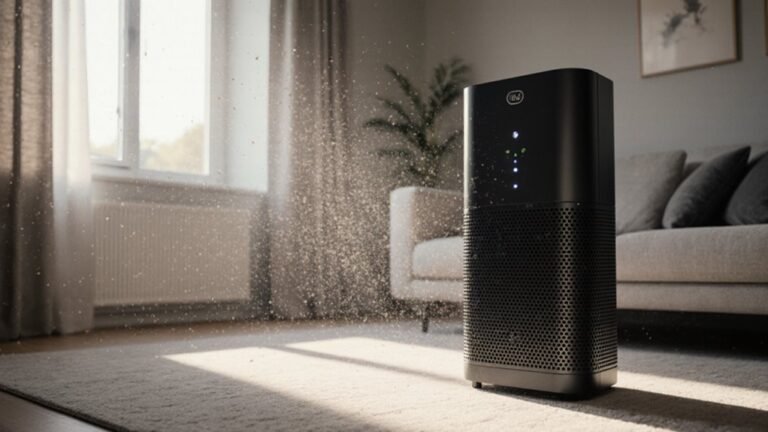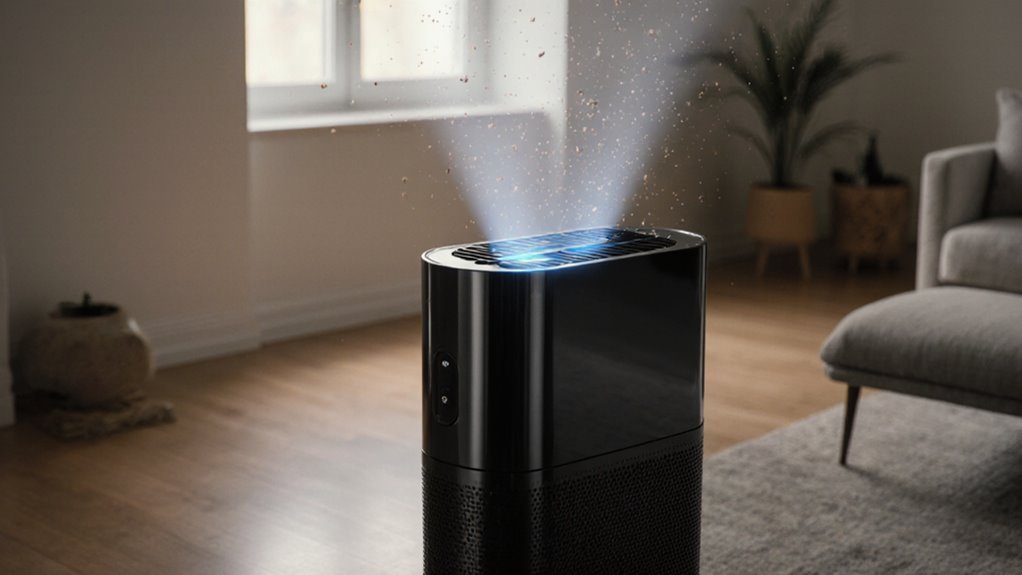

Yes — air purifiers can remove bacteria from the air by trapping particles that carry bacterial cells. True HEPA filters capture airborne droplets and aerosols down to 0.3 microns with very high efficiency, removing many bacteria-laden particles. Filter quality, proper placement, adequate air changes per hour, and regular maintenance determine real-world performance. Some units add UV-C or photocatalytic technology to inactivate microbes, though effectiveness varies by design and exposure time. Choosing the right purifier for room size and keeping filters clean maximizes bacterial reduction indoors.
Can Air Purifiers Remove Bacteria From the Air?
Yes, many air purifiers can remove bacteria from the air, and that can bring real peace of mind whenever you’re worried about what’s floating around your home.
Whenever you choose a HEPA unit or a strong MERV-13 filter, you help trap bacteria on particles before they keep moving through the room. Some UV-C models can also lower microbial persistence through damaging germs that pass through the purifier.
Still, you shouldn’t expect every device to clear every airborne reservoir on its own. Room size, airflow, and upkeep all matter, so a small cleaner in a big space won’t do much.
In case you want to feel safer with your crew, pick a evaluated model, place it well, and keep the filter fresh.
How Bacteria Travel Through Indoor Air
Bacteria don’t just float still in a room, because indoor air keeps moving them from place to place. Whenever you talk, cough, or even walk, you stir tiny droplets that can ride the airflow. That’s why airborne clustering can happen near people, vents, and corners.
| Where they go | What helps them move |
|---|---|
| Near a person | Breathing and speech |
| Across the room | Fans and HVAC flow |
| Onto surfaces | Deposition mechanisms |
These droplets can drift, linger, and then settle. So, provided you share a space, you’re also sharing the air path they follow. Warm, dry air can let them stay aloft longer, while heavier particles fall sooner. That movement is messy, but it’s normal, and you’re not helpless in it.
Which Filters Catch Bacteria?
A good air filter can be a quiet hero while you’re trying to cut down on bacteria indoors, but not every filter works the same way.
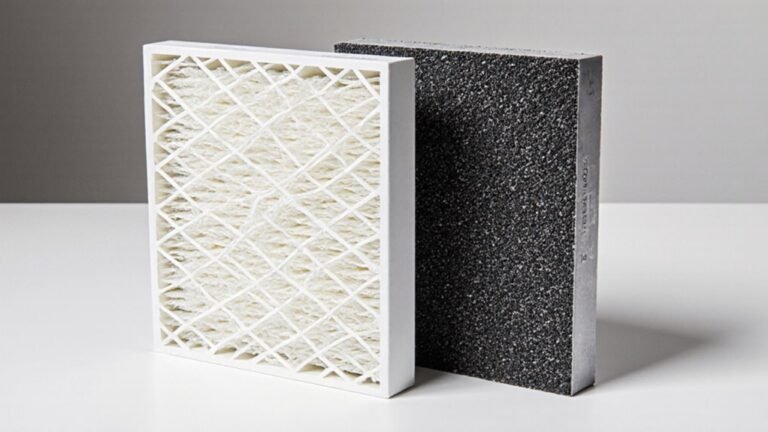
You’ll get the best support from filters that trap tiny particles well, like high-rated mechanical filters and electrostatic filtration units. These help catch bacteria riding on dust, droplets, and other bits you breathe around every day.
Some devices also add antimicrobial coatings, which can slow microbial growth on the filter itself. That matters because a dirty filter can turn into a weak spot fast.
How HEPA Filters Remove Bacteria
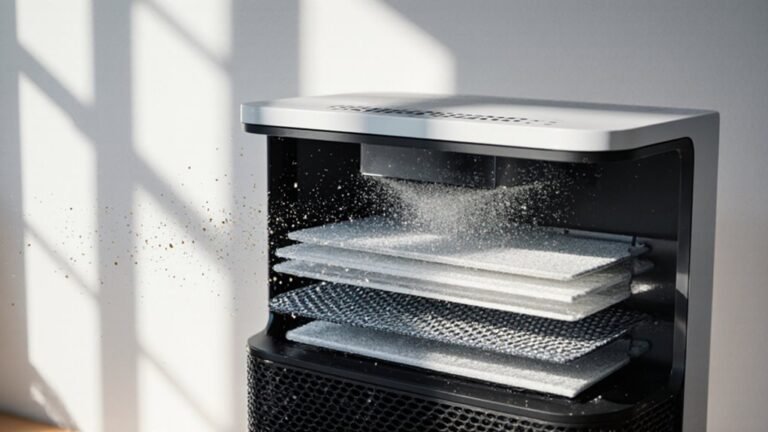
HEPA filters work like a fine net, and that’s what makes them so effective against bacteria in the air. You breathe easier because they trap bacteria-laden droplets before they spread through your room. Their particle capture happens through deep fibers that snag tiny bits as air moves past. Once the filter fills, though, filter loading can slow airflow, so regular replacement keeps your purifier strong.
| Step | What you get |
|---|---|
| Air enters | Dirty air moves in |
| Fibers catch | Particles stick fast |
| Layers build | More bacteria get held |
| Flow stays steady | Clean air keeps moving |
| Filter loads | You swap it on time |
That steady care helps you feel like you belong in a cleaner, calmer space, with less worry in every breath.
Do Activated Carbon Filters Help With Bacteria?
After talking about how HEPA filters trap bacteria, it’s fair to ask whether activated carbon can do the same job. You’ll find that it mostly can’t. Activated carbon works through adsorption mechanisms, so it grabs gases, smoke, and many smells instead of catching bacteria in the air.
That means it might help cut down microbial odors, which can make your room feel fresher and less stuffy. But bacteria are living organisms, and carbon alone doesn’t reliably remove them the way a true particle filter does.
Should you want cleaner air, consider carbon as a helpful teammate, not the star player. It supports comfort, while filtration does the hard work of reducing bacteria. So, you can enjoy the scent control, but you shouldn’t count on carbon for real bacterial cleanup.
How UV-C Air Purifiers Kill Microbes
Once UV-C air purifiers are set up the right way, they can help stop microbes from spreading through the air.
You place the unit where air moves freely, and the purifier pulls air past a UV lamp. That light damages the microbe’s genetic material, so it can’t keep growing or making you sick.
The key is the UV dose, which depends on lamp strength and Air residence time. Should air moves too fast, the light won’t work as well. Thus, a slower fan setting can help in the right room.
You still need good filtration and fresh air, because UV-C works best as one part of a team. Whenever you choose a well-tested model, you give your space a calmer, cleaner feel.
Are Ionizers Effective Against Airborne Bacteria?
Ionizers can help reduce airborne bacteria by charging tiny particles so they stick to surfaces or get trapped more easily, but you shouldn’t expect them to clear every germ from the air.
Their real-world results can vary a lot, and some units might also create ozone, which can be a health concern.
How Ionizers Work
Consider an ionizer as a tiny particle charger in the air. Through ion generation, it gives nearby dust and bacteria-bearing specks a small electrical charge. Then charge dynamics make those particles stick to walls, filters, or each other, so they’re easier to trap or settle out.
You get a cleaner-feeling room when the device works with good airflow and a purifier. Still, ionizers don’t kill every germ on contact, and they work best as part of a bigger home team, not solo.
Should you be choosing one, look for clear evaluation, low ozone output, and steady operation. That way, you can feel more confident that the air around you is getting help, not just a fancy buzz.
Bacteria Removal Limits
Even a smart ionizer has limits, so it helps to set your expectations before you trust it with airborne bacteria. You can get some help from charged particles, but you won’t get a magic shield.
In real rooms, results shift with occupant behavior, room size, and how well air moves. Should people keep walking, talking, and opening doors, bacteria can stay in circulation or settle on surfaces. Some germs also linger in residual biofilms, which ionizers don’t clean away.
That means you might see a drop in airborne load, yet not a full removal. For better control, you’ll typically want clean airflow, regular filter care, and smart placement. Then you can employ the purifier as part of the crew, not the whole team.
Safety And Ozone Risks
Whenever you look at an ionizer or any other air-cleaning device, safety matters just as much as bacteria removal, because a purifier that creates new problems is no help at all.
Ionizers can help pull some particles from the air, but you should check for Ozone exposure initially. Too much ozone can bother your lungs, especially if you live, sleep, or work near the unit. That’s why Regulatory standards matter so much. They help you spot models that stay within safer limits.
You’ll also want clear trial data, not just bold claims. In your space, choose devices that prove low by-products and steady performance. Once you do, you’re not just buying cleaner air, you’re choosing a setup that helps your household breathe easier together.
What Limits Bacteria Removal?
You may expect an air purifier to catch every bacterium, but particle size can change what gets trapped and what slips through.
Even once a filter is strong, its real-world efficiency can shift with filter quality, clogging, and how well the unit is maintained.
Airflow and room coverage matter too, because should the air don’t reach the purifier often enough, bacteria can stay in the space longer.
Particle Size Limits
Because bacteria ride through the air on particles, size is a big part of the story. Bigger droplets and clumps are easier for your purifier to catch, so aerosol aggregation can help removal. Smaller, drier bits can drift longer, and particle desiccation can shrink them even more, which makes the job harder.
That doesn’t mean you’re out of options. HEPA filters still trap many bacteria because they grab the particles carrying them, not just the germs themselves. In plain terms, your purifier works best when the airborne bits are large enough and slow enough to reach the filter. So should you be trying to protect your space, you’re not chasing every microbe alone. You’re helping your room breathe easier, one captured particle at a time.
Filter Efficiency Variability
Filter efficiency isn’t a fixed promise, and that’s where bacteria removal can get tricky. You could buy a purifier expecting steady results, but filter variability can change how well it works from day to day. A fresh HEPA filter grabs tiny bacteria-laden particles well, yet dust buildup can slow it down. In that situation, performance drift starts to chip away at capture power. You mightn’t notice it right away, but the unit can quietly lose its edge.
Even between models, the build quality, seal fit, and filter grade can differ, so two machines that look alike mightn’t act alike. That’s why you should check replacement schedules, read real evaluations, and trust devices that stay consistent, not just impressive on the box.
Airflow And Coverage
Even a strong purifier can fall short should the air in the room never reaches it. You need steady room mixing, or bacteria can hang in dead zones and dodge the intake. That’s why airflow mapping matters: it shows where stale pockets hide and where your purifier can truly help. Coverage modeling then helps you match the unit to the room, so you don’t feel left out of protection.
- You stay safer whenever air moves past the device.
- You feel relief whenever corners don’t become silent traps.
- You trust the system whenever every seat gets some cleanup.
- You breathe easier whenever placement fits your shared space.
If one fan can’t move enough air, add another unit or adjust placement. Small changes can make your room feel like a team effort.
Which Features Matter Most for Germ Control?
Whenever you want an air purifier to help with germs, the most essential feature is usually how well it moves and cleans the air, not how fancy it sounds on the box. You want a unit with strong CADR, a true HEPA filter, and simple upkeep you can keep on a schedule. That way, you and your space stay in sync.
| Feature | Why it matters | What to check |
|---|---|---|
| HEPA filter | Traps many bacteria on particles | True HEPA label |
| CADR | Shows cleaning speed | Match room size |
| Noise levels | A quiet unit gets used more | Low setting you can live with |
Next, look at maintenance schedules and filter costs. Should you skip changes, performance slips fast. Also, select a model you won’t mind hearing at night, because the best purifier is the one you’ll actually run every day.
Can Air Purifiers Reduce Sick Days at Home?
- You might cough less whenever airborne bacteria drop.
- Your kids could rest better and recover with less stress.
- You can protect your routine, so fewer days feel lost.
- Your home can feel like a stronger team for household immunity.
Still, you need steady use, clean filters, and good ventilation. The purifier won’t do everything, but it can add real support. Should you want your home to feel calmer during flu season, this small step can help you stay connected, cared for, and ready for each day.
Where Do Air Purifiers Work Best at Home?
You’ll get the best results whenever you place your air purifier in the room where you spend the most time, like the bedroom or family room.
Put it near the center of the space or where air moves well, so it can catch more bacteria-bearing particles before they settle.
In high-traffic spots, like shared family areas, your purifier can work harder for you because more air keeps moving through the room.
Optimal Room Placement
Near the center of a room, an air purifier often works best because it can pull in air from more directions and mix cleaner air more evenly through the space. You’ll feel more at ease provided it isn’t tucked behind furniture or pushed near wall obstructions, since those spots can weaken corner airflow and leave stale pockets behind.
That said, you don’t need perfection to help your home feel safer and calmer.
- Place it where air can move freely around you.
- Keep it a little away from corners.
- Give it space from curtains and shelves.
- Set it where your family gathers, so everyone feels included.
Once you choose a smart spot, you help the purifier work with your room, not against it.
High-Traffic Areas
Now that you’ve found a good spot for your purifier, the next question is where it will help the most in daily life. Put it where crowd density rises, like the kitchen, household room, or a busy hallway. These are the places where you breathe shared air most often, so the unit can catch bacteria before they spread from person to person.
Should your home feels like one of those transit hubs during rush hour, don’t worry, that’s exactly where steady airflow matters. Keep doors open when you can, and let the purifier run before guests arrive. This gives it time to mix the air and do its job. With the right placement, you’ll feel more at ease in the rooms you use together.
What Can’t Air Purifiers Remove?
Even the best air purifier has limits, and that matters in case you’re trying to make indoor air safer. You can’t expect it to erase every threat, because some material emissions keep coming from paint, cleaners, smoke, and new furniture. It also can’t fix maintenance challenges, like a clogged filter or a worn fan. That’s why you might still notice odors, gases, or tiny particles lingering nearby.
- You might feel frustrated whenever chemical smells stay in the room.
- You might worry whenever dust from a spill settles again.
- You might feel left out whenever others suppose one device solves all.
- You might get discouraged provided the purifier needs care you can’t skip.
How Should You Use an Air Purifier for Best Results?
To get the best results, place your air purifier where air moves freely and where you spend the most time, so it can catch more bacteria in the room.
Keep it running at a steady speed instead of turning it on and off, because consistent cleaning works better than quick bursts.
Then, stay on top of filter care and replacements, since a dirty filter can slow everything down and weaken the purifier’s help.
Placement For Maximum Coverage
For the best coverage, place your air purifier where it can pull in dirty air and push out clean air without getting blocked. You’ll feel more settled whenever it can move with the room, not fight it.
Try these spots:
- Near the center of the room for better corner circulation.
- Several feet from walls, curtains, and furniture.
- Close to the air you breathe most, like your desk or bed.
- Away from tight corners, so the noise footprint stays calmer and the flow stays steady.
Whenever you share the room with the purifier, you help it reach you better too. That simple choice can make your space feel cleaner, cozier, and more like everyone belongs there.
Run Time And Speed
When you want your air purifier to really help, let it run long enough to keep the air moving and cleaning all day.
For runtime optimization, keep it on the whole time you’re in the room, and use a higher speed whenever you need faster cleanup. High speed can pull more air through the unit, but speed tradeoffs matter because louder noise might make you want to turn it off. If that happens, the room loses protection. So choose a setting you can tolerate.
In a bedroom, a steady medium speed often works well. In a busy family room, increase the speed during crowded moments, then lower it afterwards. That way, you stay comfortable while the purifier keeps working for your space.
Filter Care And Replacement
A clean filter keeps your air purifier doing the hard work you bought it for, and that matters more than most people consider.
Whenever you stay on top of filter maintenance, you help the unit catch more bacteria-bearing particles and keep your room feeling safer for everyone who shares it.
Follow replacement schedules in the manual, because a clogged filter slows airflow and weakens results.
- Check the filter monthly so you don’t miss concealed dust.
- Replace HEPA filters on time, even though they still look okay.
- Vacuum prefilters often to protect the main filter.
- Watch for odd smells or louder noise, since both can indicate it’s time.
This small routine helps you protect your space and belong to a group that cares about clean, healthy air.
Are Air Purifiers Worth It for Bacteria?
Absolutely, air purifiers can be worth it for bacteria, but their value depends on the device and how you use it.
Should you choose a HEPA unit with strong CADR, you can cut down bacteria-laced particles in shared rooms and feel safer at home.
A quick cost effectiveness analysis helps you compare price, room size, and the protection you get.
Your behavioral compliance matters too, since running it in the right spot and keeping filters fresh enhances results.
You’ll get the most from units that fit your space, since oversized claims can disappoint.
In busy rooms, purifier use feels like teamwork: it supports ventilation, source control, and your daily comfort.
Frequently Asked Questions
Can Air Purifiers Produce Ozone While Removing Bacteria?
Yes. Some air purifiers can produce ozone while removing bacteria, particularly ionizing emitters and photocatalytic oxidation units. Choose certified low ozone models because safer options help your home feel healthier and provide better protection.
How Often Should Purifier Filters Be Replaced for Bacteria Control?
Replace your purifier filters every 3 to 12 months, or sooner should the filter lifespan drop or you notice microbial buildup. Why risk your shared space? Follow the maker’s schedule and check monthly in busy homes.
Do Air Purifiers Remove Bacteria From HVAC Ductwork?
No, you usually cannot count on air purifiers to sterilize ductwork. You will need ductwork sterilization and microbial sampling to verify results. A MERV 13 or higher HVAC filter can help reduce bacteria, but ventilation and maintenance still matter.
Is Independent Third-Party Testing Better Than Manufacturer Claims?
Yes, independent third party evaluations are usually better than manufacturer claims, like a trusted friend compared to a sales pitch. You get laboratory verification and consumer advocacy, so you can choose confidently and feel included in a safer, informed group.
How Many ACH Are Needed for Meaningful Bacterial Reduction?
You’ll usually want 4 to 6 air changes per hour for meaningful bacterial reduction, and 6 to 12 ACH for stronger control. Higher air change rates enhance reduction rate, especially whenever you have crowded, poorly ventilated spaces.