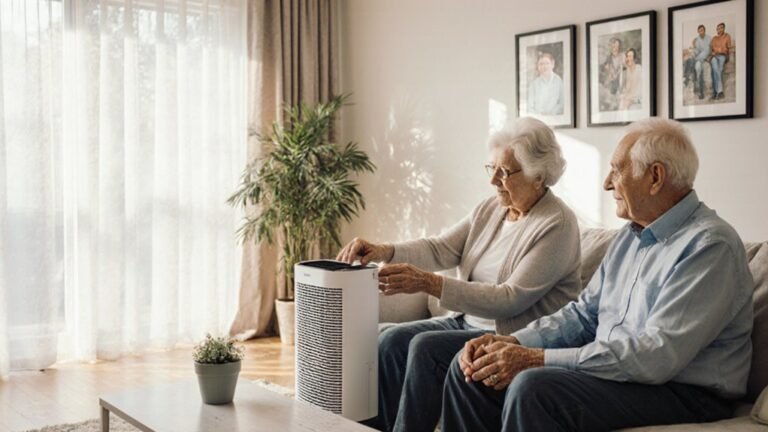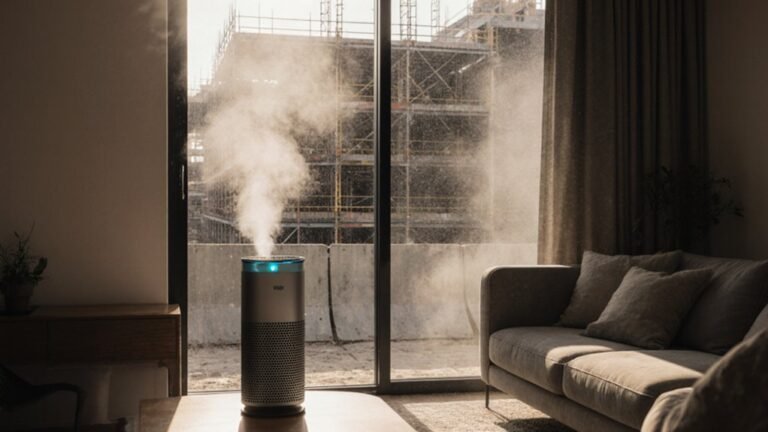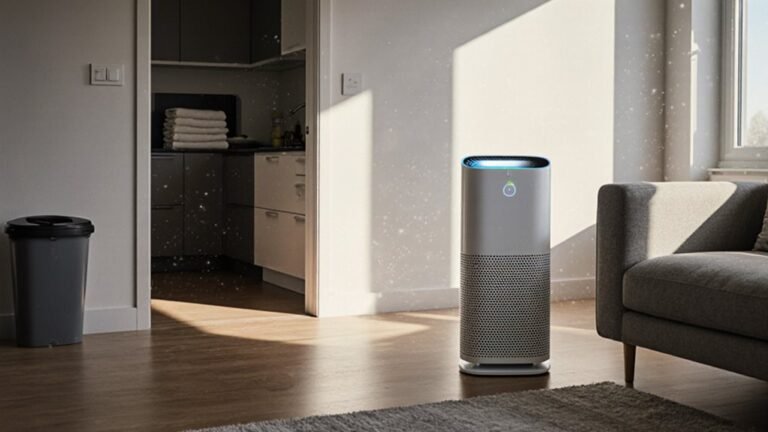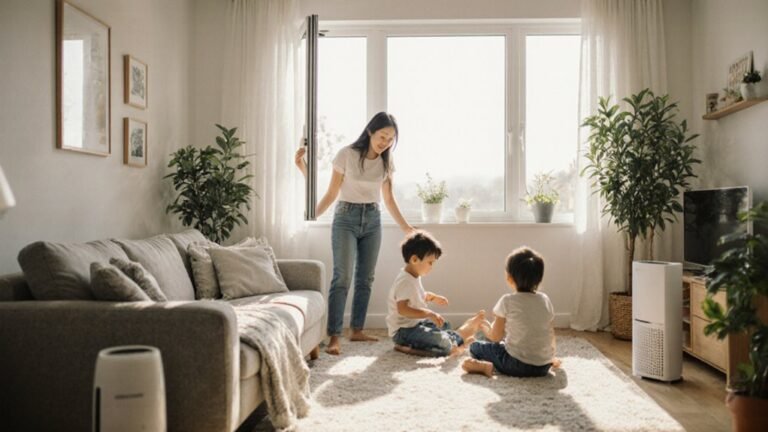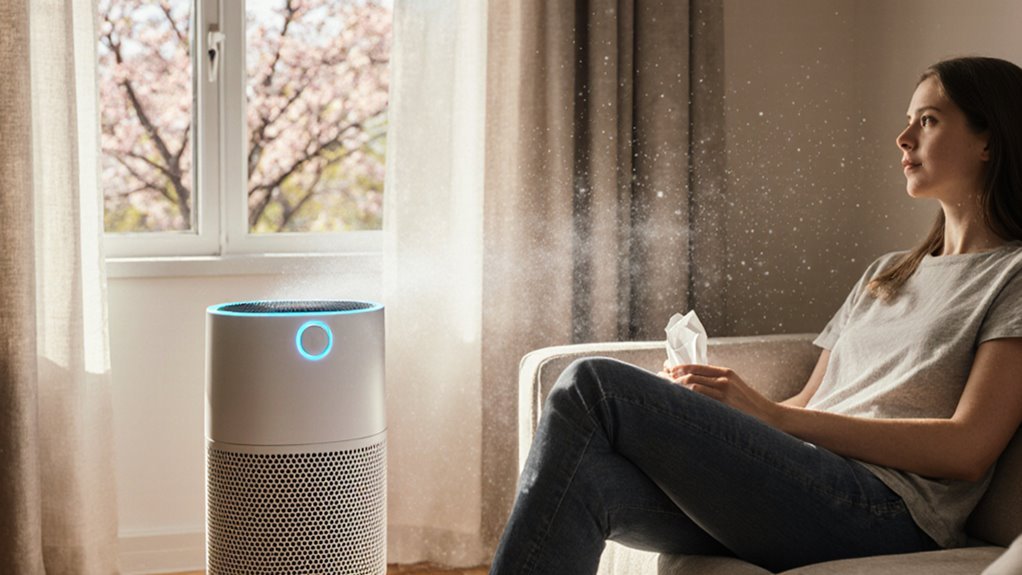

Air purifiers reduce airborne allergens by trapping pollen, pet dander, dust, and mold spores with HEPA and activated carbon filters. Consistent use in bedrooms and common rooms lowers indoor allergen levels and can reduce nasal and eye irritation. Look for units rated for the room size and a true HEPA filter to capture particles down to 0.3 microns. Regular filter replacement and proper placement improve performance. Cleaner indoor air supports easier breathing and better sleep during allergy season.
Do Air Purifiers Help Allergies?
Yes, air purifiers can help allergies, and for many people they can make a real difference in daily comfort.
You’re not imagining it whenever pollen, pet dander, or dust leaves you tired and stuffed up. With good seasonal timing, you can run portable units before symptoms surge, especially in bedrooms where you rest and recharge.
A true HEPA model captures tiny particles that float around and trigger sneezing, itchy eyes, and that annoying scratchy throat. Assuming you choose the right size for your room, you’ll feel the change more clearly.
Still, an air purifier works best as part of your routine, not as a magic fix. Whenever you use it consistently, you give yourself a cleaner space and a little more breathing room every day.
How Air Purifiers Reduce Allergy Symptoms
Once pollen starts filling the air, a true HEPA air purifier can trap those tiny particles before they settle into your nose and eyes.
It also helps cut down pet dander, so you’re not breathing in as much of the stuff that can trigger sneezing and itching.
With the right size unit running often, you can feel more comfortable in your own space, even as allergy season shows up uninvited.
Pollen Filtration Benefits
Pollen can make allergy season feel unending, but a true HEPA air purifier can take a real load off your lungs through pulling tiny pollen grains out of the air before you breathe them in. Whenever you match seasonal timing with steady use, you build a calmer indoor space that feels like it’s on your side.
You can keep showing up for your day with less sneezing and less scratchy pressure. For easy mask compatibility, run the purifier at home after you come in from outside.
- You breathe easier at night.
- You wake up less puffy.
- You feel safer in your room.
- You share cleaner air with your people.
That kind of relief matters, because pollen keeps drifting in, and filtration helps you stay grounded whenever the season won’t.
Pet Dander Reduction
Pet relief matters too, because pollen isn’t the only thing that can leave you itchy, stuffed up, and tired.
Whenever you run a true HEPA air purifier, you help trap tiny pet dander that floats from fur, skin, and bedding.
That means fewer particles reach your nose and lungs, so you might breathe easier at home.
For the best results, keep the unit near where your pet sleeps, and let it run often, especially at night.
Pair it with regular pet grooming, because less loose fur means less dander in the air.
You can also use fabric treatments on sofas and pillows to cut what settles there.
Together, these steps help you feel more at ease in the space you share.
How HEPA Filters Trap Allergens
Although HEPA filters may look simple, they work in a very smart way via trapping tiny allergy triggers as air moves through the filter fibers. You’re not imagining relief whenever a true HEPA unit helps your space feel calmer and safer for your crew. Instead of relying on electrostatic misconceptions, it uses dense fibers to catch particles as they twist and bump through.
- You breathe easier.
- Your room feels fresher.
- Your filter lifespan improves with a pre-filter.
- Your routine feels more under control.
That steady capture matters because it keeps allergens from floating back around. Should you’ve felt left out by itchy seasons, this helps you take your place in a cleaner home. Choose real HEPA, and keep airflow clear so the filter can keep doing its quiet, caring work.
Which Allergens Air Purifiers Can Remove
Air purifiers can help you breathe easier through capturing common allergy triggers like pollen, dust mites, and pet dander.
Whenever you run a true HEPA unit, it can pull these tiny particles from the air prior to them keeping irritating your nose and eyes.
That means you can get cleaner indoor air and a little more relief throughout allergy season.
Pollen Capture
Pollen is one of the easiest allergy triggers for a good HEPA purifier to catch, and that can feel like a real relief whenever your nose, eyes, and throat are already on edge.
During seasonal timing, you can lean on it whenever plant pollenation impacts push outdoor counts higher. You’re not alone in this; many people breathe easier with a purifier running nearby.
To get that steady support, focus on:
- True HEPA filtration
- A room-sized CADR
- Continuous daily use
- Clear airflow around the unit
Whenever pollen drifts inside, the filter traps tiny grains before they keep swirling through your space.
That helps you make your home feel calmer, cleaner, and more like a place where you can finally settle in.
Dust Mite Removal
Even though dust mites stay out of sight, their tiny fragments can still ride the air and make your symptoms flare up quickly.
A true HEPA purifier can help you catch those particles before they settle on your skin, nose, and throat.
Still, you’ll get better relief once you pair it with mattress encasements, because that cuts the source hiding in your bed.
Add humidity control, too, since dry, balanced air helps slow mite growth and keeps your room less inviting to them.
Place the purifier near your bed, run it every night, and keep the filter fresh so airflow stays strong.
With these steps, you can breathe easier and feel more at home in your own space.
Pet Dander Filtration
Whenever your pet shakes, grooms, or naps on the couch, tiny dander flakes can float into the air and stir up sneezing, itchy eyes, and that stuffy feeling you hate.
A true HEPA purifier can catch many of those particles before they settle into your space, so you can breathe easier with your pet close beside.
Use allergen mapping to spot where dander builds up most, like bedrooms, rugs, and favorite chairs.
Then pair air cleaning with pet grooming to cut the source at home.
- Choose a HEPA unit sized for your room.
- Run it near the spots you share most.
- Keep filters fresh so airflow stays strong.
- Vacuum and dust so trapped dander doesn’t return.
That way, your home feels more welcoming for you and your furry sidekick.
Best Air Purifier Features for Allergies
Whenever allergies start making your home feel like a battle zone, the right air purifier can bring real relief. You’ll want true HEPA filtration initially, because it catches tiny pollen, mold, and pet dander that keep you sneezing.
Next, look for a pre-filter, since it grabs bigger dust and hair before they clog the main filter. Activated carbon also helps whenever smells or indoor fumes make you feel worse.
For daily comfort, choose quiet operation so you can sleep, relax, and breathe without a loud hum in the background. Energy efficiency matters too, because you might run it often during allergy season.
Finally, check the CADR so the purifier fits your room, and replace filters on time so your air stays cleaner and your home feels calmer.
How to Choose the Right Air Purifier
Choosing the right air purifier can feel like shopping for peace of mind, especially as allergy season has you reaching for tissues all day. You want a unit that fits your home and helps you breathe easier with your people nearby. Look for true HEPA filters, plus smart features should you like alerts and app control.
- Check for true HEPA, not just claims.
- Pick budget models with honest filter costs.
- Choose smart features that fit your routine.
- Avoid ozone makers and odd promises.
In case you share a room, a quiet machine can feel like a small team win. Also, choose one you’ll actually run every day, because steady use matters more than fancy marketing.
Once you trust your choice, your space feels calmer, and so do you.
Why Room Size and CADR Matter
A purifier can be quiet, sleek, and full of promises, but it won’t help much provided it’s too small for the room. Once you match room capacity to CADR, you give yourself real relief instead of wishful reasoning.
| Room size | CADR need |
|---|---|
| Small bedroom | Lower but true HEPA rated |
| Medium household room | Midrange, steady particle clearance |
| Large shared space | Higher CADR or two units |
Supposing the numbers fit, you’ll notice cleaner air faster, and your space feels more like a calm place where you can breathe with everyone else. A strong CADR moves pollen, dust, and pet dander through the filter at a useful rate, so particle clearance keeps up with allergy season. In case it’s undersized, it works harder, yet you still wait longer for comfort.
Best Places to Put an Air Purifier at Home
Should you want your air purifier to help, where you place it matters more than most people expect. Put it where you breathe the most, especially your bedroom, so you can rest with less pollen in the air. Then move to shared rooms that your family uses often, because clean air feels better whenever everyone gets a turn.
- Bedroom corner, but not behind furniture.
- Nursery placement near the crib, yet out of reach.
- Household room near the center, where your people gather.
- Garage placement only provided fumes and dust drift inside.
Keep it away from walls, curtains, and clutter so air can move freely. Once you choose the right spot, you’re not just placing a machine. You’re making a calmer home for everyone who resides there.
How to Use an Air Purifier Better
To get the best results, place your purifier where air can move freely around it, not tucked in a corner or concealed behind furniture.
Keep it running as much as you can, especially in the room where you sleep, because steady cleaning works better than quick bursts.
Afterwards check the filter on schedule and replace it once it’s dirty, since a fresh filter keeps trapping pollen, dust, and pet dander the way it should.
Optimal Placement Tips
At the time you place your air purifier in the right spot, it can do a lot more of the hard work for you, and that matters most during allergy season. Put it where air moves freely, so you and your room feel the benefit faster.
- Keep floor placement near the center of the room for steady flow.
- Skip corner avoidance, because tight spots trap air and weaken the clean-air reach.
- Set it close to where you sleep, so you wake up feeling less stuffed up.
- Leave space around it, so your home feels open and your purifier can breathe too.
If you share a room, choose a spot that helps everyone feel included. Small shifts can make your space feel calmer, cleaner, and more like a place where you can finally relax together.
Filter Maintenance Basics
Once you’ve found the best spot for your purifier, the next step is keeping it working like it should, because a dusty filter can turn a helpful machine into a tired one. Check the pre-filter each week, and replace or clean it whenever it looks gray. Watch the filter indicators so you don’t guess; they’ll tell you whenever airflow drops. Use this quick guide:
| Task | Timing |
|---|---|
| Check pre-filter | Weekly |
| Clean dust outside | Weekly |
| Inspect HEPA | Monthly |
| Replace filter | Per schedule |
| Review warranty tips | At purchase |
Keep the vents open, and don’t run the unit with loose parts. Should you hear odd noise or smell dust, change the filter sooner. Good maintenance helps you feel at home with cleaner air, and it keeps your purifier ready for every sneeze season.
What Air Purifiers Can’t Do for Allergies
Even though an air purifier is a good one, it can’t solve every allergy problem, and that’s essential to keep in mind so you don’t expect too much from it.
You still need to handle dust on surfaces and limit allergen sources.
It won’t fix all short term expectations, and air purifier myths can make you feel let down.
- It can’t remove settled dust.
- It won’t stop pollen from coming in.
- It can’t replace medicine or a doctor.
- It won’t clean every room at once.
How to Maintain Your Air Purifier
Keeping your air purifier in good shape matters because a clean machine can keep doing its job without losing power or pushing trapped dust back into your room.
Check the pre-filter every few weeks, since it catches hair and larger bits initially. Vacuum it gently or wash it provided the maker says you can.
Then watch the HEPA filter date and do filter disposal on schedule, because a full filter can slow airflow and strain the unit.
Wipe the outside with a soft cloth so dust doesn’t slip inside.
Also, keep vents open and set the purifier where air can move freely.
In case you won’t use it for a while, handle seasonal storage through cleaning it, drying it, and covering it in a dry spot.
How to Make Air Purifiers Part of Your Allergy Routine
Now that your purifier is clean and ready, you can start using it as part of your daily allergy plan, not just as a box in the corner. Put it where you spend time, then let it run while you work, rest, and sleep. That steady rhythm helps you feel like you’re not fighting pollen alone.
- Turn it on before symptoms spike.
- Keep it near your bed for sleep hygiene.
- Match its use with travel strategies, like running it after you unpack.
- Check the filter on a set day each month.
When you build this habit, the room feels calmer, and you do too. Pair the purifier with closed windows during high pollen times, and you’ll create a space that feels shared, safe, and truly yours.
Frequently Asked Questions
How Long Does It Take to Notice Allergy Relief?
You may notice immediate relief from cleaner air, but real allergy easing usually builds over weeks. With continuous use, you will often see gradual improvement in about 2 to 6 weeks, especially overnight.
Do Air Purifiers Work Better at Night?
Yes, you’ll often notice better relief at night because you’re breathing the same air for hours, and sleep timing keeps exposure steady. Align purifier use with airflow patterns, and you will wake up less congested.
Can Air Purifiers Reduce Allergy Medication Use?
Yes, you can often need less allergy medicine if you run a true HEPA purifier consistently. It can lower symptoms and improve medication adherence, but you should still watch prescription interactions and consult with your clinician.
Are Ozone-Producing Purifiers Safe for Allergy Sufferers?
No, you should not trust ozone producing purifiers; they can create ozone risks and harmful health impacts, especially if you are sensitive. Choose true HEPA instead, so you will breathe easier with safer, community backed relief.
Should I Use an Air Purifier With My HVAC System?
Yes, you should provided that your HVAC allows safe HVAC integration and filter compatibility. You will get broader allergen reduction, cleaner air, and a more comfortable home; just choose the right MERV filter and check airflow limits.