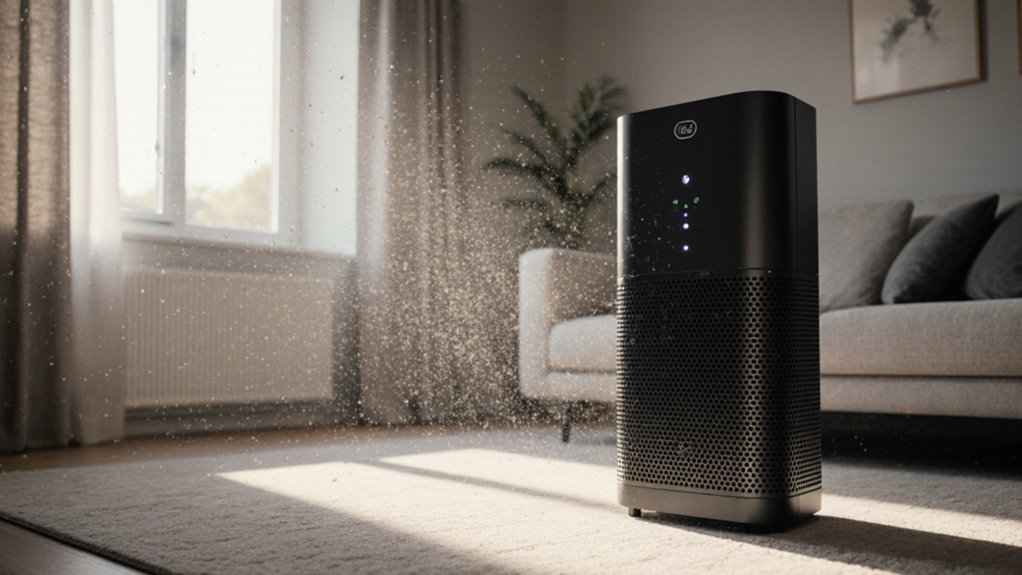

Most people spend over 80% of their time indoors, so indoor air directly affects daily health and comfort. Air purifiers capture dust, pollen, smoke, and pet dander, reducing allergy and irritation triggers. Different purifiers target different particle sizes and use distinct filtration methods like HEPA, activated carbon, or ionizers. Choosing a purifier depends on the specific pollutants present, room size, and noise preferences. This guide explains what common devices trap, what they miss, and how to pick the right unit for your space.
What Air Purifiers Remove
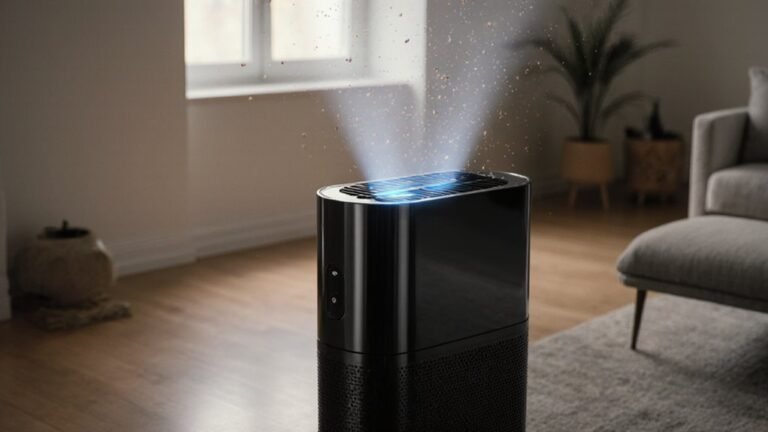
As you run an air purifier, it mainly pulls tiny particles out of the air you breathe. You get help with dust, pollen, smoke, pet dander, mold spores, and other bits that can bug your lungs.
Some units also use activated carbon to catch odors and some gases, so your room can feel fresher.
Should you share space with indoor plants, they can add a calm touch, but they won’t replace filtration.
To keep your purifier working well, check filter lifespan and change filters on schedule. That keeps airflow strong and helps you stay comfortable day after day.
Whenever you choose the right unit for your room, you make your home feel more like a place where you can relax, breathe easier, and belong.
How HEPA Filters Trap Particles
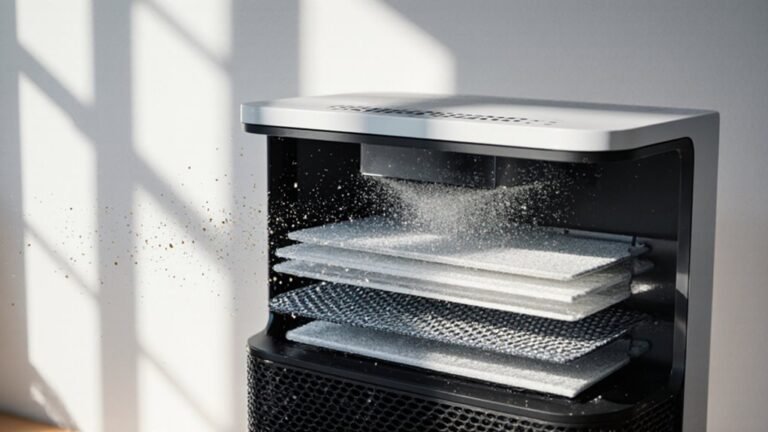
HEPA filters trap particles via pulling air through a dense mat of tiny fibers, and that’s where the real work begins. As air moves through, particles get caught through direct hit, through drifting into a fiber, or through sticking via tiny air motions that pull them off course.
HEPA Filtration Mechanics
At the point air moves through a true HEPA filter, it doesn’t just slip past like water through a loose net, because the fibers inside the filter use several trapping forces at once.
You get help from tiny twists in the maze, so particles lose their easy path and stick to the mesh.
As air keeps moving, the filter also creates pressure drop, and that’s normal; it means the air meets resistance as it passes through the dense material.
Over time, filter aging changes that flow, so you might notice less smooth airflow and a tired fan.
That’s why you should check the filter frequently and replace it if required.
In doing so, you keep your purifier feeling like part of your home team.
Particle Capture Process
That dense HEPA mesh doesn’t just block dirt in one simple way, and that’s what makes it so effective.
Whenever you breathe through a purifier, tiny particles follow filtration dynamics that bend them into the fibers, especially as air speeds change.
Bigger bits get caught by sieving, while smaller ones drift and hit strands by chance.
Some also stick because of particle deposition, so the filter keeps grabbing more as air moves through it.
Near the 0.3 micron size, the fibers still trap a lot because different capture paths overlap.
So you get steadier cleanup in your room, and that can feel like a relief whenever dust, pollen, or smoke hangs around.
You’re not just filtering air; you’re building a calmer space with each pass.
Why CADR Ratings Matter
CADR tells you how fast an air purifier can clean smoke, dust, and pollen from the air, so it’s one of the best ways to compare models.
Whenever you match the CADR to your room size, you give your purifier a real chance to clear the air instead of just moving it around.
Should the CADR be too low for the space, you might still be breathing more particles than you want, and that can feel pretty frustrating.
CADR Basics
While you’re trying to clear the air in a room, CADR is one of the most useful numbers to check because it tells you how fast a purifier can remove particles like smoke, dust, and pollen.
With CADR interpretation, you can compare models with more confidence, instead of guessing from bold box claims. Filter evaluation gives you a cleaner way to judge performance because trusted labs measure how much clean air a unit really delivers.
So, should you want a purifier that fits your space and your routine, look for a higher CADR for the particle type that bothers you most. Then you’ll know the machine can keep up whenever life gets messy, from cooking smoke to a dusty corner.
That simple check can help you feel more at home, breathing easier together.
Matching Room Size
A purifier only helps provided it can keep up with the room you put it in, and that’s where size really matters. Should you pick a unit with too little CADR, you might still hear the fan, but you won’t feel the comfort. Match the purifier to your room’s square footage, then check the run time it needs to clear the air you share.
- You feel calmer whenever the unit fits the space.
- You save energy consumption because the purifier works efficiently.
- You avoid louder noise levels and surprise filter replacement costs.
Once the size is right, you and your family can breathe easier together. A well-matched purifier also helps your room feel like home, not a waiting room.
Best Air Purifiers for Dust and Pollen
For most homes, the best air purifiers for dust and pollen use a true HEPA filter, because it can trap 99.97% of particles as small as 0.3 microns in a single pass.
You’ll feel better whenever your allergy relief starts at home, especially in a bedroom setup where you rest for hours. Choose a unit with a strong CADR for dust and pollen, and pick one sized a bit larger than your room in case you’re unsure. Then place it where air can move freely, not concealed behind a dresser. Run it often, because steady cleaning helps lower floating dust and pollen.
Since settled dust still stays on shelves and bedding, keep vacuuming and wet dusting too. That way, you and your space can breathe easier together.
Air Purifiers for Smoke
Smoke changes the game because tiny particles and harsh gases can spread fast through your home, and a good purifier can help you breathe easier whenever the air feels heavy. Whenever wildfire communication warns of bad air, you can act fast and protect your space. Look for True HEPA plus activated carbon, because smoke chemistry includes fine PM2.5 and odors that filters can trap. Keep it running in the room where you live most, and let it work steadily instead of in short bursts.
- You’ll feel calmer whenever the air seems less sharp.
- You can rest better understanding your family breathes cleaner air.
- You’ll fit in with neighbors who prepare promptly and stay ready.
Choose a unit with strong CADR, and check the filters often so smoke doesn’t sneak back in.
Air Purifiers for Pet Dander and Odors
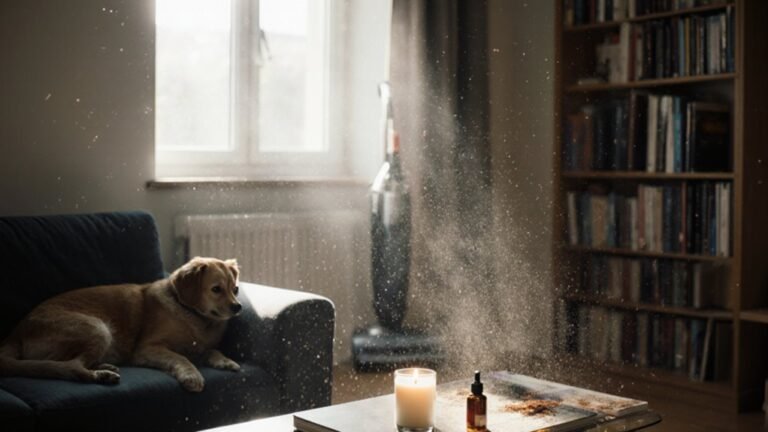
Whenever you live with pets, the air can fill up with dander and odors faster than you’d expect, especially in small rooms where fur and dust like to linger.
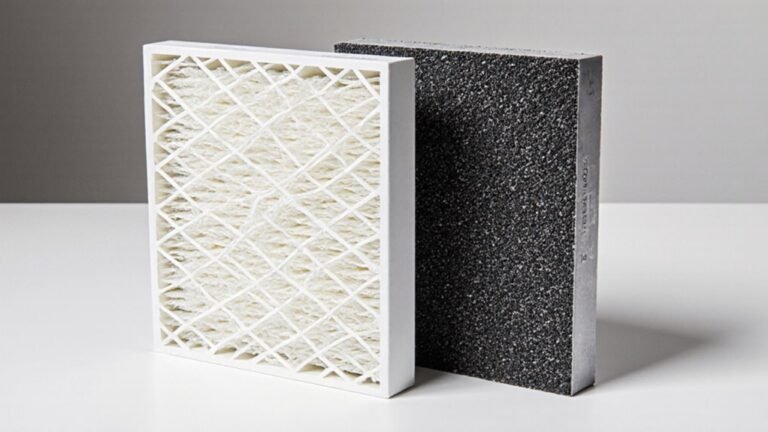
You can ease that daily tug by choosing a purifier with a true HEPA filter for pet dander and an activated carbon stage for odor adsorption. HEPA catches tiny flakes before they settle on your clothes or couch, while carbon helps trap the smells that make a room feel less fresh.
Place the unit where you and your pets spend the most time, and let it run often so the air stays more comfortable. Then pair it with regular vacuuming and washing bedding, and you’ll build a home that feels cleaner, calmer, and easier to share.
Features That Improve Particle Capture
A purifier works best whenever it can pull air in, trap particles, and send cleaner air back out without much fuss. You want tight filter sealing, so dirty air can’t sneak around the filter and back into your room. You also want fan turbulence kept low, because smoother airflow helps particles reach the media instead of bouncing away.
- A true HEPA filter can help you breathe easier whenever pollen, dust, and smoke feel like they’re taking over.
- A snug frame and good gaskets can make you feel protected, not shortchanged.
- Steady airflow can give you that calm, settled feeling that says, “You’re covered.”
If your purifier has a prefilter as well, it catches bigger bits initially and keeps the main filter working longer.
How to Match a Purifier to Your Room
To match a purifier to your room, start when measuring the space so you know how much air it needs to clean. Then look at the CADR and make sure the purifier can handle your room size with enough airflow for steady particle removal.
After that, place it where air can move freely, because a good unit can’t help much unless it’s tucked behind a couch or shoved into a corner.
Room Size and Coverage
Picking the right purifier size can make the difference between a room that feels fresher and one that still leaves you sneezing near bedtime. You want a unit that fits your space, not just your floor plan. Start with the room’s square footage, then check the ceiling height, because taller rooms hold more air to clean. Also watch for door leakage, since gaps can let dirty air sneak back in and make your purifier work harder.
- In a snug bedroom, the right fit helps you breathe easier and sleep with less worry.
- In a shared lounge room, good coverage helps everyone feel included in the cleaner air.
- In a busy home office, proper sizing keeps you calm and focused, not frustrated.
CADR and Airflow
CADR tells you how fast a purifier can clean the air, so it’s the number you want to watch whenever your room feels stuffy or dusty.
You want a CADR that fits your room, because weak airflow leaves particles hanging around.
Start with seasonal sizing: a bigger room, smoky days, or closed windows call for more cleaning power.
Then consider filter tuning, since dense filters can slow airflow assuming the fan can’t keep up.
You’ll also want to notice noise tradeoffs, because a quiet unit that you never run won’t help much.
Smart controls can make this easier by matching fan speed to the mess in your air.
Once you choose well, you give yourself a cleaner space and a little more breathing room.
Placement and Layout
Whenever you place a purifier well, it can do a lot more with the same fan power, and that small choice can feel like a big relief. Put it where you spend time most, like your bedroom or residential room, and keep it near the center of the room. This helps airflow pathways stay open and lets clean air reach you faster. Also, watch your furniture placement. A couch, curtain, or bed can block the intake and cut performance, even provided the unit looks fine.
- You breathe easier provided the path stays clear.
- You feel calmer assuming the room works with you.
- You trust the space more provided the purifier can help your whole crew.
Leave space around the unit, lift it off thick carpet when needed, and keep doors open assuming you want shared air comfort.
Common Air Purifier Buying Mistakes
One of the biggest air purifier buying mistakes is treating every machine like it does the same job, because the truth is that the wrong unit can leave you breathing almost the same air you started with. At the time you shop, don’t fall for false claims or let aesthetic priorities pick the filter for you. | Mistake | Why it hurts | Better move |
| — | — | — |
|---|---|---|
| Fake HEPA labels | Weak capture | Check true HEPA |
| Tiny CADR | Slow cleaning | Match room size |
| Ozone models | Irritate lungs | Skip them |
| No carbon stage | Odors linger | Choose both |
You want a purifier that fits your room and your needs, not just your décor. Also, don’t assume one box handles dust, smoke, and gases equally. That mix of honesty and fit helps you feel at home, and it gives your air a fair shot too.
How to Use an Air Purifier Daily
Every day, a good air purifier works best whenever you use it like part of your routine, not like a machine you turn on only after the air already feels bad. Put it where you spend time, keep doors clear, and let it run while you work, relax, or sleep.
- Run it on sleep mode at night so you rest with cleaner air and fewer sneezes.
- Check the filter monthly, because a clean unit helps you breathe easier and feel safer in your room.
- Plan filter replacement before the airflow drops, so your purifier keeps up if smoke, dust, or pet dander shows up.
If you live with family or roommates, this habit helps everyone feel included, cared for, and more comfortable together.
Frequently Asked Questions
Can Air Purifiers Reduce Indoor Carbon Dioxide Levels?
No, you can’t expect air purifiers to cut carbon dioxide; they just recycle your room’s air like a gym bro skipping cardio. You need better ventilation efficiency, because fresh air, not filtration, lowers CO2.
Are Ionizers Safe for Everyday Home Use?
Generally, you shouldn’t rely on ionizers for everyday home use. You could face ozone concerns, and your user experience can suffer from odors or irritation. Choose a true HEPA purifier instead, and you will breathe easier together.
How Often Should HEPA and Carbon Filters Be Replaced?
Replace your HEPA filter every 6 to 12 months and your carbon filter every 3 to 6 months, but watch for filter lifespan clues. If airflow drops, odors linger, or replacement indicators flash, you will know it is time.
Do Air Purifiers Remove Particles Already Settled on Surfaces?
No. An air purifier does not remove particles that have already settled on surfaces — it mainly reduces airborne particles. You will need vacuuming and wet dusting to remove settled particles, and regular cleaning helps limit surface resuspension in shared spaces.
Should I Use a Purifier With Ventilation or Opening Windows?
Use both if you can: window ventilation and a purifier work together, especially when outdoor air is clean. Place the purifier centrally, close windows during smoke or high pollen, and you’ll breathe easier.