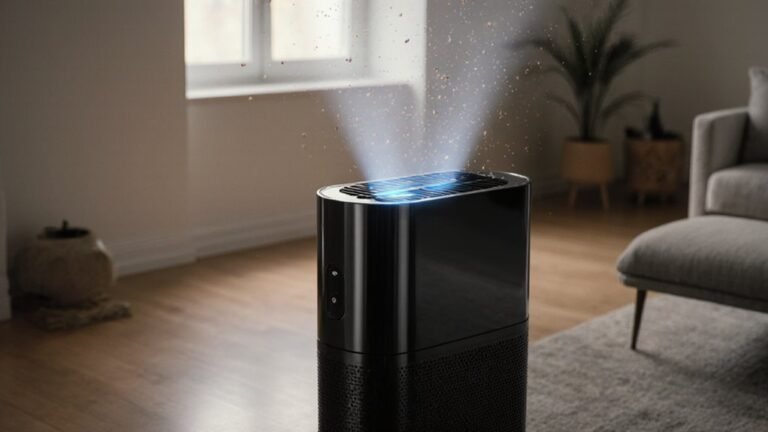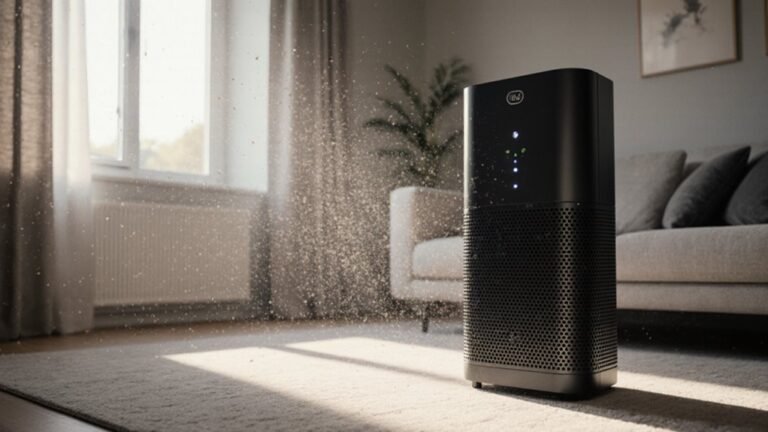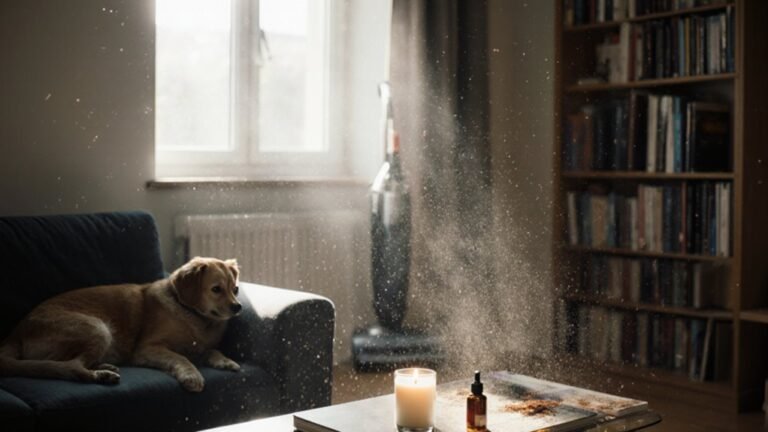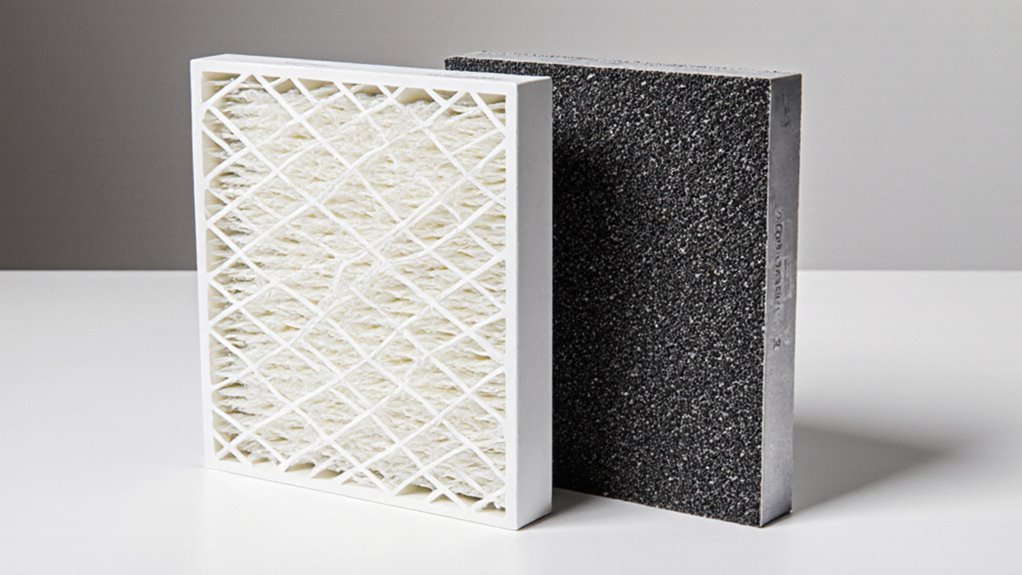

HEPA filters trap tiny particles like dust, pollen, and pet dander. Activated carbon filters absorb odors, smoke, and volatile organic compounds (VOCs). For musty bedroom smells after a rainy week, activated carbon handles the odor source while HEPA improves overall air cleanliness. Combining both provides the broadest protection against particles and smells. Choosing depends on whether lingering odor or airborne particles bother you more.
What HEPA and Carbon Filters Do
HEPA and activated carbon filters do very different jobs, and that’s what makes them so useful together.
You rely on HEPA to catch tiny particles like dust, pollen, pet dander, and other airborne bits that can bother your breathing.
You rely on activated carbon to trap gases, smoke smells, and VOCs that a particle filter can’t stop.
So should your room feels stuffy, each filter covers a gap the other leaves behind.
That can make your space feel more comfortable and more like home.
Whenever you check filter lifespan, look at how often you run the unit and what floats through your air.
For installation tips, place the filter snugly, follow the airflow arrows, and keep the prefilter clean so both parts work well longer.
How HEPA and Carbon Filters Work
As air passes through a HEPA filter, the filter does the hard work of snagging tiny particles before they can keep floating around your room. You get this help through airflow mechanics that push air into dense filter materials, where fibers trap dust, pollen, and other bits via interception, impaction, and diffusion. The particles don’t usually bounce back out, so the air leaving the filter feels cleaner and easier to breathe.
Activated carbon works differently. Instead of catching solids, you send air past porous carbon, and gases and odors cling to its surface through adsorption. That means smoke smells, VOCs, and other invisible annoyances can stick to the carbon like guests who stayed too long. Together, these filters help you feel more at home in your own space.
Best Uses for HEPA Filters
Often, the best time to choose a HEPA filter is whenever you want real relief from tiny airborne particles that keep bothering you day after day. You’ll do well with it in bedrooms, household rooms, and nurseries where dust, pollen, and pet dander can stir up discomfort.
It also helps in allergy season, after cleaning, or whenever wildfire smoke leaves fine ash in the air. Should you need strong particle control, a true HEPA unit can support cleanroom standards in sensitive spaces and help you breathe easier at home.
Best Uses for Activated Carbon Filters
Activated carbon filters shine whenever you want to cut stubborn odors and trap VOCs that HEPA filters can’t handle. You can use them in kitchens to tame cooking smells, greasey air, and lingering smoke after a busy meal. Should your space feels sharp, stale, or just a little too “last night’s dinner,” carbon can help make it feel fresh again.
Odor Removal
As odors keep hanging in the air, a good activated carbon filter can be a real relief because it tackles the gas molecules that make smells linger in the outset. You feel the difference fast whenever kitchen fumes, pet smells, or microbial odors try to take over your space. The carbon’s tiny pores grab those smell-causing particles, and chemical breakdown can help weaken stubborn compounds too.
| Use case | Why it helps |
|---|---|
| Cooking | Cuts greasy smells |
| Pets | Softens lingering stink |
| Trash area | Freshens shared air |
| Damp rooms | Reduces musty note |
VOC Capture
At the point odors keep lingering around, VOCs are often the concealed troublemakers behind the scenes. Whenever you choose activated carbon, you’re aiming for VOC capture, not particle trapping. The pores grab gas molecules through adsorption, and that’s where adsorption kinetics matter most.
Faster airflow can shorten contact time, so a dense carbon bed often works better for stubborn fumes. You’ll also want to watch breakthrough behavior, because once the media fills up, VOCs slip through again. Humidity effects can weaken performance too, since water competes for space on the surface.
That’s why you get the best results in rooms with steady airflow, moderate moisture, and a strong carbon load. Should you be handling paint smells, solvents, or renovation fumes, carbon can help you breathe easier and feel like you’re not tackling it alone.
Kitchen Air Quality
In a busy kitchen, the air can turn heavy fast, and that’s where activated carbon really earns its keep. You’re not just fighting smells; you’re tackling cooking emissions that drift from frying, simmering, and searing. Carbon pulls in gas fumes and lingering odors, so your space feels fresher and more welcoming for everyone at the table. It also helps slow grease buildup on nearby surfaces by catching some airborne residue before it settles. Should you love cooking for family or roommates, that matters.
A strong carbon filter works best alongside good ventilation and a true HEPA filter, since HEPA handles particles while carbon handles the gases. Together, they help your kitchen feel cleaner, calmer, and more like home.
HEPA vs Activated Carbon for Odors
Whenever odors are the problem, you’ll want to know that HEPA filters catch tiny particles, but they don’t trap the gases and smell molecules that cause most odors.
Activated carbon works differently because it adsorbs those odor-causing molecules, which makes it the better choice for cooking smells, smoke, and VOCs.
In case you’re handling both dust and odors, a unit with HEPA and activated carbon can give you much better results.
Odor Removal Mechanisms
Odors can feel stubborn and personal, which is why it helps to know that HEPA and activated carbon do very different jobs. HEPA traps tiny particles, but it can’t grab the gas molecules that carry most smells. Activated carbon works through surface chemistry, so those molecules stick to its pores instead of drifting back to you.
- You get particle control with HEPA.
- You get odor control with carbon.
- Carbon can reduce olfactory masking from strong smells.
- Together, they help your air feel cleaner and more comfortable.
When you choose a filter, consider about what’s bothering you most. In case the smell is real, carbon does the heavy lifting. Suppose the air also feels dusty, HEPA joins in and supports your space without making you sort it all out alone.
Best Uses For Odors
Activated carbon usually wins for odors because it can actually grab the gas molecules that make smells linger, while HEPA mostly handles the tiny particles that float with them.
Whenever you’re fighting pet odors, cooking smells, or a smoky room, you’ll usually feel better with carbon in the mix. It helps you tackle what your nose notices most, so your space feels fresher and more welcoming.
HEPA still matters whenever odors ride along with dust, dander, or pollen, because it clears those particles out first. For the best results, pair carbon with strong room ventilation and a true HEPA filter.
That way, you’re not just masking the problem. You’re helping your home breathe easier, and you can relax appreciating your air is doing more for you every day.
HEPA vs Activated Carbon for Allergies
For allergies, HEPA usually does the heavy lifting because it traps tiny particles that trigger sneezing, itchy eyes, and that stuffy, tired feeling you know too well.
In case you’re coping with pet dander or pollen control, a true HEPA filter gives you the best shot at calmer breathing and fewer flare-ups.
- It catches pollen before it settles on your couch and skin.
- It grabs pet dander from fur, bedding, and floating dust.
- It helps whenever mold spores join the allergy mess.
- It works best in the room where you spend the most time.
Activated carbon can help with smells, but it won’t catch the particles that stir up allergies.
Can One Filter Handle Dust and Smells?
Yes, one filter can handle both dust and smells, but only provided it combines the right media. You need HEPA for the tiny bits you can see in sunlight and the ones you can’t, like pollen and pet dander. You also need activated carbon for the odors that hang around after dinner, smoke, or paint.
Whenever both layers work together, you get cleaner air and a calmer room that feels easier to breathe in. Still, keep an eye on filter lifespan, because dust builds up and carbon can saturate. That implies you’ll replace it more often with heavy use. Also, there are noise tradeoffs, since stronger fans might sound louder whenever they push air through both stages.
How to Choose the Right Filter
Upon choosing the right filter, start with the problem you want to solve, because that choice makes everything else easier.
In case dust, pollen, or pet dander keeps bugging you, pick true HEPA. Should smells, smoke, or VOCs be the real issue, choose activated carbon. Then check filter certification, so you know the label matches real performance. Also look at room size, fan power, and sensor integration, because those features help you feel confident day to day.
- Match the filter to your main pollutant.
- Check certified ratings, not just marketing claims.
- Pick a unit sized for your space.
- Trust sensors that flag changing air conditions.
When you’re choosing with others in mind, you’ll feel less guesswork and more peace at home.
Using HEPA and Carbon Filters Together
Should you desire cleaner air without guessing, HEPA and activated carbon can work best side by side. You get particle capture from HEPA and gas control from carbon, so your room feels easier to breathe in.
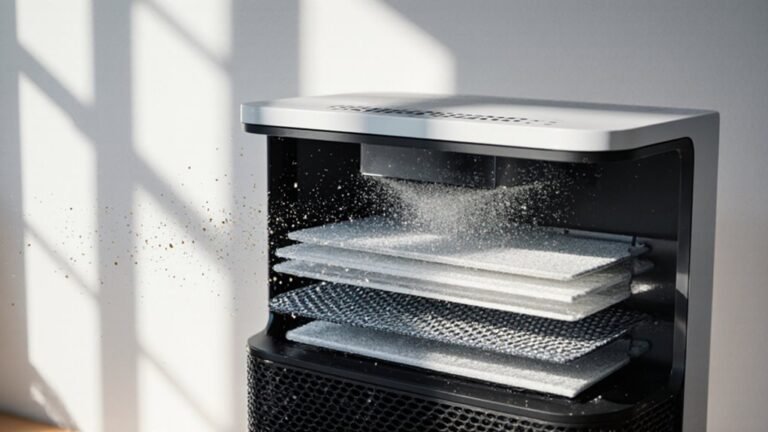
Use filter sequencing wisely: let the prefilter catch lint initially, then HEPA trap dust, pollen, and smoke particles, and finally carbon absorb odors and VOCs. This order helps each layer do its job without tiring out the others.
You’ll also want maintenance scheduling that fits your home, because a clogged HEPA slows airflow and a spent carbon bed stops helping. Check your filters on a set routine, replace them before they feel overloaded, and keep the system running smoothly for your family.
Frequently Asked Questions
How Often Should HEPA Filters Be Replaced?
You should replace your HEPA filter every 6 to 12 months, depending on use and your maintenance schedule. If airflow drops, odor lingers, or dust builds up faster, you will know it is time for your filter’s lifespan to end.
How Long Do Activated Carbon Filters Last?
Activated carbon filters usually last 3 to 6 months, though your filter lifespan depends on use, humidity, and pollutants. Watch replacement indicators like lingering odors, reduced smoke removal, or rising VOCs, then swap it promptly.
Do HEPA Filters Remove Viruses?
Yes, you can rely on true HEPA filters for virus capture while viruses hitch a ride on droplets or particles; they do not remove every airborne virus, but they trap tiny particle size contaminants very effectively.
Does Humidity Affect Activated Carbon Performance?
Yes, humidity can reduce activated carbon performance. Moisture occupies pores and slows adsorption kinetics, so the filter will be less effective at removing odors. For best results, use drier air and replace the filter on schedule.
Are H13 and H14 HEPA Filters Worth It?
Yes, provided you need maximum particle removal, you will get value from H13 or H14. True HEPA matters most in medical settings; otherwise, the cost benefit could shrink because the noise tradeoff and fan power rise.